
Trasforma le intuizioni dell’IA in azioni concrete

Tendenze
Categories
Delta Air Lines Retires Its Oldest Widebody After Nearly 36 Years of Service
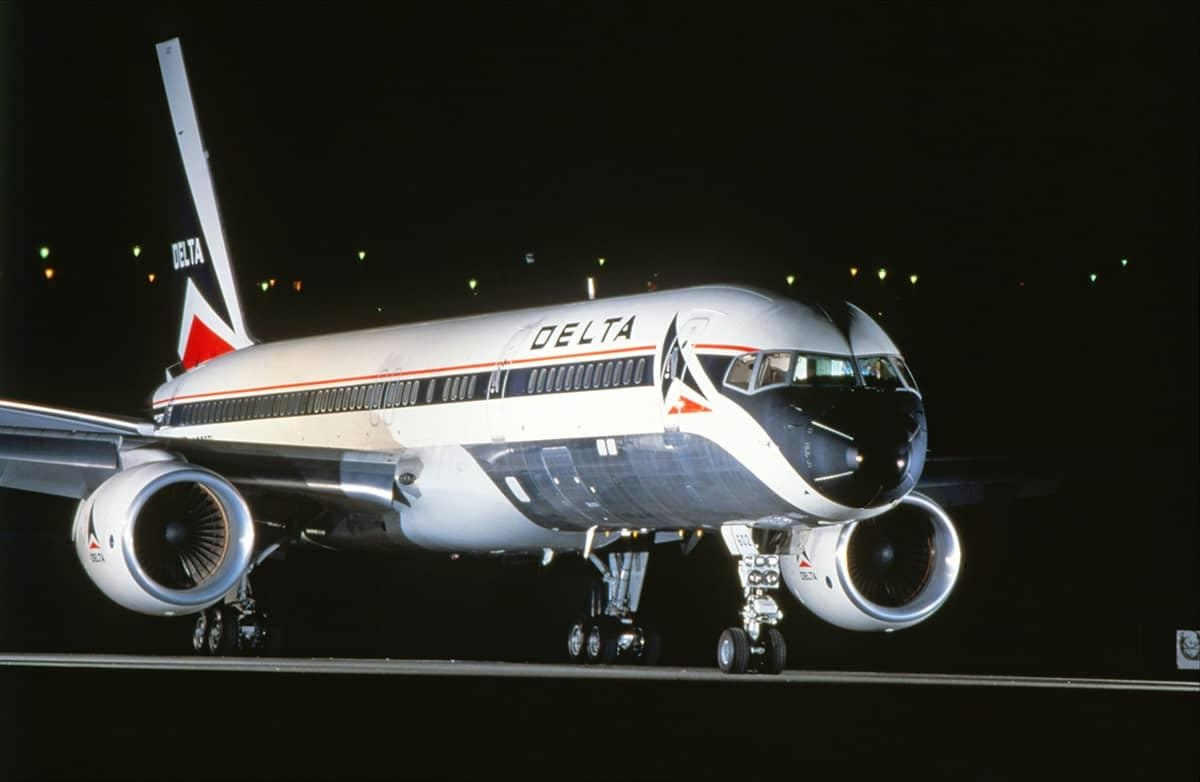
Delta Air Lines Retires Its Oldest Widebody After Nearly 36 Years of Service
Delta Air Lines has officially retired its oldest widebody aircraft, the Boeing 767-300ER registered as N171DN, concluding nearly 36 years of dedicated service. The aircraft completed its final flight on April 10, ferrying from Atlanta to Birmingham, where it will be dismantled for parts. Since joining Delta’s fleet in June 1990, N171DN accumulated over 150,000 flight hours, a testament to Boeing’s engineering durability and the meticulous maintenance efforts by Delta’s technical teams.
A Storied Career Across Domestic and International Routes
During its extensive tenure, N171DN primarily operated long-haul international routes in its early years before transitioning to transcontinental and domestic flights. Its final revenue service, flight DL715, departed San Francisco International Airport on April 9 and arrived at Hartsfield-Jackson Atlanta International Airport, marking the end of an era for Delta’s longest-serving aircraft. Configured to accommodate 36 passengers in Domestic First Class and 175 in Economy, the aircraft played a crucial role in Delta’s network, particularly on domestic and short-haul international routes. In its final weeks, N171DN continued to serve major hubs including Atlanta, Phoenix, New York, and San Francisco.
Currently, Delta operates a fleet of 37 Boeing 767-300s, but these are gradually being phased out in favor of newer, more fuel-efficient models such as the Airbus A350 and A330neo. The retirement of N171DN reflects this broader fleet modernization strategy aimed at enhancing operational efficiency and passenger experience.
Fleet Modernization Amid Industry Challenges
The retirement of this venerable aircraft comes at a pivotal moment for Delta and the wider U.S. airline industry. As Delta advances its fleet renewal, it must navigate challenges including rising labor costs and potential regulatory impacts from proposed credit card legislation. Despite these pressures, the airline maintains a strategic focus on premium services and customer loyalty, which continue to differentiate it in a competitive market.
Delta’s ability to generate strong free cash flow amid volatile jet fuel prices—recently intensified by geopolitical tensions such as the Iran conflict—demonstrates its operational resilience. A significant factor in this stability is Delta’s ownership of the Monroe Energy refinery, which provides a unique hedge against fuel price fluctuations and offers a competitive advantage over its rivals.
While Delta accelerates its investment in next-generation aircraft, competitors like American Airlines face the risk of falling behind in the so-called “aircraft arms race,” with fewer new widebody orders compared to Delta and United Airlines. Supported by robust market fundamentals, broad-based travel demand, and a strategic shift toward premium offerings, Delta is well positioned for future growth.
The retirement of N171DN, just shy of its 36th anniversary, not only underscores the longevity and reliability of the Boeing 767-300ER but also symbolizes Delta’s ongoing transformation. As the airline bids farewell to a loyal workhorse, it continues to pursue innovation, efficiency, and enhanced customer satisfaction through its evolving fleet and service offerings.
Signature Aviation and Partners Demonstrate Feasibility of Electric Flight

Wing and Papa John's Pilot Drone Delivery Service
Six Airlines Offering the Best Narrowbody Business Class in 2026
Fifteen Years On, the Boeing 787 Dreamliner Has Transformed Long-Haul Travel

Canada Leases 10 New Aircraft Ahead of Wildfire Season

Saudi Aviation Regulator Approves First Drone Medicine Delivery Permit for Hajj

Air India Flight 171 Crash: Did AAIB Overlook Electrical Faults?

Kazakhstan Establishes Regulations for Air Taxis and Urban Air Mobility
Safran Secures New Engine Deal with Air India
Airbus Delivers First A321XLR Amid Rising Orders and Production Challenges
