imabge

AeroGenie: il tuo copilota intelligente.

Chiedi qualsiasi cosa. Analizza tutto. Agisci all'istante.

Tendenze

Categories

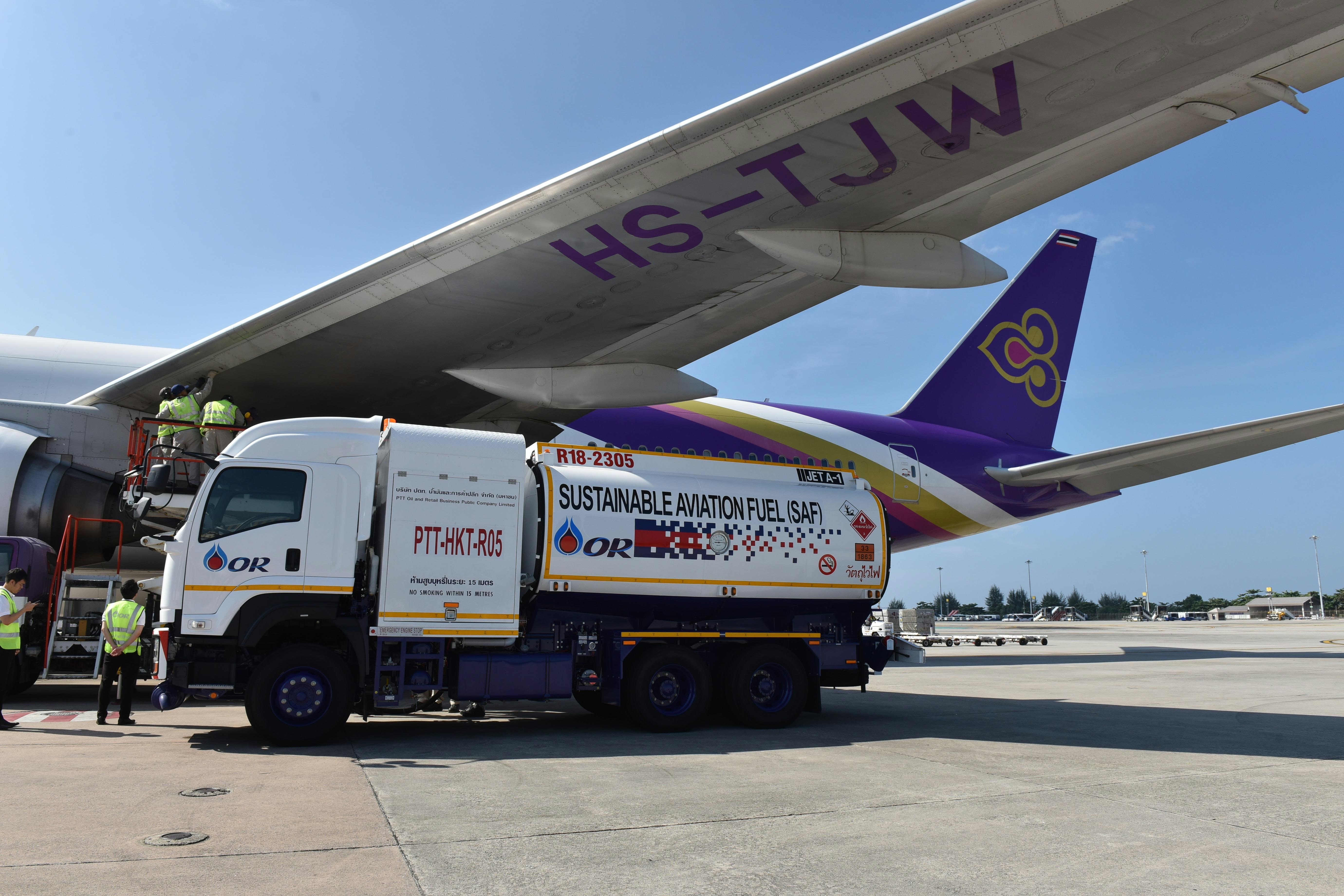
EcoCeres Partners with Xiamen Airlines to Develop Sustainable Aviation Fuel
August 18, 2025By ePlane AI
EcoCeres Partners with Xiamen Airlines to Develop Sustainable Aviation Fuel
0
0
Sustainable Aviation Fuel
EcoCeres
Xiamen Airlines

EcoCeres and Xiamen Airlines Forge Partnership to Advance Sustainable Aviation Fuel

EcoCeres has entered into a strategic partnership with Xiamen Airlines to accelerate the development and adoption of sustainable aviation fuel (SAF), a critical component in the aviation sector’s efforts to reduce carbon emissions. This collaboration represents a significant milestone in the industry’s pursuit of greener alternatives to conventional jet fuel, aiming to scale production and promote the widespread use of SAF as a viable solution for decarbonizing air travel.

Challenges and Industry Context

Despite the promise of SAF, the path to large-scale deployment remains fraught with challenges. Both EcoCeres and Xiamen Airlines must navigate high production costs, stringent regulatory frameworks, and intensifying competition from other players in the SAF market. The sector has witnessed rapid innovation, exemplified by companies such as OXCCU, which has made notable progress in converting waste carbon into cost-effective sustainable fuels. These advancements set a high bar for new entrants and established firms alike.

The market’s response to the EcoCeres-Xiamen Airlines partnership will largely depend on their ability to deliver scalable and economically sustainable solutions. Success in this endeavor could compel competitors to increase their SAF production capacities or pursue similar strategic alliances to maintain their competitive edge. This dynamic is already apparent, with Luxaviation recently securing a long-term synthetic SAF supply agreement, reflecting the broader industry commitment to securing sustainable fuel sources.

Investment Volatility and Future Outlook

The investment climate surrounding SAF remains uncertain, as illustrated by Southwest Airlines’ recent decision to divest from its SAF developer after only 16 months. This move underscores the financial risks and volatility inherent in the sector. Nevertheless, regulatory pressures and growing consumer demand for environmentally responsible travel continue to drive momentum toward cleaner aviation fuels.

As EcoCeres and Xiamen Airlines advance their partnership, industry observers will closely monitor their progress as a measure of the sector’s capacity to overcome existing obstacles and fulfill the potential of sustainable aviation fuel.

More news
Nine Lufthansa Airlines to Adopt Amadeus’ AI-Based Nevio Modular Solutions

Nine Lufthansa Airlines to Adopt Amadeus’ AI-Based Nevio Modular Solutions

Lufthansa Group to Adopt Amadeus’ AI-Driven Nevio Modular Solutions Amadeus announced on Wednesday that the Lufthansa Group will implement its AI-native Nevio modular platform across nine of its airlines, including Austrian Airlines, Brussels Airlines, Lufthansa, and Swiss. This next-generation system is designed to enhance personalised retail sales, ordering, and distribution management by providing flexible core technology that allows airlines to manage their digital transformation at a tailored pace. Advancing Digital Transformation Amid Challenges The adoption of Amadeus’ Nevio platform positions the Lufthansa Group at the forefront of technological innovation within the airline industry. However, the transition is expected to encounter several challenges. Integrating the new AI-based system with existing legacy infrastructure may prove complex, and there is potential resistance from employees accustomed to traditional workflows. To facilitate a smooth implementation, Lufthansa will need to invest significantly in training and change management initiatives. Industry Implications and Competitive Dynamics Market analysts have noted that the introduction of Nevio may generate skepticism among competitors regarding its operational effectiveness and the risks of disruption during the transition period. Nevertheless, Lufthansa’s move towards a more flexible, AI-driven retail system is anticipated to prompt rival airlines to accelerate their own investments in advanced technology platforms to remain competitive. Amadeus’ Nevio solution offers modular and adaptable tools that can be deployed incrementally, enabling each airline to customise the transformation according to its specific requirements and timeline. As the Lufthansa Group undertakes this substantial digital upgrade, the wider airline industry will closely monitor the outcomes to evaluate the integration of advanced AI solutions within complex operational environments.
ACC Aviation Names Luca D’Urso Vice President

ACC Aviation Names Luca D’Urso Vice President

ACC Aviation Appoints Luca D’Urso as Vice President Amid Market Evolution ACC Aviation, a specialist in aircraft leasing, has announced the appointment of Luca D’Urso as Vice President – Leasing Consultant within its ACMI division. Based at the company’s Reigate office near London, D’Urso joins a seasoned team, bringing extensive experience spanning ACMI, air charter, and airline operations. Expertise and Role D’Urso’s professional background includes direct roles within airlines, where he gained expertise in traffic rights, slot planning, and crew rostering. This operational knowledge equips him with a comprehensive understanding of the complexities involved in daily airline management. Fluent in Spanish, Italian, and French, he is expected to play a pivotal role in strengthening ACC’s relationships with airline partners globally, supporting both the ACMI and Aircraft Transactions teams. Reflecting on his decision to join ACC, D’Urso highlighted the company’s strong industry reputation. He stated, “ACC is a well-known and respected name within the ACMI space, and I have the benefit of already knowing the team well, as we have previously collaborated on several exciting projects. I am very much looking forward to working with them and contributing to the continued success they have achieved to date.” Dave Williams, Director of Leasing at ACC Aviation, welcomed the appointment, emphasizing the value of D’Urso’s airline sales and operational experience. “His direct airline sales and operational experience brings an invaluable perspective when working with our airline customers and suppliers. Together with his language skills, Luca adds further strength to our ACMI offering and supports our continued focus on solutions aligned with airline planning cycles and operational realities,” Williams said. Strategic Context and Industry Implications D’Urso’s arrival comes at a critical juncture for ACC Aviation, as the company navigates a rapidly evolving and increasingly competitive market. The aircraft leasing sector is undergoing significant shifts driven by advancements in propulsion technology and changing market demands. In this context, D’Urso’s operational insight and international experience are anticipated to be key assets in managing the complexities of modern airline operations. Industry observers are closely monitoring ACC’s strategic direction, particularly in relation to potential innovations in propulsion technology and the company’s positioning amid intensifying competition. Rival firms are expected to respond by enhancing their own offerings to maintain or expand their market share, especially within the business aviation segment. Through this appointment, ACC Aviation aims to reinforce its expertise and agility, positioning itself to address both current challenges and emerging opportunities in the global aviation market.
BluJay Aerospace Advances Indian Aviation

BluJay Aerospace Advances Indian Aviation

BluJay Aerospace Advances Indian Aviation Pioneering VTOL Technology for Regional Connectivity BluJay Aerospace is poised to revolutionize regional transportation in India through its focus on Vertical Take-Off and Landing (VTOL) technology. The company’s founders identified a persistent challenge in the Indian aviation sector: regional connectivity remains constrained not only by capacity but also by limited access. Traditional approaches, such as increasing the number of aircraft and constructing additional airports, have struggled to address the complexities posed by India’s vast and diverse geography. Despite decades of growth in aviation, many regions continue to be underserved. VTOL technology presents a fundamentally new solution by eliminating the need for large runways and enabling direct point-to-point travel. This innovation could unlock novel models of regional connectivity, particularly suited to India’s infrastructure gaps and varied terrain. Recent advancements in composite materials, electric propulsion, autonomous systems, and hydrogen power have converged to make VTOL aircraft both technically feasible and economically viable. For a country like India, these developments hold the potential to transform the landscape of regional air mobility. Challenges and Competitive Landscape BluJay Aerospace’s ambitious vision is not without significant challenges. The company faces intense competition from established global aerospace leaders such as SpaceX and Blue Origin, both of which have expressed interest in expanding their footprint within India’s burgeoning aviation market. In addition, domestic aerospace firms are expected to intensify efforts to safeguard their market positions, while international players may accelerate their expansion strategies in response to BluJay’s progress. Navigating India’s complex regulatory framework represents another formidable obstacle. Obtaining the necessary approvals for emerging aviation technologies is often a protracted and uncertain process. Furthermore, the scale of BluJay’s aspirations demands substantial financial investment, attracting heightened scrutiny from investors and stakeholders closely monitoring the company’s trajectory and its potential impact on the market. Despite these hurdles, BluJay Aerospace remains optimistic about its prospects. The company contends that India’s unique requirements, combined with the convergence of enabling technologies, position it at the forefront of a new era in aviation. As competition intensifies in the race to redefine regional air mobility, BluJay’s efforts could signify a pivotal advancement for the Indian aerospace sector—contingent on its ability to surmount the competitive, regulatory, and financial challenges ahead.
Kenya Airways Plans to Use 767 Freighters Ahead of 777F Delivery

Kenya Airways Plans to Use 767 Freighters Ahead of 777F Delivery

Kenya Airways to Deploy 767 Freighters as Interim Measure Ahead of 777F Deliveries Kenya Airways is advancing its cargo expansion strategy by introducing Boeing 767 freighters as an interim solution while awaiting the delivery of larger Boeing 777F aircraft. This initiative forms a key part of the airline’s objective to double the cargo division’s contribution to group revenues from 10% to 20% within the year, aiming to stabilize earnings and reduce dependence on the fluctuating passenger market. Interim Fleet Expansion and Strategic Outlook Fitsum Abadi Gebrehawaria, Kenya Airways’ cargo director, revealed that the airline anticipates adding its first 767 freighter by the end of the first quarter, with a second expected shortly thereafter. These aircraft will serve as a transitional fleet until the arrival of the 777Fs, which Kenya Airways plans to operate in a fleet of three by 2030. While the 777F remains the preferred long-term freighter, immediate acquisition has been constrained by limited availability. Boeing is currently seeking an FAA emissions waiver to authorize the sale of 35 additional 777F freighters, responding to strong customer demand and delays in certifying the next-generation 777-8F. This industry-wide bottleneck has compelled Kenya Airways to rely on the more readily available 767s in the short term, reflecting a broader trend among airlines turning to older models to meet urgent air freight requirements. At present, Kenya Airways operates four narrowbody freighters—two Boeing 737-300s and two 737-800s, the latter introduced in 2024. The introduction of widebody freighters is expected to significantly enhance the airline’s capacity to serve high-demand routes, particularly within the Asia-Pacific region. Guangzhou and potentially Hong Kong have been identified as key destinations, with initial 767 operations likely to include technical stops in the Middle East to facilitate the transport of perishable exports before returning with e-commerce cargo. Enhancing Market Position Through Technology and Partnerships The fleet expansion is part of a broader effort to strengthen Kenya Airways Cargo’s market position. In addition to acquiring new aircraft, the airline is investing in digital transformation initiatives, including the implementation of advanced cargo management systems designed for capacity planning, real-time tracking, and yield optimization. Abadi emphasized the importance of these technological upgrades in improving operational efficiency and revenue management. Kenya Airways is also expanding its network reach through strategic partnerships. Recent memorandums of understanding with Qatar Airways and Air Tanzania, alongside interline agreements with China Southern, Saudia, Turkish Airlines, Ethiopian Airlines, and Bluorbit, are intended to open access to new markets and increase cargo revenues. According to Abadi, these interline agreements enable the airline to tap into offline markets, thereby supporting cargo growth. Further investments are being directed toward specialized cargo solutions tailored for pharmaceuticals, e-commerce, express, and courier services, building on Kenya Airways’ established expertise in perishable exports. While the market’s response and competitor reactions to the interim use of 767 freighters remain to be seen, the strategy underscores the airline’s adaptability and commitment to addressing current air freight demand amid widespread industry supply constraints.
AxioAero Group Acquires Airway Aerospace

AxioAero Group Acquires Airway Aerospace

AxioAero Group Acquires Airway Aerospace, Expanding Aftermarket Capabilities AxioAero Group, a newly established holding company specializing in aerospace and aviation, has announced the acquisition of Airway Aerospace, a Florida-based repair station certified by the FAA, EASA, and CAA UK. This acquisition represents AxioAero’s second strategic purchase following its acquisition of Aviation Concepts in January 2024, underscoring the company’s ambition to develop a distinctive platform within the aerospace aftermarket sector. Airway Aerospace’s Expertise and Market Reach Founded in 2013, Airway Aerospace offers comprehensive maintenance, repair, and overhaul (MRO) services with expertise across accessories, airframe, and powerplant repairs. The company caters to commercial, cargo, and defense aviation markets, providing component repairs in critical systems such as hydraulics, pneumatics, fuel systems, flight controls, thrust reversers, nacelles, and fixed-wing structures. Airway’s certifications, including RS-DER repair authority and Owner-Produced Parts capabilities, enable it to support a broad spectrum of aircraft. These range from narrow-body models like the Boeing 737 and Airbus A320 family to wide-body aircraft such as the Boeing 747/767 and Airbus A300/A330, as well as Boeing 707 military variants. Operating from two facilities in Doral, Florida, Airway Aerospace has built a reputation for delivering fast, adaptable solutions backed by technical expertise. The company maintains enduring relationships with a diverse customer base, emphasizing reliability and responsiveness. Under the terms of the acquisition, Airway will continue to operate under its existing name and leadership, preserving its core identity, culture, and agility as a small business. Strategic Implications and Industry Perspectives Joe Ferrer, owner of Airway Aerospace, highlighted the company’s commitment to quality and customer relationships, stating that the partnership with AxioAero Group will support continued growth while maintaining the values that have defined Airway. Matt Haugk, CEO of AxioAero Group, described the acquisition as a significant milestone in the company’s strategy to build a differentiated aerospace aftermarket platform. He emphasized that Airway’s technical expertise and customer-focused approach align closely with AxioAero’s vision to expand capabilities and deliver value globally. As AxioAero integrates Airway Aerospace into its portfolio, the company will need to address challenges such as operational alignment, regulatory compliance, and ensuring uninterrupted service to customers. Industry analysts anticipate that investor scrutiny will focus on the strategic fit and financial implications of the acquisition. Meanwhile, competitors may respond by accelerating consolidation efforts or forming new partnerships to sustain their market positions amid the evolving aerospace services landscape.
Joby to Train Up to 250 Pilots Annually with New Simulators in Marina

Joby to Train Up to 250 Pilots Annually with New Simulators in Marina

Joby to Train Up to 250 Pilots Annually with New Simulators in Marina Joby Aviation is preparing to train up to 250 pilots annually at its newly established simulator facility in Marina, California. This development marks a significant milestone as the company advances toward its inaugural commercial electric vertical takeoff and landing (eVTOL) flights, anticipated later this year. The cutting-edge simulators, integral to the Federal Aviation Administration (FAA) certification process, are being delivered on schedule to facilitate the comprehensive training required for Joby’s pilot cadre. Strategic Importance of Pilot Training The pilot training program represents a vital element of Joby’s broader strategy to position itself as a frontrunner in the emerging eVTOL market. Despite this progress, the company continues to confront substantial challenges. Regulatory approval remains a complex and demanding process, with the FAA requiring extensive certification not only for the aircraft but also for the associated pilot training programs. Concurrently, competition within the sector is intensifying. Rivals such as Vertical Aerospace are reportedly accelerating their own pilot training and certification initiatives in response to Joby’s advancements, underscoring the competitive pressures facing the company. Market analysts suggest that Joby’s investment in pilot training infrastructure could enhance investor confidence, as the capacity to efficiently train and certify pilots is increasingly viewed as a critical differentiator in the race to commercialize eVTOL services. In parallel, Joby is expanding its manufacturing capabilities in the United States, with plans to double production capacity by 2027. This expansion aims to support the manufacture of up to four aircraft per month, aligning production growth with the anticipated demand for both aircraft and trained pilots. However, this scaling effort also intensifies the need to ensure that training programs keep pace with manufacturing output. Outlook and Industry Implications As Joby approaches the launch of its commercial operations, the integration of advanced simulators and the scaling of pilot training programs will be closely monitored by regulators, investors, and competitors. The company’s ability to successfully navigate regulatory requirements, respond to competitive dynamics, and synchronize manufacturing with pilot training will be pivotal to its success in the rapidly evolving eVTOL industry.
Boeing and Alaska Airlines Confirm Major Aircraft Order

Boeing and Alaska Airlines Confirm Major Aircraft Order

Boeing and Alaska Airlines Announce Record Aircraft Order **Seattle, January 7, 2026** — Boeing and Alaska Airlines have confirmed the largest aircraft order in the airline’s history, signaling a major step in Alaska’s strategy for domestic and international expansion. The agreement includes the purchase of 105 Boeing 737-10 jets—the largest model in the 737 MAX series—alongside options for an additional 35 aircraft, as well as five Boeing 787-10 Dreamliners. This substantial investment increases Alaska’s 737 MAX order book to 174 planes and represents a critical component of the carrier’s ongoing fleet renewal and growth plans. Strategic Fleet Expansion and Route Development The new aircraft acquisition is intended to modernize Alaska Airlines’ fleet and support the expansion of its route network, including the launch of new long-haul services to Europe and Asia from its Seattle hub. The 737-10s will enable the airline to operate high-density domestic routes more efficiently, offering the lowest cost per seat among single-aisle aircraft. Meanwhile, the 787-10 Dreamliners will enhance Alaska’s international capabilities, delivering superior fuel efficiency, extended range, and improved passenger comfort for long-haul flights. Ben Minicucci, CEO and President of Alaska Air Group, emphasized the significance of the order, stating, “This fleet investment builds on the strong foundation Alaska has created to support steady, scalable, and sustained growth, and is another building block in executing our Alaska Accelerate strategic plan. These planes will fuel our expansion to more destinations across the globe and ensure our guests travel aboard the newest, most fuel-efficient, and state-of-the-art aircraft. We are incredibly proud to be partnering with Boeing, a Pacific Northwest neighbor and a company that stands as a symbol of American innovation and manufacturing.” Confidence in Boeing and Long-Term Delivery Commitments The deal also reflects Alaska Airlines’ confidence in Boeing’s recovery efforts and the anticipated certification of the 737 MAX 10. By securing delivery slots through 2035, Alaska guarantees a steady influx of new aircraft to support its ambition of serving at least 12 long-haul international destinations from Seattle by 2030. Stephanie Pope, president and CEO of Boeing Commercial Airplanes, remarked, “This is a historic airplane order underwritten by Alaska Airlines’ record of strong performance and strategic expansion. All of us at Boeing are proud of Alaska’s success and are honored they have placed their trust in our people and our 737 and 787 airplanes to help grow their airline.” The announcement coincides with the 60th anniversary of the partnership between Boeing and Alaska Airlines, which began with the delivery of a Boeing 727. Currently, Alaska operates 248 Boeing 737 aircraft and five 787 Dreamliners. With this latest order, the airline’s 787 order book expands to 12, positioning it to further extend its global network in the years ahead.
LATAM Receives First Boeing 787-9 Equipped with GEnx Engines

LATAM Receives First Boeing 787-9 Equipped with GEnx Engines

LATAM Receives First Boeing 787-9 Equipped with GEnx Engines LATAM Airlines has taken delivery of its first Boeing 787-9 Dreamliner powered by GE Aerospace’s GEnx engines, marking a pivotal advancement in the airline’s ongoing fleet modernization efforts. The aircraft, registered as CC-BMB, completed its delivery flight from Charleston, United States, to Santiago, Chile, on December 30, according to flight records. Strategic Shift in Engine Choice The decision to equip the new widebody aircraft with GEnx engines comes amid persistent availability challenges with the Rolls-Royce Trent engines, which currently power 37 aircraft within LATAM’s fleet. Sebastián Acuto, Fleet and Projects Director of LATAM Airlines Group, emphasized the operational benefits of this transition, noting that the combination of the Boeing 787-9 and GEnx engines represents a significant step toward enhanced efficiency and sustainability. He highlighted reductions in fuel consumption and emissions, alongside increased operational flexibility to support growth across diverse markets and routes. Challenges and Industry Implications Integrating the GEnx-powered Dreamliners introduces several operational challenges for LATAM. The airline must adapt to new maintenance procedures, particularly as GE Aerospace advances its 360 Foam Wash technology, designed to simplify engine upkeep and boost operational efficiency. This transition will likely necessitate retraining technical personnel and revising maintenance protocols to accommodate the new engine technology. The market response to LATAM’s fleet upgrade may intensify competition, prompting rival carriers to accelerate the adoption of comparable fuel-efficient technologies to preserve their competitive positions. Airlines utilizing alternative engine manufacturers may also emphasize their own technological innovations in reaction to LATAM’s move. Operationally, the introduction of new aircraft types often presents logistical complexities, including the integration of new systems and ensuring the availability of spare parts. These challenges coincide with Boeing’s efforts to enhance production quality and supply chain resilience, notably through its recent acquisition of Spirit AeroSystems. This strategic move is expected to benefit customers like LATAM by improving aircraft delivery schedules and reliability. Fleet Expansion and Future Outlook By the end of 2025, LATAM operated a fleet of 371 aircraft, having incorporated 26 new airplanes throughout the year. The airline’s expansion plans include the receipt of 41 new aircraft in 2026, featuring its first 12 Embraer E195-E2 jets, followed by an additional 27 aircraft in 2027, highlighted by the introduction of the Airbus A321XLR—a narrow-body model with an extended range of 8,400 kilometers. Looking further ahead, LATAM aims to add more than 130 new aircraft by 2030, with advanced models expected to constitute over half of its fleet by the end of the decade. As LATAM pursues this ambitious fleet renewal, the successful integration of the Boeing 787-9 equipped with GEnx engines will serve as a critical measure of the airline’s capacity to adapt to evolving technologies and sustain its competitive standing in a dynamic global aviation market.
Dassault Aviation Reports Aircraft Deliveries, Orders, Backlog, and Sales Outlook

Dassault Aviation Reports Aircraft Deliveries, Orders, Backlog, and Sales Outlook

Dassault Aviation Exceeds Rafale Delivery Targets but Faces Challenges in Falcon Sales Dassault Aviation has announced its preliminary consolidated figures for 2025, highlighting aircraft deliveries, orders, backlog, and an updated sales outlook. The French aerospace manufacturer surpassed its delivery guidance for the Rafale fighter jet, delivering 26 units compared to the targeted 25, marking an improvement over the 21 jets delivered in 2024. However, the company fell short of its Falcon business jet delivery target for the third consecutive year, delivering 37 aircraft against a goal of 40, despite an increase from 31 units in 2024. This shortfall underscores persistent challenges within the business aviation market. Aircraft Deliveries and Order Book In 2025, Dassault secured orders for 26 export Rafale jets, a slight decline from 30 orders in 2024. Conversely, Falcon orders increased to 31 from 26 the previous year. The company’s backlog as of December 31, 2025, remained steady at 220 Rafale jets, with a notable shift favoring export orders—175 compared to 45 for France. The Falcon backlog, however, decreased to 73 aircraft from 79 at the end of 2024, reflecting the ongoing difficulties in the business jet segment. Financial Outlook and Industry Context Dassault Aviation has raised its net sales guidance for 2025 to exceed €7 billion, up from €6.2 billion reported in 2024. The company is scheduled to release its full annual results, including detailed figures on net sales, order intake, and backlog, on March 4, 2026. The company’s performance occurs within a dynamic aerospace sector. Airbus has surpassed its 2025 delivery target by handing over 793 aircraft against a goal of 790. Meanwhile, competitors are advancing in their respective markets: Bombardier secured a $400 million contract for its Global 6500 business jets, and Joby Aviation is exploring opportunities in the Gulf region for its electric vertical takeoff and landing (eVTOL) aircraft. About Dassault Aviation Dassault Aviation has delivered over 10,000 military and civil aircraft to more than 90 countries over the past century. The company is globally recognized for its expertise in designing, producing, selling, and supporting a diverse range of aircraft, including the Rafale fighter, Falcon business jets, military drones, and space systems. Employing 14,600 people worldwide, Dassault continues to be a significant player in the aerospace industry. For more information, visit dassault-aviation.com.
Alaska Airlines Orders 140 Boeing 737-10 and 5 Boeing 787-10 Jets

Alaska Airlines Orders 140 Boeing 737-10 and 5 Boeing 787-10 Jets

Alaska Airlines Places Record Order for Boeing Jets to Modernize Fleet and Expand International Reach Alaska Airlines has announced its largest aircraft order to date, committing to purchase 105 Boeing 737 Max 10s alongside five Boeing 787-10 Dreamliners. This agreement, which also includes 35 additional options for the 737-10, brings the airline’s total Boeing order book to 245 jets. The substantial investment forms a key part of Alaska’s strategy to modernize its fleet and broaden its international network, particularly in the wake of its merger with Hawaiian Airlines. Fleet Renewal and Expansion with 737 Max 10s The commitment to the 737-10 model comprises 53 new orders slated for delivery between 2032 and 2035, as well as the conversion of 52 existing options with deliveries planned from 2028 to 2032. Alaska Airlines intends to deploy these aircraft both to replace its aging Boeing 737 Next Generation (NG) narrowbodies and to support overall fleet growth. According to ch-aviation data, the airline currently operates a diverse 737 fleet, including eleven 737-700s, fifty-nine 737-800s, seventy-nine 737-900ERs, fourteen 737-8s, and eighty 737-9s. Prior to this announcement, Alaska had outstanding commitments for six additional 737-8s and sixty-three 737-10s. The carrier also operates eighteen Airbus A321-200Ns, inherited from Hawaiian Airlines, which remain dedicated to Hawai‘i operations. Alaska retains flexibility to substitute the 737-10s for other 737 MAX variants as operational needs evolve. Introduction of Widebody Aircraft and International Ambitions The order also marks a significant milestone in Alaska Airlines’ widebody strategy. The five Boeing 787-10 Dreamliners will be the first widebody aircraft directly ordered by Alaska, as its current fleet of five 787-9s were originally ordered by Hawaiian Airlines prior to the merger. The combined group holds inherited commitments for an additional four 787-9s and five 787-10s, following a partial conversion to the larger 787-10 variant earlier this year. The newly ordered 787-10s are converted options previously assigned to Hawaiian Airlines and are expected to be delivered between 2031 and 2032. Alaska Airlines has emphasized that the addition of the 787-10s will enable the launch of new long-haul routes to Asia and Europe from its Seattle hub, capitalizing on the expanded network opportunities created by the Hawaiian Airlines merger. While the airline has not disclosed a specific delivery timeline for these aircraft, the order underscores its commitment to international growth. Strategic Confidence Amid Industry Challenges This record-breaking order reflects Alaska Airlines’ confidence in Boeing’s ability to deliver high-quality aircraft on schedule, despite the manufacturer’s recent production challenges. The move positions Alaska to modernize its fleet, increase capacity, and pursue international expansion throughout the coming decade.
Ask AeroGenie










