Immagine

Trasforma le intuizioni dell’IA in azioni concrete

Unisciti oggi alla lista d’attesa di AeroGenie!

Tendenze

Categories

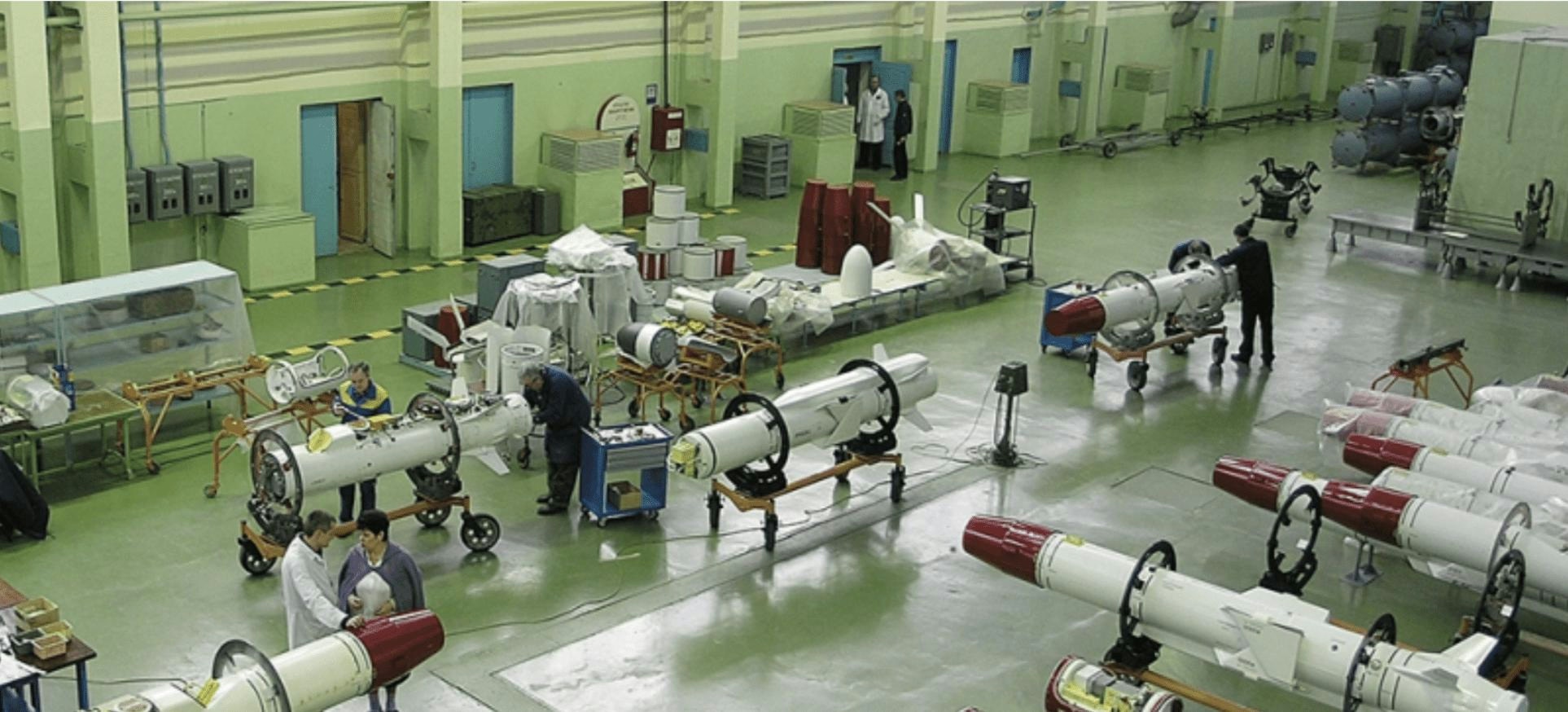
Engineer from Moscow Region Develops Combined Hypersonic and Rocket Engine
September 5, 2026By ePlane AI
Engineer from Moscow Region Develops Combined Hypersonic and Rocket Engine
0
0
Hypersonic Propulsion
Rocket Engine
Hybrid Engine Technology

Engineer from Moscow Region Develops Combined Hypersonic and Rocket Engine

Innovative Hybrid Propulsion System

Oleg Aleksandrov, an engineer based in Orekhovo-Zuyevo within the Moscow Region, has introduced a groundbreaking propulsion system that integrates a rocket combustion chamber with a hypersonic ramjet engine. This hybrid design is intended to enhance both versatility and efficiency in aerospace applications, potentially positioning Russia at the forefront of advanced propulsion technology development.

The engine’s architecture features an annular combustion chamber that encircles a central body, complemented by a nozzle that forms an additional channel for the ramjet. In subsonic flight conditions, incoming air is combusted within the chamber, while at higher velocities, the outer surface of the nozzle functions as the combustion chamber for the hypersonic ramjet. This configuration enables the propulsion system to transition seamlessly between operating modes: the rocket component operates independently of atmospheric air, whereas the ramjet utilizes incoming airflow and activates as speed increases.

Design Features and Technical Innovations

A distinctive element of Aleksandrov’s design is the use of the fuel tank’s tail section as the central body of the annular combustion chamber. Internal mechanisms manage engine operation and fuel delivery, optimizing spatial efficiency. To regulate airflow, the engine incorporates a movable ring with a conical profile that adjusts the air intake area according to the current mode of operation. For hypersonic speeds, multiple belts of nozzles can be selectively engaged depending on the velocity range, further enhancing the engine’s adaptability. The modular construction of the engine allows for flexible manufacturing options, with components producible from metals, composite materials, or through additive manufacturing techniques such as 3D printing.

Challenges and Strategic Implications

Despite the technical promise of this propulsion system, Aleksandrov faces considerable obstacles in advancing the technology to market readiness. International sanctions have increasingly isolated Russia’s United Engine Corporation and affiliated enterprises from Western supply chains, complicating access to advanced materials and critical components. Furthermore, the Russian aerospace sector contends with well-established global competitors who are simultaneously accelerating investments in hypersonic and hybrid propulsion technologies in response to Russia’s progress.

Nonetheless, the engine concept has garnered attention from defense and aerospace stakeholders, particularly as Russia intensifies efforts to achieve technological sovereignty and develop indigenous propulsion capabilities. This innovation aligns with the country’s broader strategic objective to reduce dependence on foreign technology and strengthen its capabilities in advanced missile and unmanned aerial systems.

Market analysts indicate that Aleksandrov’s design could stimulate rival firms to escalate research and development in similar propulsion technologies, potentially reshaping the competitive dynamics within both military and civilian aerospace sectors. As geopolitical tensions persist, Russia’s prioritization of homegrown technological solutions underscores the potential significance of such engineering initiatives in shaping the nation’s future aerospace ambitions.

More news
GTA Aims to Expand Role in Malaysia’s Defence Self-Reliance Efforts

GTA Aims to Expand Role in Malaysia’s Defence Self-Reliance Efforts

GTA Aims to Expand Role in Malaysia’s Defence Self-Reliance Efforts KUALA LUMPUR, Sept 5 — GTA Holdings Bhd (GTA), a prominent provider of aviation maintenance, repair, and overhaul (MRO) services, is preparing to enhance Malaysia’s defence self-reliance through the establishment of a Centre of Excellence (CoE). This initiative will follow the company’s forthcoming listing on the ACE Market of Bursa Malaysia and is designed to strengthen the nation’s capabilities in the defence sector. Establishing a Centre of Excellence to Drive Innovation The proposed CoE will concentrate on advancing research and development (R&D), training, and technological expertise within the MRO industry. Datuk Nonee Ashirin Mohd Radzi, Managing Director and Chief Executive Officer of GTA, described the initiative as a key component of the company’s post-listing growth strategy. She emphasized that the CoE aims to position GTA as a leading player in research and technology, supported by strong partnerships with original equipment manufacturers (OEMs). “The CoE will allow us to position ourselves as a key player in research and technology, with the backing of our OEM partners. We are investing in a new facility that will include R&D and training programmes, within which there will be a CoE,” Nonee Ashirin stated in a recent interview with Bernama. She further noted that this development aligns with Malaysia’s National Defence Industry Policy (NDIP), which promotes greater self-reliance through local capability enhancement and technology transfer. In addition to the CoE, GTA is exploring investments in advanced testing infrastructure, including a Level 4 test bench and specialised equipment such as the Hydromechanical Unit (HMU), a critical component for helicopter engines. Nonee Ashirin acknowledged the challenges involved, as the HMU is a highly specialised capability typically retained by OEMs who are often reluctant to share expertise. Negotiations are ongoing, with investment details remaining confidential. Strengthening Core Capabilities and Regional Presence GTA is committed to reinforcing its core MRO services while expanding into new areas such as landing gear, wheels, and brakes. This expansion is underpinned by a longstanding relationship with the Ministry of Defence (Mindef) and the Malaysian Armed Forces, cultivated over more than a decade. “We have become the sole provider for the OEM in Malaysia due to the trust and technical expertise we have developed,” Nonee Ashirin explained. The company is also investing in human capital development to meet the evolving demands of Malaysia’s aerospace and defence sectors. Regionally, GTA has established itself as a distributor in Brunei, collaborating closely with the Royal Brunei Air Force. The force operates six helicopters, each equipped with two engines, totaling 12 engines that GTA will support, according to Nonee Ashirin. Challenges and Regional Dynamics While GTA’s expansion is viewed by some as a positive advancement for Malaysia’s defence capabilities, it is not without challenges. Industry observers, including Defence Minister Mohamed Khaled, have warned that miscalculations or misunderstandings within the sector could escalate tensions. Market reactions have been mixed, with some stakeholders expressing skepticism regarding the effectiveness of such partnerships. Furthermore, regional competitors, notably Pakistan—which has recently entered defence agreements with Turkey and Saudi Arabia—may perceive GTA’s growing role as a strategic challenge. GTA’s upcoming listing on the ACE Market is anticipated to reinforce its position within the region as it continues to navigate the complex landscape of opportunities and challenges in Malaysia’s defence industry.
Flying Taxi Firm’s Chief Engineer Advises Embracing Discovery

Flying Taxi Firm’s Chief Engineer Advises Embracing Discovery

Flying Taxi Firm’s Chief Engineer Advocates Embracing Discovery Amid Industry Challenges David King, chief engineer at Vertical Aerospace, underscores the necessity of embracing uncertainty as a cornerstone of innovation in the rapidly evolving flying taxi sector. Speaking at the Farnborough Airshow in July, King emphasized the importance of approaching discovery with both openness and caution. “Don’t be afraid of the unknown,” he told Business Insider. “Just discover, and embrace the discovery, and learn as you go, but get to discovery safely and effectively.” Milestones and Industry Context King, who brings over 35 years of aerospace experience, highlighted Vertical Aerospace’s recent achievement with its VX4 prototype, which became the first electric vertical takeoff and landing (eVTOL) aircraft to publicly perform a transition flight. This maneuver involved the wing-mounted propellers shifting to enable airplane-like flight before reverting to helicopter mode for landing, marking a significant milestone for the British company’s ambitions in urban air mobility. After earning a graduate degree from MIT in 1989, King developed his expertise at leading aerospace firms such as Bell and Leonardo before joining Vertical in 2023. Reflecting on his career, he described the continuous learning process as “a rewarding experience,” a mindset he considers essential for teams pioneering entirely new aircraft designs. eVTOLs like Vertical’s Valo are engineered to operate similarly to helicopters but with substantially reduced noise levels, making them well-suited for frequent urban use. The company envisions transforming urban commutes, citing the Valo’s potential to cover the 22 miles between Miami Airport and Fort Lauderdale in just 11 minutes—a journey that typically takes an hour by car. Pricing is expected to be comparable to luxury rideshare services such as Uber Black. Navigating Regulatory and Technological Challenges Despite the promising prospects, the path to commercial air taxi service remains fraught with complexity. The industry must overcome significant regulatory hurdles, address safety concerns, and resolve technological limitations. Securing certification from aviation authorities is a formidable challenge, requiring companies to demonstrate not only the safety but also the reliability of their aircraft. Nevertheless, the market response has been encouraging. The sector has attracted substantial investment and forged high-profile partnerships, exemplified by Archer Aviation’s acquisition of Boeing’s flying taxi enterprise. Competitors are intensifying efforts to advance autonomous flight technology and expand operational capabilities, with companies like Uber actively working to scale their autonomous vehicle fleets. Embracing Discovery with Safety and Agility King stressed the critical balance between rapid learning and safety in the development process. “When you test at the next higher level of integration, you’re going to have some level of discovery,” he explained. “Get there quickly, then you learn, adjust your models, and then go test it.” He advised young engineers to establish “guardrails” around testing procedures, advocating for a pragmatic approach that prioritizes safe iteration over waiting for perfection before taking action. Recalling early career experiences marked by discouragement from unexpected results, King now views discovery as a driving force for progress. “Once people get energized by discovery as opposed to discouraged by discovery, you can see the iterations happen quickly,” he said. Vertical Aerospace aims to commence commercial service by 2029, as the race to introduce flying taxis into urban airspace intensifies.
15 Mi-34M Helicopters with 74-Hour Engine Life Planned for Sale to UAE

15 Mi-34M Helicopters with 74-Hour Engine Life Planned for Sale to UAE

15 Mi-34M Helicopters with 74-Hour Engine Life Planned for Sale to UAE The Kazan Helicopter Plant (KVZ) had initially planned to export a batch of 15 Mi-34M helicopters to the United Arab Emirates. However, according to aviation expert Alexey Zakharov, the project ultimately failed to materialize. KVZ aimed to complete production by the end of 2025, but no significant progress was made, and the export initiative was quietly shelved. Subsequently, attention shifted towards positioning the Mi-34M as a competitor to established models such as Robinson helicopters within the Russian domestic market. Technical Challenges and Engine Limitations A major technical obstacle for the Mi-34M lies in the limited overhaul life of its VK-650V engine, which currently stands at just 74.6 hours. Zakharov described this figure as "under-introduced," emphasizing that the industry standard for new engines typically begins at a minimum of 100 hours. This shortfall raises concerns about the engine’s competitiveness and operational viability in both domestic and international markets. Aviation expert Roman Gusarov, speaking to "Pervy Tekhnichesky," noted that the engine’s service life is expected to improve as serial production ramps up and operational experience accumulates. However, he did not provide a specific timeline for when these enhancements might be realized. Market Context and Competitive Pressures The collapse of the export plan occurs against the backdrop of a highly competitive international helicopter market. The UAE, a significant player in the Middle East, is actively courted by multiple manufacturers. Recent transactions in the region include the sale of Bell 412EPX and Bell 407M helicopters to Iraq, as well as UH-60M Black Hawk helicopters to Norway. These deals underscore the intense competition KVZ faces, not only from Western manufacturers but also from established global players seeking to expand their footprint in the Middle East. Market analysts observe that such sales carry strategic weight due to the UAE’s geopolitical importance. Competitors are likely to respond to potential Russian deals by offering more aggressive pricing or enhanced features, further complicating KVZ’s prospects for securing contracts in the region. Despite these challenges, manufacturing helicopters in Russia remains more profitable for export than for the domestic market. KVZ’s products reportedly generate nearly three times higher profitability abroad. Nonetheless, without overcoming the technical limitations of the Mi-34M and navigating the fierce international competition, the future of its export ambitions remains uncertain.
PD-35 Engine Features Smaller Fan Compared to GE9X

PD-35 Engine Features Smaller Fan Compared to GE9X

PD-35 Engine Features Smaller Fan Compared to GE9X Fan Size and Design Differences The Russian PD-35 engine is equipped with a fan measuring 3.1 meters in diameter, which is notably smaller than the 3.4-meter fan of its American counterpart, the GE9X. This 30-centimeter difference, approximately 8%, initially suggests an advantage for the GE9X, as larger fans typically allow for greater air intake. However, the relationship between fan diameter and engine performance is more complex. Since the fan’s cross-sectional area increases with the square of its radius, the GE9X’s fan has an area of about 9.1 square meters, nearly 20% larger than the PD-35’s 7.5 square meters. This larger area enables the GE9X to move significantly more air, contributing to its imposing size. During flight tests, General Electric had to modify a Boeing 747’s pylon to accommodate the GE9X’s record-breaking 134-inch fan, ensuring adequate ground clearance. Bypass Ratio and Engine Efficiency Despite its smaller fan, the PD-35 achieves a bypass ratio of 11:1, surpassing the GE9X’s 10:1. The bypass ratio, which measures the volume of air passing through the engine’s outer duct relative to the inner core, is a critical indicator of engine efficiency. Achieving a higher bypass ratio with a smaller fan underscores the importance of overall engine design rather than fan size alone. Key factors include the dimensions of the gas generator, core airflow, and specific fan parameters. The GE9X, designed for the Boeing 777X, incorporates a powerful gas generator that demands substantial core airflow, which in turn limits its bypass ratio despite the larger fan diameter. Market Positioning and Challenges The PD-35, with a calculated takeoff thrust of approximately 35 tonnes-force (tf), occupies a different market segment compared to the GE9X, which delivers between 47 and 49 tf. The Russian engine’s design emphasizes flexibility and technological evolution within its family, prioritizing adaptability over sheer size. This approach demonstrates that a larger fan does not necessarily guarantee the highest bypass ratio or overall efficiency. However, the PD-35’s smaller fan introduces challenges related to manufacturing adaptation, integration with existing aircraft systems, and meeting stringent performance and cost-effectiveness criteria. Industry analysts remain skeptical about the PD-35’s ability to match the efficiency and competitiveness of the GE9X, particularly as global demand for advanced turbofan engines continues to grow. Industry Implications Competition in the large commercial aircraft engine sector is expected to intensify as manufacturers highlight their technological advancements and performance metrics. The market for aircraft fan frames—a critical component of these engines—is projected to grow at a compound annual growth rate of 5.7% through 2036, with front fan frames and turbofan engines representing significant segments. The PD-35’s design highlights that engine performance results from a complex interplay of factors beyond fan diameter. As manufacturers innovate and respond to evolving market demands, the debate over size versus efficiency will remain a central theme in the aviation industry.
Sydney‑bound Qantas flight diverted to Christchurch after suspected engine issue

Sydney‑bound Qantas flight diverted to Christchurch after suspected engine issue

Sydney-Bound Qantas Flight Diverts to Christchurch Following Suspected Engine Malfunction A Qantas flight en route to Sydney was compelled to divert to Christchurch on Saturday afternoon after experiencing a suspected engine issue shortly after departing Queenstown. Flight QF-122, operated by a Boeing 737, was traversing New Zealand’s South Island when witnesses reported seeing flames and hearing repeated loud bangs emanating from the aircraft’s left engine. Eyewitness Accounts and Immediate Response Residents in Queenstown described a dramatic and unsettling scene as the plane passed overhead. Campbell Longmire recounted observing “six or seven flame bursts and loud bangs,” which echoed through the surrounding valley. His relative, Daniel Longmire, added that the noise prompted many locals to rush outside onto their balconies to witness the event, leaving several visibly shaken. “We were kind of just in shock, really. We were all a bit shaken. We didn’t know what was happening. You don’t see stuff like that every day,” Daniel said. Qantas confirmed that the aircraft landed safely in Christchurch without further incident. A spokesperson for the airline stated, “One of our flights to Sydney experienced a suspected engine issue after take-off from Queenstown this afternoon and the aircraft diverted to Christchurch. Our pilots are highly trained to manage situations like this and the aircraft landed safely. We know this would have been a distressing experience for passengers and will be contacting all customers to provide support.” Official Investigations and Industry Implications The Civil Aviation Authority of New Zealand acknowledged the incident, attributing the engine problem to a bird strike. A spokesperson explained, “The flight departed Queenstown Airport bound for Sydney and experienced an engine issue after take-off. The aircraft subsequently diverted to Christchurch and has landed safely.” Passengers affected by the diversion are expected to receive accommodation and be rebooked on alternate flights. This incident arrives at a challenging moment for Qantas, as it is likely to attract increased scrutiny from aviation regulators and concerned travellers regarding the airline’s maintenance standards and operational reliability. Market reactions may reflect heightened apprehension, while competitors such as Air New Zealand and Virgin Australia could leverage the situation to promote their services as more dependable alternatives. The diversion also highlights the critical importance of robust contingency planning. With Emirates operating A380 flights between Sydney and Christchurch, Qantas may face pressure to reassess its route strategies to ensure operational resilience and maintain customer confidence. Qantas has reiterated that passenger safety remains its foremost priority as investigations into the incident continue.
Six Boeing 747 Cabin Designs Still Used by Airlines Today

Six Boeing 747 Cabin Designs Still Used by Airlines Today

Six Boeing 747 Cabin Designs Still Used by Airlines Today The Boeing 747 remains one of the most iconic passenger airliners in aviation history. For decades, it was the default choice for long-haul travel, serving as the flagship aircraft for nearly every major airline. Its unmatched range and capacity established the 747 as a cultural symbol of air travel. However, as the industry increasingly shifts toward more efficient twin-engine widebodies, only a handful of airlines continue to operate passenger 747s today. Despite its gradual retirement, the 747’s cabin innovations have left a lasting impact on modern aircraft design. Airlines now favor smaller, more cost-effective planes such as the Boeing 777-300ER, which can match or even exceed the 747’s range. This transition is evident as carriers like American Airlines explore replacements for aging fleets, including the 777-200, focusing on advanced configurations that prioritize both efficiency and passenger comfort. Enduring Cabin Innovations One of the most significant contributions of the 747 was the introduction of dedicated inflight rest areas. Prior to the 747, relief pilots on long-haul flights often rested in blocked passenger seats. The 747 revolutionized this practice by incorporating crew rest areas, particularly in the upper deck behind the cockpit. Originally designed as a premium lounge, this space evolved into a standard feature for pilot rest on extended flights. Today, similar rest facilities are common in modern widebodies, often located as pods in cargo holds or overhead compartments—a design concept first standardized by Boeing on the 777. Another innovation that originated with the 747 is the enclosed overhead bin. Earlier aircraft typically featured open shelves or netted racks for small items, but the 747 introduced lockable storage lockers, enhancing passenger convenience and safety. This feature has since become ubiquitous across all commercial aircraft. The 747 also pioneered premium cabin configurations, including upper-deck lounges and private suites. However, introducing new premium products remains challenging due to stringent regulatory requirements. Flagship carriers such as American Airlines, Lufthansa, Riyadh Air, and Singapore Airlines have all faced lengthy approval processes for their latest premium offerings, highlighting the ongoing balance between innovation and compliance in cabin design. In terms of inflight entertainment, the 747 was among the first to offer seatback screens and centralized entertainment systems. The expectation for high-tech connectivity and on-demand content among today’s passengers can be traced back to these early innovations, driving airlines to continually upgrade their entertainment offerings. Privacy features in premium cabins, such as enclosed suites and sliding doors, also have their roots in the 747’s design. As modern travelers increasingly seek enhanced privacy, airlines continue to refine cabin layouts to meet these evolving demands. Finally, the 747’s spacious main deck allowed airlines to experiment with a variety of seating arrangements, ranging from high-density economy to luxurious first-class suites. This flexibility remains a key consideration for airlines as they evaluate new aircraft and cabin products. The 747’s Legacy Amidst Emerging Competition As airlines adapt to changing market demands, new competitors are emerging. China’s COMAC C919 recently completed its first international commercial flight, signaling a potential challenge to established manufacturers. However, the C919 still relies heavily on foreign components and has yet to secure certification from major U.S. and European regulators, underscoring the difficulties faced by new entrants in the global aviation market. While the Boeing 747’s role as a passenger workhorse is diminishing, its legacy in cabin design continues to influence the future of air travel. The innovations it introduced have shaped passenger expectations and airline strategies worldwide, ensuring that the spirit of the 747 endures well beyond its operational lifespan.
The Role of Human Leadership and Empathy in the Future of Travel Automation

The Role of Human Leadership and Empathy in the Future of Travel Automation

The Role of Human Leadership and Empathy in the Future of Travel Automation The travel industry is undergoing a profound transformation as artificial intelligence (AI) becomes increasingly integrated into its operations. Airlines, cruise lines, hotels, and travel agencies are adopting automation not only to streamline back-end processes but also to reshape labor organization and customer service. However, as AI assumes responsibility for routine and repetitive tasks, the sector faces a critical challenge: preserving human-centric leadership and empathy as essential components of the travel experience. Empathy as a Core Leadership Competency Don Gregori, Chief Operating Officer of First Factory, emphasizes that empathy has evolved beyond a mere “soft skill” to become a vital leadership capability. While AI excels in data analysis and delivering personalized interactions, it is the human element that remains indispensable in service recovery and complex decision-making. In hospitality and tourism, where trust is fundamental, AI can optimize logistics and operational efficiency, but only human leaders can effectively manage the emotional consequences of disruptions such as flight cancellations or medical emergencies at sea. Automation’s Influence on Workforce Dynamics Automation is streamlining various functions across the travel ecosystem, yet it also introduces psychological and professional challenges for employees. In airlines, automated scheduling and operations require human leaders to manage crew anxiety and facilitate role transitions. Hotels employ AI-powered reservation and concierge tools, but maintaining high-touch hospitality and empathy remains a distinctly human responsibility. Cruise lines utilize predictive planning and guest services automation, yet complex problem-solving during disruptions demands human intervention. Similarly, travel agencies leverage data-driven personalization and booking bots, while high-level advisory roles and emotional intelligence continue to rely on human expertise. Building Traveler Trust in AI Systems A significant obstacle in the adoption of AI within travel is cultivating traveler trust. Evan Konwiser of Amex GBT stresses the importance of transparency in AI systems, noting that explaining AI-generated recommendations is crucial to earning traveler confidence. Market trends reveal that the most substantial returns on AI investments arise from augmenting human capabilities rather than replacing them. Duane Overgaard highlights that operational efficiency and enhanced guest experiences are best achieved when AI supports human staff instead of supplanting them. In response, competitors are developing AI agents capable of retaining contextual information over time, aiming to foster persistent and personalized relationships with travelers. This approach reflects a broader industry effort to deepen customer engagement through technology while preserving the human touch. Managing the Digital Transition in Travel For travel organizations, integrating AI represents more than a technological upgrade; it is a fundamental workforce transition. Effective strategies include clear communication to establish transparent timelines for AI implementation, thereby reducing uncertainty and resistance among employees. Upskilling initiatives are essential to redefine roles, focusing on “exception management” where humans address complex cases beyond AI’s capabilities. Regular “human-in-the-loop” audits empower staff to identify and rectify AI shortcomings, ensuring continuous improvement. Additionally, aligning AI adoption with regional digital transit policies—such as India’s Digi Yatra or Europe’s ETIAS—is critical to avoid introducing new bureaucratic obstacles. Toward a Hybrid Model of Travel The shift toward AI-driven travel represents a structural reorganization of the tourism economy. Organizations that fail to invest in human leadership risk diminished employee engagement and a depersonalized customer experience. The future of travel infrastructure will be inherently hybrid: AI will provide scale and efficiency, while human leaders will deliver value through empathy and judgment. As articulated in Don Gregori’s award-winning framework, *The Emergent Leader*, the equilibrium between automation and human leadership will define the next era of travel.
How to plan a vacation with AI, from cheap flights to personalized itineraries

How to plan a vacation with AI, from cheap flights to personalized itineraries

How to Plan a Vacation with AI: From Cheap Flights to Personalized Itineraries Planning a vacation traditionally involves managing numerous browser tabs—flights, hotels, restaurants, attractions, weather forecasts, and maps—in an effort to create a coherent itinerary. Artificial intelligence is now poised to simplify this complex process through conversational interfaces. By providing a chatbot with details such as destination preferences, travel dates, companions, and budget, AI can suggest suitable locations, compare options, and even generate detailed day-by-day plans. Google is leading this transformation, recently releasing a guide on vacation planning using its Gemini AI and expanding its portfolio of AI-powered travel tools. The company has observed a significant surge in interest for AI-assisted trip planning, mirroring a wider industry trend. Competitors including ChatGPT, KAYAK, Mindtrip, Layla, Wanderlog, and Perplexity are also introducing AI features that range from natural-language travel searches to collaborative itinerary creation. Dreaming and Discovering Destinations Rather than beginning with a predetermined list of destinations, travelers can now articulate their ideal vacation experience. For instance, a user seeking a romantic four-night getaway in November might specify parameters such as maximum flight duration, budget, preferred climate, culinary scene, and hotel location. Gemini AI then evaluates multiple destinations, presenting their advantages, drawbacks, and estimated costs. The precision of AI recommendations improves with the amount of detail provided. Information such as travel dates, budget constraints, number and ages of travelers, accessibility requirements, dietary preferences, and desired travel pace allows the AI to tailor suggestions more effectively. Users can further refine results by excluding destinations with unfavorable weather, adding child-friendly options, or comparing urban breaks with nature retreats. Nonetheless, it remains essential to verify flight schedules, prices, and availability through official sources before making any bookings. Securing the Best Flight Deals After selecting a destination, the next hurdle is finding affordable airfare. Google Flights offers an experimental Flight Deals feature that enables users to describe the type of trip they want—such as “a cheap beach vacation in November with no stops”—without specifying exact destinations or dates. The tool then presents relevant flight options, helping travelers uncover deals that might otherwise go unnoticed. The Expanding Role of AI in Travel AI is reshaping how travelers research and plan their trips, although its impact remains most pronounced during the initial stages of exploration rather than the final booking process. For example, 44% of Chinese travelers utilize AI for trip planning but continue to rely on online travel agencies to complete reservations. Major travel companies are investing heavily in AI technologies. Booking.com has reported a positive return on investment, while Airbnb has significantly lowered support costs and enhanced issue resolution through AI-driven automation. The industry is increasingly focused on ensuring that AI tools serve the interests of travelers rather than solely benefiting companies. As Meta’s Mark Zuckerberg has highlighted, the future of AI in travel depends on aligning these technologies with the goals and preferences of individual travelers. Google’s growing AI ecosystem aims to support users throughout every phase of their journey—from initial inspiration to real-time assistance abroad—making vacation planning more personalized, efficient, and accessible than ever before.
JAL Acquires Hanjin KAL Stake, Strengthening Alliance with Korean Air

JAL Acquires Hanjin KAL Stake, Strengthening Alliance with Korean Air

JAL Acquires Stake in Hanjin KAL, Bolstering Alliance with Korean Air Amid Management Dispute Japan Airlines (JAL) has acquired a stake in Hanjin KAL, the holding company of Korean Air, marking a significant development in the strategic partnership between the two carriers. Although the exact size and value of JAL’s investment have not been disclosed, industry analysts emphasize the timing of the acquisition as critical, coinciding with an intensifying management control dispute involving the Hoban Group. Strategic Investment Amid Shareholder Tensions JAL announced the acquisition in Tokyo on June 3, simultaneously signing a broader strategic partnership agreement with Korean Air. Korean Air clarified that JAL’s investment was made independently, motivated by the long-term market value of Hanjin KAL. The absence of a regulatory filing for large shareholdings—mandatory for stakes of 5% or more—suggests that JAL’s stake remains below this threshold. The investment arrives at a pivotal moment. The Hoban Group has rapidly increased its stake in Hanjin KAL, reaching 20.15% as of July, closely matching the combined 20.57% held by Chairman Cho Won-tae and his allies. Should JAL’s stake be aligned with Chairman Cho, it could serve as a crucial “white knight” in defending his management control amid the ongoing contest. Currently, major shareholders of Hanjin KAL include Delta Air Lines with 14.90%, Korea Development Bank (KDB) holding 10.58%, and the National Pension Service at 5.11%. Both Delta and KDB are regarded as supporters of Chairman Cho. With JAL’s addition, the pro-Cho faction would command over 46% of shares, significantly outnumbering the Hoban Group’s holdings. Potential Challenges and Market Implications Despite the strengthened alliance, challenges remain. There is speculation that KDB, which played a stabilizing role during the 2019 management dispute between Chairman Cho and his sister, might divest its 10.58% stake to recover public funds following the planned merger of Korean Air and Asiana Airlines. Such a move could reignite a full-scale battle for control with the Hoban Group. JAL’s investment also raises questions regarding regulatory approval and the integration process with Korean Air, given the cross-border nature of the partnership. Market reactions have been largely positive, with expectations that the deepening cooperation will boost investor confidence and potentially enhance stock performance for both airlines. Competitors, including Delta Air Lines, a major stakeholder, are closely monitoring the situation and may reconsider their strategic positions in response to JAL’s involvement. Chairman Cho has a history of leveraging foreign airline partnerships to consolidate his control. During the 2019 dispute, Delta Air Lines acquired a stake in Hanjin KAL, reinforcing Cho’s position. Since then, Delta has expanded its cooperation with Korean Air, including a joint bid for Canada’s WestJet. Expanding Cooperation Beyond Equity Investment The partnership between JAL and Korean Air extends beyond equity stakes to encompass broad business collaboration. Despite their membership in different global airline alliances—Korean Air in SkyTeam and JAL in oneworld—the two carriers have agreed to pursue a cooperative relationship that transcends alliance boundaries. Enhanced codesharing on Korea-Japan routes is expected to be the initial focus, particularly as Korean Air advances its merger with Asiana Airlines.
AI Startup Offers $12.5 Million for Spirit Aviation Data

AI Startup Offers $12.5 Million for Spirit Aviation Data

AI Startup Micro1 Surpasses Google with $12.5 Million Bid for Spirit Airlines Data Micro1 Inc., an artificial intelligence startup, has submitted a $12.5 million offer to acquire Spirit Airlines’ extensive business data, outbidding Google’s $10 million proposal by 25%. This development, revealed in a court filing on Thursday, has intensified the competition for access to a vast dataset comprising approximately 100 million corporate emails, 500 million Microsoft Teams messages, over five million crew pairings, and around 16 million customer chat sessions. These records, alongside other operational and internal documents, were created prior to the low-cost carrier’s cessation of operations earlier this year. The auction, conducted in New York’s Southern District Court as part of Spirit Airlines’ Chapter 11 liquidation proceedings, has attracted significant attention due to the scale and commercial value of the data involved. AI firms like Micro1 are keen to obtain such real-world business datasets to train and enhance artificial intelligence models, as well as to gain deeper insights into airline operations. Legal Proceedings and Privacy Concerns Spirit’s advisers have provisionally agreed to sell the data to Google following a court-sanctioned auction. However, the sale has not been finalized. A bankruptcy judge is scheduled to rule on September 9 whether to approve the Google transaction or consider Micro1’s higher, albeit late, bid. Given the judiciary’s general reluctance to overturn auction results post-conclusion, Micro1 faces considerable procedural challenges despite its more lucrative offer. Privacy and data protection issues remain at the forefront of the dispute. Micro1’s legal representatives have highlighted the company’s technical capacity to “deidentify” the records, thereby safeguarding employee privacy. The startup has committed to excluding sensitive personnel files, including disciplinary and investigatory documents, as well as materials related to collective bargaining with unions representing Spirit employees. Furthermore, Micro1 has pledged to store the data exclusively within the United States and to permit oversight by an independent ombudsman appointed by Spirit’s advisers. Unions representing former Spirit workers have voiced opposition to the Google sale, citing concerns over privacy risks. In response, Google has asserted that it “will not receive any personal information from this dataset” and plans to engage an external firm to remove sensitive customer information. The forthcoming hearing on September 9 may establish significant precedents regarding how courts weigh higher bids against the finality of bankruptcy auctions and the privacy protections required when large corporate datasets are transferred. This case highlights the increasing value of business data in the artificial intelligence era and the heightened scrutiny surrounding the handling of such information during corporate liquidations.
line









