
Trasforma le intuizioni dell’IA in azioni concrete

Tendenze
Categories
FAA Proposes New Runway Safety Lighting System to Improve Airport Operations
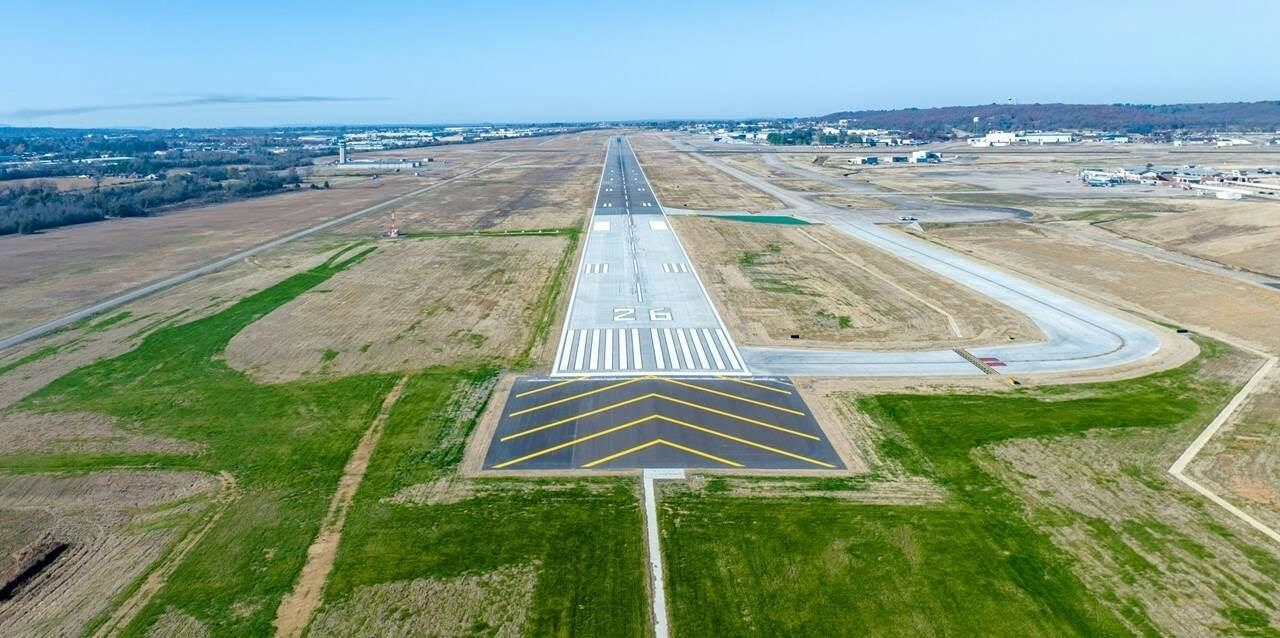
FAA Proposes New Runway Safety Lighting System to Improve Airport Operations
The Federal Aviation Administration (FAA) has announced a new initiative aimed at enhancing runway safety across U.S. airports by seeking innovative lighting solutions. With air traffic steadily increasing within the National Airspace System (NAS), the agency recognizes the urgent need to improve safety measures on runways. The FAA’s latest proposal focuses on deploying cost-effective lighting systems to airports that currently lack Runway Status Lights (RWSL), thereby improving situational awareness for pilots, air traffic controllers, and ground vehicle operators.
Expanding Safety Through Technological Innovation
At present, RWSL systems are installed at only 20 major airports nationwide. These systems, embedded within runway and taxiway pavements, provide real-time visual signals that warn pilots and vehicle operators when it is unsafe to enter, cross, or take off from a runway. By integrating data from surface surveillance technologies, RWSL activates entrance and takeoff hold lights to alert users of potential hazards. Despite their proven effectiveness, the complexity and high cost of installation—often requiring extensive construction and temporary runway closures—have limited their broader adoption.
To overcome these barriers, the FAA has issued a request for information (RFI) to industry leaders, inviting proposals for alternative technologies that can be deployed more rapidly and economically. The objective is to reduce runway incursions—dangerous incidents involving unauthorized aircraft or vehicles on active runways—by enhancing visual safety cues through improved lighting systems.
Addressing Implementation Challenges and Industry Perspectives
The integration of new safety technologies into existing airport infrastructure presents several challenges. Ensuring compatibility with current systems, managing the technical complexity of installation, and securing sufficient funding remain significant obstacles. While some industry stakeholders may initially express skepticism regarding the feasibility and effectiveness of proposed solutions, it is anticipated that support will increase as the safety benefits become evident.
Within the aviation sector, responses may vary. Some competitors might adopt similar technologies to strengthen their own safety protocols, while others could resist regulatory changes that might impact competitive dynamics. Nonetheless, the FAA’s commitment to developing a simpler, more scalable runway status lighting system underscores a broader effort to modernize airport operations and enhance safety.
Part of a Broader Modernization Strategy
This runway lighting initiative forms a key element of the FAA’s comprehensive strategy to improve airport safety and operational efficiency. Alongside this effort, the agency is investing billions of dollars in upgrading the nation’s air traffic control system and implementing additional runway safety enhancements. Collectively, these measures represent a concerted approach to reinforcing the safety and reliability of U.S. aviation infrastructure.
By actively soliciting industry input and prioritizing practical, cost-effective solutions, the FAA aims to extend critical runway safety capabilities to a wider range of airports nationwide. This initiative is designed to protect passengers, flight crews, and airport personnel as the NAS continues to evolve in response to growing air traffic demands.

Adobe Warns AI-Driven Trip Planning Challenges Travel Sites

The Global Parts Shortage
GE Aerospace's Robust Capital Position Fuels Higher Shareholder Returns

AI Advances Support Sustainable Aviation and Efficient Flight Paths

Airbus Faces Freighter Deadline Amid Weak Order Growth and Stagnant Shares

Integrated CNS System for Low-Altitude Aircraft

Chinese Robots Debut in Aviation and Military Roles at WRC 2026

Kenya Airways Aims to Resume Operations of Grounded Fleet by Early 2027

Avora Aviation Completes A320 Sale-Leaseback Agreement with FTAI
StandardAero Expands Bombardier Global MRO Services at Van Nuys Facility
