
Trasforma le intuizioni dell’IA in azioni concrete

Tendenze
Categories
Finnair Chooses Embraer for Narrow-Body Fleet Renewal
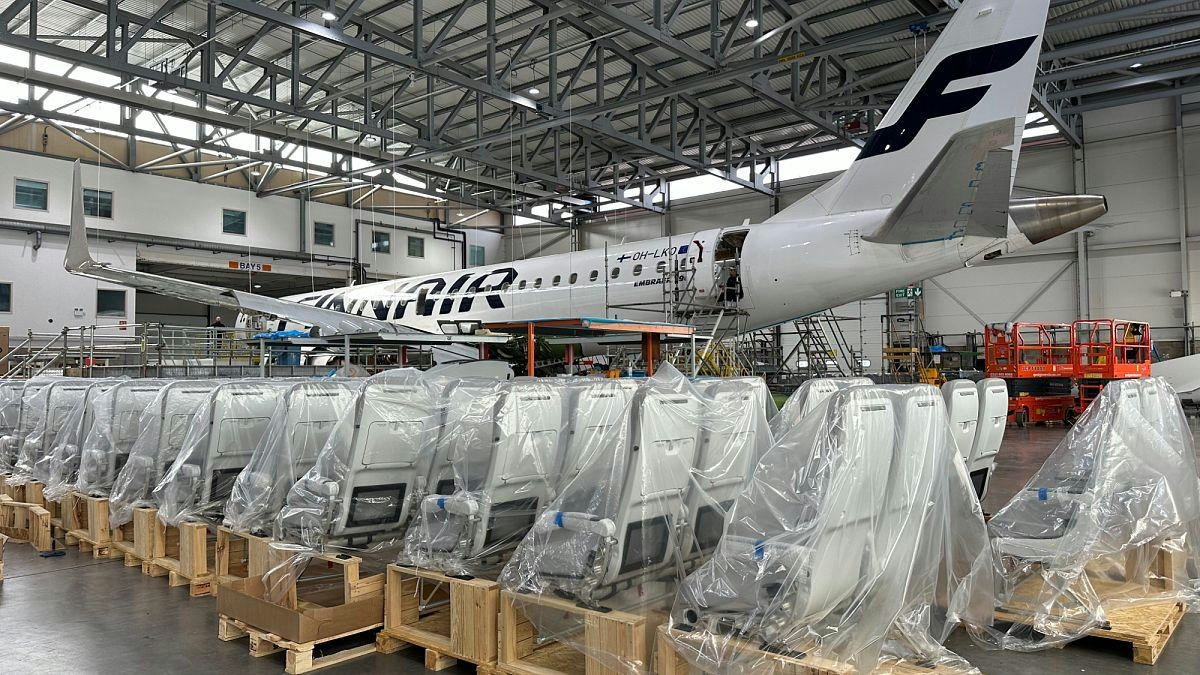
Finnair Selects Embraer for Narrow-Body Fleet Renewal
Strategic Shift in Fleet Modernization
Finnair has taken a decisive step in its fleet renewal strategy by selecting Brazilian manufacturer Embraer for a major order of 18 E195-E2 narrow-body aircraft, marking a departure from its long-standing relationship with Airbus. This agreement represents Finnair’s largest investment in over two decades and underscores the airline’s commitment to modernizing its European operations while advancing its environmental goals.
The contract includes options for an additional 16 aircraft and purchase rights for 12 more. Alongside this, Finnair plans to acquire up to 12 used Airbus A320 or A321 jets from the secondary market. The total investment is projected to reach approximately 2 billion euros ($2.31 billion) by 2029, according to CEO Turkka Kuusisto. He emphasized the E195-E2’s versatility and environmental benefits, noting that the aircraft is among the quietest in its class and can reduce CO2 emissions by 30% per passenger. Kuusisto highlighted that the new jets will enable efficient operations both within Finland and across Europe, aligning with the airline’s operational and climate objectives.
Market Context and Industry Implications
Embraer’s success with the E2 series comes amid a global surge in demand for regional jets, as airlines seek to replace aging fleets delayed by the COVID-19 pandemic. The E2 series notably outsold the Airbus A220 by a three-to-one margin last year, reinforcing Embraer’s growing market presence. Embraer CEO Arjan Meijer expressed optimism about supporting Finnair’s fleet modernization efforts, emphasizing the potential to better match market demand, reduce emissions, and foster growth.
Despite the strategic advantages, Finnair’s pivot from Airbus to Embraer introduces certain risks. Industry analysts caution that Embraer’s complex global supply chain could lead to potential delivery delays or disruptions. Some investors have voiced concerns regarding the shift away from Airbus, questioning the long-term reliability and support associated with Embraer’s aircraft. This decision may prompt competitors to reevaluate their own fleet renewal plans, potentially favoring suppliers with established records of timely deliveries and comprehensive service networks.
The order represents a significant commercial victory for Embraer, enhancing its aircraft backlog and strengthening its reputation in the European market. However, it also places increased pressure on the manufacturer to meet delivery schedules and maintain high service standards amid ongoing supply chain challenges.
Finnair’s Operational Landscape
Majority-owned by the Finnish state, Finnair has navigated considerable challenges in recent years, including the impacts of the COVID-19 pandemic and disruptions caused by airspace closures between Russia and the European Union following Russia’s invasion of Ukraine. The airline’s current narrow-body fleet comprises 29 Airbus A319, A320, and A321 aircraft, with 15 identified as requiring urgent replacement. Its broader fleet of approximately 80 aircraft also includes 26 wide-body Airbus A330s and A350s, 12 ATR 72-500s, and 12 Embraer 190s.
As Finnair embarks on this ambitious renewal program, industry observers will closely monitor the evolving partnership with Embraer, particularly in light of ongoing supply chain uncertainties and shifting market dynamics.

Etihad Airways Suspends Airbus A380 Flights on Key Route

Aditya Birla Group Seeks Approval for Aircraft Leasing in GIFT City

Qatar Airways Highlights Innovation and Connectivity at Arabian Travel Market 2026

Hong Kong's Five-Year Plan Includes Andrew Fan's Aircraft Parts Processing Hub Proposal

ACIA Aero Leasing Delivers ATR72-600 to Air Nostrum

RTX Appoints Jill Albertelli as Head of Pratt & Whitney

TAT Technologies Joins Beyond Aero Hydrogen Aircraft Program

AURAK Study Highlights Barriers to Air Taxi Adoption in Emerging Economies

Xiamen Air Selects Altitude for 787 Maintenance at Heathrow

Etihad and Swissport Extend Global Partnership
