
Trasforma le intuizioni dell’IA in azioni concrete

Tendenze
Categories
Fuel Shortages in Thailand and China Disrupt Flights for Vietnam Airlines and VietJet
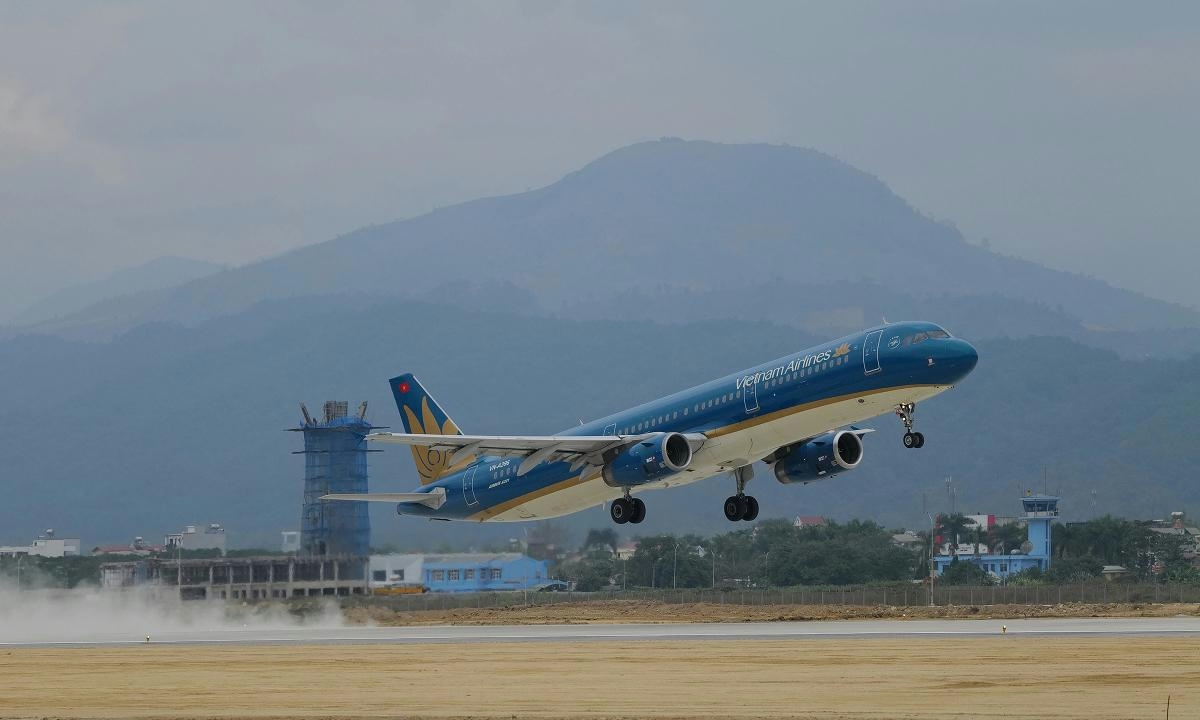
Fuel Shortages in Thailand and China Disrupt Flights for Vietnam Airlines and VietJet
Vietnam’s aviation industry is confronting significant operational challenges as fuel shortages in Thailand and China threaten to disrupt flight schedules for the nation’s leading carriers, Vietnam Airlines and VietJet. Beginning in April 2026, the suspension of jet fuel exports by these two primary suppliers—driven by escalating geopolitical tensions in the Middle East—has precipitated a crisis that could severely impact airline operations.
Operational and Financial Challenges for Airlines
The Civil Aviation Authority of Vietnam (CAAV) has issued urgent advisories to domestic airlines, urging them to prepare for potential flight reductions and to revise operational strategies, particularly on domestic routes most susceptible to fuel supply disruptions. Vietnam Airlines and VietJet, which collectively operate over 400 flights daily with fleets of 93 and 103 aircraft respectively, are expected to bear the brunt of the shortage. The scarcity of jet fuel is anticipated to elevate operational costs substantially, prompting both carriers to consider fare increases and the implementation of additional fuel surcharges in response to rising oil prices.
Smaller airlines, which operate with narrower profit margins, face even greater risks of severe schedule disruptions or cancellations. In response to the anticipated grounding of aircraft, airport authorities have been instructed to expand parking capacities to accommodate the increased number of planes unable to operate.
Limited Domestic Alternatives Amid Global Supply Chain Pressures
Vietnam relies on imports for more than 60% of its jet fuel, primarily sourced from China and Thailand. Domestic refineries are unable to offset the shortfall, as their production focuses predominantly on gasoline and diesel rather than jet fuel. The CAAV has encouraged airlines to explore alternative suppliers in countries such as South Korea, Japan, Brunei, and India. However, securing new supply contracts amid the current volatile market conditions has proven challenging.
The repercussions of these supply constraints extend beyond Vietnam, affecting the global aviation sector. Airlines worldwide are adjusting routes to circumvent affected regions, while ongoing conflicts in the Middle East continue to drive oil prices upward, complicating efforts to stabilize airline operations and fare structures.
Passenger Impact and Market Implications
Passengers traveling to and from Vietnam should anticipate increased volatility in flight availability, especially on domestic routes. The unreliability of fuel supplies is heightening the risk of cancellations and delays. Market responses have already included fare hikes and the introduction of fuel surcharges, placing additional financial burdens on travelers.
This situation highlights the vulnerability of Vietnam’s aviation sector to disruptions in global supply chains and geopolitical instability. Without prompt resolution or the identification of new fuel sources, the industry faces a period of uncertainty that may have lasting effects on connectivity, pricing, and the broader travel market across Southeast Asia.
How AI Could Transform Bird-Strike Prevention for Business Aviation
American Airlines and Boeing Complete First 737 MAX Landing Gear Swap
Vietjet and Thales sign major MRO and AI deals in Paris
Etihad CEO Cites Aircraft Capacity as Limiting Factor Amid Growth in China and Africa

Artificial Intelligence Enters the Cockpit

How Southwest Airlines is using technology, data and AI to strengthen CX while keeping the human touch
Red Sea Airlines to Lease Two Boeing 737 MAX 8 Aircraft

Su-30 and Su-34 Fighter Jets' Engines Contribute to Urban Heat
Airlines Urge Increased Competition in Used Jet Engine Parts Market
Future Developments Planned for NWF Beaches Airport
