Immagine

Trasforma le intuizioni dell’IA in azioni concrete

Unisciti oggi alla lista d’attesa di AeroGenie!

Tendenze

Categories

Loke Unveils Plan for Air Taxis and Drone Services by 2030
June 24, 2026By ePlane AI
Loke Unveils Plan for Air Taxis and Drone Services by 2030
0
0
Air Taxis
Drone Services
Low-Altitude Economy

Malaysia Unveils Ambitious Plan for Air Taxis and Drone Services by 2030

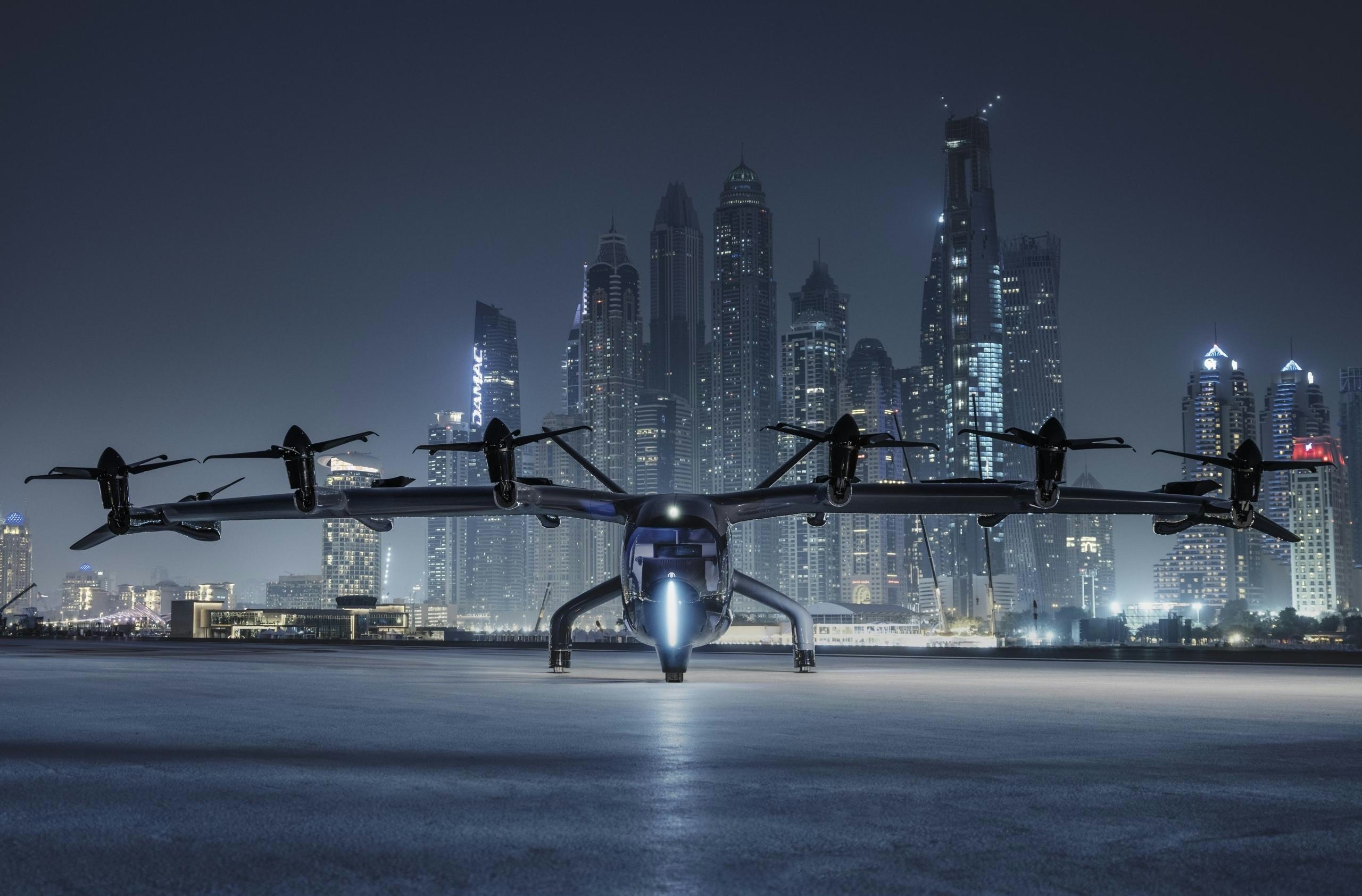
PUTRAJAYA — Malaysia has announced a comprehensive roadmap to introduce air taxis and drone services by 2030, aiming to establish itself as a regional leader in the emerging low-altitude economy. Transport Minister Loke Siew Fook revealed the Low-Altitude Economy (LAE) initiative, which seeks to integrate autonomous aircraft into Malaysian airspace while promoting industry growth and innovation.

Regulatory Framework and Industry Development

The Civil Aviation Authority of Malaysia (CAAM) will lead the initiative, tasked with creating a robust regulatory framework to ensure the safe integration of drones and air taxis. At the launch event in Putrajaya, Loke emphasized that this framework will underpin safe airspace management, operational oversight, and the development of future mobility solutions. The roadmap envisions the introduction of limited commercial freight drone services as early as the first quarter of 2027. However, passenger drones and air taxi services will undergo further studies and rigorous testing before regulatory approval is granted.

Minister Loke also highlighted the importance of developing Malaysia’s own maintenance, repair, and overhaul capabilities, alongside establishing manufacturing standards to support the nascent sector. This approach aims to build a sustainable ecosystem that can compete with traditional aviation industries, which currently dominate the market.

Scope and International Interest

The LAE initiative covers economic activities conducted at altitudes of 1,000 meters and below, including cargo delivery, infrastructure inspection, emergency response, and advanced air mobility services. CAAM CEO Norazman Mahmud noted growing interest from several Chinese companies in Malaysia’s low-altitude sector. However, foreign operators will be required to form joint ventures with local firms before commencing operations, ensuring domestic participation and control.

Malaysia’s move aligns with a global race to commercialize air taxi and drone services, where major international players such as Joby, Archer, and Vertical are competing for early market dominance. Despite this momentum, the sector faces significant challenges, including ongoing legal disputes between leading companies. Recent court rulings dismissing claims and counterclaims between Archer and Joby have threatened to delay certification processes and undermine investor confidence.

Market Challenges and Competitive Landscape

Investor sentiment has cooled amid these uncertainties, with shares of major air taxi manufacturers declining in recent months. Archer, for instance, has experienced a 9% drop in stock value this year and lost over a third of its value over the past 12 months, reflecting skepticism about the sector’s near-term prospects.

Meanwhile, competitors are accelerating efforts to launch commercial services. Joby and Archer are targeting launches within the current year, while Beta Technologies is pursuing a longer-term timeline. This competitive pressure underscores the urgency for regulatory clarity and technological readiness as countries like Malaysia seek to establish a foothold in the future of urban air mobility.

As Malaysia embarks on its LAE roadmap, the government’s priority remains the creation of a strong regulatory environment and the cultivation of local industry capabilities. These efforts aim to ensure the safe and sustainable integration of air taxis and drones into the nation’s airspace, positioning Malaysia at the forefront of the evolving low-altitude economy.

More news
Nomad Technics Completes BBJ Upgrade

Nomad Technics Completes BBJ Upgrade

Nomad Technics Completes Major BBJ Upgrade for Action Aviation Nomad Technics has successfully completed an extensive maintenance and upgrade program on a Boeing Business Jet (BBJ) for Action Aviation. The aircraft was brought to Nomad Technics’ Basel facility for a comprehensive 12-year inspection and a landing gear overhaul. Seizing the opportunity presented by the aircraft’s downtime, Action Aviation commissioned a series of significant enhancements to both the aircraft’s systems and interior. Advanced Connectivity and Interior Refurbishment One of the most notable technical upgrades was the installation of the Gogo Galileo FDX satcom system, marking one of the first such implementations on a BBJ worldwide. This enhancement significantly improves the aircraft’s connectivity capabilities, meeting the growing demand for reliable in-flight communication. The cabin also underwent a full refurbishment, with Aero Visto re-upholstering all seats and divans in a bespoke design, complemented by new carpeting supplied by Simrick to refresh the cabin’s aesthetic. The in-flight entertainment system received a comprehensive modernization. Larger, higher-resolution monitors replaced the previous screens, and a custom app-based video-on-demand streaming system was introduced to align with the client’s specific requirements. Additionally, the cabin lighting was upgraded to multi-colour LED mood lights, controllable via an app, while a new app-based moving map system was installed for display on both cabin monitors and personal devices, enhancing passenger experience and convenience. Collaborative Project Execution and Industry Implications Brigita Vildžiūnienė, Director of Sales at Nomad Technics, emphasized the collaborative nature of the project, noting that the client’s involvement from the quotation phase through to completion fostered trust and efficiency. She remarked, “The project was interesting and challenging to put together, but I think that’s something that made us win because the client saw how quickly and efficiently we can do things. Our responsiveness, honesty and transparency built trust with the customer and we carried that on throughout the project.” Thomas Gierlich, CEO of Nomad Technics, expressed gratitude towards Action Aviation and the company’s partners for entrusting them with such a large-scale project, describing the experience as “wonderful.” While the successful completion of this BBJ upgrade highlights Nomad Technics’ technical expertise and commitment to quality, it also underscores ongoing challenges. Maintaining high standards while managing production costs remains critical, particularly as customer expectations for business jet upgrades continue to rise. Positive market reception will depend on the delivery of promised enhancements, with any shortcomings potentially affecting customer satisfaction and the company’s reputation. The competitive landscape is evolving as rival maintenance providers may introduce similar upgrades to remain competitive, potentially intensifying competition and exerting price pressures within the business jet market. This environment necessitates a careful balance of innovation, quality, and cost-effectiveness for Nomad Technics moving forward. Nomad Technics AG, the maintenance division of Nomad Aviation AG based at EuroAirport in Basel, Switzerland, is an EASA Part-145 approved organization. The company specializes in maintenance, inspection, and non-routine repair work on Bombardier Global and Challenger business jets, as well as line and base maintenance for the Airbus A320 family (neo and ceo) and Boeing 737NG and MAX series aircraft.
Delta State Expands College of Business and Aviation, Business Program to Emphasize AI

Delta State Expands College of Business and Aviation, Business Program to Emphasize AI

Delta State University Restructures Academic Programs to Enhance Focus and Emphasize Artificial Intelligence The Mississippi Institutions of Higher Learning (IHL) Board of Trustees has approved a significant restructuring at Delta State University, authorizing the division of its College of Business and Aviation into two separate academic entities. This strategic decision is intended to provide more focused leadership and specialized oversight for each discipline, aligning with the university’s objective to better prepare students for the evolving demands of the modern workforce. Dedicated Leadership for Business and Aviation Delta State President Dr. Daniel J. Ennis emphasized the importance of this development, noting that the growth and success of both the aviation and business programs necessitated a clearer organizational structure. By establishing distinct colleges, the university aims to foster intentional planning and strategic leadership tailored to the unique needs of each field. This approach is expected to enhance academic quality and support the institution’s broader mission of student success. The decision follows extensive internal deliberations over the past two years, particularly in response to rising demand for pilots and rapid technological advancements within the aviation sector. Dr. Leslie Griffin, Provost and Vice President for Academic Affairs, highlighted that the separation will enable each college to capitalize on its strengths, pursue innovative initiatives, and better serve students, industry partners, and the wider community reliant on their graduates. Integrating Artificial Intelligence into Business Education A key component of the newly independent College of Business’s expansion is the integration of artificial intelligence (AI) into its curriculum. This initiative reflects a strategic response to workforce needs in Mississippi and the increasing demand for AI expertise across various industries. The university acknowledges the challenges inherent in this transition, including the necessity to update academic programs and provide faculty with adequate training to keep pace with rapid technological change. While some recent graduates have voiced concerns about AI’s potential impact on employment opportunities, current market trends suggest that proficiency in AI is becoming a highly sought-after skill among employers. The program’s new focus is anticipated to attract a growing number of students eager to develop competencies in this area. Concurrently, competing institutions may intensify their efforts to enhance AI-related offerings, further elevating the importance of such skills in higher education. Leadership and Future Prospects Each of the newly formed colleges will be led by its own dean, ensuring dedicated guidance and support for faculty and students. Dr. Joe Childs, appointed Dean of the College of Aviation, remarked that the establishment of a standalone college acknowledges the significant momentum of Delta State’s aviation programs. He emphasized that this move positions the university to continue addressing the needs of a rapidly evolving industry while building upon the strong foundation laid by previous academic leaders. Through these structural changes, Delta State University seeks to reinforce its standing as a leader in both business and aviation education, equipping students with the specialized skills required to thrive in dynamic, technology-driven fields.
Five McDonnell Douglas Aircraft That Shaped Commercial Aviation

Five McDonnell Douglas Aircraft That Shaped Commercial Aviation

Five McDonnell Douglas Aircraft That Shaped Commercial Aviation The Douglas Aircraft Company was a dominant force in commercial aviation both before and after World War II, celebrated for its iconic DC-3 and a succession of successful airliners including the DC-4, DC-6, and DC-7. The company’s transition into the Jet Age was marked by the introduction of the DC-8, a capable jetliner that, despite being outsold by the Boeing 707, played a crucial role in establishing jet travel as the standard for air transportation. Following the DC-8, the DC-9 emerged as a reliable short-range aircraft, though the financial pressures from both the DC-8 and DC-9 programs placed significant strain on Douglas’s resources. In parallel, McDonnell Aircraft, primarily a military contractor, faced challenges due to the cyclical nature of defense spending and lacked a substantial presence in the civilian market. The 1967 merger of the two companies formed McDonnell Douglas, which rapidly became the world’s second-largest commercial aircraft manufacturer and a major military supplier. While McDonnell Douglas is often best remembered for military aircraft such as the C-17 Globemaster III and the F-15 Eagle, its commercial jets left an enduring legacy prior to the company’s eventual merger with Boeing in 1997. DC-8: Pioneering the Jet Age The DC-8 was Douglas’s first jet-powered airliner and, alongside the Boeing 707, was instrumental in ushering in the era of jet travel. Initially, the DC-8 trailed the 707 in market share due to fewer fuselage options, but the introduction of the Super 60 series—with extended range and new fuselage lengths—significantly enhanced its appeal. Although production ceased in 1972, the DC-8’s operational life was extended well beyond that point. In the late 1970s, airlines sought more fuel-efficient and quieter engines to comply with emerging noise and emissions regulations. This demand led to the re-engining of over 100 DC-8s with the CFM56 high-bypass turbofan, creating the ‘Super 70’ series. This upgrade not only prolonged the DC-8’s service but also helped establish the CFM56 as the most successful commercial jet engine in aviation history. MD-80: Challenging the 727’s Dominance During the 1960s and 1970s, the Boeing 727 dominated short- to medium-range routes, with the DC-9 and early Boeing 737 models serving as alternatives. The MD-80, an evolution of the DC-9, emerged as a formidable competitor by offering improved efficiency and greater passenger capacity. Its success marked a significant shift in the market, laying the groundwork for the modern single-aisle jets that now dominate commercial aviation worldwide. Navigating Modern Challenges The legacy of McDonnell Douglas’s aircraft is now considered within the context of a rapidly evolving industry. Intense competition from emerging markets, particularly in China and the United States, is driving the development of next-generation aircraft powered by zero-emission and hybrid technologies. European initiatives aimed at decarbonizing aviation, supported by legislative frameworks encouraging innovation, are accelerating the transition toward sustainable solutions. Meanwhile, competitors such as Embraer are increasing production and adapting to supply chain challenges, and new entrants are focusing on electric regional aircraft. Notably, MD Aircraft’s battery-swapping design represents a potential breakthrough that could redefine regional aviation. As the commercial aviation industry continues to evolve, the pioneering spirit embodied by McDonnell Douglas’s aircraft remains influential, underscoring the enduring importance of innovation and adaptability in shaping the future of air travel.
Nikita Ermoshkin: Putting the Pilot at the Center of Aviation Innovation

Nikita Ermoshkin: Putting the Pilot at the Center of Aviation Innovation

Nikita Ermoshkin: Putting the Pilot at the Center of Aviation Innovation As the aviation industry rapidly advances toward automation, the prospect of fully autonomous, crewless flights often dominates discussions. However, Nikita Ermoshkin, founder and CEO of Airhart Aeronautics, presents a compelling alternative vision. He contends that genuine innovation must preserve the human pilot as the central figure within the cockpit, integrating technology to enhance rather than replace human judgment. Redefining the Role of the Pilot Ermoshkin emphasizes that while automation and autonomous safety systems will inevitably become integral to aviation, the pilot’s role should remain paramount. Drawing from his own experience as a student pilot and his engineering background at SpaceX, he found traditional general aviation aircraft overly complex and mentally demanding. Legacy light aircraft require continuous mechanical multitasking, which often detracts from a pilot’s ability to focus on critical safety decisions. Airhart Aeronautics addresses this challenge by automating routine aerodynamic adjustments, thereby allowing pilots to concentrate on situational awareness, weather navigation, and communication with air traffic control. In this model, software manages micro-level controls while the pilot retains ultimate authority over the flight. Broad Appeal Among Pilots Airhart’s pilot-centric system has garnered positive responses from both novice and experienced aviators during prototype and simulator testing. For beginners, the simplified cockpit environment reduces anxiety and cognitive load, potentially making flight training more accessible and helping to lower the industry’s high dropout rates. Ermoshkin notes that users consistently describe the system as less intimidating and remarkably low-stress. Veteran pilots, who often approach automation with skepticism, have also welcomed the technology. Rather than diminishing traditional skills, Airhart’s fly-by-wire automation alleviates fatigue and mental strain during extended flights. The platform’s advanced, data-driven flight analysis tools serve as a digital coach, enabling seasoned pilots to review and refine their performance after each journey. Industry Challenges and Emerging Opportunities Despite encouraging early feedback, Ermoshkin acknowledges the significant obstacles that lie ahead. The aviation sector’s entrenched regulatory environment and established industry practices pose formidable barriers for new technologies. Successfully integrating Airhart’s innovations with existing systems and securing widespread pilot acceptance will require careful navigation of regulatory frameworks and industry conventions. Market reactions have been mixed. While some traditional pilots and airlines remain skeptical, others recognize the potential for AI-driven systems to improve safety and operational efficiency. Competitors are responding by exploring similar technologies or devising strategies to maintain their market share. Recent developments, including advances in AI-powered pilot assistance and the Federal Aviation Administration’s support for workforce development grants, indicate a broader industry shift toward innovation and inclusivity. Within this evolving landscape, Ermoshkin’s vision of centering the pilot within a technologically advanced ecosystem may serve as a bridge between aviation’s traditional foundations and its future transformation. By prioritizing both human capability and technological progress, Airhart Aeronautics aspires not only to develop a new aircraft but to fundamentally reshape the flight experience for the next generation.
Boeing’s 777X Completes Flight Tests but Service Entry Delayed Until 2027

Boeing’s 777X Completes Flight Tests but Service Entry Delayed Until 2027

Boeing’s 777X Completes Flight Tests Amid Service Entry Delay Boeing’s 777X program has achieved a major milestone with the completion of its primary flight test campaign, marking significant progress after years of anticipation and multiple delays. However, the aircraft’s entry into commercial service has been postponed until 2027, primarily due to the extended timeline required for the Extended-range Twin-engine Operational Performance Standards (ETOPS) certification. Development and Certification Challenges Introduced in 2013 as the successor to the highly successful 777-300ER, the 777X was originally scheduled to enter service in 2020. Since then, the timeline has been repeatedly pushed back, with the latest delay attributed not to general testing setbacks but to the stringent regulatory demands of ETOPS certification. This certification is critical for twin-engine aircraft like the 777-9, as it governs the maximum distance the plane can operate from a diversion airport—a vital consideration for the ultra-long-haul routes that define the aircraft’s commercial appeal. Boeing CEO Kelly Ortberg recently confirmed that while the main flight test program is expected to conclude by the end of 2026, ETOPS testing will continue into 2027, becoming the decisive factor in the final certification process. FAA Administrator Bryan Bedford has indicated that the 777X certification will follow the approval of the 737 MAX 7 and MAX 10 models, further extending the timeline into next year. The FAA has authorized Boeing to commence the final significant certification phase for the 777-9, focusing on critical systems such as avionics. ETOPS certification is among the most rigorous in the aviation industry. Regulators must thoroughly assess not only the reliability of the aircraft and its engines but also the resilience of its systems, maintenance protocols, and operational procedures. For airlines, obtaining ETOPS approval is essential; without it, the 777-9 cannot be deployed on many of the long-haul and transoceanic routes for which it was designed. As Ortberg emphasized, ETOPS represents the final major hurdle before full certification can be granted. Industry Response and Outlook Despite the delays, airlines remain cautiously optimistic about the 777X’s future. Emirates, the largest customer for the aircraft, has expressed hope of receiving its first 777X by June next year, though it acknowledges that this timeline is contingent on the pace of ETOPS certification. Emirates has also raised concerns regarding the Rolls-Royce engine powering the competing Airbus A350-1000, highlighting the competitive stakes for both manufacturers. Meanwhile, All Nippon Airways (ANA) anticipates receiving its first 777-9s in 2027 and has developed contingency plans in case of further postponements. The 777X has already accumulated thousands of test hours and cleared significant certification milestones. However, until ETOPS approval is secured, its operational deployment remains limited. Delivering the aircraft without ETOPS certification would restrict airlines from utilizing it on their most critical long-haul networks, thereby diminishing its immediate commercial value. As Boeing advances through the final stages of certification, industry attention remains focused on the outcome of ETOPS testing. This process will ultimately determine when the world’s newest large twin-engine jet can commence operations on its intended ultra-long-haul routes.
Amadeus Addresses Challenges of AI’s Endless Search

Amadeus Addresses Challenges of AI’s Endless Search

Amadeus Addresses Challenges of AI’s Endless Search The Rise of AI in Travel Technology Decius Valmorbida, president of travel at Amadeus, is scheduled to speak at the upcoming Skift Global Forum in New York City from September 22 to 24, 2026, where the convergence of artificial intelligence and travel technology will be a central theme. As AI agents become increasingly integrated into the travel sector, they reveal a fundamental tension between systems originally designed for human users and the exhaustive, unrelenting nature of machine-driven search processes. Unlike human travelers, AI agents do not experience fatigue. When tasked with searching for fares on airline websites, these agents can generate and analyze an immense number of combinations without pause. A recent example highlighted by Skift involved a coding agent querying Etihad Airways’ site, which returned over 880,000 fare options for a single trip. This phenomenon, often described as the “infinite search” problem, is placing significant strain on legacy travel systems and compelling industry leaders to reconsider their technological frameworks. Amadeus’ Response to the Infinite Search Problem Valmorbida emphasized that managing large-scale operations is a core strength of Amadeus. The company’s infrastructure currently supports approximately 150,000 transactions per second, yet the surge in AI-driven search activity is testing even these robust capabilities. To mitigate this challenge, Amadeus is moving away from responding to every AI-generated query in real time. Instead, the company is adopting a strategy of precomputing a broad set of likely answers, which can then be served to AI agents as needed. This approach aims to enhance both efficiency and scalability, allowing systems to meet the demands of automated agents without becoming overwhelmed. Industry Implications and Competitive Dynamics Amadeus’ ambition to establish itself as a foundational distribution layer for the travel industry has attracted considerable attention. Its efforts to accelerate the adoption of agent-driven automation across booking, customer service, and operational workflows have drawn scrutiny from competitors and regulators alike. Rival company Sabre, in particular, has expressed concerns regarding Amadeus’ expanding influence and the competitive pressures this exerts within the market. Despite these challenges, Amadeus remains steadfast in its commitment to lead the industry through this technological transformation. By reengineering its systems to accommodate the unique demands posed by AI, the company seeks to balance innovation with operational stability, ensuring that both human travelers and their digital agents can effectively navigate the complexities of modern travel.
US Air Force Receives Interim VC-25B Air Force One

US Air Force Receives Interim VC-25B Air Force One

US Air Force Receives Interim VC-25B Air Force One The United States Air Force has officially taken delivery of the VC-25B Bridge aircraft, a Boeing 747-8(BBJ) generously donated by the Qatari government. This aircraft will serve as the interim Air Force One while the next generation of presidential aircraft is under development. The VC-25B Bridge arrived on June 19 at Joint Base Andrews, Maryland, just ahead of the nation’s 250th anniversary celebrations. Refurbishment and Modifications The aircraft, bearing manufacturer serial number 37075, underwent extensive refurbishment by L3Harris Technologies. It now sports a new red, white, and blue livery and has been outfitted with final government modifications to meet the rigorous standards required for presidential transport. Commissioning flights have commenced at Joint Base Andrews as the aircraft prepares for operational deployment. Context and Future Plans This delivery addresses delays in the refurbishment of two new Boeing 747-8s intended to replace the aging VC-25A aircraft currently in service. The new VC-25Bs are not expected to enter service until 2028. The interim solution was partly driven by former President Donald Trump’s dissatisfaction with Boeing’s timeline for the new aircraft. Consequently, the acceptance of Qatar’s donation in July 2025 was formally approved by the Trump administration the following month. Secretary of the Air Force Troy Meink underscored the urgency and precision of the project, stating, “From the beginning, we meticulously evaluated every requirement to accelerate delivery while maintaining the high standards expected of the presidential mission. This effort proves that the US Air Force can move fast without sacrificing quality, security, or reliability.” Ensuring Presidential Readiness The Qatari-donated aircraft has been transformed into a secure and luxurious flying White House, ensuring continuity for the commander in chief during this transitional period. President Trump highlighted the aircraft’s upgraded features during its unveiling, emphasizing its critical role in maintaining presidential readiness. With the VC-25B Bridge now operational, the Air Force guarantees uninterrupted, secure air transport for the president until the arrival of the next-generation Air Force One fleet.
EASA Orders Urgent Wing-Spar Crack Inspections on Airbus A380 Fleet

EASA Orders Urgent Wing-Spar Crack Inspections on Airbus A380 Fleet

EASA Mandates Immediate Wing-Spar Crack Inspections on Airbus A380 Fleet The European Union Aviation Safety Agency (EASA) has issued an urgent airworthiness directive requiring comprehensive inspections of the Airbus A380 fleet following the discovery of cracks in a critical wing component. This directive affects 16 aircraft currently in operation worldwide and places particular emphasis on Emirates, the largest operator of the superjumbo. Discovery of Cracks in a Critical Wing Structure The cracks were identified during routine maintenance checks in the wing spar, a principal structural beam that extends along the wing and bears significant aerodynamic loads during flight. EASA has indicated that the affected area lies within the outer wing section, a region subjected to considerable stress. Although the agency has not revealed the precise number of aircraft with confirmed cracks, the broad scope of the directive suggests a precautionary approach aimed at preventing a wider structural issue across the global fleet. This directive follows a series of inspections conducted over the past two years, which uncovered cracks in both the rear and front spars of certain A380s. The urgency of the current mandate underscores the potential risk to the aircraft’s structural integrity if such damage remains undetected, compelling EASA to demand immediate inspections before further flights are permitted. Operational Implications and Industry Challenges The directive targets specific A380 airframes based on flight cycles and configuration, impacting major operators including Emirates, Singapore Airlines, British Airways, Qantas, Lufthansa, Qatar Airways, Korean Air, Etihad Airways, ANA, and Asiana Airlines. Emirates, which operates more than half of the active A380 fleet, faces significant operational challenges as the inspections may result in flight cancellations or the need to substitute aircraft in the short term. Airlines are required to complete the inspections within a stringent timeframe established by EASA. Aircraft found to have cracks must undergo repairs before returning to service, while those passing the inspections may continue operating under standard maintenance protocols. The aviation maintenance sector is already contending with labor and material shortages, escalating costs, and geopolitical uncertainties, all of which could complicate timely repairs and further disrupt airline operations. Inspection and Repair Procedures Technicians will employ non-destructive testing methods such as ultrasonic scanning and eddy-current testing to examine the wing spar without dismantling major structures. These advanced techniques can detect cracks invisible to the naked eye and typically require several hours per aircraft. Airlines with large A380 fleets are expected to stagger inspections to mitigate operational disruptions, though some delays are anticipated. If cracks are detected, repairs may range from reinforcement patches to more extensive structural interventions, potentially grounding affected aircraft for prolonged periods. The directive has also prompted increased scrutiny of Airbus’s maintenance protocols and speculation about similar issues in competitor fleets, which could lead to further regulatory measures. Historical Context and Ongoing Concerns The A380 has previously encountered wing-related structural issues. In 2012, EASA mandated inspections after cracks were found in wing rib feet and brackets. The current directive renews attention on the long-term durability of the world’s largest passenger aircraft, which entered service in 2007 and saw its final delivery in 2021 following the end of its production. As the aviation industry responds to this directive, it highlights the complexities involved in maintaining aging widebody fleets and underscores the persistent challenges confronting global aviation maintenance.
China Joins Global Leaders at AirExpo Shanghai to Advance Aviation Innovation

China Joins Global Leaders at AirExpo Shanghai to Advance Aviation Innovation

China Joins Global Leaders at AirExpo Shanghai to Advance Aviation Innovation China has solidified its position alongside established aviation powerhouses such as the United States, Germany, France, the United Kingdom, and Japan by participating prominently in AirExpo Shanghai. This event has rapidly become a pivotal gathering for global aerospace leaders to present cutting-edge advancements in aerospace technology, smart airport solutions, and aircraft innovation. With expectations of attracting over 100,000 visitors and more than 500 exhibitors from over 100 countries and regions, AirExpo Shanghai is emerging as a strategic hub for manufacturers, airlines, airports, and technology providers worldwide. Shanghai as a Gateway for Aerospace Cooperation As the aviation industry undergoes recovery and modernization, Shanghai is positioning itself as a critical gateway for international aerospace collaboration, investment, and forward-looking partnerships. AirExpo Shanghai is now recognized as one of China’s largest aerospace trade exhibitions, offering a platform for airlines, airports, aircraft manufacturers, suppliers, and technology innovators to accelerate global cooperation. The event reflects China’s growing influence in the aerospace sector, underscoring its ambition to play a central role in shaping the industry’s future over the next decade. The exhibition draws a diverse international contingent, with participants from the United States, Germany, France, the United Kingdom, Japan, South Korea, Singapore, Italy, Canada, and Australia. This broad representation highlights the event’s significance as a global marketplace for aviation stakeholders. However, China’s expanding presence also introduces challenges, particularly in navigating competition with established players from the United States and Europe. While some investors and industry participants view China’s involvement as a positive step toward enhanced global collaboration, others approach it with caution, mindful of the competitive dynamics at play. Industry Participation and Emerging Trends China’s role at AirExpo Shanghai is attracting close scrutiny regarding adherence to international aviation standards and regulations, as global competitors and regulatory bodies monitor its integration into the wider aviation ecosystem. Several leading Chinese aviation organizations are expected to maintain a strong presence, including COMAC, AVIC, China Eastern Airlines, Spring Airlines, Harbin Aircraft Industry Group, and China National Aviation Fuel Group. Alongside these domestic entities, international brands and technology providers will engage directly with buyers, government agencies, and aviation professionals. Exhibitors at the event represent a broad spectrum of sectors, ranging from aerospace materials and digital systems to drone technology, aerospace communications, and smart equipment solutions. This diversity illustrates the increasing interconnection of aviation with artificial intelligence, automation, and sustainability initiatives. While commercial aviation remains a dominant sector at AirExpo Shanghai, the event’s integrated approach—encompassing aerospace manufacturing, airport infrastructure, airline operations, and emerging technologies—positions it as a comprehensive international marketplace. This platform enables businesses to address current industry challenges and explore future opportunities, reflecting both China’s ambition to deepen international industrial cooperation and the global aviation sector’s pursuit of resilient supply chains and innovation.
FAA Selects Air Space Intelligence for AI-Based Traffic Control Tool

FAA Selects Air Space Intelligence for AI-Based Traffic Control Tool

FAA Selects Air Space Intelligence for AI-Based Traffic Control Tool The Federal Aviation Administration (FAA) has awarded a significant contract to Air Space Intelligence Inc. (ASI), a Boston-based startup, to implement artificial intelligence technologies aimed at revolutionizing flight traffic management. This contract represents a key milestone in the FAA’s multibillion-dollar initiative to modernize the United States airspace system. ASI was selected over larger competitors, including Palantir Technologies Inc. and Thales SA, in a competitive process announced jointly by the FAA and the Department of Transportation on June 22. AI Tools to Enhance Air Traffic Management Under the contract, ASI will deliver two integrated AI systems designed to optimize airspace operations. The first system processes a variety of data inputs—such as airline schedules, real-time aircraft positions, and weather conditions—to generate optimal flight trajectories. The second system focuses on identifying congestion and potential conflicts within the airspace, providing air traffic controllers with actionable insights. This includes predicting possible flight convergences and recommending route adjustments to mitigate delays and improve traffic flow. The U.S. government anticipates that these technologies will significantly reduce delays, enhance airspace capacity, and streamline overall traffic management. Transportation Secretary Sean Duffy emphasized the transformative potential of the initiative, stating, “Once implemented, we will fundamentally reshape how the airspace is managed—slashing thousands of delays and cancellations in the process.” The contract is valued at $875 million, with deployment scheduled to begin this fall and full implementation targeted by the end of 2028. The FAA is collaborating closely with airlines to integrate the new system into daily operations in a phased approach. Broader Modernization Efforts and Industry Implications The FAA’s adoption of AI-driven traffic control tools forms part of a wider strategy to modernize airspace management and scheduling by leveraging machine learning to address persistent inefficiencies. Congress has allocated $12.5 billion to upgrade the nation’s aging air traffic control infrastructure and reduce technology outages, though officials acknowledge that further funding will be necessary to complete these efforts. Despite the promise of AI integration, the FAA faces challenges in ensuring compatibility with existing legacy systems, maintaining regulatory compliance, and managing potential resistance from traditional air traffic control providers. Industry analysts predict that this move will intensify competition among AI solution providers. Companies such as Indra Group and Collins Aerospace may respond by enhancing their AI capabilities or expanding drone integration platforms to sustain their market positions. ASI CEO Phillip Buckendorf highlighted the commercial readiness of the technology, noting, “The FAA is embracing commercially proven technology already helping everyone from major airlines to the broader aviation community operate more efficiently and predictably.” ASI’s Position and Future Outlook Air Space Intelligence’s client portfolio includes prominent organizations such as the U.S. Department of Defense and Alaska Air Group Inc. The company’s early investors comprise notable venture capital firms including Andreessen Horowitz, Renegade Partners, and Bloomberg Beta, the investment arm of Bloomberg LP. As the FAA advances its modernization agenda, the integration of AI and machine learning is expected to drive significant changes across the aviation industry. This initiative has the potential to reshape airspace management practices and establish new benchmarks for efficiency and safety within U.S. aviation.
line