Immagine

AeroGenie — Il tuo copilota intelligente.

Chiedi qualsiasi cosa. Analizza tutto. Agisci immediatamente.

Tendenze

Categories

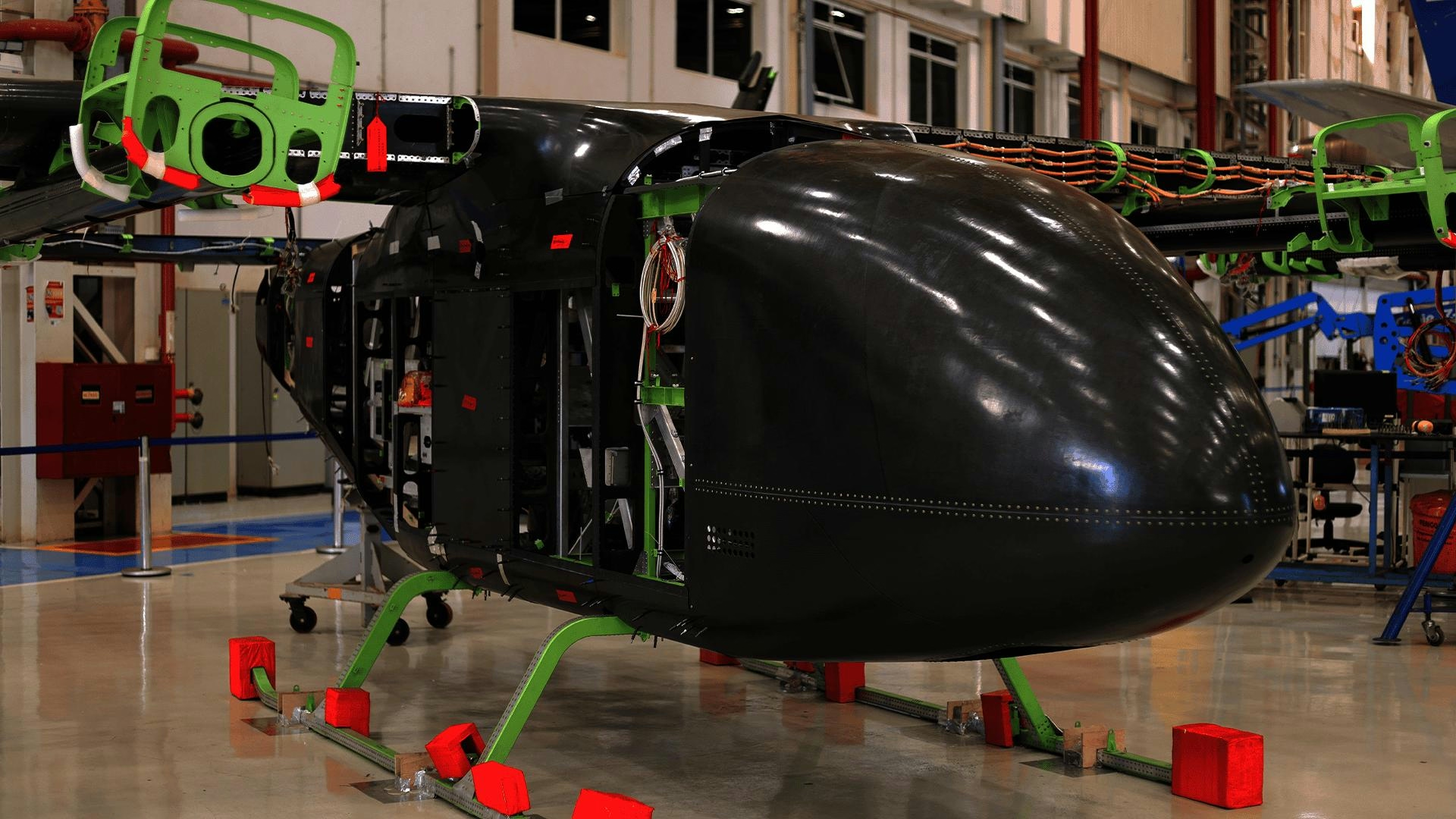
Pentagon Contracts and Emerging Markets Could Support eVTOL Stock Growth
January 29, 2026By ePlane AI
Pentagon Contracts and Emerging Markets Could Support eVTOL Stock Growth
0
0
Archer Aviation
eVTOL Market
Pentagon Contracts

Pentagon Contracts and Emerging Markets Could Support eVTOL Stock Growth

Archer Aviation (NYSE: ACHR) is solidifying its position within the electric vertical takeoff and landing (eVTOL) industry through strategic expansions in East Asia and promising prospects for U.S. defense contracts. These developments, combined with its growing presence in Southern California, underscore the company’s potential for sustained long-term revenue, making ACHR stock an appealing consideration for investors focused on the evolving urban air mobility sector.

Expanding Presence in Asia

During Archer’s third-quarter earnings call, CEO Adam Goldstein emphasized the company’s significant partnerships in Asia, which are central to its growth strategy. Korean Air, South Korea’s largest airline, has designated Archer as its exclusive air taxi partner. Simultaneously, a consortium led by Archer and Japan Airlines was selected to provide air-taxi services in Tokyo. These collaborations with prominent carriers are expected to facilitate the development of essential infrastructure and marketing efforts in both countries.

The urban centers of Seoul and Tokyo, notorious for their severe traffic congestion, represent substantial demand for innovative air taxi solutions. Archer’s established foothold in these markets could serve as a springboard for further expansion into other Asia-Pacific regions, including Vietnam, Australia, and the Philippines, where urban mobility challenges are similarly acute.

Pentagon Contracts and Southern California Launch

Archer’s outlook is further enhanced by its potential to secure contracts with the Pentagon. eVTOL aircraft offer distinct advantages for military applications such as surveillance, logistics, and reconnaissance, including low thermal signatures and reduced noise levels compared to traditional helicopters. Goldstein has indicated that defense could evolve into a strategic pillar for Archer, positioning the company to attract significant funding from the U.S. Department of Defense and allied nations.

In addition, Archer’s acquisition of Hawthorne Airport in Los Angeles provides a strategic operational base for launching air-taxi services in Southern California. This region, characterized by heavy traffic congestion and a high concentration of affluent residents, offers a lucrative market for urban air mobility. The airport acquisition could afford Archer a competitive advantage over other providers seeking to establish a presence in this key metropolitan area.

Competitive Landscape and Industry Challenges

Despite these promising developments, Archer faces considerable challenges amid intensifying competition. Established aerospace firms such as Embraer and Boeing are increasingly directing resources toward the eVTOL and defense sectors, raising the stakes for market share and contract awards. Securing Pentagon contracts will demand not only technological innovation but also significant investment in manufacturing and production capabilities.

The industry is closely monitoring how competitors leverage their industrial scale and expertise to prioritize defense and eVTOL initiatives. In response, companies may pursue strategic investments and technological advancements to strengthen their positions. Within this competitive environment, those with robust manufacturing readiness and proven execution capabilities are likely to gain favor among investors and defense partners.

Regulatory Support and Market Outlook

The Federal Aviation Administration’s recent commitment to fostering public-private partnerships in the eVTOL sector highlights a supportive regulatory framework that could accelerate industry growth. Archer’s strategic initiatives in Asia and Southern California, coupled with its defense ambitions, position the company favorably for expansion. However, the evolving competitive landscape and the imperative to achieve industrial scale remain critical factors that will influence long-term success.

As the eVTOL market matures, investors should carefully consider both the substantial opportunities and the emerging challenges that define this dynamic sector.

More news
Nigeria Seeks International Partners for Aircraft Financing

Nigeria Seeks International Partners for Aircraft Financing

Nigeria Seeks International Partners for Aircraft Financing Strategic Engagement at Global Aviation Conference Nigeria is intensifying its efforts to secure international partnerships aimed at aircraft financing and fleet renewal. This initiative was underscored by the presence of the Minister of Aviation and Aerospace Development, Festus Keyamo, who led a high-level delegation to the Airline Economics Growth Frontiers Global Conference held in Dublin, Ireland. The annual conference convenes aircraft lessors, financiers, airline executives, and policymakers from across the globe, offering Nigeria a strategic platform to engage on critical issues such as access to modern aircraft, balance-sheet optimization, and long-term sector development. The Nigerian Ministry of Aviation highlighted that the country’s participation reflects its commitment to global discussions on aircraft financing, airline competitiveness, and sustainable growth within the aviation sector. The delegation featured prominent industry leaders and regulators, including Capt. Chris Ona Najomo, Director General of the Nigerian Civil Aviation Authority; Ahmed Tijani, Director of Air Traffic Management; and airline executives Toyin Olajide of Air Peace, Dr. Obiora Okonkwo of United Nigeria Airlines, and George Urensi of Ibom Air. Minister Keyamo’s presentations were noted for their impact, with the Nigerian contingent receiving significant attention for the second consecutive year. This recognition signals Nigeria’s growing credibility within the global aviation financing community. Focus on Partnerships and Financing Solutions A central theme of this year’s conference was Nigeria’s engagement with AerCap, the world’s largest aircraft leasing company. Minister Keyamo led discussions with AerCap CEO Angus Kelly, focusing on establishing long-term strategic partnerships aligned with Nigeria’s fleet modernization objectives. The talks explored innovative leasing solutions, flexible financing structures, and practical pathways for Nigerian airlines to access modern, fuel-efficient aircraft. These initiatives are considered vital for enhancing operational efficiency, strengthening safety standards, reducing costs, and enabling Nigerian carriers to compete more effectively on both regional and international routes. In addition to AerCap, the delegation held high-level discussions with Afreximbank, represented by Executive Vice President Kanayo Awani and Director Helen Brume. These talks aimed to deepen aviation finance partnerships and leverage Afreximbank’s support for African carriers through structured financing and risk-mitigation mechanisms. Challenges and Competitive Landscape Despite these proactive engagements, Nigeria faces significant challenges in attracting international partners for aircraft financing. The complexities of navigating international financial regulations, ensuring compliance with global aviation standards, and managing risks related to political instability remain substantial obstacles. Potential investors have expressed skepticism, citing Nigeria’s historical economic volatility and the need for clear evidence demonstrating the viability of the aviation sector. Moreover, the competitive environment is intensifying as other countries and companies offer more favorable terms or capitalize on existing partnerships to maintain or expand their presence in Nigeria’s aviation market. Although Nigeria has made strides in opening its satellite market to international players such as Amazon LEO, the financing landscape for aviation remains intricate and highly competitive. Nonetheless, the Nigerian government’s active participation in international forums signals a strategic intent to position the country as a credible partner in global aviation. The Ministry of Aviation emphasized a collaborative approach between government and industry, aiming to place aviation at the forefront of economic growth, regional integration, and intra-African trade.
Airports Use AI to Manage Increasing Global Passenger Traffic

Airports Use AI to Manage Increasing Global Passenger Traffic

Airports Harness Artificial Intelligence to Manage Rising Global Passenger Traffic Airports around the world are increasingly adopting artificial intelligence (AI) technologies to address the rapid growth in global air passenger traffic. According to Airports Council International, passenger numbers are expected to reach 10.2 billion by 2026, representing an annual increase of 3.9 percent. In response, airports are making significant investments in AI-driven solutions aimed at enhancing operational efficiency, streamlining passenger flow, and elevating the overall travel experience. Transforming Airport Operations Through AI AI is becoming integral to a wide range of airport functions, including passenger movement management, baggage tracking, predictive maintenance, and cybersecurity. At the recent Airport AI Exchange event, industry experts underscored how AI-powered analytics enable airports to anticipate congestion at critical points such as security checkpoints, immigration, and boarding gates. This shift from reactive crowd control to predictive, data-driven management allows airports to reduce delays and optimize resource allocation more effectively. Biometric technologies and AI-enhanced baggage handling systems are also gaining prominence. These innovations facilitate faster immigration processing by enabling passengers to pass through checkpoints without presenting physical passports, while simultaneously reducing the incidence of lost luggage. Automated check-in and boarding processes, alongside personalized passenger services, further contribute to a smoother and more efficient travel experience. Amad Malik, chief AI officer at Airport AI Exchange, noted the rapid evolution of AI since 2017, describing the past two years as a period of exponential growth in capability. However, he cautioned that the aviation sector’s adoption of AI remains comparatively limited due to its dependence on legacy systems and a stringent safety-first regulatory environment. “When you’re dealing with people’s lives, safety and regulation outweigh speed of innovation,” Malik explained. Challenges and Opportunities in AI Integration The accelerated integration of AI in airport operations presents both opportunities and challenges. The expansion of 5G networks and increased automation are driving growth in the self-organizing network AI market, offering airports new avenues to optimize their operations. At the same time, this technological advancement introduces heightened cybersecurity risks. Experts warn that as airports become more reliant on AI systems, they will face an evolving landscape of cyber threats by 2026, necessitating robust security measures to protect critical infrastructure. Environmental concerns are also emerging as a significant consideration. The travel industry’s adoption of advanced technologies contributes to rising greenhouse gas emissions in the United States, complicating airports’ efforts to achieve net-zero targets. As airports strive to deliver more efficient and personalized services through intelligent, connected systems, they must also navigate complex regulatory, environmental, and security challenges. Despite these obstacles, industry leaders remain optimistic about AI’s transformative potential. Mahmood AlSeddiqi, former vice president of IT for Bahrain Airport Company, highlighted that AI-powered analytics can enable airports to customize services according to individual passenger preferences, fostering a more seamless and efficient journey from check-in to boarding. As global passenger volumes continue to climb, airports are increasingly relying on AI to usher in a new era of safe, efficient, and customer-focused air travel.
IATA Warns of Supply Chain and Decarbonization Challenges Amid Record Passenger Demand in 2025

IATA Warns of Supply Chain and Decarbonization Challenges Amid Record Passenger Demand in 2025

IATA Highlights Supply Chain and Decarbonization Challenges Amid Record Passenger Demand in 2025 The International Air Transport Association (IATA) has reported a remarkable surge in global air travel demand in 2025, with passenger traffic increasing by 5.3% year-on-year and capacity rising by 5.2%. This growth propelled the average load factor to an unprecedented 83.6%, reflecting airlines’ efforts to accommodate robust demand despite significant operational challenges. Regional Growth and Operational Pressures International travel emerged as the primary driver of this expansion, growing by 7.1%, while domestic markets experienced a more moderate increase of 2.4%, indicating a stabilization following the post-pandemic recovery phase. The Asia-Pacific region led in both growth and load factors, whereas North America lagged due to weaker domestic performance. Nevertheless, IATA cautioned that the industry’s strong recovery is under threat from ongoing supply chain disruptions and slow progress in decarbonization efforts. Airlines encountered severe capacity constraints throughout 2025, exacerbated by delays in aircraft deliveries, engine maintenance bottlenecks, and broader supply chain complications. These issues contributed to an estimated $11 billion in additional costs, compelling carriers to extend aircraft service lives and optimize seat occupancy to maintain operational efficiency. The fragility of global supply chains was further exposed by incidents such as the temporary Jet A-1 fuel shortage at Cape Town International Airport. Persistent challenges including tariffs, trade uncertainties, labor shortages, rising material costs, and volatility in freight markets continue to exert pressure on airline operations and profitability. Decarbonization and Industry Challenges Efforts to reduce aviation’s environmental impact face significant hurdles. The adoption of sustainable aviation fuel (SAF) remains limited, accounting for only 0.7% of the global fuel supply. High costs and constrained production capacity are major impediments, prompting IATA to call for urgent innovation and stronger government policies to accelerate emissions reductions. The sector’s reliance on long-lived aircraft further complicates the transition to greener technologies, a concern highlighted by industry figures such as Bill Gates. Competition issues within the maintenance, repair, and operations (MRO) sector add another layer of complexity. IATA has warned that manufacturers’ business models often restrict aftermarket competition, potentially increasing costs and limiting airlines’ flexibility in fleet management. Looking forward, IATA urges governments to enhance policy support in 2026 to bolster supply chain resilience and scale up SAF production. Without decisive intervention, the industry risks undermining its capacity to sustain growth and achieve ambitious climate goals. Despite record passenger demand and near-84% load factors globally, the aviation sector confronts a multifaceted landscape of operational, economic, and environmental challenges. IATA’s warning underscores the imperative for coordinated action among governments, manufacturers, and airlines to secure the industry’s long-term sustainability and resilience.
Autonomous Drone Race in Abu Dhabi Highlights Advances in AI Pilot Technology

Autonomous Drone Race in Abu Dhabi Highlights Advances in AI Pilot Technology

Autonomous Drone Race in Abu Dhabi Highlights Advances in AI Pilot Technology A Tense Showdown Between Human and Machine In a gripping contest held at Abu Dhabi’s race arena, the future of autonomous flight was dramatically underscored by a narrow victory for human intuition over artificial intelligence. The final race of the A2RL Drone Championship saw Minchan Kim, the world champion first-person-view (FPV) drone pilot, edge out an AI-controlled drone after the machine clipped a gate and failed to recover. With the competition tied at four races apiece, Kim’s experience and instinct ultimately prevailed in a contest that pitted human skill against cutting-edge AI technology. The championship, held on January 21-22 during the UMEX event and organized by ASPIRE under the Advanced Technology Research Council, was more than a mere spectacle. It functioned as a rigorous real-world testing ground for the latest developments in AI pilot systems. Elite FPV pilots and leading AI research teams competed across various race formats, pushing the boundaries of both human and machine capabilities. Testing AI Under Realistic Constraints The event’s $600,000 prize pool reflected the high stakes involved, but for many participants, the primary objective was to gather valuable data and validate their technologies in a domain where milliseconds can determine outcomes. The competition imposed strict limitations on drone sensors: GPS, LiDAR, stereo cameras, and external positioning systems were prohibited. Instead, each drone relied solely on a single forward-facing RGB camera paired with an inertial measurement unit. This constraint closely mirrored the sensory input available to human pilots, ensuring that performance improvements were driven predominantly by software innovation rather than hardware advantages. This approach yielded impressive results, particularly in the AI Speed Challenge, where TII Racing’s autonomous drone recorded the fastest lap of the championship at 12.032 seconds. Giovanni Pau, technical director at TII Racing, attributed this success to disciplined software development and extensive testing, highlighting the increasing sophistication of AI-driven flight systems. The Human Advantage in FPV Piloting FPV drone pilots operate their machines through live video feeds transmitted directly to goggles, providing an immersive, real-time perspective that enables precise control and rapid decision-making. These skills remain challenging for AI to replicate fully, as evidenced by the championship’s final race outcome. The human capacity for intuition and adaptability continues to offer a competitive edge in the fast-paced, dynamic environment of drone racing. Industry Implications and Future Prospects Beyond the competition itself, the Abu Dhabi event illuminated broader challenges and opportunities facing autonomous flight technology. Regulatory frameworks and safety concerns remain significant obstacles as AI-piloted drones approach real-world applications. The demonstrated success of AI systems in high-profile competitions like the A2RL Drone Championship may positively influence market sentiment, potentially accelerating investment in AI-driven technologies and supporting forthcoming initial public offerings from companies such as Anthropic and OpenAI. Industry leaders and competitors, including firms like Anduril and SpaceX, are expected to intensify their research and development efforts to maintain a competitive edge in autonomous systems. As the market evaluates the viability and potential of AI pilots, the outcomes of events like this championship will play a crucial role in shaping the trajectory of innovation and investment within the autonomous technology sector.
Air India Orders 30 Boeing 737s, Converts Airbus A321neos to XLRs

Air India Orders 30 Boeing 737s, Converts Airbus A321neos to XLRs

Air India Expands Fleet with New Boeing 737 Orders and Airbus A321XLR Conversions Air India commenced the Wings India 2026 event in Hyderabad by announcing significant fleet expansion plans, reinforcing its position in the competitive aviation market. On January 29, 2026, the airline declared an order for 30 additional Boeing aircraft, comprising 20 737 MAX 8s and 10 737 MAX 10s. This latest acquisition supplements Air India’s substantial 2023 commitment of 220 Boeing jets, elevating its total Boeing orders to 250 aircraft. Campbell Wilson, CEO of Air India, described the new order as a critical component of the airline’s long-term fleet strategy. He emphasized that these acquisitions are designed to ensure steady deliveries and facilitate planned fleet upgrades, positioning Air India as a world-class global carrier that meets both national aspirations and international expectations. To date, Air India has received 52 aircraft from its 2023 Boeing order, including 51 737-8s currently operated by Air India Express. Additionally, a new 787-9 is scheduled to commence service on the Mumbai–Frankfurt route starting February 1, 2026. Paul Righi, Boeing’s Vice President of Commercial Sales and Marketing for Eurasia, India, and South Asia, highlighted the strong performance of Air India’s existing 737-8 fleet and noted that the new order will support the airline’s efforts to expand connectivity across India and the broader South Asia region. Strategic Shift to Airbus A321XLR Variant In a parallel development, Air India announced the conversion of 15 of its existing Airbus A321neo orders to the longer-range A321XLR variant. This marks the airline’s first adoption of Airbus’s latest single-aisle model and forms part of its broader Airbus procurement strategy initiated in 2023 and 2024. These orders include 50 A350 widebodies and 300 A320 family aircraft. Of the original 210 A321neos ordered, 15 will now be delivered as A321XLRs, with deliveries anticipated between 2029 and 2030. Wilson explained that this strategic conversion aligns with Air India’s vision of future-proofing its fleet. He noted that while the airline is accelerating the modernization of its current fleet through new and retrofitted aircraft, it is simultaneously building a versatile and scalable future fleet to meet the evolving demands of travelers to and from India. As Air India advances its fleet renewal and expansion, it faces the operational challenges of integrating new aircraft types, ensuring comprehensive crew training, and maintaining efficiency across an increasingly diverse narrowbody fleet. The airline’s aggressive procurement strategy is also intensifying competition in the narrowbody segment, prompting both Boeing and Airbus to respond to growing market demand. Rival carriers, including IndiGo, may accelerate their own fleet acquisitions, particularly for long-range narrowbody jets, to capitalize on the shifting dynamics of the Indian aviation market. With these strategic moves, Air India is positioning itself as a pivotal player in the rapidly evolving Indian and regional aviation sectors, aiming to serve a growing and increasingly globalized passenger base.
Wings India Addresses Skill Shortage to Expand MRO Capabilities

Wings India Addresses Skill Shortage to Expand MRO Capabilities

Wings India Addresses Skill Shortage to Expand MRO Capabilities As India’s aviation sector experiences rapid growth, key stakeholders—including government officials, airlines, original equipment manufacturers (OEMs), and Maintenance, Repair, and Overhaul (MRO) operators—gathered at Wings India 2026 in Hyderabad to discuss strategies for positioning the country as a globally competitive MRO hub. During a panel titled “Local Capability for Global Credibility: Elevating Indian MRO through Scale, Standards and Solutions,” participants acknowledged India’s impressive scale and growth trajectory but emphasized that achieving true global competitiveness requires international certifications, enhanced infrastructure, skilled manpower, and the adoption of advanced technologies. Policy Initiatives and the Need for Certification Samir Kumar Sinha, Secretary of the Ministry of Civil Aviation, underscored the centrality of MRO services to India’s broader aviation ambitions. He cautioned, however, that scale alone would not suffice to gain global trust. While the number of MRO facilities in India is expected to reach 200, only a limited number currently possess essential international certifications such as those from the European Union Aviation Safety Agency (EASA) or the Federal Aviation Administration (FAA). These certifications are critical for attracting international contracts and establishing credibility in the global market. Sinha highlighted recent government policy measures designed to support the sector’s growth. These include rationalized customs duties and Goods and Services Tax (GST) on MRO services, a uniform 5% Integrated GST (IGST) on imported parts, 100% foreign direct investment (FDI) under the automatic route, long-term airport land leases, and the removal of royalty charges. Despite these advances, he acknowledged persistent challenges related to infrastructure and skill development. Infrastructure Deficits and Talent Shortages Despite policy progress, significant gaps remain in infrastructure and skilled manpower. Sharad Agarwal, CEO of AI Engineering Services Limited (AIESL), pointed out that while India has established a regional reputation for narrowbody aircraft painting, it lacks comprehensive facilities for widebody aircraft painting. This shortfall compels airlines to send widebody aircraft overseas for such services. Agarwal also noted a shortage of widebody hangars at major airports like Delhi, necessitating the transfer of aircraft to other cities such as Nagpur or Mumbai for heavy maintenance. Ashok Gopinath, President of GMR Aero Technic, reported that although engine overhaul capacity is expanding, the availability and retention of skilled personnel remain significant challenges. The ongoing migration of talent to established global hubs continues to undermine domestic capabilities, a concern echoed throughout the industry and highlighted in recent analyses of the global engine MRO landscape. In response to these challenges, a representative from Hindustan Aeronautics Limited (HAL) outlined plans to develop an integrated MRO hub at Nashik. This initiative involves converting a defense hangar into a civil facility compliant with CAR-145 regulations, aiming to address some of the existing infrastructure and capability gaps. Competitive Landscape and Industry Initiatives The ambitions articulated at Wings India unfold amid intensifying competition within the MRO sector. Major Indian conglomerates such as the Adani Group are significantly expanding their MRO capabilities, while international players like Gama Aviation are investing in new maintenance and paint shop facilities. Additionally, recent industry moves—such as TransDigm’s $2.2 billion acquisition to broaden its parts manufacturer approval (PMA) portfolio—reflect a broader trend toward consolidation and capability enhancement. These developments are driving Indian MRO providers to increase investments in training programs, strategic partnerships, and technological innovation. Addressing skill shortages and infrastructure deficits will be essential for India to establish itself as a credible global MRO destination and to remain competitive against both domestic and international rivals.
Safran Expands Le Creusot Facility to Support LEAP and M88 Engine Production

Safran Expands Le Creusot Facility to Support LEAP and M88 Engine Production

Safran Expands Le Creusot Facility to Support LEAP and M88 Engine Production Safran Aircraft Engines has unveiled a €70 million ($76 million) investment to expand its Le Creusot facility, aiming to enhance production capacity and strengthen supply chain resilience. Scheduled to be fully operational by 2029, this expansion will transform the site from a specialized civil aviation hub into a dual-use facility, integrating both military and commercial engine manufacturing. Expansion Details and Production Capabilities Currently, the Le Creusot plant focuses on machining low-pressure turbine disks for CFM International’s LEAP and CFM56 engines. While demand for the CFM56 has declined, the LEAP engine—used in the Airbus A320neo and Boeing 737 MAX—has experienced significant growth. Safran, in partnership with GE Aerospace through their CFM joint venture, faces increasing pressure to scale production as airlines and lessors, including Avolon with its recent order of 100 LEAP engines, expand their fleets. The planned expansion will add 9,000 square meters (96,875 square feet) to the existing facility, bringing the total industrial space to 26,000 square meters (279,861 square feet) by the end of the decade. Alongside physical growth, Safran intends to increase its workforce from 200 to 300 employees by 2032 and invest in advanced manufacturing technologies. The upgraded facility will also begin machining complex rotating parts for the GE90 engine, which powers legacy Boeing 777 aircraft, and crucially, the M88 turbofan engine used in the Dassault Rafale fighter jet. Machining for these new engine lines is expected to commence within the current facility as early as 2026, with operations transitioning to the expanded area upon completion. This development is particularly significant for the M88 program, as critical components have traditionally been produced at Safran’s Évry-Corbeil site. Establishing Le Creusot as a second production source aims to reduce single-source vulnerabilities, a strategic response to recent global supply chain disruptions. Strategic Importance Amid Rising Demand and Industry Challenges The timing of this expansion is critical. After a period of slow sales in the 2010s, the Rafale program has seen a surge in export orders from countries such as Croatia, Greece, Indonesia, the United Arab Emirates, and Egypt, alongside sustained demand from the French military. This commercial momentum has created an urgent need to accelerate engine production to meet delivery schedules. By adding a second M88 production line at Le Creusot, Safran not only increases capacity but also mitigates risks of production bottlenecks and supply chain interruptions. Safran’s expansion occurs against a backdrop of broader industry challenges. Supply chain constraints continue to pose risks, as evidenced by GE Aerospace’s ongoing recovery in commercial engine deliveries, which is expected to stabilize by 2025. Competition is intensifying, with GE Aerospace ramping up its own commercial engine output and Rolls-Royce advancing engine testing for the U.S. Future Long-Range Assault Aircraft (FLRAA) program. In this competitive environment, Safran must maintain its edge as demand for LEAP and M88 engines grows. By expanding the Le Creusot facility, Safran is strategically positioning itself to meet increasing market demands, support accelerated production schedules, and safeguard its critical engine programs against future disruptions.
AI’s Role in Preventing In-Flight System Failures

AI’s Role in Preventing In-Flight System Failures

AI’s Role in Preventing In-Flight System Failures In military aviation, in-flight system failures represent one of the most significant risks, as aircraft operate under extreme conditions and undertake extended missions. Even minor technical malfunctions can rapidly escalate, jeopardizing both flight safety and mission objectives. Increasingly, artificial intelligence (AI) is being employed to anticipate and prevent such failures, marking a shift from reactive maintenance to proactive system management. Predictive Maintenance Through Advanced Data Analysis AI systems leverage extensive datasets collected during flights and maintenance cycles to identify subtle anomalies and deviations from normal operational patterns. By analyzing performance trends across avionics, power systems, flight controls, and onboard sensors, AI can detect early warning signs of potential failures well before they become critical. This predictive approach enables maintenance teams and flight crews to intervene promptly, thereby mitigating the risk of in-flight malfunctions and enhancing overall aircraft reliability. Real-Time Monitoring and Prioritized Alerts Beyond predictive maintenance, AI plays a vital role in real-time system monitoring during flight operations. It continuously assesses sensor data related to temperature, vibration, electrical loads, and system responses to evaluate aircraft health. Importantly, AI systems are designed to prioritize alerts based on urgency and potential impact, ensuring that pilots receive actionable recommendations without being overwhelmed by excessive warnings. This intelligent filtering supports informed decision-making and helps reduce system stress during critical phases of flight. Integration Challenges and Industry Adoption Effective AI deployment requires seamless integration with aircraft avionics, power networks, and mission-critical systems. Aerospace companies, including Federal Supply Group, are advancing technologies to guarantee stable power delivery, secure data transmission, and robust connectivity essential for AI-driven monitoring tools. According to the Air Force Research Laboratory, the success of such integration depends on system reliability and clear communication channels between human operators and intelligent systems. The aviation industry has responded positively to these developments. Market analyses indicate that 93% of investors express confidence in AI’s long-term potential for avionics-grade computing platforms. In response, manufacturers and operators are retrofitting existing aircraft with AI-enabled systems to meet evolving safety and performance standards, striving to balance innovation with manageable capital expenditures. Operational Advantages and the Necessity of Human Oversight AI-driven failure prevention delivers substantial operational benefits, including reduced unscheduled maintenance, enhanced aircraft availability, and lower long-term maintenance costs. By enabling early detection of issues, AI contributes to extending aircraft service life and maintaining mission readiness. Nonetheless, human oversight remains indispensable. Pilots and maintenance personnel must comprehend and trust AI-generated recommendations while retaining ultimate authority over operational decisions. Comprehensive training is essential to ensure that crews interpret AI alerts accurately and avoid excessive dependence on automation. The International Institute for Strategic Studies underscores that AI should augment, not supplant, human responsibility in aviation safety. Emerging Challenges and Security Concerns Despite its promise, AI implementation faces significant challenges. Its effectiveness hinges on the availability of high-quality, reliable data; sensor inaccuracies or incomplete records can compromise predictive accuracy. Cybersecurity threats are an escalating concern, particularly as 2026 is anticipated to be a pivotal year for cyberattacks, with AI potentially exploited offensively against manufacturers and operators. Furthermore, ensuring that AI systems remain adaptable to evolving safety, performance, and regulatory requirements without incurring prohibitive costs presents an ongoing challenge. As AI becomes increasingly embedded within aviation systems, maintaining a careful balance between technological advancement, rigorous oversight, and robust security measures will be essential to safeguarding flight operations.
Self-Flying Air Taxis Nearing Launch in Dallas-Fort Worth

Self-Flying Air Taxis Nearing Launch in Dallas-Fort Worth

Self-Flying Air Taxis Nearing Launch in Dallas-Fort Worth For decades, the concept of air taxis has been confined to the realm of science fiction, evoking images of futuristic cities with skies bustling with flying vehicles. This vision is now approaching reality in North Texas, where the North Texas Council of Governments is pursuing Federal Aviation Administration (FAA) approval to initiate a pilot program for unpiloted, electric-powered aircraft capable of vertical takeoff and landing. Pilot Program and Regional Involvement If granted approval, the pilot program will encompass several major airports in the Dallas-Fort Worth area, including Dallas Fort Worth International Airport, Arlington Municipal Airport, Perot Field Fort Worth Alliance Airport, and Fort Worth Meacham International Airport. Roger Venables, Fort Worth’s aviation director, expressed optimism about the initiative’s timeline, suggesting that regular air taxi services could be operational within the next five years. He emphasized the region’s relatively low airport congestion as a strategic advantage for adopting this next generation of urban air transportation. Challenges and Industry Landscape Despite the promising outlook, significant challenges remain before self-flying air taxis can become a routine part of urban mobility. Regulatory approval is a primary obstacle, as authorities must rigorously assess the safety and reliability of autonomous aircraft navigating complex urban airspace. Additionally, the development of supporting infrastructure is essential, requiring new facilities for takeoff, landing, maintenance, and seamless integration with existing transportation networks. Public acceptance will also be critical, as communities adjust to the presence of pilotless vehicles operating overhead. The market for autonomous air taxis is rapidly evolving, with intense competition among technology and transportation companies. Industry leaders such as Uber have already formed partnerships with firms like Avride and Waymo to explore autonomous mobility solutions in other cities. Meanwhile, companies including Archer Aviation and Vertical Aerospace are expanding their operations, seeking to establish a foothold in the emerging urban air mobility sector. Transitioning from experimental technology demonstrations to commercially viable air taxi services will demand coordinated efforts across multiple domains, including technological innovation, infrastructure investment, human factors, and regulatory governance. As Dallas-Fort Worth positions itself at the forefront of this transportation revolution, the coming years will be pivotal in determining whether self-flying air taxis become a familiar presence in the region’s skies.
VSE to Invest $2 Billion in Expanding Global Aviation Repair Services

VSE to Invest $2 Billion in Expanding Global Aviation Repair Services

VSE to Invest $2 Billion in Expanding Global Aviation Repair Services Strategic Acquisition to Enhance Aviation Aftermarket Capabilities VSE Corporation (NASDAQ: VSEC), a prominent provider of aviation aftermarket distribution and repair services, has announced a definitive agreement to acquire Precision Aviation Group, Inc. (PAG) for approximately $2.025 billion in cash and equity. The transaction, expected to close in 2026, represents a significant expansion of VSE’s global aviation repair capabilities and positions the company as a leading independent entity within the rapidly consolidating aviation aftermarket sector. Founded in 1996 and headquartered in Atlanta, PAG operates as a global provider of maintenance, repair, and overhaul (MRO) services, distribution, and supply chain solutions. With 29 locations worldwide, a workforce exceeding 1,000 employees, and a customer base of more than 10,000, PAG completes over 175,000 repairs annually. The company anticipates generating approximately $615 million in adjusted revenue for 2025. The acquisition is projected to increase VSE’s pro forma full-year 2025 aviation revenue by roughly 50%. VSE expects its consolidated adjusted EBITDA margin to surpass 20% in the coming years as integration and synergy initiatives advance. PAG’s adjusted EBITDA margin is anticipated to be immediately accretive to VSE’s overall profitability. John Cuomo, President and CEO of VSE Corporation, described the acquisition as a pivotal moment for the company and a major milestone in its strategy to develop a scaled, differentiated, and higher-margin aviation aftermarket platform. He emphasized that PAG brings a unique parts and services model, complementary capabilities, a best-in-class sales organization, a substantial MRO footprint, deep technical expertise, and strong relationships across commercial, business, general aviation, rotorcraft, and defense markets. Industry Context and Future Outlook The combined entity aims to deliver a more diversified and globally scaled aviation aftermarket platform, featuring expanded technical capabilities and a broader portfolio of proprietary repair solutions. This integration is designed to enhance customer support, extend asset life, and reduce the total cost of ownership for aviation operators worldwide. VSE’s $2 billion investment occurs amid intensifying competition and ongoing industry consolidation. Notably, rival TransDigm recently agreed to acquire Jet Parts Engineering and Victor Sierra Aviation for $2.2 billion, underscoring a competitive race among major players to expand their aftermarket presence. This wave of consolidation is expected to attract increased regulatory scrutiny as the sector’s landscape evolves. Competitors are likely to respond through strategic partnerships, heightened investment in technology, or expansion into new markets to protect their market share. Additionally, persistent global supply chain disruptions remain a significant challenge, potentially affecting the availability of critical components and materials essential for repair services. These factors could impact operational efficiency and customer service across the industry. VSE plans to host a presentation, conference call, and Q&A session regarding the acquisition and its preliminary fourth quarter and full-year 2025 results on January 29, 2026, at 8:00 a.m. ET. As the aviation aftermarket sector enters a new phase marked by consolidation and supply chain complexities, VSE’s acquisition of PAG highlights its commitment to growth, diversification, and delivering enhanced value to customers, suppliers, employees, and shareholders.
line










