
Trasforma le intuizioni dell’IA in azioni concrete

Tendenze
Categories
Review of Airbus Widebody Aircraft
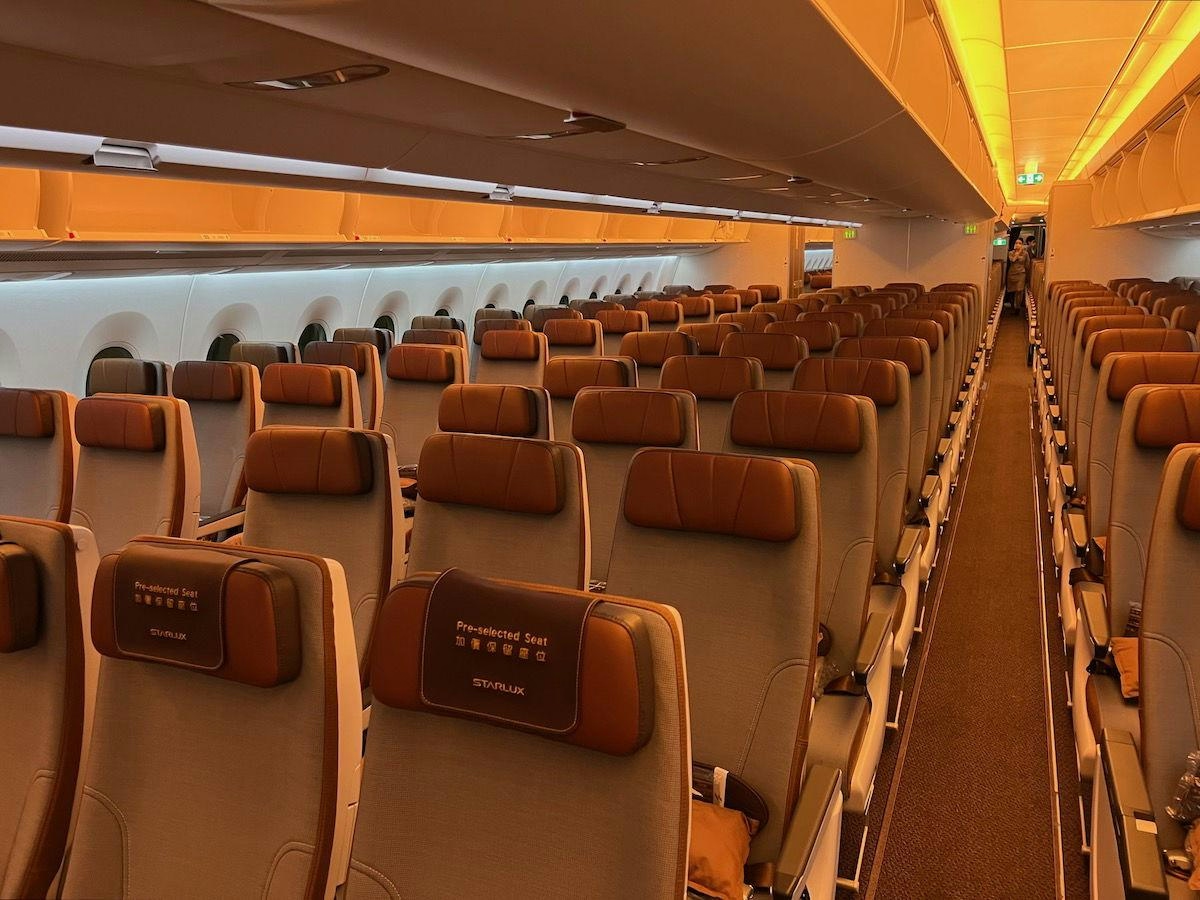
Review of Airbus Widebody Aircraft
Market Position and Competitive Landscape
As Airbus enters 2026, the company maintains a commanding presence in the single-aisle market, with the A321neo family continuing to dominate global sales. The A321neo remains the industry’s best-selling aircraft, enjoying a near-monopoly with no direct competitor anticipated for at least another year. This sustained success has strengthened Airbus’s order book and production capacity, enabling the manufacturer to meet robust demand effectively.
In contrast, the widebody segment presents a more challenging competitive environment for Airbus, primarily due to Boeing’s strong foothold. Although Boeing’s 777-9 program faces delays and has yet to receive certification, the 787 family has solidified its position as a formidable rival. The 787’s impressive payload and range capabilities have resonated with airlines, which continue to place orders despite production setbacks and program difficulties. This ongoing demand validates Boeing’s strategic decision to focus on the 787 following the discontinuation of the A380.
Regulatory and Industry Developments
The competitive dynamics between Airbus and Boeing are further complicated by increasing regulatory scrutiny. Recent actions by the Federal Aviation Administration (FAA), including the review of Boeing’s 737 MAX 10 and the emissions waiver granted for the 777F, highlight a growing emphasis on environmental compliance. These regulatory pressures present challenges for both manufacturers and are likely to influence future aircraft development and certification schedules.
Simultaneously, significant industry moves are reshaping market dynamics. Boeing’s $4.7 billion acquisition of Spirit AeroSystems signals a strategic push toward greater vertical integration, which may affect production quality and timelines across the aerospace sector. Meanwhile, Airbus continues to secure substantial orders, exemplified by China Airlines’ recent agreement to purchase five additional A350-1000 aircraft. Such transactions reinforce Airbus’s standing in the widebody market amid evolving regulatory and competitive pressures.
Fleet Modernization and Future Outlook
The introduction of new aircraft models underscores the intensity of competition in the widebody and single-aisle markets. The deployment of the A321XLR by Qanot Sharq and Philippine Airlines’ addition of the A350-1000 to its fleet illustrate the ongoing demand for next-generation aircraft that offer enhanced efficiency and extended range. These developments reflect airlines’ strategic efforts to modernize their fleets and adapt to shifting market requirements.
Looking ahead, Airbus’s widebody aircraft face the dual challenge of competing with Boeing’s established 787 family and navigating a rapidly evolving regulatory environment alongside shifting industry alliances. While Airbus’s dominance in the single-aisle segment remains secure for the time being, maintaining a competitive edge in the widebody market will require continued innovation and strategic agility.

Etihad Airways Suspends Airbus A380 Flights on Key Route

Aditya Birla Group Seeks Approval for Aircraft Leasing in GIFT City

Qatar Airways Highlights Innovation and Connectivity at Arabian Travel Market 2026

Hong Kong's Five-Year Plan Includes Andrew Fan's Aircraft Parts Processing Hub Proposal

ACIA Aero Leasing Delivers ATR72-600 to Air Nostrum

RTX Appoints Jill Albertelli as Head of Pratt & Whitney

TAT Technologies Joins Beyond Aero Hydrogen Aircraft Program

AURAK Study Highlights Barriers to Air Taxi Adoption in Emerging Economies

Xiamen Air Selects Altitude for 787 Maintenance at Heathrow

Etihad and Swissport Extend Global Partnership
