Immagine

Trasforma le intuizioni dell’IA in azioni concrete

Unisciti oggi alla lista d’attesa di AeroGenie!

Tendenze

Categories

Safran Advances Hybridization Efforts Ahead of Silvercrest Summer Tests
March 26, 2026By ePlane AI
Safran Advances Hybridization Efforts Ahead of Silvercrest Summer Tests
0
0
Safran Aircraft Engines
Hybrid-Electric Propulsion
Silvercrest Engine

Safran Advances Hybridization Efforts Ahead of Silvercrest Summer Tests

Progress in Hybrid-Electric Propulsion Development

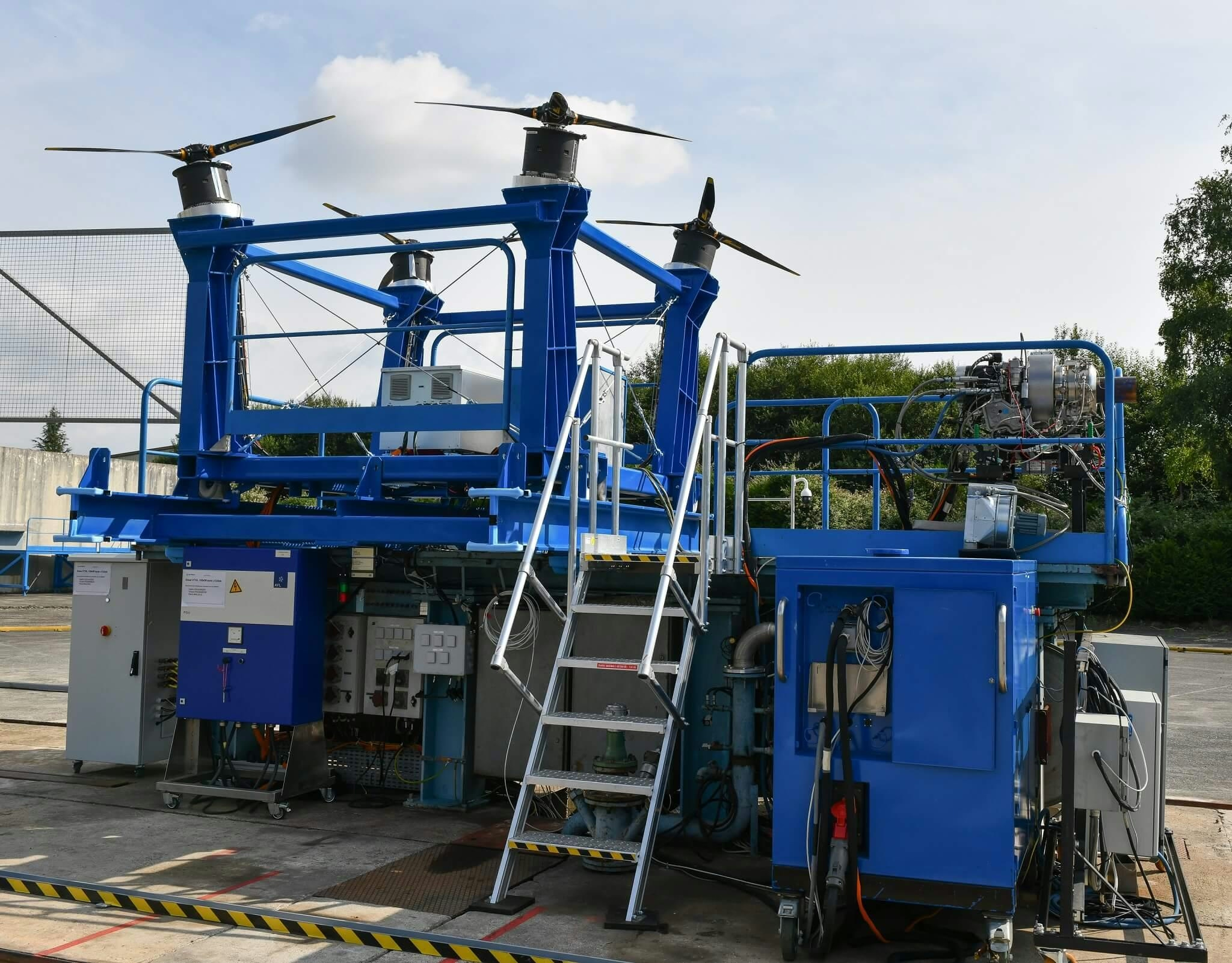
Safran Aircraft Engines is intensifying its hybridization program with plans to test a Silvercrest business jet engine equipped with 250kW electric motors on both the low- and high-pressure spools. These tests are scheduled for this summer in Istres, southern France, marking a significant step forward in the company’s efforts to enhance engine efficiency through hybrid-electric technology.

At Clean Aviation’s annual forum in Brussels on March 18, Delphine Dijoud, deputy vice-president of engineering and research and technology at Safran Aircraft Engines, highlighted hybridization as a vital complement to open-fan architecture. She described it as a “complementary lever” capable of improving power extraction, facilitating power transfer between spools, and enabling real-time engine optimization. This approach aims to deliver tangible efficiency gains in future propulsion systems.

Development Path and Technical Challenges

The current phase of Safran’s hybridization program, supported internally and by France’s DGAC civil aviation authority, builds on a series of incremental trials. Initially, Safran integrated electric power into a small turbofan engine from a start-up, collaborating with its Electrical & Power division to refine engine regulation and control systems. This cautious approach allowed the company to address the complexities of hybrid-electric integration before advancing to larger engines.

In 2023, Safran conducted 300 hours of testing on the Silvercrest engine, a 10,000lb-thrust business jet powerplant whose development was previously halted. These tests involved fitting an electric motor on the high-pressure spool, yielding valuable insights into engine operability, control law impacts, and the dynamic interaction between electric motors and gas turbines. Eric Dalbies, senior executive vice-president of research, technology, and innovation at Safran Group, emphasized the importance of understanding potential risks such as compressor stall caused by rapid power injection.

The upcoming tests will extend this work by installing 250kW electric motors on both the low- and high-pressure spools. These motors are designed to meet the specifications of the RISE open-fan technology demonstrator, developed in partnership with GE Aerospace through CFM International. Dijoud confirmed that the integration will align closely with RISE’s power requirements and operational use cases.

Despite the promising progress, Safran faces significant engineering challenges. Integrating electric motors into gas-turbine engines demands advanced systems capable of managing larger electrical components while ensuring compatibility with existing aircraft infrastructure. The safe and efficient incorporation of high-voltage electrical systems remains a critical hurdle.

Industry Context and Future Prospects

Market responses to Safran’s hybrid propulsion initiatives have been varied. While some traditional engine manufacturers remain cautious, there is growing interest among early adopters in the business jet sector. Competitors such as GE and Rolls-Royce are anticipated to accelerate their hybrid technology development efforts, potentially forging new strategic partnerships to enhance their competitive positions.

Safran’s hybrid research also forms part of the Clean Aviation OFELIA project, which focuses on open-fan technology. The company is actively pursuing funding for a full-scale ground-test demonstrator through Clean Aviation’s fourth call for proposals, closing in May. The European Union has allocated €60 million to support up to three such demonstrators, reflecting the increasing momentum behind hybrid propulsion technologies within the aviation industry.

More news
Low Flyby of Boeing 777F in Texas Sparks Safety Debate Among Pilots

Low Flyby of Boeing 777F in Texas Sparks Safety Debate Among Pilots

Low Flyby of Boeing 777F in Texas Sparks Safety Debate Among Pilots A low-altitude flyby by a Boeing 777F freighter over Horseshoe Bay Resort Airport in Texas on June 25, 2026, has sparked a widespread debate regarding aviation safety standards. The aircraft, registered N705DN and operated by Jetran LLC, was captured on video performing a dramatic pass mere feet above the ground during a pre-delivery test flight prior to its transfer to Qatar Airways Cargo. The footage quickly circulated on social media, drawing sharp criticism from pilots and safety experts who described the maneuver as reckless and inconsistent with established safety protocols. The Incident Over Horseshoe Bay The aircraft, initially delivered to Delta Air Lines in 2009 before being converted into a dedicated cargo platform, was conducting final acceptance procedures when it executed an unplanned low pass over Horseshoe Bay. Witnesses reported that the plane approached at an extremely low altitude with its landing gear fully retracted. During the flyby, the aircraft performed a right bank maneuver that brought one wingtip visually close to the runway, startling observers on the ground. The flight was en route between Grissom Aeroplex and Perot Field Fort Worth Alliance Airport but diverted over the airport associated with leasing operations. While acceptance flights are a routine part of aircraft delivery cycles, such visually dramatic low passes are rare and generally discouraged unless mandated by structured test protocols. Industry Reaction and Ongoing Investigation The viral video has divided the aviation community. Many pilots and analysts contend that the maneuver introduced unnecessary risks and could erode public confidence in aviation safety. Concerns have been raised about the lack of operational necessity for such a low-altitude pass, the heightened perception of risk to public safety, and questionable decision-making during a non-revenue flight. Jetran LLC, the operator responsible for the flight, issued a statement clarifying that the maneuver did not reflect its operational standards and has called for an investigation by the relevant authorities. The Federal Aviation Administration (FAA) has acknowledged the incident and confirmed that it is under review. Qatar Airways Cargo, the intended recipient of the aircraft, emphasized that the flyby was not conducted by its pilots and did not involve its operational procedures. Meanwhile, China Airlines announced plans to acquire two additional Boeing 777Fs, highlighting the ongoing expansion of global freighter fleets and underscoring the importance of maintaining rigorous safety standards during such transitions. Scrutiny of Safety Culture in Acceptance Flights This incident has reignited discussions about the safety culture surrounding pre-delivery acceptance flights. These flights are typically designed to verify engine performance, systems integrity, avionics calibration, flight control response, structural and aerodynamic behavior, and compliance with regulatory certification standards. Safety experts emphasize that a robust safety culture is critical, particularly during non-revenue operations such as test and acceptance flights. The Horseshoe Bay flyby serves as a stark reminder of the necessity for industry-wide vigilance and strict adherence to operational protocols to preserve public trust and ensure aviation safety.
How to Book Delta’s Lie-Flat Widebody Seat at Domestic Main Cabin Prices in 2026

How to Book Delta’s Lie-Flat Widebody Seat at Domestic Main Cabin Prices in 2026

How to Book Delta’s Lie-Flat Widebody Seat at Domestic Main Cabin Prices in 2026 Delta Air Lines is quietly transforming the premium-cabin experience within the U.S. domestic market by significantly expanding its deployment of lie-flat Delta One seats on domestic flights. In June, the airline scheduled a record 1,522 domestic flights featuring these lie-flat seats across 37 routes, offering passengers international-style business-class comfort on domestic itineraries. This marks a departure from the traditional domestic premium cabins, which typically offered wider recliners and extra legroom, by introducing fully flat beds aboard widebody aircraft usually reserved for long-haul international service. For travelers accustomed to narrowbody jets and standard first-class seats, this represents a notable upgrade in comfort and service. Delta’s Domestic Widebody Expansion and Fleet Strategy Delta’s June schedule reflects its largest-ever domestic deployment of lie-flat seats, signaling a strategic shift in how the airline utilizes its widebody fleet. According to Award Wallet, the 1,522 flights equipped with Delta One seating span 37 routes, underscoring Delta’s commitment to expanding premium domestic capacity. Rather than confining widebody aircraft to international routes, Delta is increasingly integrating these planes into its domestic network to enhance fleet flexibility and optimize aircraft utilization. Widebody aircraft, traditionally reserved for transoceanic travel, are now more frequently deployed on U.S. domestic routes to meet network demand or reposition aircraft. Delta’s approach surpasses that of its competitors, creating more opportunities for travelers to experience widebody comfort on routine domestic flights. For instance, the Airbus A350 operates a daily round-trip between Atlanta (ATL) and Los Angeles (LAX), making it a highly sought-after option for those seeking a premium experience. The Airbus A330 fleet serves recurring routes such as Atlanta–Honolulu, Minneapolis–Honolulu, and New York JFK–Los Angeles, and also appears on select one-off flights like Atlanta–Tampa. Booking Complexities and Market Outlook for 2026 Looking ahead to 2026, securing Delta’s lie-flat widebody seats at main cabin prices may become increasingly challenging due to evolving market dynamics. Competition is intensifying as American Airlines contemplates a widebody aircraft order to rival Delta and United, potentially increasing competition and affecting seat availability. Furthermore, the ongoing conflict in the Middle East has led to a reduction in global seat capacity, which could influence Delta’s pricing strategies and the availability of premium seats on domestic routes. Despite these challenges, Delta continues to hold a strong position in the market. The Points Guy’s Best Airlines Report for 2026 ranks Delta as a leading U.S. carrier, highlighting its reputation for quality and innovation in premium travel offerings. Variability in the Delta One Experience It is important for travelers to recognize that booking a Delta One ticket does not guarantee a uniform experience across all flights. Delta operates a diverse fleet with cabins designed in different eras and tailored to various operational requirements. While the Delta One brand is consistent, the actual seat configuration, cabin layout, and onboard amenities can vary significantly. Passengers who are knowledgeable about Delta’s fleet assignments and scheduling nuances are better positioned to secure the most modern and comfortable lie-flat experience, often at prices that are not substantially higher than standard main cabin fares.
Boeing 747-200 Engine Upgrade Ends Anchorage Fuel Stop on New York–Tokyo Flights

Boeing 747-200 Engine Upgrade Ends Anchorage Fuel Stop on New York–Tokyo Flights

Boeing 747-200 Engine Upgrade Ends Anchorage Fuel Stop on New York–Tokyo Flights Historical Context of Transpacific Travel In the late 1960s and early 1970s, passengers traveling from New York to Tokyo aboard a Boeing 747 faced an inevitable and lengthy refueling stop in Anchorage, Alaska. The original 747-100, introduced by Pan Am in 1970, was limited by its fuel capacity and could not complete the transpacific journey nonstop with a full passenger load. Anchorage, strategically located near the midpoint of the great circle route between the U.S. East Coast and Japan, became a vital refueling hub. This stop not only extended travel times but also shaped the operational and commercial dynamics of transpacific air travel during that era. The 747-100 was powered by four Pratt & Whitney JT9D-3A engines and had a maximum takeoff weight of 735,000 pounds. Its range of approximately 5,300 nautical miles was sufficient for transatlantic flights such as New York to London but fell short of the 5,850 nautical miles required for nonstop New York–Tokyo service. With typical passenger loads of 350 to 400, the aircraft could not reliably complete the Pacific crossing without stopping. Consequently, Anchorage emerged as one of the busiest international transit airports, serving major carriers including Pan Am, Japan Air Lines, Northwest Orient, and Lufthansa. Technological Advancements and Operational Impact The operational limitations of the 747-100 spurred airlines and manufacturers to seek solutions that would enable nonstop transpacific flights. The breakthrough came with the Boeing 747-200, which received FAA certification in December 1970 and entered service the following year. While maintaining the fundamental airframe design of its predecessor, the 747-200 incorporated more powerful engines, increased maximum takeoff weight, and enhanced fuel capacity. These improvements extended the aircraft’s range by approximately 1,550 nautical miles, allowing nonstop flights between New York and Tokyo with ample fuel reserves. This advancement eliminated the need for the Anchorage fuel stop, significantly reducing travel time and operational complexity. Moreover, the extended range capabilities of the 747-200 opened new possibilities for long-haul city pairs that had previously been beyond reach, reshaping airline route networks and passenger expectations. Broader Industry Implications The introduction of the 747-200 and its enhanced performance had far-reaching effects beyond passenger convenience. Airlines that adopted longer-range aircraft gained a competitive advantage, as nonstop service became a critical differentiator in a market sensitive to fuel price volatility and evolving regulatory frameworks. The competitive pressures observed during the 747-200’s debut resonate with current industry dynamics, where financially robust carriers leverage investments in advanced aircraft and premium services to outpace weaker rivals. Regulatory developments continue to influence airline strategies, exemplified by recent FAA actions addressing fuel pump issues and fire risks in modern engines such as the GEnx. Airlines must carefully balance fleet modernization and compliance with safety standards while managing operational costs and maintaining market competitiveness. The 747-200’s engine and fuel system enhancements marked a pivotal moment in the evolution of long-haul aviation. Its legacy persists in the ongoing pursuit by airlines to optimize range, efficiency, and safety amid an increasingly complex and competitive global aviation landscape.
Trump Team Establishes Oklahoma Base to Test Flying Cars

Trump Team Establishes Oklahoma Base to Test Flying Cars

Trump Administration Advances Flying Car Testing with New Oklahoma Facility The Trump administration has announced plans to establish a dedicated testing facility in Oklahoma for next-generation advanced mobility aircraft, including flying car-style air taxis. Situated at the 1,100-acre Mike Monroney Aeronautical Center in Oklahoma City, the project will feature an $8.3 million testing area known as the Vertical Take-Off and Landing Procedures and Analysis Range (V-PAR). This initiative aims to support the development and integration of emerging aviation technologies. Facility Design and Purpose According to the Federal Aviation Administration (FAA), the V-PAR is specifically designed to accommodate larger electric and hybrid aircraft, with a focus on vertical takeoff and landing capabilities. The facility will include a touchdown and liftoff area, taxiways, electric aircraft charging stations, and an observation and operations building. Construction is planned for the west side of the aeronautical center, adjacent to Will Rogers World Airport and existing aviation infrastructure. Deputy Secretary Steven Bradbury emphasized the importance of the project, stating, “The V-PAR is a critical step in helping the FAA better understand how to integrate advanced air mobility aircraft safely into the National Airspace System. This facility will strengthen our ability to conduct research, train people, and support the future of aviation.” The center is expected to be completed by summer 2027, with potential future expansions including additional landing sites, increased charging capacity, a second vertipad, and a short takeoff and landing runway. Context and Industry Challenges This development follows the Department of Transportation’s release of the nation’s first “Advanced Air Mobility National Strategy” in December, which sets an ambitious timeline for demonstrations and initial operations of new aircraft as early as next year. The strategy envisions expanded air operations in both urban and rural areas by 2030. Despite this forward momentum, the advanced air mobility sector faces significant challenges. Legal disputes and internal conflicts among leading air taxi manufacturers such as Joby, Archer, and Vertical have raised concerns about delays in certification processes. These issues, combined with broader skepticism regarding the commercial viability of flying cars, have contributed to a decline in share prices for major companies in the field this year. As certification timelines extend and competition intensifies, market confidence remains cautious. Nonetheless, federal officials maintain optimism that the Oklahoma facility will be instrumental in advancing aviation innovation and securing the United States’ leadership in aerospace technology.
WMPO Seeks Role in State’s Air Taxi Pilot Program

WMPO Seeks Role in State’s Air Taxi Pilot Program

WMPO Pursues Participation in North Carolina’s Air Taxi Pilot Program WILMINGTON — The Wilmington Urban Area Metropolitan Planning Organization (WMPO) has formally expressed its intent to join North Carolina’s advanced air mobility pilot program, an initiative designed to introduce innovative aircraft technologies such as electric air taxis and drone delivery systems to the region. This move reflects a growing interest in integrating cutting-edge transportation solutions to address evolving infrastructure demands. At its board meeting on Wednesday, the WMPO unanimously approved the submission of an application to the North Carolina Department of Transportation (NCDOT) for inclusion in the program’s second phase. NCDOT has earmarked $750,000 in consulting funds to assist selected communities in exploring the deployment and integration of advanced air mobility technologies. Krysden Burden, WMPO’s grants coordinator, emphasized the department’s recognition of the increasing strain on transportation infrastructure amid the state’s population growth, noting the agency’s commitment to ensuring transportation systems remain accessible, efficient, and resilient. Advancing Community-Focused Air Mobility Planning Should WMPO’s application be successful, the organization would receive funding to develop a comprehensive, community-oriented plan for incorporating advanced aircraft technologies. These include electric vertical takeoff and landing (eVTOL) aircraft—vehicles capable of vertical ascent and descent powered by electricity—and drone-based delivery systems. During the meeting, Burden presented an informative video outlining four primary eVTOL configurations: wingless multicopters, lift and cruise models, tilt rotor designs, and ducted vector thrust systems. Each type offers distinct advantages and limitations in terms of range, noise levels, payload capacity, and power requirements. Globally, China remains the sole country currently operating commercial eVTOL passenger flights, while several cities in the United States and other nations are conducting pilot programs focused on cargo delivery and emergency response applications. Potential uses for these technologies include connecting ports with manufacturing facilities and enhancing search and rescue operations in inaccessible areas. Industry Challenges and Regional Implications Despite the promising outlook, the air taxi sector faces considerable challenges. Regulatory complexities, intense market competition, and investor skepticism continue to influence the trajectory of the industry. Leading companies such as Archer and Joby Aviation, both actively developing eVTOL platforms, are navigating intricate regulatory environments and experiencing fluctuations in market confidence. Archer aims to commence commercial operations by 2026, supported by the White House’s eVTOL Integration Pilot Program, though ongoing legal disputes may impede progress. Joby Aviation has secured key Federal Aviation Administration approvals and initiated early commercial flights, yet investor caution persists. These factors highlight the significant hurdles that remain as the air taxi industry gains momentum. WMPO’s involvement in North Carolina’s pilot program could position Wilmington as a pioneer in adopting advanced air mobility solutions. However, the success of such initiatives will depend on overcoming regulatory, financial, and operational challenges that have affected even the most prominent industry players. As state and local agencies advance these efforts, the coming years will be critical in determining whether advanced air mobility can be effectively integrated into Wilmington’s transportation infrastructure.
FAA Establishes Air Taxi Research Hub in Oklahoma City to Shape the Future of Urban Flight

FAA Establishes Air Taxi Research Hub in Oklahoma City to Shape the Future of Urban Flight

FAA Establishes Air Taxi Research Hub in Oklahoma City to Shape the Future of Urban Flight The Federal Aviation Administration (FAA) has announced the creation of a dedicated research hub in Oklahoma City aimed at advancing urban air mobility. This initiative represents a significant federal investment in the development and study of electric air taxis, particularly electric vertical takeoff and landing (eVTOL) aircraft. Situated at the FAA’s Mike Monroney Aeronautical Center, the new facility will concentrate on addressing the operational, training, and safety challenges associated with advanced air mobility (AAM). A Research Center for Next-Generation Aviation The Mike Monroney Aeronautical Center, already the FAA’s principal site for training and logistics, will now incorporate air taxi research into its existing aviation infrastructure. This development coincides with accelerating efforts by manufacturers to introduce eVTOLs into commercial service, with several companies targeting passenger operations within the next few years. At the hub, researchers will focus on the integration of powered-lift aircraft—a new FAA category created specifically for eVTOLs—into the National Airspace System. Their work will encompass pilot training requirements, simulator development, maintenance protocols, and the formulation of airspace procedures tailored to aircraft that combine vertical takeoff capabilities with fixed-wing cruising. These hybrid flight characteristics pose unique regulatory challenges, as eVTOLs do not conform neatly to existing helicopter or airplane classifications. In response, the FAA issued a special federal aviation regulation in October 2024 to address pilot qualifications and operational standards for powered-lift aircraft. Strategic Importance of Oklahoma City Oklahoma City’s selection as the site for the research hub highlights its enduring role as a central hub for U.S. aviation administration. The Mike Monroney Aeronautical Center spans 1,100 acres and employs thousands of FAA personnel, including instructors, engineers, and safety inspectors. The campus also houses the Civil Aerospace Medical Institute, which conducts research on pilot health and human factors. Establishing the air taxi research hub at this location provides immediate access to simulators, laboratories, and subject-matter experts, while maintaining proximity to the FAA Academy, where future air traffic controllers and safety inspectors receive their training. For the state of Oklahoma, the decision reinforces the economic significance of the aerospace sector, which is among the largest industries in the region. Anchored by Tinker Air Force Base, the FAA campus, and a network of private contractors, the aerospace industry supports tens of thousands of jobs across the state. Addressing Challenges and Industry Developments The research agenda at the new hub will tackle critical issues that must be resolved before air taxis can operate at scale. These include managing low-altitude eVTOL traffic over urban environments, establishing standards for batteries and propulsion systems, and designing and licensing vertiports. Pilot training remains a particularly urgent concern, as powered-lift aircraft demand a combination of skills traditionally associated with both helicopter and airplane operations. Despite progress, significant challenges persist. Battery storage limitations continue to constrain electric aircraft endurance, as exemplified by Honda’s F1 model, which currently achieves a maximum flight time of just 15 minutes. Regulatory approval processes are also stringent; for instance, Joby Aviation’s demonstration flights in New York City have attracted attention but still require extensive FAA testing and certification before commercial operations can commence. Industry players are pursuing varied strategies in response to these challenges. Archer Aviation aims to achieve a “Waymo moment” by 2026, signaling a breakthrough in commercial viability, while Beta Technologies is targeting near-term certification for its Alia 250 model. Market sentiment remains cautiously optimistic, bolstered by substantial investments from major corporations such as Toyota, which underscore strong confidence in the sector’s potential growth. As the FAA’s new research hub begins its work, the agency and its partners confront a complex landscape of technical, regulatory, and operational challenges, alongside the opportunity to transform urban transportation in the coming years.
Canada’s Skyservice Expands Bombardier MRO Services

Canada’s Skyservice Expands Bombardier MRO Services

Canada’s Skyservice Expands Bombardier MRO Services Enhanced Maintenance Capabilities in Western Canada Skyservice Business Aviation (SYB), based at Montréal Trudeau Airport, has announced a significant expansion of its maintenance, repair, and overhaul (MRO) services by becoming an authorised Bombardier Business Aircraft service facility at Vancouver International Airport. This strategic development is intended to improve access to certified technicians, mobile repair teams, and rapid-response maintenance support for business jet operators throughout Western Canada. Skyservice already maintains Bombardier-authorised service centres at Toronto Pearson and Montréal Trudeau airports, thereby reinforcing its comprehensive national service network. Competitive Dynamics and Operational Challenges This expansion occurs amid intensifying competition within the MRO sector, where established providers such as ACI Jet and California MRO offer extensive maintenance services for Bombardier and Citation aircraft. As Skyservice extends its geographical reach, business jet operators are expected to evaluate service quality and cost-effectiveness with greater scrutiny. This dynamic may compel competitors to enhance their service offerings or adjust pricing strategies to maintain their market positions. To accommodate the growing client base and reduce aircraft downtime, Skyservice must ensure that its Vancouver facility is equipped with sufficient skilled personnel and robust infrastructure. The company’s capacity to provide rapid and reliable maintenance will be crucial, as operators increasingly demand efficient solutions to minimize grounded aircraft time. With this latest upgrade, Skyservice aims to consolidate its standing in the Canadian business aviation market by delivering comprehensive Bombardier MRO services across key regions, while navigating a competitive and evolving industry landscape.
Investigators May Examine Low Pass of Converted 777 Freighter During Test Flight

Investigators May Examine Low Pass of Converted 777 Freighter During Test Flight

Investigation Underway into Low-Altitude Flypast of Converted 777 Freighter Safety authorities are set to investigate a contentious low-altitude flypast conducted by a converted Boeing 777-200LR freighter during its final test flights prior to delivery to Qatar Airways Cargo. Video footage circulating on social media depicts the aircraft flying mere meters above the ground, parallel to the north-south runway at Horseshoe Bay Resort Airport, located west of Austin, Texas. The aircraft then executes a sharp right bank as it climbs away, with its right wingtip appearing to come alarmingly close to the runway surface. The aircraft, adorned in Qatar Airways Cargo livery, is the first of its kind converted under the Mammoth Freighters 777-200LRMF program. The incident took place on 24 June as the twin-engine jet, reportedly US-registered N705DN and formerly operated by Delta Air Lines, departed Grissom Joint Reserve Air Base in Indiana en route to Fort Worth Alliance Airport before descending to perform the maneuver. Responses from Stakeholders and Regulatory Authorities Jetran, a US-based aviation services and leasing company responsible for placing Mammoth-converted aircraft with customers including Qatar Airways, clarified that despite the aircraft’s branding, it was neither owned nor operated by Qatar Airways at the time of the incident and did not carry a Qatari registration. The pilots involved were not Qatar Airways personnel. Jetran emphasized that the maneuver did not reflect accepted operational standards and expressed expectations that relevant parties and authorities would conduct a thorough investigation and take appropriate action. Mammoth Freighters, which carried out the cargo conversion, also distanced itself from the event, stating it did not own or control the aircraft during the flight. The company noted that the current owner, not Qatar Airways, was in control and that the aircraft was in the final stages of preparation before delivery to the Doha-based airline. The Federal Aviation Administration (FAA) has initiated an investigation into the low pass, and the National Transportation Safety Board (NTSB) has been contacted for comment. The incident occurs amid heightened scrutiny of Boeing’s safety and operational standards. Industry analysts suggest that such events could further challenge Boeing’s reputation, particularly as certification work for the 777-9’s extended-range twin-engine operations (ETOPS) is now projected to continue into 2027. Market reactions have already reflected investor apprehension, with Boeing’s stock experiencing a temporary decline as stakeholders evaluate potential regulatory and reputational consequences. Competitors may leverage the situation to underscore their own safety records and operational discipline. FlightGlobal has sought comments from Qatar Airways, the FAA, and the NTSB. The aviation sector will be closely monitoring developments as authorities determine whether further regulatory measures are warranted.
Airbus Surpasses Boeing in 2026 Jet Orders

Airbus Surpasses Boeing in 2026 Jet Orders

Airbus Surpasses Boeing in 2026 Jet Orders In the early months of 2026, Boeing appeared to be regaining momentum in the commercial aviation market. Through April, the American manufacturer had delivered more aircraft than its European rival, suggesting a potential resurgence. However, this trend shifted markedly in May when Airbus delivered 262 jets compared to Boeing’s 250, marking Airbus’s strongest monthly performance of the year and allowing it to overtake Boeing in total deliveries. A Decisive Shift in New Orders The more significant development lies in new aircraft orders. In May alone, Airbus secured 379 firm orders, vastly outpacing Boeing’s 13. By mid-year, Airbus’s net orders for 2026 stood at approximately 368, while Boeing’s were around 140, according to industry estimates. This substantial lead is largely driven by the popularity of Airbus’s A320neo family, particularly the A321neo and its long-range A321XLR variant. These models enable airlines to operate longer, less dense routes efficiently with single-aisle aircraft, meeting evolving market demands. The delivery figures through May 2026 highlight a competitive dynamic: Airbus has delivered 262 aircraft, while Boeing has delivered 250. In terms of net orders, Airbus’s tally ranges between 368 and 379, whereas Boeing’s figures vary from 13 to 140. The delivery race has seen fluctuations, with Boeing leading in the first quarter by delivering approximately 143 jets compared to Airbus’s 114, supported by increased production of the 737 MAX. However, Airbus rapidly closed the gap in the spring, culminating in a peak of around 81 deliveries in May alone. Despite monthly variations, the mid-year trajectory favors Airbus. Market Dynamics and Strategic Responses The order book underscores Airbus’s dominance, anchored by the A320neo family and especially the A321neo. Boeing’s 737 MAX remains its best-selling model and a cornerstone of its recovery efforts, complemented by ongoing wins in the widebody segment. Nevertheless, Boeing continues to grapple with the repercussions of recent production setbacks and reputational challenges, which are reflected in its comparatively modest order intake. This evolving competitive landscape is prompting strategic recalibrations across the industry. American Airlines is currently evaluating a widebody aircraft order from either Boeing or Airbus as it seeks to maintain competitiveness with Delta and United. Boeing, meanwhile, is considering increasing 737 production rates to approximately 70 jets per month to align with Airbus’s ambitious output goals. Airbus faces internal deliberations regarding the potential early launch of a larger A220 model, amid subdued interest from leasing companies and ongoing discussions about the aircraft’s range and performance capabilities. The rivalry between Airbus and Boeing continues to shape the global aviation market, influencing airline purchasing decisions, delivery schedules, and pricing structures. With both manufacturers managing multi-year backlogs, the competition increasingly centers on the ability to deliver aircraft efficiently. Factors such as supply chain stability, engine availability, and factory throughput have become as critical as sales efforts in determining which company will lead the skies in the coming years.
How Skyways Quietly Built a Global Heavy-Lift Drone Business

How Skyways Quietly Built a Global Heavy-Lift Drone Business

How Skyways Quietly Built a Global Heavy-Lift Drone Business Texas-based Skyways Aviation has spent nearly a decade developing one of the world’s largest fleets of heavy-lift unmanned aircraft, delivering robust drone services across three continents. Unlike many drone companies that emphasize flashy innovations, Skyways has maintained a low profile, concentrating on addressing practical logistics challenges for clients in the maritime and energy sectors. A Customer-Centric Approach to Drone Logistics At the recent InnovateEnergy Week conference in The Woodlands, Texas, Bill Wimberley, Skyways’ chief commercial officer, acknowledged that the company remains relatively unknown outside industry circles. Skyways’ flagship aircraft, the V3, is a long-range, autonomous vertical takeoff and landing (VTOL) drone capable of carrying payloads up to 100 pounds over distances exceeding 1,000 miles. The V3 features seven cubic feet of cargo space and employs a hybrid propulsion system—electric motors for vertical lift and a jet-fuel engine for horizontal flight—allowing it to support a variety of sensors, including electro-optical/infrared (EO/IR) and LiDAR. Despite these technical capabilities, Wimberley stressed that Skyways prioritizes customer needs over technological showmanship. “A lot of people are putting emphasis on the actual aircraft and not so much on the customer’s needs. We completely reversed that when we built Skyways. Our approach is no one cares about the aircraft,” he said, underscoring the company’s focus on practical solutions rather than hardware alone. Expanding Markets and Navigating Challenges Skyways’ operations have primarily targeted international markets, specializing in long-distance, heavy-duty autonomous deliveries for the maritime industry. The company is now expanding its services to include cargo delivery and inspection for clients with assets in the Gulf of Mexico, collaborating with major U.S. and global oil companies. While specific details remain confidential, Wimberley indicated that further announcements are forthcoming. Since its founding nine years ago by CEO Charles Atkin, Skyways has deliberately avoided traditional marketing strategies. Atkin’s vision centered on solving real-world problems by designing aircraft tailored to those needs, eschewing promotional efforts. Until last year, the company operated without any marketing personnel, relying instead on word-of-mouth and direct engagement within the industry. As Skyways grows, it confronts significant challenges common to the drone logistics sector. Complex aviation regulations and the need to secure certifications for international operations continue to pose obstacles. Additionally, the company faces increasing competition from firms such as AIR, ERC System, and Elroy Air, all advancing autonomous technologies for military and commercial logistics applications. Market acceptance remains a critical factor in the company’s trajectory. Interest from the U.S. government in funding drone enterprises has already elevated the profiles and stock valuations of competitors like Unusual Machines and Motorola Solutions. To sustain its competitive advantage, Skyways must ensure its drones meet the rising demand for efficient and reliable logistics solutions across defense and commercial markets. As regulatory frameworks for beyond visual line of sight (BVLOS) drone operations evolve in the United States, Skyways is positioning itself for the next phase of growth. The company continues to operate quietly but with a clear focus on addressing the logistics challenges of the future.
line









