Immagine

AeroGenie — Il tuo copilota intelligente.

Chiedi qualsiasi cosa. Analizza tutto. Agisci immediatamente.

Tendenze

Categories

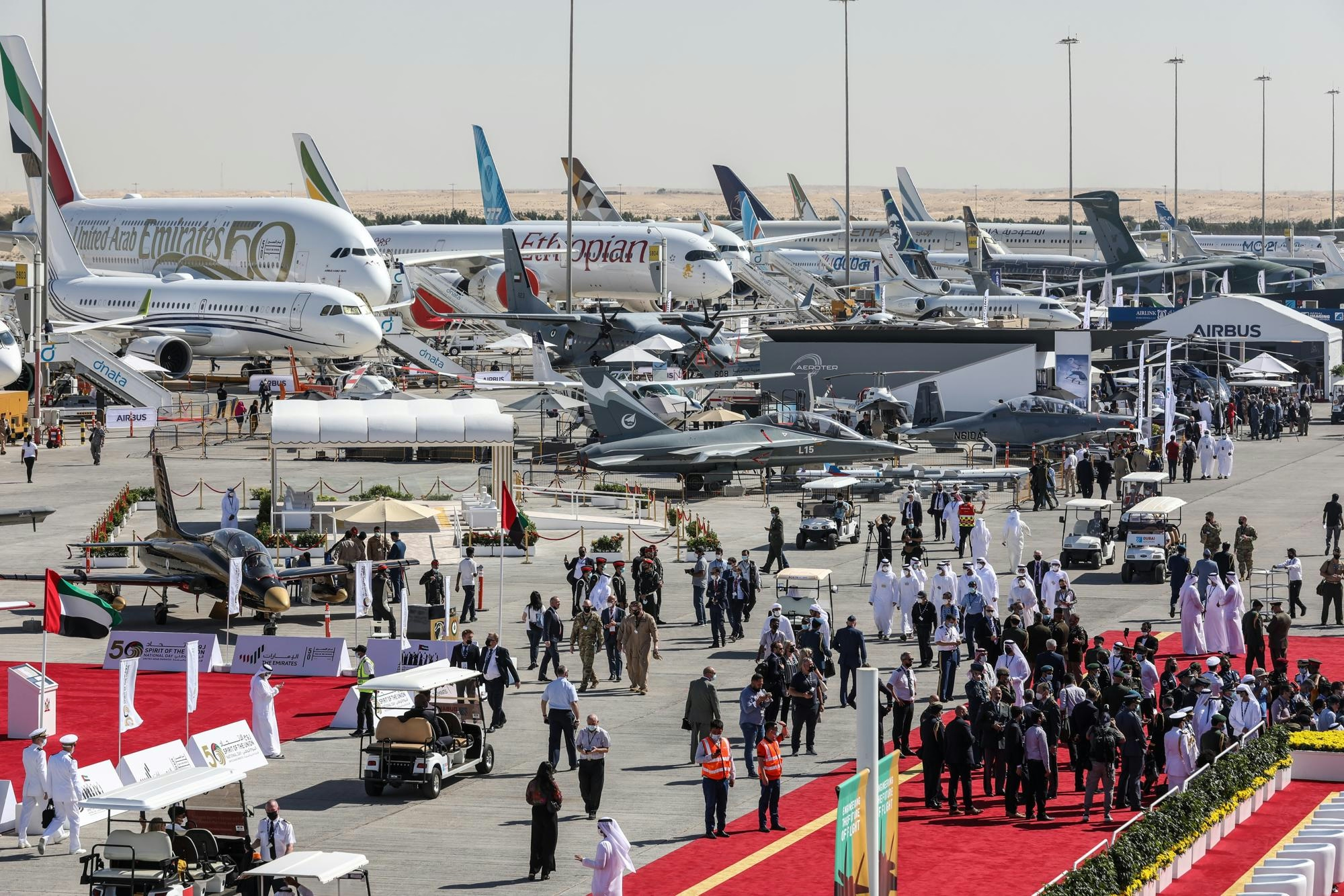
Saudia Considers 150-Jet Order from Boeing and Airbus
February 6, 2026By ePlane AI
Saudia Considers 150-Jet Order from Boeing and Airbus
0
0
Saudia
Boeing
Airbus Aircraft Orders

Saudia Considers Major 150-Jet Order from Boeing and Airbus

Saudia is reportedly contemplating a substantial aircraft acquisition, potentially ordering at least 150 jets from Boeing and Airbus. This prospective deal aims to support both the airline’s passenger and cargo operations, addressing the need to replace aging aircraft while facilitating future growth centered around Saudia’s Jeddah hub. The move aligns with broader strategic shifts in Saudi Arabia’s aviation landscape, as Riyadh Air is expected to concentrate its activities on the capital, positioning Jeddah as Saudia’s primary base for expansion.

The discussions remain in preliminary stages, with no official confirmation from Saudia. Industry analysts, including Behramjee Ghadially, an expert in airline network and fleet planning with extensive experience in the Middle East, have provided forecasts that focus exclusively on Saudia’s fleet strategy. These projections suggest a carefully calibrated approach to fleet renewal and expansion.

Boeing Fleet Strategy

Saudia’s current cargo operations include four Boeing 777 freighters and four leased 747-400Fs, according to ch-aviation data. Ghadially anticipates that the airline could place an order for ten Boeing 777-8 freighters to replace the existing fleet and accommodate anticipated cargo growth.

On the passenger side, Saudia’s widebody fleet is anchored by 37 Boeing 777-300ERs, with an average age of 11.4 years. The forecast envisions an order for 50 Boeing 777-9 aircraft to replace these older models, supplemented by an additional 13 units to support network expansion. Ghadially suggests that Saudia is unlikely to select the Airbus A350-1000, citing the 777-9’s superior takeoff performance in Saudi Arabia’s extreme summer temperatures as a decisive factor.

The anticipated 777-9 deliveries are expected to feature three distinct cabin configurations: a high-density layout for lower-yield routes to South and Southeast Asia, a two-class arrangement, and a three-class version including first class, reflecting the diverse passenger demand across Saudia’s network.

Saudia’s Dreamliner fleet currently comprises 13 Boeing 787-9s and eight 787-10s. The forecast includes an order for 30 additional Dreamliners—20 787-10s (including options from a previous order) and ten 787-9s. These aircraft would partially replace the airline’s 31 Airbus A330-300s while providing more fuel-efficient capacity to support future growth.

Airbus Fleet Prospects

Saudia’s Airbus fleet presently consists of 95 aircraft, including 37 A320ceos, 31 A330-300s, 15 A321ceos, and 12 A321neos. The airline also has 15 A321XLRs on order, configured with a high-premium layout. Ghadially projects an order for 60 additional Airbus jets, exclusively A321neos, comprising 40 standard models and 20 XLR variants. The expanded XLR fleet would enable Saudia to develop additional hub wave banks at Jeddah, particularly for European and African routes that do not justify larger widebody aircraft but could sustain increased frequencies with the A321XLR.

Market Impact and Challenges

Should Saudia proceed with this order, it would represent one of the largest fleet renewals in the region, with significant implications for both Boeing and Airbus, potentially boosting their market valuations. However, the airline may encounter challenges including fluctuating market demand, production delays, and intensified competition from other manufacturers such as Embraer, which may respond with their own strategic initiatives.

At present, Saudia remains in early negotiations, and no formal announcement has been made. The aviation industry continues to monitor developments closely as the airline evaluates its options for this pivotal fleet expansion.

More news
How BEB Tax Policies Impact Airlines’ International Leasing Contracts

How BEB Tax Policies Impact Airlines’ International Leasing Contracts

How BEB Tax Policies Impact Airlines’ International Leasing Contracts Challenges Faced by Ukrainian Airlines Abroad Over the past two years, Ukrainian airlines operating internationally have encountered significant difficulties stemming from the Bureau of Economic Security’s (BEB) tax policies, particularly concerning issues of double taxation. Despite having paid taxes in foreign jurisdictions, these carriers have been subjected to additional tax claims by Ukrainian authorities. The full-scale war in Ukraine compelled many airlines to relocate their operations abroad to protect their aircraft and retain skilled personnel. In this context, the imposition of further taxes by Ukrainian regulators has been perceived as an unusual and undue pressure on the aviation sector, raising serious concerns about the future viability of civil aviation in Ukraine. Double taxation has emerged as a critical challenge for companies operating through foreign jurisdictions. Ukrainian regulatory and law enforcement bodies frequently question the legitimacy of such business structures, contending that companies managed from Ukraine should be subject to domestic taxation regardless of their foreign registration. However, legal experts argue that the key determinant should be the location where income is generated and where the actual economic activity takes place, rather than the company’s registration address. Dmytro Kasianenko, founder of the law firm Kasianenko and Partners, emphasized that international conventions designed to prevent double taxation should govern these cases. He explained that when airlines conduct flights and generate revenue outside Ukraine, the same income should not be taxed twice. According to Kasianenko, if tax has already been paid abroad, Ukraine either lacks the authority to impose additional taxes or must apply a limited tax rate consistent with international agreements. BEB’s Approach and Legal Controversies The core of the dispute lies in the BEB’s methodology, which often relies on formal connections—such as the presence of Ukrainian beneficiaries or other ties to Ukraine—to justify domestic taxation. This approach tends to overlook a substantive analysis of where the economic activity actually occurs. Kasianenko noted that such claims generally lack a robust evidentiary foundation and frequently fail in court, as they do not adequately consider factors such as management control, beneficial ownership, economic substance, and the flow of funds. Implications for International Leasing Contracts in Brazil The challenges posed by BEB tax policies are not confined to Ukraine. In Brazil, similar concerns have arisen regarding the impact of these policies on airlines’ international leasing contracts. The increased tax burden threatens to complicate leasing operations, potentially making it more difficult for airlines to manage leases effectively on the international stage. John Rodgerson, CEO of Azul Airlines, has highlighted structural barriers within Brazil’s aviation market, including a disproportionate share of global passenger lawsuits and the requirement to finance operations in local currency. These factors, combined with underdeveloped market conditions, contribute to less favorable leasing terms for international operators. The financial pressures resulting from BEB tax policies may compel airlines to reconsider their leasing strategies, shift operational priorities, or explore alternative markets. As the aviation sectors in both Ukraine and Brazil confront these regulatory and financial challenges, the risk of adverse market conditions and increased operational costs remains a significant concern for international carriers.
Indonesia’s Danantara and Mandiri Partner with SMBC to Launch $800 Million Aviation Leasing Fund

Indonesia’s Danantara and Mandiri Partner with SMBC to Launch $800 Million Aviation Leasing Fund

Indonesia’s Danantara and Mandiri Partner with SMBC to Launch $800 Million Aviation Leasing Fund Indonesia’s Danantara Investment Management and Mandiri Investment Management have joined forces with Japan’s SMBC Aviation Capital to establish the Mandiri Aviation Leasing Fund, an $800 million initiative that represents Indonesia’s first dedicated aviation leasing fund. Positioned as an institutional-grade platform, the fund is designed to offer investors access to a portfolio of high-quality global aviation assets. Strategic Partnership and Market Positioning The fund will be co-managed by Mandiri Investment Management and SMBC Aviation Capital, with Danantara acting as a strategic anchor investor. SMBC Aviation Capital brings extensive operational expertise in aircraft leasing and will provide aviation and leasing services to the fund. This collaboration is expected to support Danantara’s ambitions to expand into related global asset classes over time. Beyond the financial objectives, the partnership is also seen as a foundation for enhanced economic cooperation between Indonesia and Japan, potentially facilitating increased cross-border investment between the SMBC Group and Danantara Indonesia. Challenges in a Competitive Market The launch of the Mandiri Aviation Leasing Fund occurs amid a rapidly evolving and highly competitive global aircraft leasing market, which is currently experiencing significant consolidation. Recent transactions, such as Dubai Aerospace Enterprise’s acquisition of Macquarie AirFinance, highlight the intensifying competition within the sector. This competitive environment may raise concerns among investors regarding the fund’s ability to establish itself against well-entrenched industry players. Established competitors may respond with aggressive pricing or enhanced service offerings to protect or grow their market share, posing additional challenges for the new fund. The fund’s success will depend on its capacity to assemble a diversified portfolio of aircraft and to manage risks effectively, including those related to aircraft value depreciation and operational complexities. Navigating these challenges is critical, especially as the sector shifts away from traditional bank financing towards private capital. Historically reliant on bank loans to build portfolios, aircraft lessors are now increasingly turning to alternative sources of funding. The Shift Toward Private Capital in Aviation Finance This transition is driven by banks’ retreat from aviation lending amid rising capital requirements, which has created a significant funding gap in the sector. Alternative capital providers have rapidly filled this void, and the Mandiri Aviation Leasing Fund exemplifies the evolution of private credit in Asia beyond direct lending models. Aviation financing is regarded as an attractive asset class due to its combination of predictable income streams, real-asset security, global demand, and long-term value stability. These characteristics appeal to investors seeking resilience and steady growth, according to insights from aviation asset management firm Acumen. Looking forward, the broader asset-backed finance sector in Asia is anticipated to gain momentum, fueled by the region’s expanding infrastructure needs. The entry of the Mandiri Aviation Leasing Fund into the market underscores both the opportunities and the challenges confronting new entrants in the dynamic and complex landscape of global aviation finance.
South Korea’s SUM Air Places Order for New ATR Aircraft

South Korea’s SUM Air Places Order for New ATR Aircraft

South Korea’s SUM Air Orders New ATR Aircraft to Expand Regional Connectivity SUM Air, South Korea’s newest regional airline, has formalized an agreement to purchase four ATR 72-600 aircraft, with options for an additional four, as part of its strategic plan to enhance regional air connectivity. The deliveries are scheduled to commence in 2028. This significant deal was signed during the France–Korea bilateral economic forum held in Seoul, an event attended by the French President, highlighting the importance of the partnership for both countries. SUM Air’s Ambitions and Operational Foundations Established in 2022, SUM Air began commercial operations in March 2026, initially operating a leased ATR 72-600 aircraft from Avation. The airline’s launch followed over three years of meticulous preparation, including staff training, safety validation, and aircraft integration. SUM Air obtained its Air Operator Certificate (AOC) on March 10, 2026. The airline’s mission centers on reconnecting underserved regions within South Korea, including future island airports, while also developing short-haul international routes to neighboring countries such as Japan and China. Its goal is to provide reliable, efficient, and affordable air transport to these markets. The introduction of new ATR 72-600 aircraft offers SUM Air both opportunities and challenges. Integrating these aircraft into the existing fleet will demand comprehensive operational planning, extensive crew training, and careful compliance with South Korea’s regulatory framework. As the airline expands, it will encounter heightened competition from established carriers on regional routes. Industry analysts expect competitors to respond by adjusting pricing strategies or expanding their own fleets to maintain market share. ATR’s Strategic Position in South Korea ATR, the Franco-Italian turboprop manufacturer, has long viewed South Korea as a market with considerable untapped potential for regional aviation. The company projects that a fleet of 25 to 30 ATR 72 aircraft will be operating in the country in the near future. SUM Air’s recent order reinforces this outlook and demonstrates growing confidence in ATR’s advanced turboprop technology, which is particularly well-suited to South Korea’s geographic and route characteristics. As SUM Air advances with its fleet expansion, its capacity to manage operational complexities and respond effectively to competitive pressures will be pivotal in reshaping the landscape of regional air travel in South Korea.
Benoît Rollier Named Vice President of KLM Engine Service

Benoît Rollier Named Vice President of KLM Engine Service

Benoît Rollier Appointed Vice President of KLM Engine Services Air France Industries KLM Engineering & Maintenance (AFI KLM E&M) has announced that Benoît Rollier will assume the role of Vice President of KLM Engine Services, effective April 1, 2026. He will succeed Martijn de Vries, who will transition to the position of Senior Vice President Commercial on the same date. Extensive Industry Experience Rollier brings extensive experience from within KLM and the wider aviation sector, having held numerous strategic and executive roles across engineering, maintenance, supply chain, and finance. His recent appointments include Vice President Engineering at KLM and Chief Executive Officer and Managing Director of Spairliners, a joint venture with Lufthansa Technik. Throughout his career, Rollier has cultivated significant expertise in the engine sector, equipping him to lead KLM Engine Services through both current operations and future challenges. Navigating Operational Challenges As Rollier steps into his new position, he faces a complex environment marked by ongoing difficulties with Pratt & Whitney GTF engines, which have affected KLM Cityhopper’s fleet strategy. These technical issues have attracted scrutiny from investors and customers alike, raising concerns about engine reliability and operational continuity. The situation has also heightened competition within the engine maintenance and repair market, as rivals seek to capitalize on perceived weaknesses in KLM’s engine service capabilities. Despite these challenges, Rollier is expected to uphold the existing strategic direction of KLM Engine Services while fostering innovation and development. His comprehensive industry insight and leadership are regarded as vital assets in managing market pressures and reinforcing KLM’s standing in the competitive engine services sector.
Azorra Expands Engine Portfolio Through Deal with DAE

Azorra Expands Engine Portfolio Through Deal with DAE

Azorra Expands Engine Portfolio Through Deal with DAE Azorra has announced the acquisition of nine General Electric CF34-10E engines from Dubai Aerospace Enterprise (DAE), significantly enhancing its engine portfolio. These CF34-10E engines, which power Embraer E190 and E195 aircraft, will be incorporated into Azorra’s existing assets and leased to airline customers around the world. Strategic Importance of the Acquisition Shahin Mehrabanzad, Vice President of Engine Programmes and Support Solutions at Azorra, highlighted the strategic value of the transaction. He noted that the acquisition reinforces the strong partnership between Azorra and DAE while focusing on high-demand engine assets. In an industry currently challenged by maintenance delays and extended shop visit timelines, having immediate access to available engines with substantial green time is essential. Mehrabanzad emphasized that these engines will provide practical support for fleet reactivation and ongoing operations, illustrating Azorra’s ability to identify market opportunities and deliver effective solutions. He also expressed gratitude for DAE’s continued collaboration. This latest acquisition builds upon a prior agreement made in May 2025, under which Azorra agreed to purchase 49 Embraer E-Jet aircraft and two additional General Electric CF34 engines from DAE. As of April 2026, Azorra’s portfolio of owned, managed, and committed aircraft and engines exceeds 300 assets, underscoring the company’s expanding footprint in the aviation leasing sector. Market Context and Future Outlook While this expansion marks a significant milestone for Azorra, the company operates within a dynamic and sometimes uncertain market environment. Broader economic factors, including slowing growth in housing inventory and fluctuating consumer confidence, have the potential to influence demand for leased engines. Moreover, volatility in related sectors such as the automotive industry—where affordability and fuel prices remain pressing concerns—may indirectly affect the aviation leasing market. Competitors, including major dealership groups like Penske Automotive and AutoCanada, have responded to similar pressures by divesting assets and adjusting their strategies to maintain market share. Azorra’s success in integrating and leveraging its expanded engine portfolio will be critical to meeting evolving market demands. The company’s focus on high-demand assets and its proactive approach to operational challenges position it well to navigate potential headwinds. Continued collaboration with partners like DAE and adaptability to shifting economic conditions will remain essential for sustaining growth and delivering value to airline customers worldwide.
Blinkit Introduces Post-Security Delivery Service at Mumbai Airport

Blinkit Introduces Post-Security Delivery Service at Mumbai Airport

Blinkit Launches Post-Security Delivery Service at Mumbai Airport Blinkit has unveiled a pioneering rapid delivery service within Mumbai’s Chhatrapati Shivaji Maharaj International Airport, enabling travelers to order essential items after clearing security and receive them within minutes. This initiative represents what the company claims to be the world’s first quick-commerce operation inside an airport terminal beyond the security checkpoint. Currently operational at Terminal 2 for domestic departures, the service is offered in collaboration with Adani Airports, the facility’s managing authority. Passengers can browse a catalogue of over 2,500 products—including phone chargers, books, and various travel essentials—via the Blinkit app. Orders are fulfilled and delivered by a dedicated on-ground team, who navigate the terminal on foot to key passenger areas such as boarding gates, lounges, restaurants, and cafés, eliminating the need for vehicular transport within the terminal. Albinder Dhindsa, CEO of Blinkit, emphasized that the service is designed to meet the last-minute needs of travelers, providing a digital alternative to conventional airport retail outlets. The company has encouraged users to update their app to access this new feature. Context and Challenges of the New Service The launch aligns with a global trend toward airport modernization and enhanced passenger experiences, as seen in airports like Manila and in ongoing discussions about the future of security checkpoints. The integration of digital platforms such as Blinkit’s with existing airport infrastructure signals a shift toward more seamless, technology-driven services for travelers. Nonetheless, the rollout presents several challenges. Blinkit must navigate stringent airport security protocols and ensure smooth operational integration within the complex airport environment. Additionally, there may be initial hesitation from passengers unfamiliar with in-terminal delivery services, alongside scrutiny from competitors and regulatory authorities. Rival quick-commerce platforms may respond by introducing similar offerings or enhancing their existing services to remain competitive. For airports, Blinkit’s entry introduces a new dimension of retail integration, where digital commerce operates alongside traditional concessionaires. For passengers, the service offers a convenient alternative to navigating multiple retail outlets under tight time constraints, potentially transforming the airport shopping experience. As this service develops, its performance may influence how airports and retailers worldwide approach the intersection of technology, security, and customer convenience in the evolving landscape of air travel.
Korea Customs Service Advances Regulatory Innovation to Support Aircraft MRO Growth

Korea Customs Service Advances Regulatory Innovation to Support Aircraft MRO Growth

Korea Customs Service Advances Regulatory Innovation to Support Aircraft MRO Growth Streamlining Regulations to Boost Competitiveness The Korean government is undertaking significant regulatory reforms to strategically nurture the aircraft maintenance, repair, and overhaul (MRO) industry. On April 3, the Korea Customs Service announced the implementation of a revised “Notice on the Management of Goods Imported and Exported to and from Free Trade Zones (FTZ),” effective from April 6. This regulatory overhaul aims to simplify operational procedures and enhance the competitiveness of domestic MRO providers. A pivotal change introduced by the new rules is the establishment of a comprehensive approval process that permits companies to import thousands of aircraft parts into FTZs under a single authorization. This replaces the previous system, which required separate approvals for each individual part. The reform is expected to substantially reduce administrative burdens and expedite supply chains, thereby facilitating more efficient maintenance and repair operations. National Strategy and Economic Implications This regulatory update forms part of a broader national strategy to transform FTZs into dynamic hubs for high value-added industries, including aircraft MRO, while bolstering the export capabilities of Korean firms. The global aircraft MRO market is projected to reach 172 trillion won by 2034, highlighting the urgency for Korea to establish a competitive presence in this rapidly expanding sector. Under the new framework, MRO companies will benefit from a streamlined, one-stop import process that allows for faster modification and repair of aircraft parts with deferred taxation. The Korea Customs Service estimates that retrofitting aging aircraft could generate approximately 500 jobs annually and contribute 168 billion won in added value during the initial phase. Plans are also underway to develop an MRO cluster within the Advanced Aviation Complex FTZ at Incheon International Airport, spanning 510,000 square meters by 2040. This initiative is designed to stimulate related industries and facilitate the entry of domestic companies into the global MRO market. Expanded Operational Flexibility and Industry Challenges The revised regulations further extend “autonomous management benefits” to outstanding manufacturers operating within FTZs. Companies will now be permitted to utilize foreign raw materials outside of regular working hours—including nights and holidays—and report their usage the following day. This provision supports continuous, year-round operations. Additional measures include exemptions from annual inventory checks and simplified procedures for importing and exporting sample goods valued under $10,000, eliminating the need for bonded transport. Despite these advancements, the industry faces challenges such as ensuring regulatory compliance, workforce development, and the integration of emerging technologies. The evolving regulatory environment may also intensify competition among MRO providers. Leading global players like Ryanair and Airbus are expanding their MRO operations through investments in new facilities, technology hubs, and strategic acquisitions to maintain market share and operational efficiency. Commissioner Lee Myunggu of the Korea Customs Service underscored the significance of the reforms, stating, “The revised regulation is focused on boldly breaking down outdated regulatory frameworks that have hindered the growth of advanced industries such as aircraft MRO. The Korea Customs Service will continue to pursue regulatory innovation to foster new technologies and industries, thereby supporting domestic companies in creating new sources of growth in the global market.”
Lagos Summit Brings Airlines, Lessors, and Banks Together to Redefine Industry

Lagos Summit Brings Airlines, Lessors, and Banks Together to Redefine Industry

Lagos Summit Unites Airlines, Lessors, and Banks to Chart New Course for Aviation Industry Nigeria’s aviation sector stands on the cusp of significant transformation following the inaugural Nigerian Aircraft Acquisition and Investment Summit (NAAIS) held in Lagos. The event convened a broad spectrum of stakeholders, including airlines, aircraft lessors, financial institutions, and government officials, with the shared objective of unlocking new financing opportunities, expanding airline fleets, and enhancing the operational environment for domestic carriers. Government Commitment and Industry Challenges The summit featured prominent figures such as Minister of Aviation and Aerospace Development Festus Keyamo, Senate Committee on Aviation Chairman Buhari Abdulfatai, alongside representatives from the Lagos State government and the United Arab Emirates. Their presence underscored the Nigerian government’s renewed dedication to prioritising indigenous airlines and attracting investment into the country’s aviation ecosystem. Air Peace Chairman Allen Onyema provided a candid assessment of the sector’s historical challenges, recounting years of governmental neglect that left local operators struggling to compete. He detailed a protracted nine-year effort to secure land for a Maintenance, Repair, and Overhaul (MRO) facility, a process only resolved through direct ministerial intervention. Onyema criticised previous policies that favoured international carriers at the expense of Nigerian airlines but welcomed the positive policy shifts under President Bola Tinubu’s administration. Onyema also highlighted the difficulties Nigerian airlines face in international dealings, citing significant financial losses incurred by Air Peace. He referenced a $3 million loss to Tunisia’s Syphax Airlines, which absconded with an aircraft under the pretext of routine maintenance, and an $8 million loss to SmartLink Airlines, which collected funds before abruptly exiting Nigeria. These incidents, he argued, have contributed to the unfair stigmatisation of Nigerian operators. “Nigerians are very, very good people. Once you are mentioned to be a Nigerian, you are already a criminal,” Onyema lamented, emphasising the urgent need to change negative perceptions and bolster support for local carriers. Financing, Structural Barriers, and Regional Ambitions While the summit celebrated emerging partnerships—such as the aircraft acquisition deal between Fidelity Bank and AFG—industry leaders acknowledged that significant challenges remain. Although access to financing for African airlines has improved, structural barriers persist, mirroring difficulties faced in other emerging markets like Brazil. Additionally, global supply chain disruptions continue to affect airline operations, complicating efforts to modernise fleets and maintain reliable service. Despite these obstacles, market sentiment is increasingly optimistic about the prospects for stronger African carriers. Competitors are responding with strategic network expansions and new leasing agreements designed to mitigate financial risks and sustain competitiveness. Speakers at the summit expressed confidence that sustained collaboration and investment could position Nigeria as the aviation hub of West and Central Africa. Legislative support, improved access to capital, and a conducive policy environment were identified as critical factors in realising this vision. The Lagos summit thus represents a pivotal moment, signalling a new era of partnership and ambition aimed at redefining Nigeria’s aviation industry through financial innovation and a concerted effort to overcome longstanding biases and operational challenges.
United Airlines to Reduce Widebody Domestic Flights by 26% in 2026

United Airlines to Reduce Widebody Domestic Flights by 26% in 2026

United Airlines to Reduce Widebody Domestic Flights by 26% in 2026 Strategic Response to Rising Fuel Costs and Market Changes United Airlines has announced a 26% reduction in its domestic widebody aircraft operations for 2026, signaling a major adjustment in its fleet deployment strategy. This decision comes amid a surge in jet fuel prices, exacerbated by geopolitical tensions in Iran, which CEO Scott Kirby warns could cost the airline up to $11 billion. Fuel prices have more than doubled in recent weeks, with projections suggesting oil could reach $175 per barrel and remain above $100 through the end of 2027. In response, United is realigning its fleet to better navigate these economic pressures and shifting market demands. Fleet Realignment and Route Adjustments The planned cutback primarily affects United’s Boeing 767, 777, and 787 aircraft, traditionally used on high-capacity domestic routes connecting major hubs, premium transcontinental corridors, and Hawaii services. Rising fuel expenses, evolving labor agreements, and changing passenger demand have made narrowbody aircraft increasingly viable for many domestic flights. Modern narrowbodies such as the Boeing 737 MAX and Airbus A321XLR now offer extended range capabilities and enhanced premium cabins, enabling United to maintain service standards while improving operational efficiency. Consequently, the airline is reallocating widebody jets to international long-haul routes, where their larger capacity and extended range provide better unit economics. This shift reflects a broader strategic emphasis on optimizing fleet utilization in a challenging cost environment. Impact on Key Domestic Markets The reduction in widebody flights will affect several important domestic markets. Major hub-to-hub routes, including Chicago O’Hare to Denver and Dallas to Houston, will see fewer widebody operations as many services transition to narrowbody aircraft. Transcontinental routes from Chicago, Houston, and Denver to West Coast cities such as Los Angeles and San Francisco will experience selective reductions in widebody flights, particularly where competition from low-cost carriers is intensifying. Hawaii routes will largely retain widebody service due to strong leisure demand, although some lower-demand flights may shift to high-capacity narrowbodies. The extent of these changes will vary regionally, with secondary city pairs more likely to see significant shifts toward narrowbody equipment, while core routes maintain some widebody frequency. Implications for Business and Premium Travelers The reduction in domestic widebody flights presents a nuanced impact for business and premium travelers. While access to widebody amenities on certain domestic routes may diminish, United is reinforcing its commitment to premium travel. The airline is investing in a comprehensive fleet upgrade and equipping its widebody aircraft with SpaceX Starlink high-speed internet, aiming to enhance the onboard experience on remaining domestic widebody and international flights. Navigating Market Volatility United’s decision to reduce planned capacity by five percentage points this year reflects a cautious approach amid volatile fuel markets and uncertain demand. By optimizing its fleet and concentrating widebody assets on international and high-yield routes, the airline seeks to sustain global connectivity and premium service offerings while mitigating the financial impact of soaring oil prices.
Iberia Introduces Aircraft Seats Made from Ocean Waste by RECARO

Iberia Introduces Aircraft Seats Made from Ocean Waste by RECARO

Iberia Introduces Aircraft Seats Made from Ocean Waste by RECARO Pioneering Sustainable Seating in Commercial Aviation Iberia, in partnership with RECARO Aircraft Seating, a global leader in premium aircraft seat solutions, has embarked on a groundbreaking trial featuring economy class seats constructed from sustainable materials. Starting this spring, passengers aboard a selected Iberia A320neo will be the first to experience these innovative seats, which incorporate upcycled components and environmentally conscious design elements. The trial involves the installation of 186 RECARO R1 and R2 Economy Class seats in a hybrid cabin layout, which will remain in service for a minimum of six months. This initiative positions Iberia as the first airline to collaborate with RECARO on integrating such eco-friendly seating solutions, highlighting both companies’ dedication to enhancing passenger comfort while advancing sustainable cabin interiors. Sustainable Materials and Design Innovations The development of these seats involved extensive design iterations, rigorous qualification processes, and full material certification to ensure compliance with cabin safety and durability standards. Notably, the seats feature literature pockets crafted from discarded fishing nets recovered from the ocean, with each A320 shipset contributing to the removal of approximately two kilograms of marine waste. Additionally, real wood inlays are incorporated into the seat bumper areas, lending a natural and refined aesthetic to the design. These elements exemplify a thoughtful fusion of engineering ingenuity and environmental responsibility, maintaining the high standards of comfort and resilience for which RECARO seats are renowned. Dr. Mark Hiller, CEO of RECARO Aircraft Seating and RECARO Holding, emphasized the significance of this collaboration, stating, “With these seats, we have successfully combined innovation, ingenious design, and sustainability. We are proud to take this important step toward more sustainable seating options in the cabin and to partner with Iberia as our trial customer. This collaboration truly reflects our shared vision for a greener future in aviation.” Industry Context and Future Prospects While this initiative marks a positive stride toward sustainable aviation, it unfolds amid broader industry challenges. Supply chain volatility continues to pose risks, with recent commentary from ITT Enidine highlighting macroeconomic pressures that may affect pricing and availability in the aircraft seat-actuation market. The competitive landscape is also shifting, as evidenced by EasyJet’s recent decision to adopt Mirus seats, reflecting airlines’ growing emphasis on balancing innovation with cost efficiency. Material sourcing dynamics further complicate the landscape. The regional divergence in recycled PET (rPET) markets, underscored by ICIS’s introduction of Iberian and Italian flake pricing, suggests potential fluctuations in cost structures and supply availability for airlines like Iberia as they scale sustainable initiatives. Looking ahead, this trial represents a significant step toward transforming aircraft interiors with sustainability at the forefront. RECARO continues to invest in research and development, exemplified by its R Sphere Sustainable Concept Seat, a finalist in the Sustainable Cabin category of the 2026 Crystal Cabin Awards. The R Sphere embodies a vision for lighter, more recyclable, and passenger-centric seating designed to reduce CO₂ emissions over time. These innovations will be showcased at the Aircraft Interiors Expo (AIX) in Hamburg from April 14 to 16, 2026, where the Crystal Cabin Award winners will be announced. By integrating sustainable elements into everyday operations, RECARO and Iberia are helping to shape the future of aircraft cabins, demonstrating that premium comfort and environmental stewardship can coexist even amid evolving market dynamics and supply chain complexities.
line










