
Trasforma le intuizioni dell’IA in azioni concrete

Tendenze
Categories
Southwest Airlines Takes a Firm Stance on Humanoid Robots Amid AI Advances in Aviation
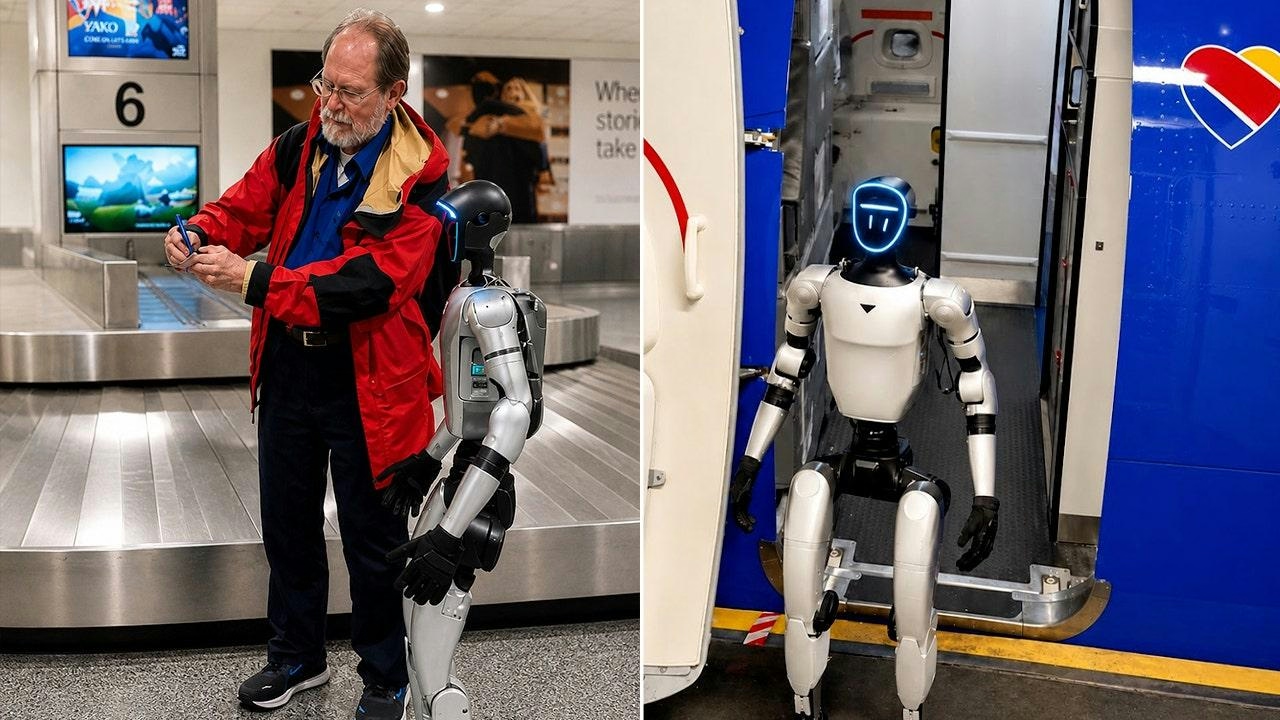
Southwest Airlines Bans Humanoid Robots Amid Growing AI Integration in Aviation
Southwest Airlines has taken a definitive stance on the presence of humanoid robots in air travel, instituting a formal ban on such devices aboard all its flights. The Dallas-based carrier’s updated policy prohibits humanoid and animal-like robots from both passenger cabins and cargo holds, regardless of their size or purpose. This move reflects growing concerns as advanced robotics transition from experimental settings into everyday environments, including commercial aviation.
Incident Sparks Policy Change
The airline’s decision follows a recent incident that brought the issue to national attention. A Dallas robotics entrepreneur purchased a ticket for a human-like robot named “Stewie,” allowing the machine to travel as a passenger on a Southwest flight from Las Vegas to Dallas. Images and videos of Stewie seated among travelers quickly circulated online, igniting debate over the regulatory status of such robots. Flight crews reportedly faced challenges in categorizing the robot—whether as cargo, electronic equipment, hazardous material, or a passenger—highlighting a regulatory ambiguity that Southwest’s new policy now seeks to eliminate.
Safety Concerns and Regulatory Clarity
Southwest’s updated guidelines explicitly ban any robot designed to mimic human or animal appearance, movement, or behavior from being transported on its aircraft, whether as checked baggage, cargo, or in the cabin. The airline cites significant safety concerns, particularly regarding the lithium-ion batteries that power these robots’ motors, sensors, cameras, and AI processors. These batteries pose a well-documented fire risk if they malfunction. Unlike conventional electronic devices, humanoid robots often contain concealed battery systems and intricate mechanical components, complicating safety inspections during boarding and screening procedures.
This policy represents one of the first comprehensive bans on humanoid robots by a major U.S. airline. Industry analysts suggest that Southwest’s firm position may prompt other carriers to clarify their own policies as robotics technology becomes increasingly accessible and visible in public spaces.
Divergent Industry Approaches to Robotics
Despite Southwest’s restrictive approach, the aviation industry remains divided on the integration of robotics. While Southwest opts for caution, other airlines are actively exploring the use of humanoid robots to enhance operational efficiency. For instance, Japan Airlines is testing humanoid robots for ground-handling tasks to address labor shortages, exemplifying a broader trend toward automation within the sector. This divergence underscores a market balancing the potential benefits of robotics against safety and operational challenges.
Broader Implications for AI and Travel
Southwest’s ban reflects a wider societal shift as artificial intelligence and robotics become more prevalent in daily life. Machines capable of speech, facial recognition, and autonomous movement are increasingly common outside research laboratories, compelling airlines and regulators to confront complex questions surrounding safety, liability, and the evolving role of technology in travel. For now, Southwest’s policy signals a clear boundary: the skies remain a domain reserved for human passengers.

Etihad Airways Suspends Airbus A380 Flights on Key Route

Aditya Birla Group Seeks Approval for Aircraft Leasing in GIFT City

Qatar Airways Highlights Innovation and Connectivity at Arabian Travel Market 2026

Hong Kong's Five-Year Plan Includes Andrew Fan's Aircraft Parts Processing Hub Proposal

ACIA Aero Leasing Delivers ATR72-600 to Air Nostrum

RTX Appoints Jill Albertelli as Head of Pratt & Whitney

TAT Technologies Joins Beyond Aero Hydrogen Aircraft Program

AURAK Study Highlights Barriers to Air Taxi Adoption in Emerging Economies

Xiamen Air Selects Altitude for 787 Maintenance at Heathrow

Etihad and Swissport Extend Global Partnership
