
Trasforma le intuizioni dell’IA in azioni concrete

Tendenze
Categories
The Role of American Propulsion in Future Global UAV Missions
The Role of American Propulsion in Future Global UAV Missions
Advancing UAV Propulsion Through Strategic Innovation
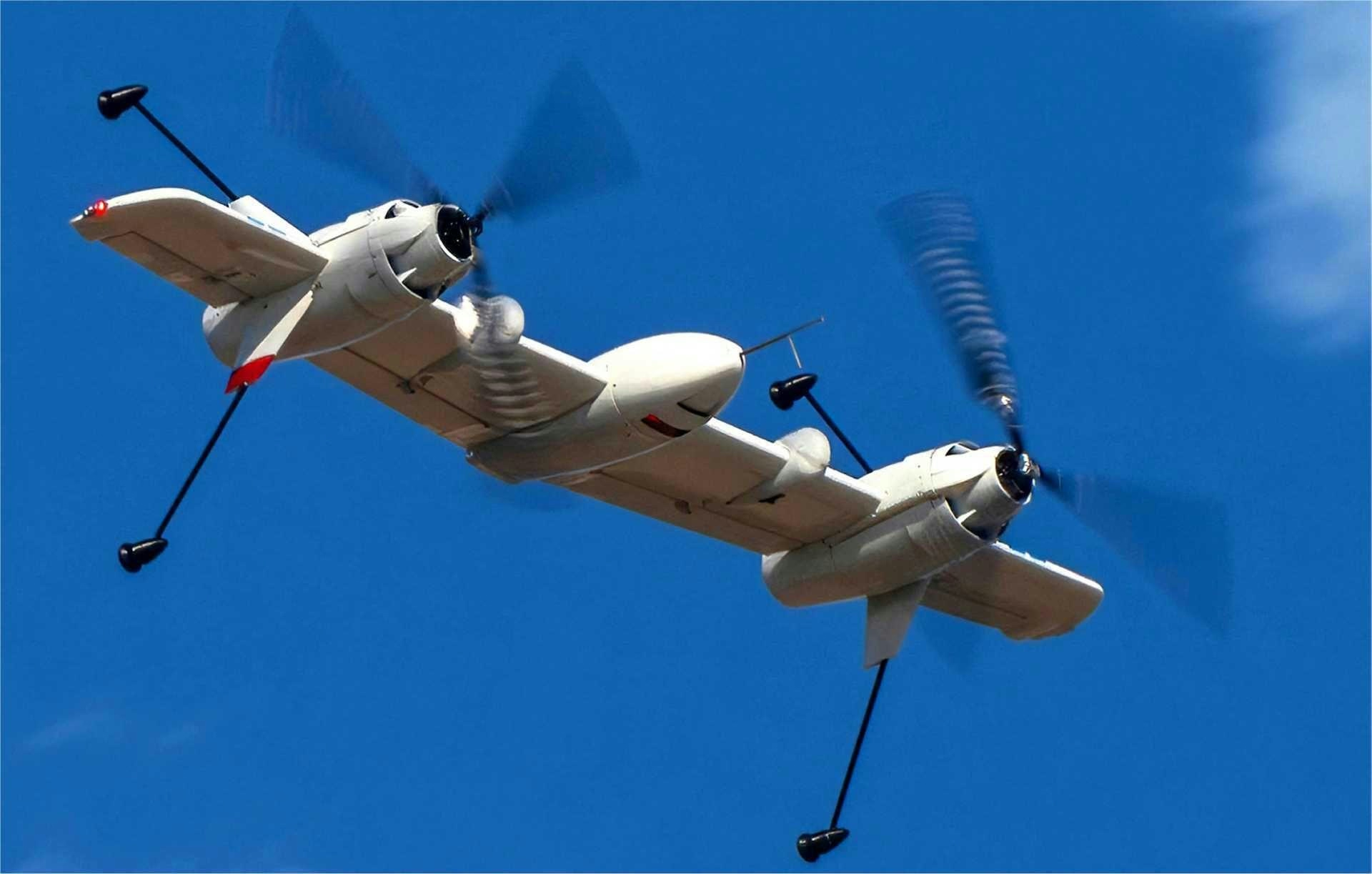
The global unmanned aerial systems (UAS) sector is experiencing a significant transformation driven by escalating geopolitical tensions and an increasing demand for sophisticated intelligence capabilities. Central to this evolution is Northwest UAV (NWUAV), an Oregon-based company that has emerged as a pivotal force within the American UAV propulsion industry. NWUAV’s approach is anchored in three strategic pillars: the Single-Fuel Mandate, Supply Chain Sovereignty, and Vertical Integration. Through these initiatives, the company is not only manufacturing advanced engines but also strengthening the resilience of national security infrastructure.
The Single-Fuel Mandate addresses a longstanding logistical challenge faced by military operations, which have traditionally managed multiple fuel types across different platforms. While ground vehicles and manned aircraft commonly utilize heavy fuels such as JP-8, many tactical UAVs have depended on high-octane gasoline, creating a complex and potentially hazardous dual-fuel environment. NWUAV’s portfolio of heavy-fuel engines—including the NW-44, NW-88, and NW-230—is engineered to operate efficiently on the same fuels already deployed in military theaters. These multi-fuel systems streamline logistics, enhance operational safety, and improve survivability, aligning closely with NATO’s “Single Fuel” initiative. Moreover, NWUAV engines are capable of performing at density altitudes up to 36,000 feet, enabling seamless mission launches from a variety of environments while reducing logistical burdens and associated risks.
Ensuring National Security Through Domestic Manufacturing
As the drone industry matures, dependence on global supply chains has evolved from a matter of convenience to a critical vulnerability. Foreign-manufactured propulsion components pose risks including embedded “kill switches,” data breaches, and abrupt supply interruptions. In response, NWUAV has committed since 2013 to developing a fully American-made propulsion stack, consolidating all design, manufacturing, and support operations at its AS9100D-certified facility in McMinnville, Oregon. This reshoring effort guarantees that U.S. defense contractors and agencies have access to propulsion systems free from adversarial influence. The company’s adherence to EAR99 export approval and stringent American aerospace standards provides customers with transparency and reliability—factors that are increasingly vital as secure supply chains and trusted microelectronics become top priorities for the Department of Defense.
Navigating Global Competition and Emerging Opportunities
Despite these technological and strategic advancements, American propulsion manufacturers face formidable competition from established foreign entities, particularly China, which has rapidly expanded its drone industry. With signals from Congress and the current administration indicating increased investment in revitalizing the domestic drone sector, demand for American-made propulsion systems is anticipated to grow substantially. This development may prompt intensified efforts by foreign competitors to maintain their market share, while U.S. companies like NWUAV capitalize on their domestic manufacturing capabilities and national security advantages.
The escalating global threat posed by drones, as emphasized by leaders of counter-drone task forces, highlights the urgent need for advanced and secure propulsion solutions. In this context, American propulsion technology is positioned to play a critical role in shaping the future of global UAV missions, offering not only innovation but also the assurance of supply chain integrity and operational security.

Etihad Airways Suspends Airbus A380 Flights on Key Route

Aditya Birla Group Seeks Approval for Aircraft Leasing in GIFT City

Qatar Airways Highlights Innovation and Connectivity at Arabian Travel Market 2026

Hong Kong's Five-Year Plan Includes Andrew Fan's Aircraft Parts Processing Hub Proposal

ACIA Aero Leasing Delivers ATR72-600 to Air Nostrum

RTX Appoints Jill Albertelli as Head of Pratt & Whitney

TAT Technologies Joins Beyond Aero Hydrogen Aircraft Program

AURAK Study Highlights Barriers to Air Taxi Adoption in Emerging Economies

Xiamen Air Selects Altitude for 787 Maintenance at Heathrow

Etihad and Swissport Extend Global Partnership
