AeroGenie: il tuo copilota intelligente.

Tendenze
Categories
United’s 737 MAX 10s Have Flown Over 300 Hours Without Passengers
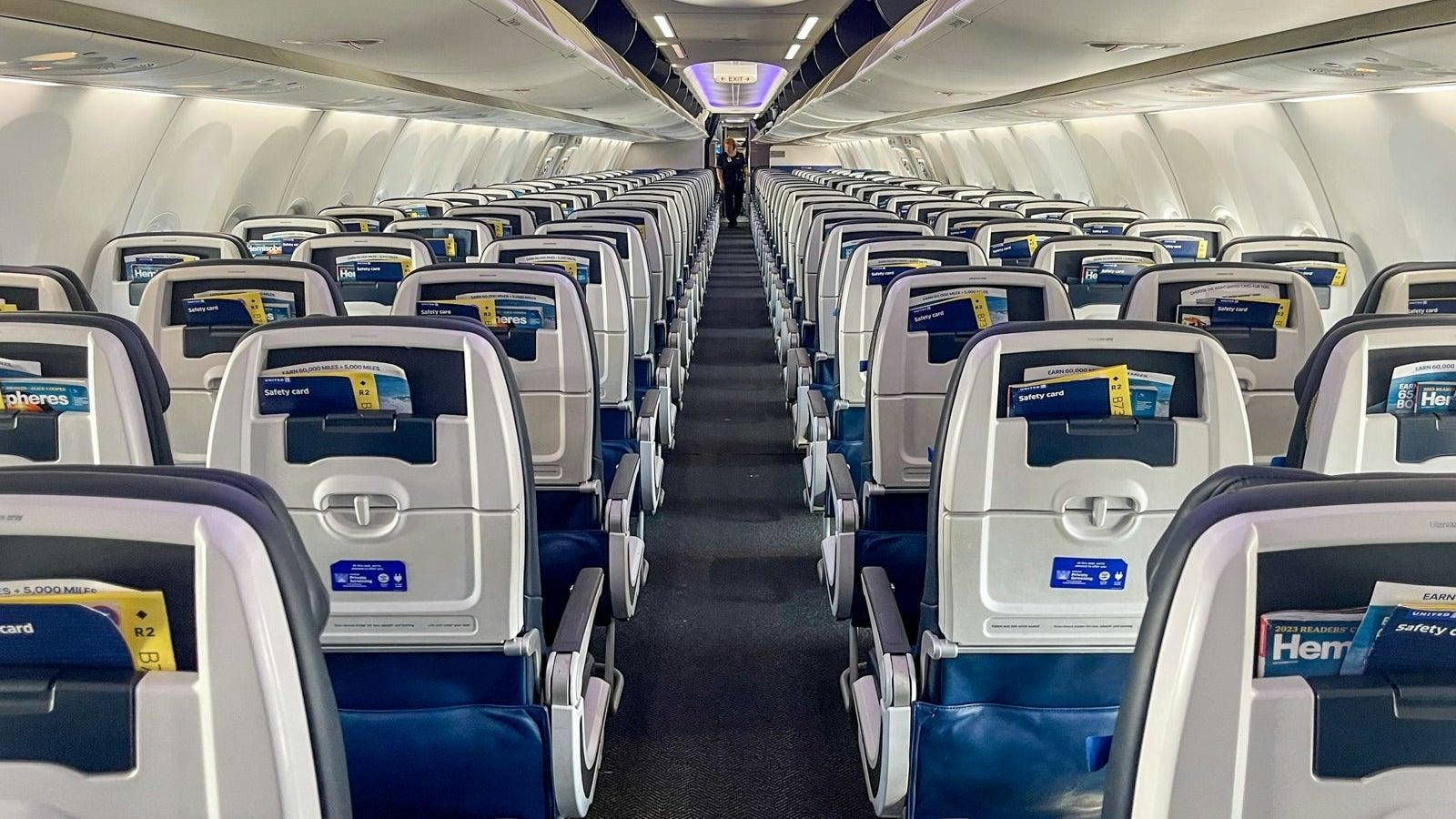
United’s 737 MAX 10s Accumulate Over 300 Hours of Passenger-Free Flight
Boeing’s newest commercial aircraft models continue to encounter significant certification delays, with the 737 MAX 7 and 10 narrowbodies, alongside the 777X widebody family, entering service years later than initially planned. Despite these setbacks, many of the aircraft have already been manufactured and are undergoing regular test flights to maintain airworthiness while awaiting regulatory approval.
United Airlines’ Experience with the 737 MAX 10
For United Airlines, the delays have had a pronounced impact. Data from Aviation Flights reveals that United’s undelivered Boeing 737 MAX 10s have collectively logged more than 300 flight hours without carrying passengers. According to fleet information from ch-aviation, United currently holds orders for 167 MAX 10 aircraft, with those already produced averaging 2.6 years in age. The oldest of these, registered as N27751, first took to the skies in June 2021 and most recently completed a test flight from Boeing Field on December 16. Other aircraft in the series, including N27752 and N27753, have also conducted recent test flights, underscoring ongoing efforts to keep the jets operationally ready.
These flights form part of the broader certification process, which remains a critical barrier before the aircraft can enter commercial service. United initially emphasized the MAX 10’s potential to enhance its domestic network by introducing larger and more efficient aircraft. However, the airline continues to await delivery as the certification timeline extends.
Industry-Wide Challenges and Developments
In addition to Boeing-related delays, United has faced minor operational disruptions unrelated to the manufacturer, such as a recall affecting six Airbus A320 aircraft in its fleet. This situation highlights the broader challenges airlines face in managing supply chain complexities and certification issues across multiple manufacturers.
Other carriers are closely monitoring the progress of the MAX 10. WestJet Airlines, for instance, is advancing its own certification process and expects to receive its first MAX 10 by the end of 2026. The wider industry remains cautious, aware that further delays could influence competitive dynamics and fleet planning strategies.
Boeing is actively addressing ongoing quality concerns through an internal initiative described as a “war on defects,” aimed at resolving production issues and meeting growing demand. Despite these efforts, the company continues to face scrutiny as it refines its manufacturing processes.
Innovation Amidst Delays: The ecoDemonstrator Program
Among United’s future MAX 10s, aircraft N27602 stands out as part of Boeing’s ecoDemonstrator research program in partnership with NASA. This jet, distinguished by a striped livery, has been used for test flights powered by Sustainable Aviation Fuel (SAF). Accompanied by a NASA Douglas DC-8 to measure emissions, these flights contribute to research comparing the environmental impact of SAF against conventional jet fuel, including differences in contrail formation.
As Boeing and its airline customers navigate certification delays, quality challenges, and evolving regulatory requirements, the 737 MAX 10 remains a focal point for the aviation industry—symbolizing both innovation and the complexities inherent in modern aircraft manufacturing.
Elroy Air’s Autonomous Chaparral Delivers Lunch on A-to-B Flight
Texarkana College Holds First Graduation for Aviation Maintenance Technician Program

Airlines Adapt to Trade Disruptions and Supply Chain Challenges
AI’s Growing Energy Use Challenges Airlines’ Net-Zero Targets
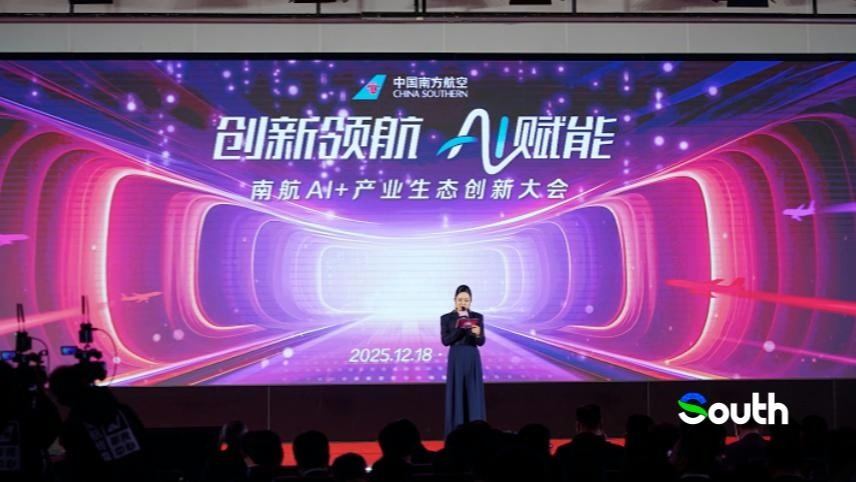
China Southern Airlines Highlights AI Innovations at Guangzhou Conference
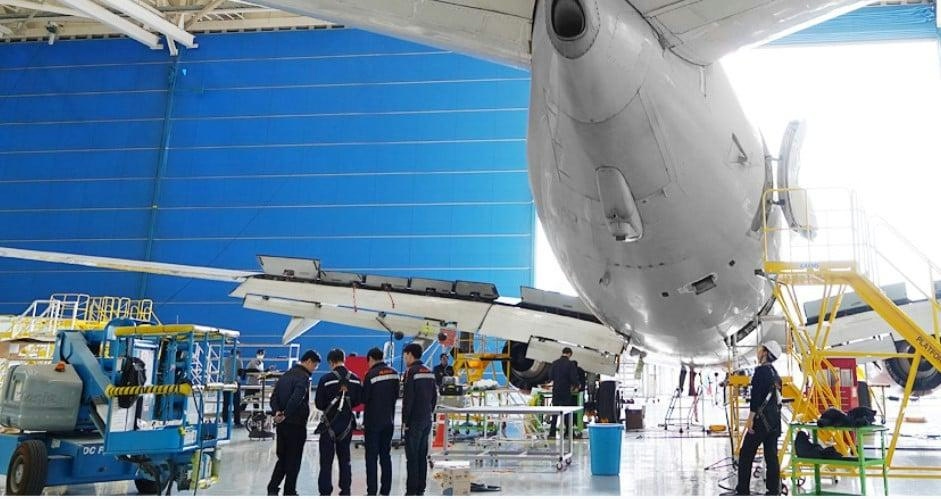
KAEMS Expands MRO Services with Tadpole Partnership
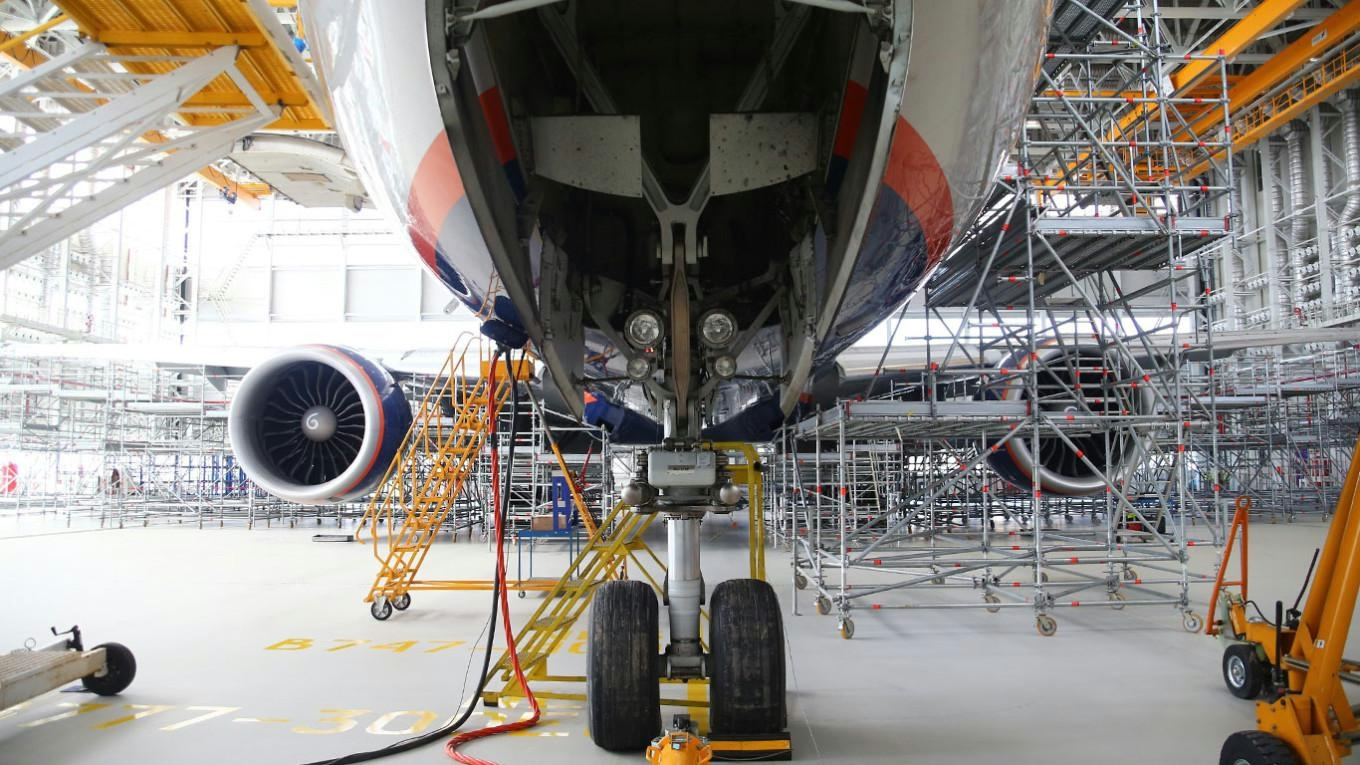
Russian Airlines Report Nine Engine Failures in One Week

AI's Role in the Holiday Season
Three Decades of Global Tourism Influenced by the Boeing 777