
Trasforma le intuizioni dell’IA in azioni concrete

Tendenze
Categories
Why Future Business Class Seats Are Expected to Be Heavier
Why Future Business Class Seats Are Expected to Be Heavier
The business class sector is undergoing a remarkable expansion, with the premium market projected to grow by 11.8% in 2024, reaching 116.9 million passengers. Once predominantly reserved for corporate executives, premium cabins are now increasingly favored by leisure travelers, a phenomenon often referred to as the "democratization of premium travel." This shift has intensified competition among airlines, each striving to offer superior business class products to attract a broader customer base and justify escalating airfares.
However, the enhancements that define modern business class—such as longer beds, larger entertainment screens, and increased privacy—come with a significant trade-off: added weight. This increase not only elevates operational costs, particularly fuel consumption, but also poses challenges to profit margins. Despite these concerns, airlines show no inclination to reduce the luxury of their offerings. Instead, they are investing in advanced materials and innovative seat designs to mitigate the impact of heavier seats.
Factors Contributing to Increased Seat Weight
The primary factor driving the weight increase in premium seats is the rising expectation among passengers for comfort and privacy. Business class travelers now demand amenities akin to those found in high-end hotels, including full-height dividers, sliding doors, expansive entertainment systems, motorized seat controls, and plush bedding. These features have led to a new generation of business class seats that are substantially heavier than their predecessors. For instance, the average business class seat on an Airbus A350-900 weighs approximately 220 pounds (100 kilograms).
This additional weight necessitates greater fuel consumption, thereby increasing operational expenses and presenting engineering challenges. The concentration of these heavier seats at the front of the aircraft can affect weight distribution, prompting manufacturers such as Airbus to develop modular suite architectures designed to better manage mass balance and maintain aircraft performance.
Emerging Trends in Business Class Seating
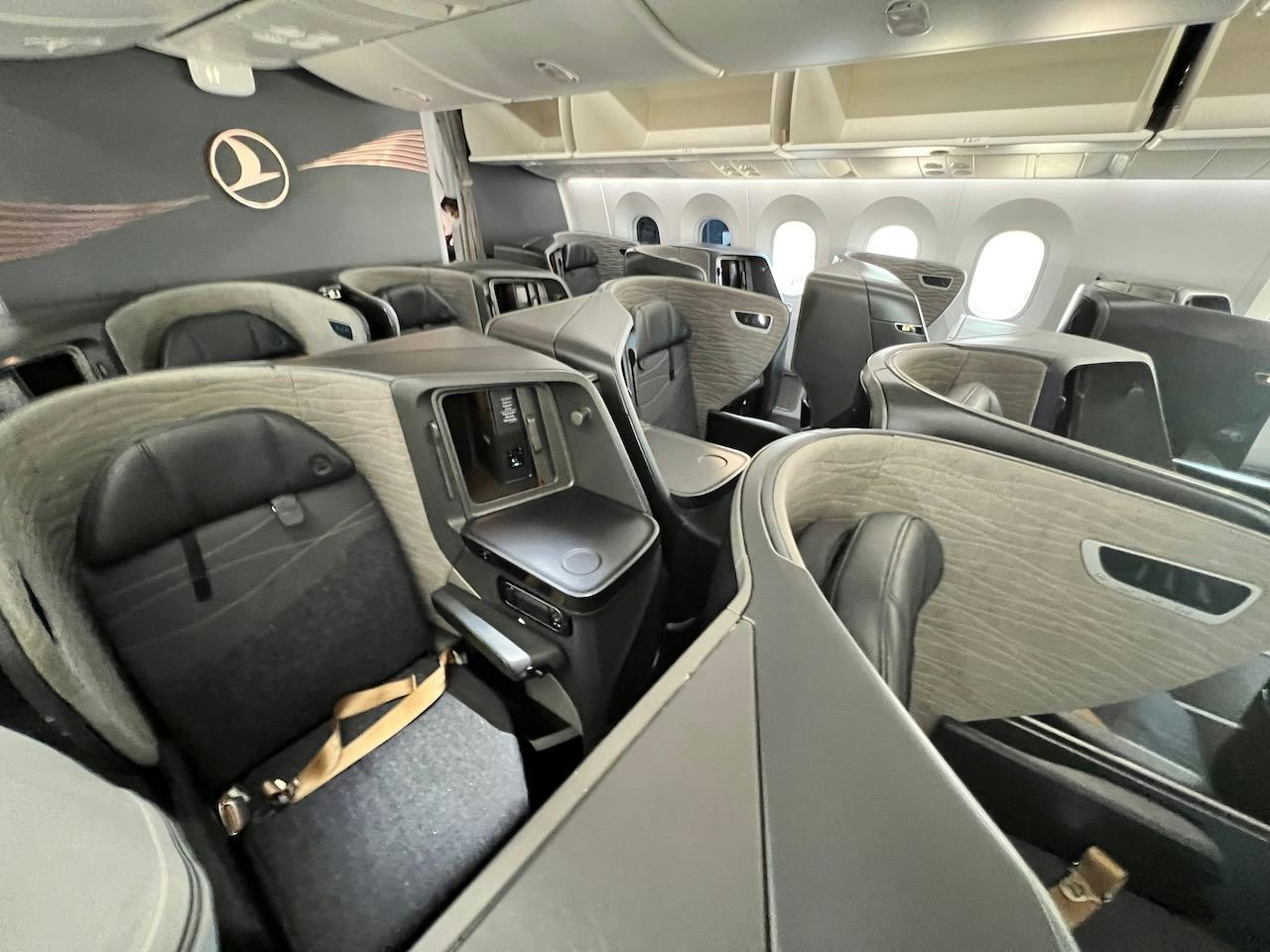
Recent product launches indicate that the trend toward heavier business class seats is set to continue. Turkish Airlines plans to introduce its new 'Crystal' business class suite, based on the Safran Unity platform, across its Boeing 777-300ER fleet by 2026. This suite features sliding doors, high sidewalls, retractable privacy dividers, a 22-inch 4K screen, Bluetooth audio, and wireless charging—all contributing to increased seat weight. As these upgrades are implemented on existing aircraft, airlines will carefully assess whether the additional revenue generated from premium passengers compensates for the higher operational costs.
Broader Industry Implications
The emphasis on premium cabins extends beyond Turkish Airlines, with major carriers such as United and American Airlines also expanding their premium offerings. This trend is likely to further increase aircraft weight and operational expenses. As airlines invest heavily in premium products, there is a risk that economy passengers may face reduced space and higher costs across all classes. To sustain profitability, airlines may pass these increased expenses onto consumers through higher ticket prices, affecting not only business class but the entire cabin.
This competitive dynamic is expected to drive airlines to continually enhance their premium services, fueling a cycle of escalating amenities and associated costs. As the race to provide the most luxurious business class experience intensifies, the future of air travel may be characterized by even heavier seats and correspondingly higher prices for all passengers.

Etihad Airways Suspends Airbus A380 Flights on Key Route

Aditya Birla Group Seeks Approval for Aircraft Leasing in GIFT City

Qatar Airways Highlights Innovation and Connectivity at Arabian Travel Market 2026

Hong Kong's Five-Year Plan Includes Andrew Fan's Aircraft Parts Processing Hub Proposal

ACIA Aero Leasing Delivers ATR72-600 to Air Nostrum

RTX Appoints Jill Albertelli as Head of Pratt & Whitney

TAT Technologies Joins Beyond Aero Hydrogen Aircraft Program

AURAK Study Highlights Barriers to Air Taxi Adoption in Emerging Economies

Xiamen Air Selects Altitude for 787 Maintenance at Heathrow

Etihad and Swissport Extend Global Partnership
