
Zet AI‑inzichten om in gerichte actie

Trending
Categories
Advances in Rotary-Wing Avionics Signal a New Era
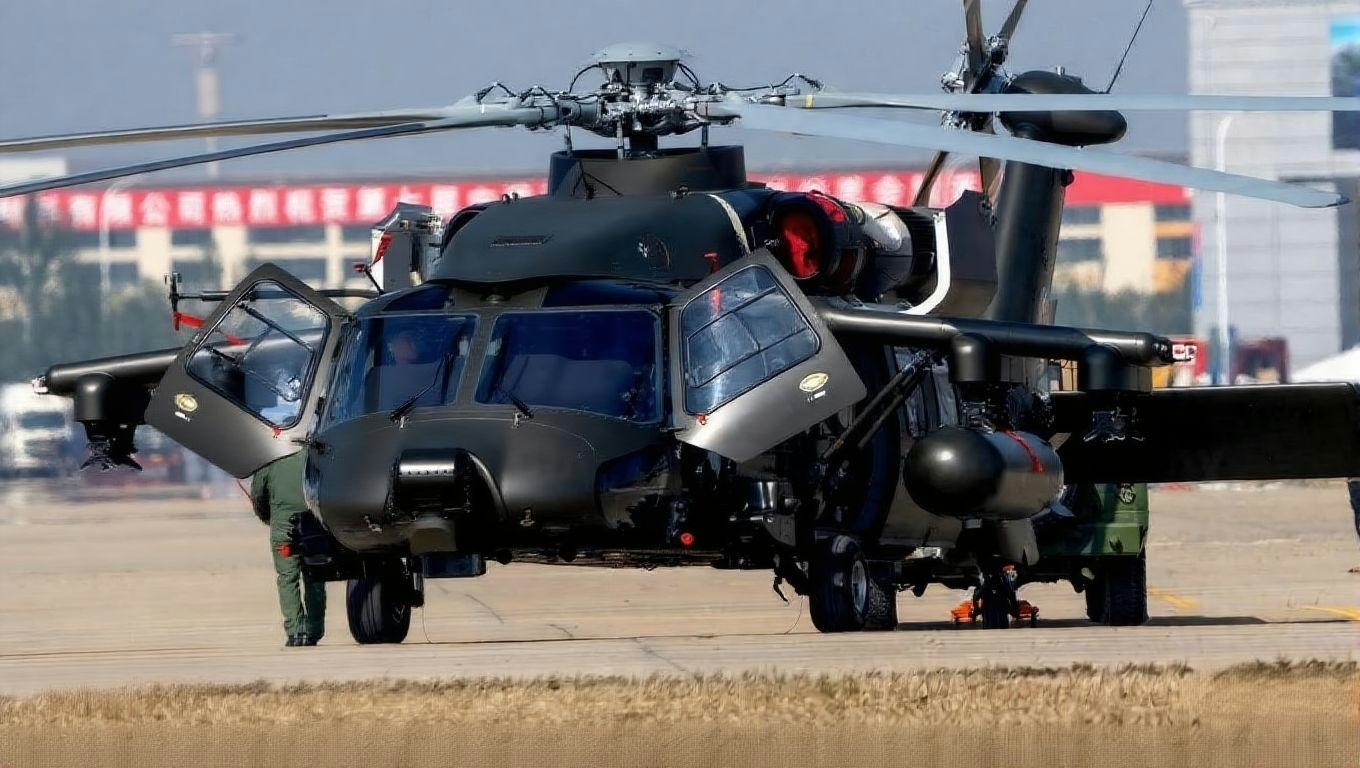
Advances in Rotary-Wing Avionics Signal a New Era
Rotary-wing avionics within the U.S. military and allied forces are undergoing a profound transformation driven by the need to address rapidly evolving threats. Traditional hardware-refresh cycles that once dictated cockpit upgrades are being surpassed by the introduction of new architectures, smarter sensors, and software-defined systems. This evolution reflects a shift not only in technology but also in the approach to sustaining and enhancing rotary-wing capabilities.
Reimagining the Helicopter Cockpit
Historically, helicopter cockpits have been characterized by a dense array of gauges and switches, requiring extensive pilot training. However, legacy platforms such as the Black Hawk and Apache now operate in environments their original avionics were never designed to handle. These environments are increasingly GPS-contested, communications-degraded, and saturated with advanced detection and engagement threats. In response, a new generation of helicopters is being developed from the ground up with open architectures and software-driven capabilities at their core.
This transformation raises critical procedural questions for the defense industry. Maintaining mission readiness during avionics upgrades, embedding robust security in hardware expected to remain operational for decades, and establishing open architecture as a verifiable engineering standard rather than a mere marketing term are among the pressing challenges currently being addressed.
Open Architecture: From Policy to Implementation
Investment in avionics modernization is accelerating, with open architecture emerging as a central focus. Representatives from RTX, based in Arlington, Virginia, emphasize that the primary motivations include combating system obsolescence, adopting modular open systems architectures (MOSA), and enabling rapid integration of new mission capabilities to improve situational awareness and interoperability.
MOSA, initially mandated by Congress, now forms the foundation of nearly every major U.S. military aviation program. The Army’s Program Executive Office (PEO) Aviation has embraced MOSA as a framework to enhance affordability, readiness, and capability growth. This approach leverages standards such as the Future Airborne Capability Environment (FACE) and Hardware Open System Technologies (HOST). These policies have translated into concrete programmatic decisions, exemplified by the selection of RTX subsidiary Collins Aerospace to lead the Army’s UH-60 avionics modernization effort. This choice reflects a growing demand for MOSA-aligned solutions that accelerate upgrade timelines while reducing integration risks.
Boeing’s AH-64E v6.5 upgrade path further illustrates this trend, positioning the Apache as the Army’s first enduring MOSA-compliant platform. The upgrade enhances communications, navigation, and sensor fusion capabilities. Bell is also advancing open-architecture solutions across its rotorcraft portfolio, underscoring the industry-wide commitment to this paradigm.
Market Dynamics and Emerging Competitors
The technological evolution in rotary-wing avionics is accompanied by significant market activity and competitive developments. Reliable Robotics’ recent $160 million funding round and its pursuit of FAA certification for autonomous flight systems by 2028 highlight the growing emphasis on automation within the sector. Meanwhile, companies such as Garmin and Jeppesen are integrating advanced avionics and emergency features, intensifying competition to deliver next-generation capabilities.
Military applications are expanding in parallel. The U.S. Air Force’s interest in one-way attack drones suggests a potential shift in the operational roles of rotary-wing platforms. Certo Aerospace’s demonstration of its Capstone rotary-wing unmanned aerial system (UAS) in anti-submarine warfare further underscores the increasing importance of unmanned systems. Additionally, Rotor Technologies’ progression toward production of the unmanned R44 helicopter reflects rising demand for autonomous rotary-wing solutions.
Collectively, these advances mark a dynamic and rapidly evolving landscape for rotary-wing avionics, characterized by open architectures, strategic investments, and a growing focus on autonomy and adaptability.

Etihad Airways Suspends Airbus A380 Flights on Key Route

Aditya Birla Group Seeks Approval for Aircraft Leasing in GIFT City

Qatar Airways Highlights Innovation and Connectivity at Arabian Travel Market 2026

Hong Kong's Five-Year Plan Includes Andrew Fan's Aircraft Parts Processing Hub Proposal

ACIA Aero Leasing Delivers ATR72-600 to Air Nostrum

RTX Appoints Jill Albertelli as Head of Pratt & Whitney

TAT Technologies Joins Beyond Aero Hydrogen Aircraft Program

AURAK Study Highlights Barriers to Air Taxi Adoption in Emerging Economies

Xiamen Air Selects Altitude for 787 Maintenance at Heathrow

Etihad and Swissport Extend Global Partnership
