
Zet AI‑inzichten om in gerichte actie

Trending
Categories
Air Canada Orders Eight Airbus A350-1000s to Expand International Fleet
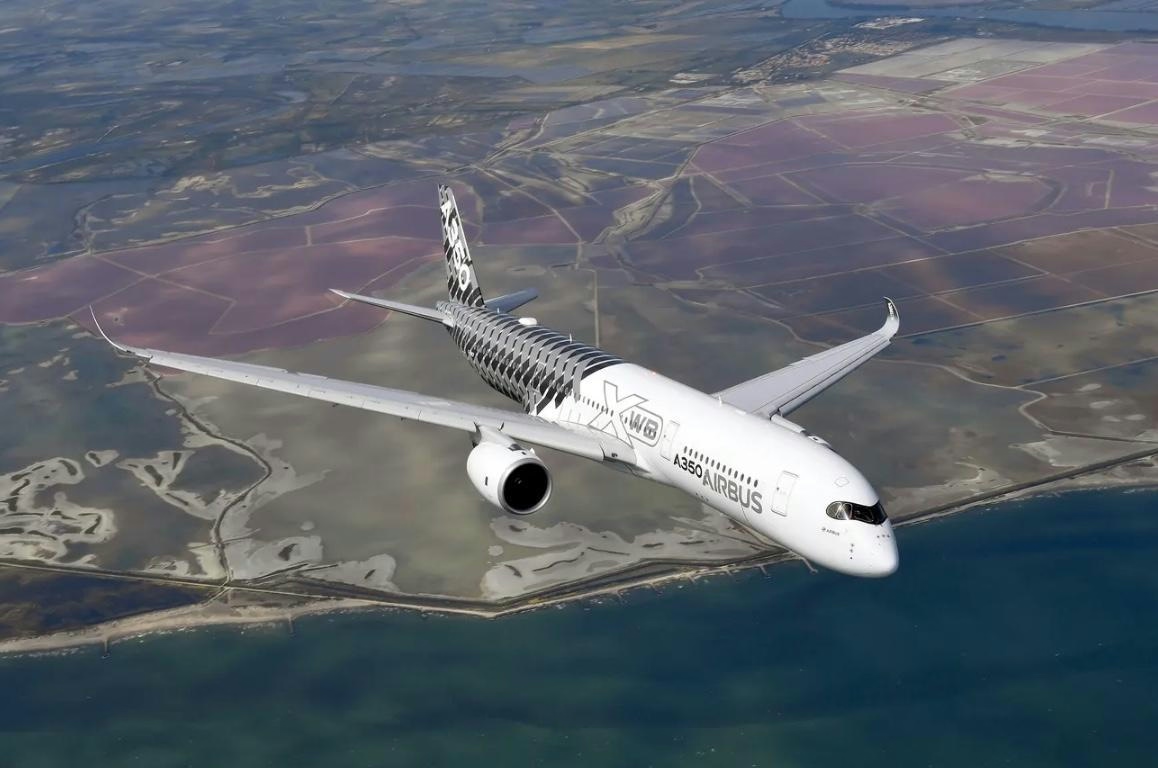
Air Canada Expands Long-Haul Fleet with Airbus A350-1000 Order
Air Canada has announced a significant advancement in its fleet modernization strategy with an order for eight Airbus A350-1000 aircraft, accompanied by options for an additional eight. The airline anticipates the first deliveries in the latter half of 2030, marking a pivotal expansion of its long-haul international operations. This move introduces a new dimension to Air Canada’s predominantly Boeing-based long-haul fleet, which currently includes Boeing 777s and 787 Dreamliners, supplemented by a limited number of Airbus A330-300s.
Strategic Significance of the A350-1000 Acquisition
The A350-1000 is recognized for its superior fuel efficiency, reportedly 25% more efficient than previous-generation aircraft, a factor that aligns with Air Canada’s goals for sustainable growth and operational cost reduction. The airline views this acquisition as central to shaping its next era of international service. While Air Canada has been a substantial operator of Airbus narrowbody aircraft, such as the A220 and A320 families, this order marks its first widebody commitment to Airbus in nearly thirty years. The new A350-1000s will be equipped with Rolls-Royce Trent XWB97 engines, underscoring the airline’s focus on advanced technology and performance.
Although the financial details of the deal have not been disclosed, the last known list price for the A350-1000 was approximately $360 million per aircraft in 2018. Given typical industry discounts and the inclusion of options, the total value of the order could exceed $3 billion if all options are exercised.
Mark Galardo, Air Canada’s Executive Vice President, Chief Commercial Officer, and President of Cargo, emphasized the strategic importance of the acquisition, stating that the A350-1000 will enhance the airline’s global leadership by offering extended range, increased payload capacity, and improved economic performance. These attributes are expected to unlock new long-haul route possibilities and elevate the customer experience.
Anticipated Onboard Experience and Cabin Features
While Air Canada has yet to release specific details regarding the seating configuration of its forthcoming A350-1000 fleet, industry standards and recent developments within the airline provide some indication of what passengers might expect. The carrier has recently introduced a new cabin standard for its Boeing 787-10 and Airbus A321XLR aircraft, suggesting a similar approach may be applied to the A350-1000.
Most operators configure the A350-1000 with a nine-abreast economy layout, balancing passenger comfort and capacity. However, some airlines, such as Philippine Airlines, have opted for a denser ten-abreast arrangement, reducing seat width to 17 inches. Air Canada’s choice in this regard remains to be seen.
The A350-1000 is notable for its low cabin altitude of 6,000 feet, which contributes to passenger comfort by reducing fatigue and jet lag. Additionally, the aircraft features Airbus’s ‘Airspace’ cabin design philosophy, incorporating adjustable mood lighting and noise-dampening technologies to create a quieter and more pleasant environment for travelers.
As Air Canada continues to expand its fleet, the integration of the A350-1000 is poised to play a crucial role in the airline’s international growth strategy, complementing its existing aircraft and enhancing its competitive position in the global aviation market.

Etihad Airways Suspends Airbus A380 Flights on Key Route

Aditya Birla Group Seeks Approval for Aircraft Leasing in GIFT City

Qatar Airways Highlights Innovation and Connectivity at Arabian Travel Market 2026

Hong Kong's Five-Year Plan Includes Andrew Fan's Aircraft Parts Processing Hub Proposal

ACIA Aero Leasing Delivers ATR72-600 to Air Nostrum

RTX Appoints Jill Albertelli as Head of Pratt & Whitney

TAT Technologies Joins Beyond Aero Hydrogen Aircraft Program

AURAK Study Highlights Barriers to Air Taxi Adoption in Emerging Economies

Xiamen Air Selects Altitude for 787 Maintenance at Heathrow

Etihad and Swissport Extend Global Partnership
