
Zet AI‑inzichten om in gerichte actie

Trending
Categories
Airbus Aims to Deliver 84 Jets Monthly in 2026 Amid Supply Chain Challenges
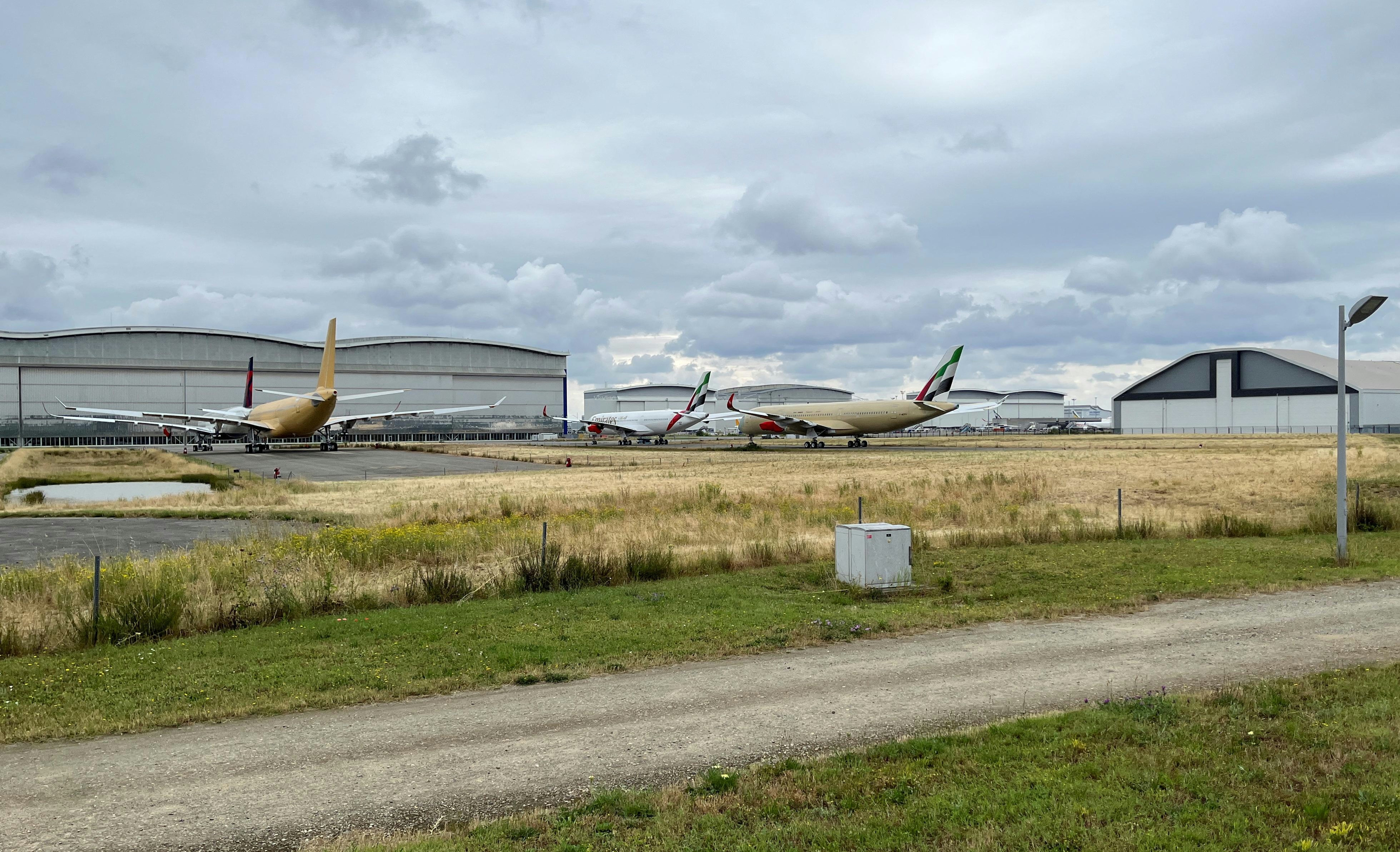
Airbus Aims to Deliver 84 Jets Monthly in 2026 Amid Supply Chain Challenges
Airbus is confronting a formidable challenge as it strives to meet its delivery targets for 2026. Having delivered only 114 aircraft in the first quarter, the European aerospace leader has set an ambitious goal of 870 deliveries by the end of the year. To reach this milestone, Airbus must increase its production rate to 84 jets per month—more than double its current output of 38 monthly aircraft. With three quarters remaining, the company faces the daunting task of manufacturing 756 additional planes, requiring not just incremental improvements but a significant overhaul of its production processes.
Demand and Backlog
The pressure on Airbus does not stem from a lack of demand. The company currently holds a substantial backlog of 9,037 aircraft orders, with nearly 8,000 of these for its A220 and A320 narrowbody families. The A321XLR, Airbus’s long-range narrowbody flagship, alone accounts for over 500 orders. The critical challenge lies in execution—delivering these aircraft on schedule amid ongoing supply chain disruptions.
Impact on Airlines
Airlines are directly affected by these delays. Canadian carrier Air Transat, for instance, has based its 2022-2026 strategy on acquiring four A321XLRs. The A321LR variant already connects secondary Canadian cities to European destinations, such as the Montreal-Dakar route, covering nearly 3,900 nautical miles. The extended range of the A321XLR promises to open new markets, but delivery delays disrupt airline planning, postponing route launches, limiting market access, and eroding competitive advantages.
Production Bottlenecks and Supply Chain Strains
The final assembly line for the A321XLR in Hamburg, Germany, is the program’s central hub, but Airbus’s manufacturing network is globally dispersed. Components are sourced from across Europe and the United States, a strategy that provides resilience but also introduces vulnerabilities when any single supplier encounters difficulties.
The most significant bottleneck currently lies with engine supplier Pratt & Whitney. The GTF engine family, which powers every A321XLR, has become a critical point of failure. In 2023, contamination defects in powder metal components prompted the Federal Aviation Administration (FAA) to issue mandatory airworthiness directives, including AD-2023-01086-E, effective in 2024. These legally binding inspections have extended production timelines by several weeks. At one point last summer, Airbus had 60 completed airframes—referred to as “gliders”—parked without engines, rendering them undeliverable.
This situation has led to delayed module replacements, unpredictable delivery schedules, and forced airlines to adjust their fleet plans amid uncertainty. Expansion strategies for long-haul routes have stalled, and confidence in the PW1100G engine program has been shaken.
Additional Delays in Cabin Interiors
Engine issues are compounded by delays in cabin interiors. Essential components such as seats and galley units frequently arrive late, sometimes after the airframes are fully assembled. This sequencing problem prevents Airbus from completing aircraft for delivery, further exacerbating production delays.
Industry Implications and Competitive Dynamics
These supply chain challenges have already impacted major customers, including delays in Qantas’s A350-1000 deliveries. The wider industry is closely monitoring Airbus’s ability to meet its targets. Continued delays could prompt airlines to reconsider their orders and delivery expectations, potentially shifting their focus toward Boeing, despite the American manufacturer’s own well-documented difficulties.
Boeing is reportedly preparing to increase its 737 production to approximately 70 jets per month, aiming to narrow the gap with Airbus’s ambitious delivery goals. The competition to meet rising demand is intensifying, and for Airbus, achieving 84 monthly deliveries by 2026 hinges on overcoming significant execution challenges rather than market demand.

Bangladesh Launches Initiative to Become Regional Aviation Hub
Russia Transports PD-8 Engine to India for International Certification

Kyrgyzstan to Adopt EMPIC GmbH Software for Flight Safety Oversight

Why Hawaiian Airlines Is Waiting Until 2028 To Add A Premium Economy Cabin To Its Airbus A330 Fleet

Engine Fault Causes Royal Navy Helicopter Crash Fatality

Joby Aviation Begins Texas Air Taxi Test Flights Amid Stock Decline

Iberia Receives Full Approval for Airbus A350 Heavy Maintenance

NetJets to Construct Terminal and Hangar at Dallas Love Field

Using AI in Aircraft Purchases

CIAM Unveils RPD-150T Engine to Replace Rotax 150 hp Model
