
Zet AI‑inzichten om in gerichte actie

Trending
Categories
Airline Operated Largest Widebody Fleet in 2025
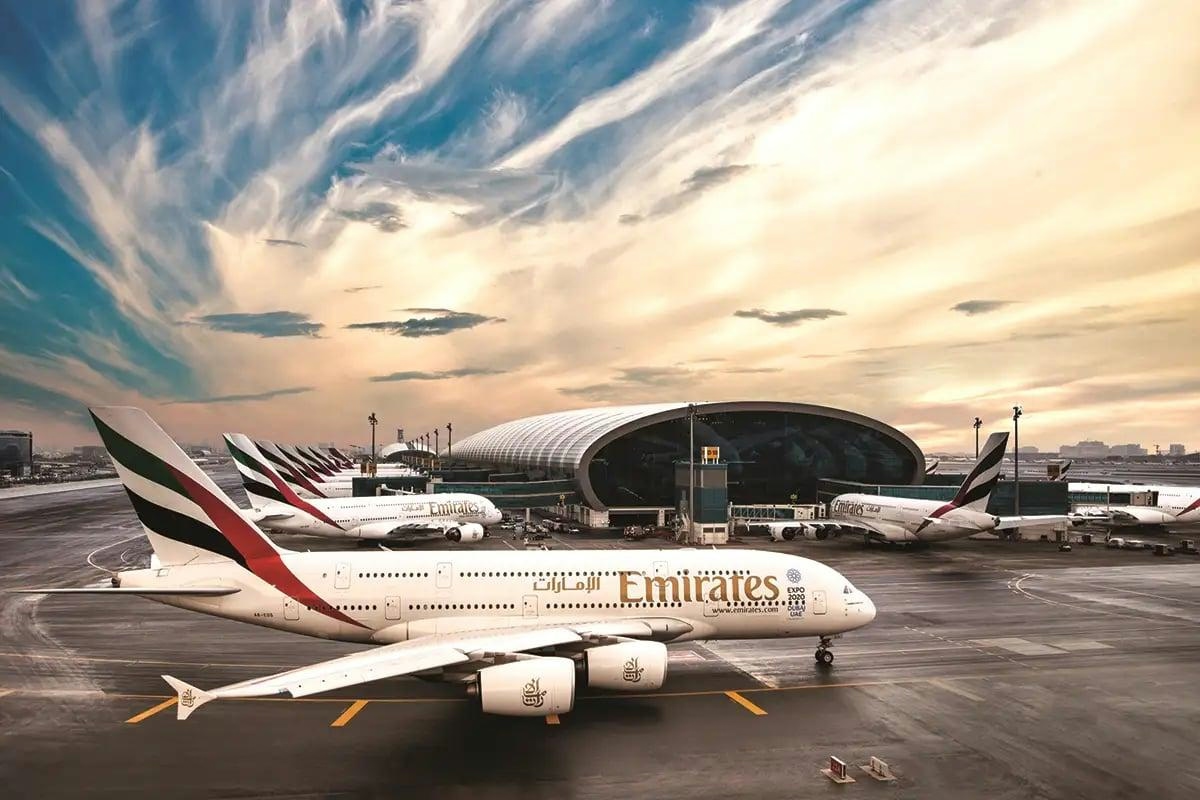
Emirates Operates World’s Largest Widebody Fleet in 2025
Emirates, the flag carrier of the United Arab Emirates, has reinforced its status as a global aviation leader in 2025 by operating the world’s largest widebody fleet. Since its inception in 1985 with just two aircraft, the Dubai-based airline has grown into a dominant force in international air travel. Its strategic focus on long-haul routes and premium service, combined with its advantageous geographic position, enables Emirates to efficiently connect passengers across Europe, Asia, Africa, and the Americas.
Fleet Composition and Service Excellence
The airline’s fleet is composed exclusively of widebody aircraft, prominently featuring the Airbus A380 and Boeing 777 models. This composition allows Emirates to serve high-demand international routes with substantial passenger capacity while maintaining a high standard of onboard comfort. Emirates’ dedication to innovation is reflected in its continuous investment in modern aircraft, cutting-edge in-flight entertainment systems, and enhanced onboard connectivity, delivering a superior travel experience across all cabin classes.
Dubai International Airport (DXB) functions as Emirates’ primary hub, equipped with state-of-the-art facilities that accommodate millions of travelers annually. Its strategic location at the crossroads of Europe, Asia, and Africa enables the airline to optimize its global network, facilitating efficient transfers and supporting rapid expansion. The airport’s modern terminals, advanced baggage handling systems, and luxurious lounges contribute to a seamless and high-quality service environment, further establishing Dubai as a premier global aviation hub.
Industry Challenges and Competitive Landscape
Despite its remarkable growth and operational scale, Emirates faces several industry-wide challenges in 2025. Notably, supply chain disruptions, including delays in Boeing’s widebody aircraft deliveries, pose potential obstacles to fleet expansion and scheduling. These issues are not unique to Emirates; other major carriers such as Delta Air Lines and Alaska Airlines are encountering similar difficulties as they seek to expand their widebody fleets. In response, these airlines are enhancing their international route offerings and leveraging strategic partnerships to improve operational efficiency and maintain competitiveness.
Market sentiment towards Emirates’ growth strategy remains optimistic, with strong investor interest underscoring confidence in the airline’s long-term prospects. Delta Air Lines, in particular, has demonstrated resilience in its stock performance amid industry disruptions, indicating a robust outlook for leading carriers operating within the widebody segment.
As Emirates continues to modernize its fleet and broaden its global network, its emphasis on quality, connectivity, and passenger comfort positions it to maintain its leadership role in international aviation. The airline’s capacity to adapt to evolving market dynamics and operational challenges will be critical to sustaining its prominence in the years ahead.

Etihad Airways Suspends Airbus A380 Flights on Key Route

Aditya Birla Group Seeks Approval for Aircraft Leasing in GIFT City

Qatar Airways Highlights Innovation and Connectivity at Arabian Travel Market 2026

Hong Kong's Five-Year Plan Includes Andrew Fan's Aircraft Parts Processing Hub Proposal

ACIA Aero Leasing Delivers ATR72-600 to Air Nostrum

RTX Appoints Jill Albertelli as Head of Pratt & Whitney

TAT Technologies Joins Beyond Aero Hydrogen Aircraft Program

AURAK Study Highlights Barriers to Air Taxi Adoption in Emerging Economies

Xiamen Air Selects Altitude for 787 Maintenance at Heathrow

Etihad and Swissport Extend Global Partnership
