
Zet AI‑inzichten om in gerichte actie

Trending
Categories
Amy Johnson Lecture: Preserving Legacy Aircraft from MRO to AI Innovations
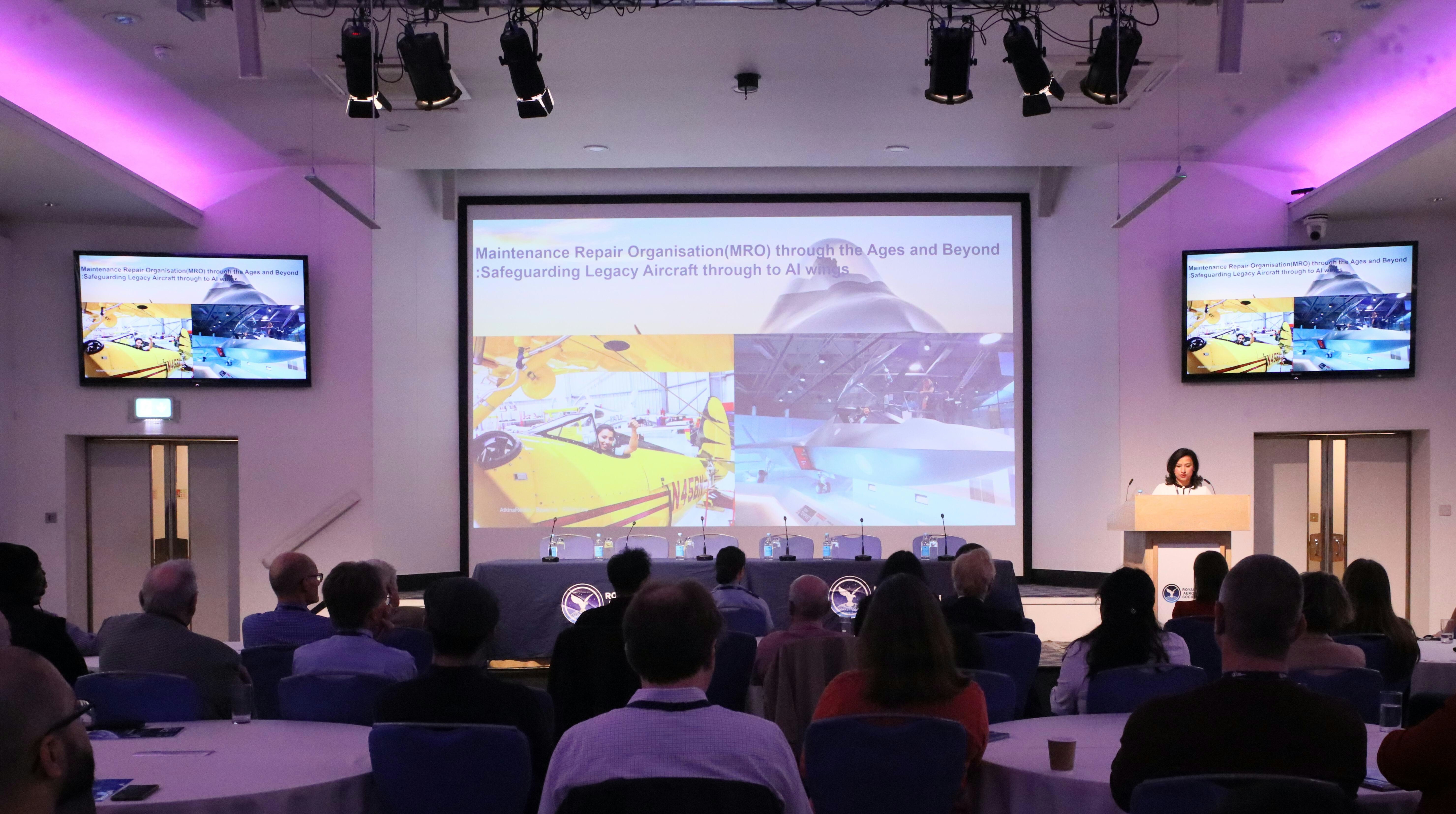
Amy Johnson Lecture Highlights Challenges in Preserving Legacy Aircraft Amid AI Advancements
In 2025, the Women in Aviation and Aerospace Committee (WAASC) reaffirmed its dedication to promoting gender equity and inclusion within the aerospace sector through a series of impactful events. A highlight of the year was the annual Amy Johnson Named Lecture, sponsored by Rolls-Royce and held at No.4 Hamilton Place on 18 September. The lecture, entitled “MRO Through the Ages and Beyond: Safeguarding Legacy Aircraft Through to AI Wings,” was delivered by Smriti Hamal CEng MRAeS, Senior Air Safety Consultant at AtkinsRéalis.
Integrating AI with Legacy Maintenance Systems
For the first time, the event incorporated a panel discussion that explored the transformative role of emerging technologies, particularly digital transformation and artificial intelligence (AI), in aviation safety systems. The panel featured industry experts including Verity Richardson, Negin Asadi, Katharine Syfret, Leah McDowell, Dawn Plant, alongside keynote speaker Smriti Hamal. The discussion emphasized the critical importance of accessibility and inclusion in the design of next-generation aircraft.
A central focus of the lecture and panel was the complex challenge of preserving legacy aircraft in an era of rapid technological advancement. The integration of sophisticated AI technologies with existing maintenance, repair, and operations (MRO) systems presents significant obstacles. These include ensuring compatibility with established infrastructure and addressing the skills gap among technicians who may lack familiarity with AI tools. Additionally, the industry faces skepticism from traditional MRO providers who question the practical benefits of AI, even as competitors increasingly invest in AI-driven solutions to maintain competitive advantage.
The dialogue also reflected broader trends within the aerospace sector, such as the U.S. Air Force’s evolving approach to fighter aircraft generations, which highlights the growing necessity of embedding AI into advanced aircraft systems. As the industry progresses, the need for collaboration, workforce upskilling, and inclusive design practices becomes increasingly urgent.
Future Initiatives and Industry Collaboration
Looking ahead, WAASC announced that the International Women’s Day Conferences for 2026 will take place on 6 March at the Royal Aeronautical Society (RAeS) headquarters in London and on 10 March in Paris. The theme for 2026, “Give to Gain,” will focus on how collaboration, allyship, and shared responsibility can drive enduring change across the aerospace sector.
Industry professionals and members are encouraged to remain engaged with WAASC and Equity, Diversity, and Inclusion (ED&I) initiatives by consulting the RAeS website. As the aerospace community navigates the dual challenges of technological innovation and legacy system preservation, collective action remains essential to accelerating progress and fostering meaningful transformation.

Etihad Airways Suspends Airbus A380 Flights on Key Route

Aditya Birla Group Seeks Approval for Aircraft Leasing in GIFT City

Qatar Airways Highlights Innovation and Connectivity at Arabian Travel Market 2026

Hong Kong's Five-Year Plan Includes Andrew Fan's Aircraft Parts Processing Hub Proposal

ACIA Aero Leasing Delivers ATR72-600 to Air Nostrum

RTX Appoints Jill Albertelli as Head of Pratt & Whitney

TAT Technologies Joins Beyond Aero Hydrogen Aircraft Program

AURAK Study Highlights Barriers to Air Taxi Adoption in Emerging Economies

Xiamen Air Selects Altitude for 787 Maintenance at Heathrow

Etihad and Swissport Extend Global Partnership
