
Zet AI‑inzichten om in gerichte actie

Trending
Categories
Boeing 777X Delays Leave Emirates and Lufthansa Committed to Orders
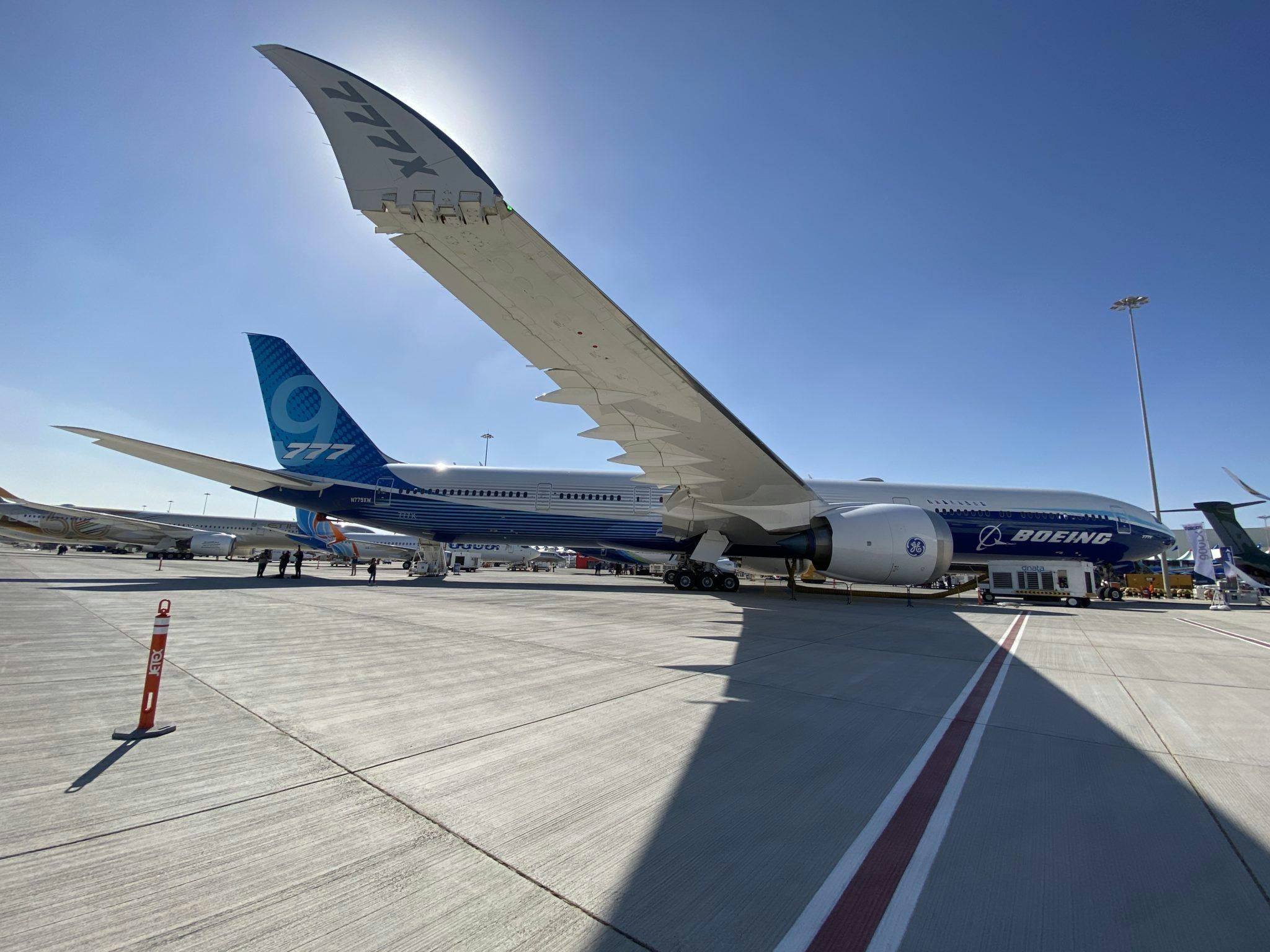
Boeing 777X Delays Leave Emirates and Lufthansa Committed to Orders
Boeing’s 777X program, once positioned as a transformative advancement in long-haul aviation, is now facing significant delays and escalating costs. The aircraft’s entry into service has been postponed until 2027, with cost overruns reaching $15 billion, primarily due to rigorous Federal Aviation Administration (FAA) safety certification requirements. Despite these challenges, major international carriers such as Emirates and Lufthansa remain steadfast in their commitment to their substantial 777X orders, highlighting the strategic importance of the aircraft in the global widebody market.
Prolonged Delays and Escalating Costs
The 777X incorporates cutting-edge features, including advanced carbon-fiber wings and innovative folding wingtips designed to improve efficiency and performance. However, the program has encountered numerous industrial and regulatory obstacles. FAA certification has been particularly demanding, with regulators requiring exhaustive validation of the aircraft’s flight control software and redundancy systems to ensure safety. Compounding these issues are concerns related to the General Electric GE9X engines, which have exhibited durability problems during high-compression testing phases.
These technical and regulatory difficulties have collectively delayed the 777X’s commercial launch by seven years, disrupting fleet planning for airlines worldwide. Boeing’s inability to adhere to its original delivery timelines threatens not only its sales momentum but also the confidence of its customers in fulfilling a substantial backlog of orders.
Airlines Maintain Strategic Commitment Amid Uncertainty
Despite the setbacks, Emirates and Lufthansa continue to uphold their orders for the 777X. Emirates, which has committed to acquiring 270 jets, is confronting significant capacity shortages on its long-haul routes. To mitigate the impact of the delay, the Dubai-based airline is investing heavily in retrofitting older, less fuel-efficient aircraft such as the Boeing 777-300ER and Airbus A380, ensuring operational continuity until the 777X becomes available.
Lufthansa is similarly adapting to the delay by extending the service life of its aging Boeing 747-400 fleet through the winter season to preserve capacity. The German carrier’s recent widebody aircraft order, which includes models from both Airbus and Boeing, reflects a deliberate strategy to balance risk and maintain operational flexibility amid ongoing uncertainty. This approach allows Lufthansa to reduce its dependence on any single manufacturer and better manage the implications of delivery delays.
Market Dynamics and Competitive Pressures
While Emirates and Lufthansa remain committed to the 777X, some U.S. legacy carriers such as United Airlines and Delta Air Lines have opted for smaller widebody aircraft that better align with their market demands, thereby avoiding exposure to the 777X’s delays. Meanwhile, competitors like Condor are capitalizing on the situation by expanding their fleets and transatlantic networks, seeking to attract a larger share of U.S. and European travelers and challenge Lufthansa’s market position.
The Road Ahead
For Boeing, the ongoing delays in the 777X program represent a critical test of its capacity to deliver on commitments to some of the world’s largest airlines. For Emirates and Lufthansa, the decision to maintain their orders reflects a calculated wager on the aircraft’s long-term advantages, despite the immediate operational and financial challenges. As the global aviation landscape continues to evolve, the resolution of this protracted delay will have lasting implications for the future of long-haul air travel.

Etihad Airways Suspends Airbus A380 Flights on Key Route

Aditya Birla Group Seeks Approval for Aircraft Leasing in GIFT City

Qatar Airways Highlights Innovation and Connectivity at Arabian Travel Market 2026

Hong Kong's Five-Year Plan Includes Andrew Fan's Aircraft Parts Processing Hub Proposal

ACIA Aero Leasing Delivers ATR72-600 to Air Nostrum

RTX Appoints Jill Albertelli as Head of Pratt & Whitney

TAT Technologies Joins Beyond Aero Hydrogen Aircraft Program

AURAK Study Highlights Barriers to Air Taxi Adoption in Emerging Economies

Xiamen Air Selects Altitude for 787 Maintenance at Heathrow

Etihad and Swissport Extend Global Partnership
