
Zet AI‑inzichten om in gerichte actie

Trending
Categories
Can Emirates and United Airlines Help Boeing Outsell Airbus in 2025?
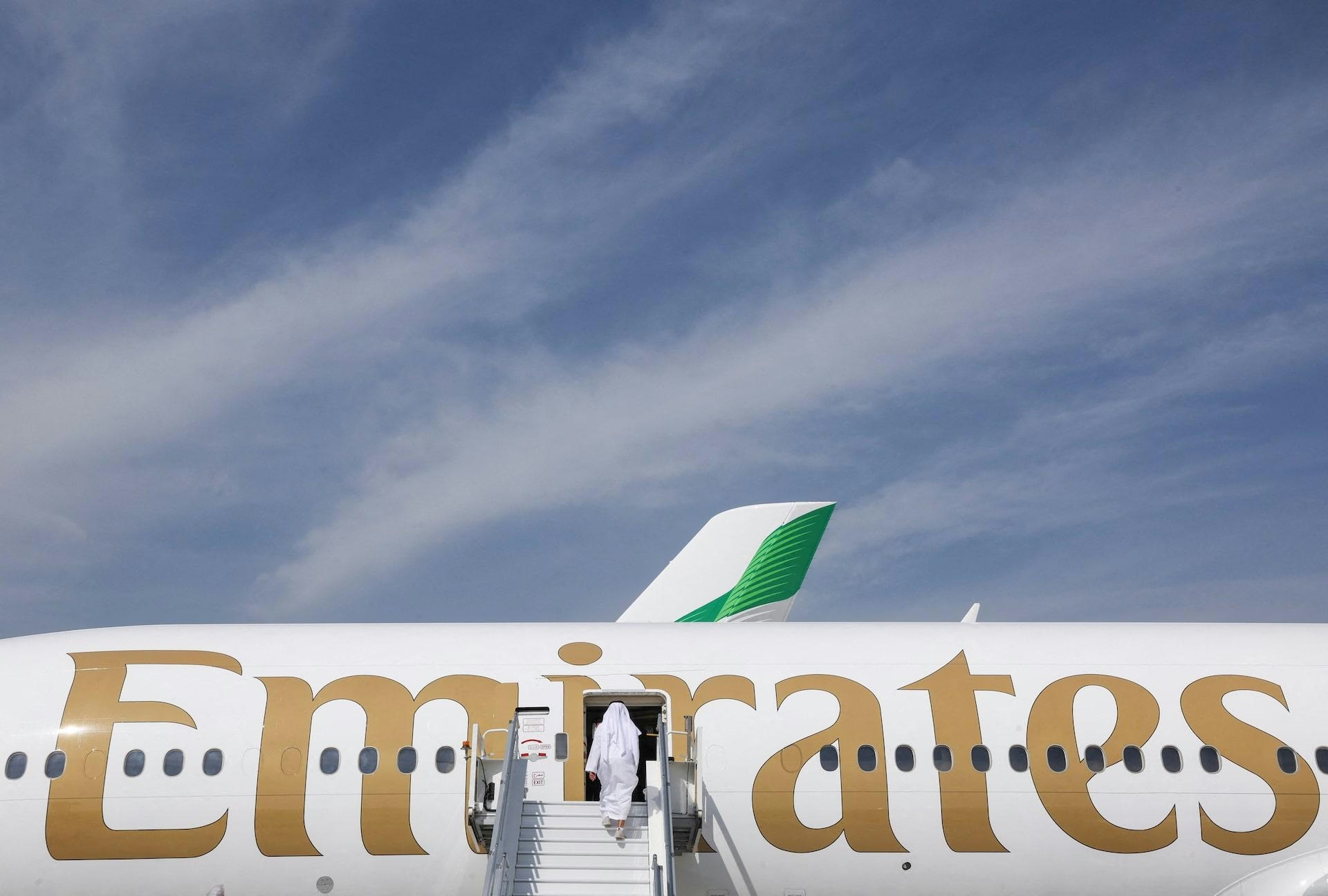
Can Emirates and United Airlines Help Boeing Outsell Airbus in 2025?
As the aviation industry approaches a critical juncture, the longstanding rivalry between Boeing and Airbus is intensifying. For the first time in six years, Boeing appears poised to potentially outsell Airbus in net aircraft orders, a development largely driven by substantial agreements with prominent carriers such as Emirates and United Airlines.
Major Orders Bolster Boeing’s Position
Emirates, widely recognized for its premium service and extensive global network, has reaffirmed its commitment to Boeing through a landmark $41.4 billion order for 65 Boeing 777-9 aircraft. United Airlines, one of the largest carriers in the United States, has also placed significant orders for Boeing’s 787 Dreamliner, further strengthening Boeing’s momentum. These high-profile deals are central to Boeing’s strategy to reclaim leadership in aircraft sales, particularly within the lucrative long-haul segment.
A Dynamic and Competitive Market
Despite Boeing’s recent surge, the competitive landscape remains fluid and highly contested. Airbus continues to lead in aircraft deliveries and maintains a substantial order backlog, underscoring its enduring market strength. Challenges have also emerged that could complicate Boeing’s path to dominance. Notably, Flydubai, a key Middle Eastern carrier, recently announced a $24 billion shift from Boeing to Airbus, highlighting that airline loyalty is not assured and that Airbus remains a formidable competitor.
Emirates itself is adopting a balanced approach, supplementing its Boeing fleet with ongoing investments in Airbus aircraft, including eight A350-900s. Furthermore, persistent delays in the Boeing 777X program have raised concerns among customers and industry analysts, potentially affecting Boeing’s ability to fulfill its ambitious order book within the expected timelines.
Implications for Passengers and the Industry
For travelers, these developments may translate into tangible benefits. The introduction of next-generation aircraft such as the Boeing 787 Dreamliner and 777X, alongside the Airbus A350, promises advancements in fuel efficiency, cabin comfort, and onboard amenities. As airlines modernize their fleets, passengers can anticipate quieter cabins, improved air quality, and enhanced in-flight entertainment experiences. Concurrently, the intense competition between Boeing and Airbus could influence ticket pricing and route availability as carriers strive to optimize the value of their new investments.
Whether Boeing can ultimately outsell Airbus in 2025 will depend not only on the volume of orders secured from major airlines like Emirates and United but also on its capacity to deliver aircraft on schedule and adapt to evolving market conditions. With competitor strategies and market responses still unfolding, the contest between these aviation giants is set to shape the future trajectory of global air travel.

Etihad Airways Suspends Airbus A380 Flights on Key Route

Aditya Birla Group Seeks Approval for Aircraft Leasing in GIFT City

Qatar Airways Highlights Innovation and Connectivity at Arabian Travel Market 2026

Hong Kong's Five-Year Plan Includes Andrew Fan's Aircraft Parts Processing Hub Proposal

ACIA Aero Leasing Delivers ATR72-600 to Air Nostrum

RTX Appoints Jill Albertelli as Head of Pratt & Whitney

TAT Technologies Joins Beyond Aero Hydrogen Aircraft Program

AURAK Study Highlights Barriers to Air Taxi Adoption in Emerging Economies

Xiamen Air Selects Altitude for 787 Maintenance at Heathrow

Etihad and Swissport Extend Global Partnership
