
Zet AI‑inzichten om in gerichte actie

Trending
Categories
Colorado Airport Introduces Unleaded Fuel Amid Implementation Challenges
Colorado Airport Introduces Unleaded Fuel Amid Implementation Challenges
Addressing Lead Pollution at Rocky Mountain Metropolitan Airport
The engines that power small aircraft, such as Cessnas, operate similarly to car engines, utilizing spark plugs, pistons, and gasoline, and consequently producing pollution during flight. While leaded gasoline was banned for automobiles in the 1970s due to its severe health and environmental consequences, leaded fuel remains the standard for most piston-engine aircraft. This continued use results in the release of toxic lead particles into the atmosphere, raising significant concerns for communities located near airports. Rocky Mountain Metropolitan Airport (RMMA) in Broomfield, Colorado—one of the busiest general aviation hubs in the United States—has become a focal point for these concerns.
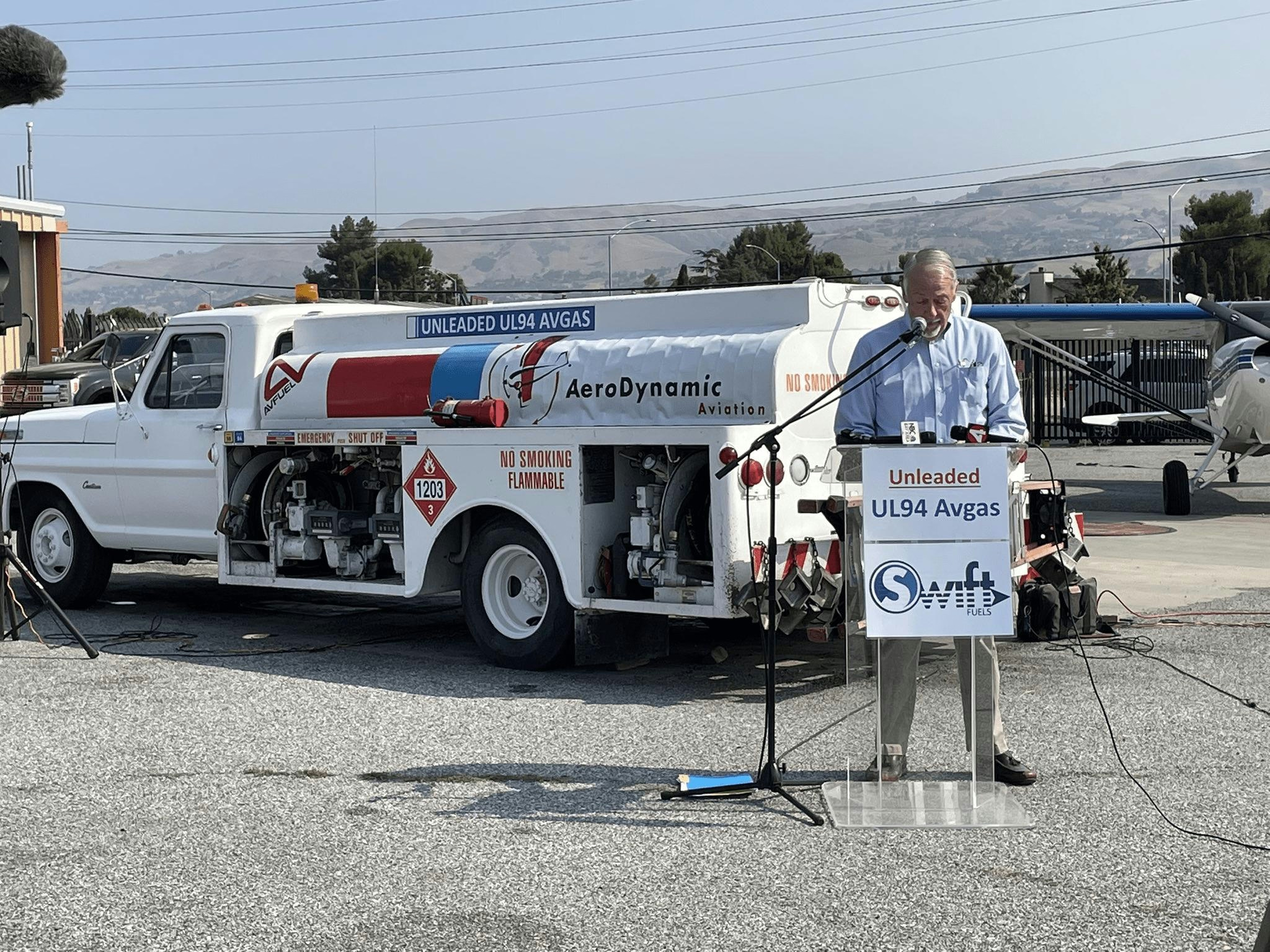
Research has demonstrated that children living in proximity to airports exhibit elevated blood lead levels compared to the general population. Bri Lehman, a resident of Lafayette and an advocate against airport lead pollution, described the issue as an “invisible public health crisis” that demanded urgent attention. Responding to community pressure, RMMA recently took a significant step by installing a new tank for unleaded aviation fuel and began offering it at the same price as the traditionally cheaper leaded fuel. This initiative was supported by a $300,000 grant from the Colorado Department of Transportation. Additionally, two of the airport’s flight schools, which contribute substantially to small-plane traffic, have committed to using unleaded fuel in at least some of their aircraft.
County Commissioner Rachel Zenzinger expressed pride in this development, emphasizing that it reflects “steady, thoughtful work” in response to longstanding community demands.
Challenges in Transitioning to Sustainable Aviation Fuels
Despite this progress, the broader transition to unleaded and sustainable aviation fuels (SAF) presents considerable challenges. Industry leaders acknowledge the complexity of implementing SAF on a wide scale. For instance, Shell’s Head of Aviation Americas has recognized past difficulties but reaffirmed the company’s commitment to overcoming these obstacles. Globally, airlines face concerns regarding the cost and availability of SAF. In Brazil, carriers have expressed uncertainty about complying with new mandates due to limited supply and high prices. European airlines have also called for revisions to the ReFuelEU regulations, citing excessive administrative burdens and regulatory misalignment. Furthermore, rising jet fuel prices have prompted warnings from experts that airlines may reduce flight schedules if costs continue to escalate.
Despite these hurdles, the aviation sector remains optimistic about growth opportunities. Azul’s CEO highlighted expanding markets even as sustainability requirements evolve, underscoring the industry’s ongoing efforts to balance environmental goals with operational realities.
Legal Developments and Public Health Implications
Meanwhile, RMMA continues to face legal challenges related to its environmental impact. The Colorado Court of Appeals recently allowed part of a lawsuit filed by Boulder County and the town of Superior against the airport to proceed. While the court dismissed claims related to airport noise, it remanded the portion concerning lead pollution back to district court for further examination. The plaintiffs contend that airport operations, overseen by Jefferson County, pose a health risk to local residents.
Lead exposure is particularly hazardous for children, with no safe threshold identified. The elimination of lead from automotive fuel is widely regarded as a major public health achievement, having significantly reduced childhood blood lead levels nationwide. As airports like RMMA begin to offer unleaded fuel alternatives, the aviation industry faces the complex task of advancing toward cleaner skies while addressing regulatory, economic, and community health challenges.

Etihad Airways Suspends Airbus A380 Flights on Key Route

Aditya Birla Group Seeks Approval for Aircraft Leasing in GIFT City

Qatar Airways Highlights Innovation and Connectivity at Arabian Travel Market 2026

Hong Kong's Five-Year Plan Includes Andrew Fan's Aircraft Parts Processing Hub Proposal

ACIA Aero Leasing Delivers ATR72-600 to Air Nostrum

RTX Appoints Jill Albertelli as Head of Pratt & Whitney

TAT Technologies Joins Beyond Aero Hydrogen Aircraft Program

AURAK Study Highlights Barriers to Air Taxi Adoption in Emerging Economies

Xiamen Air Selects Altitude for 787 Maintenance at Heathrow

Etihad and Swissport Extend Global Partnership
