
Zet AI‑inzichten om in gerichte actie

Trending
Categories
Domestic Aviation Maintenance Expands
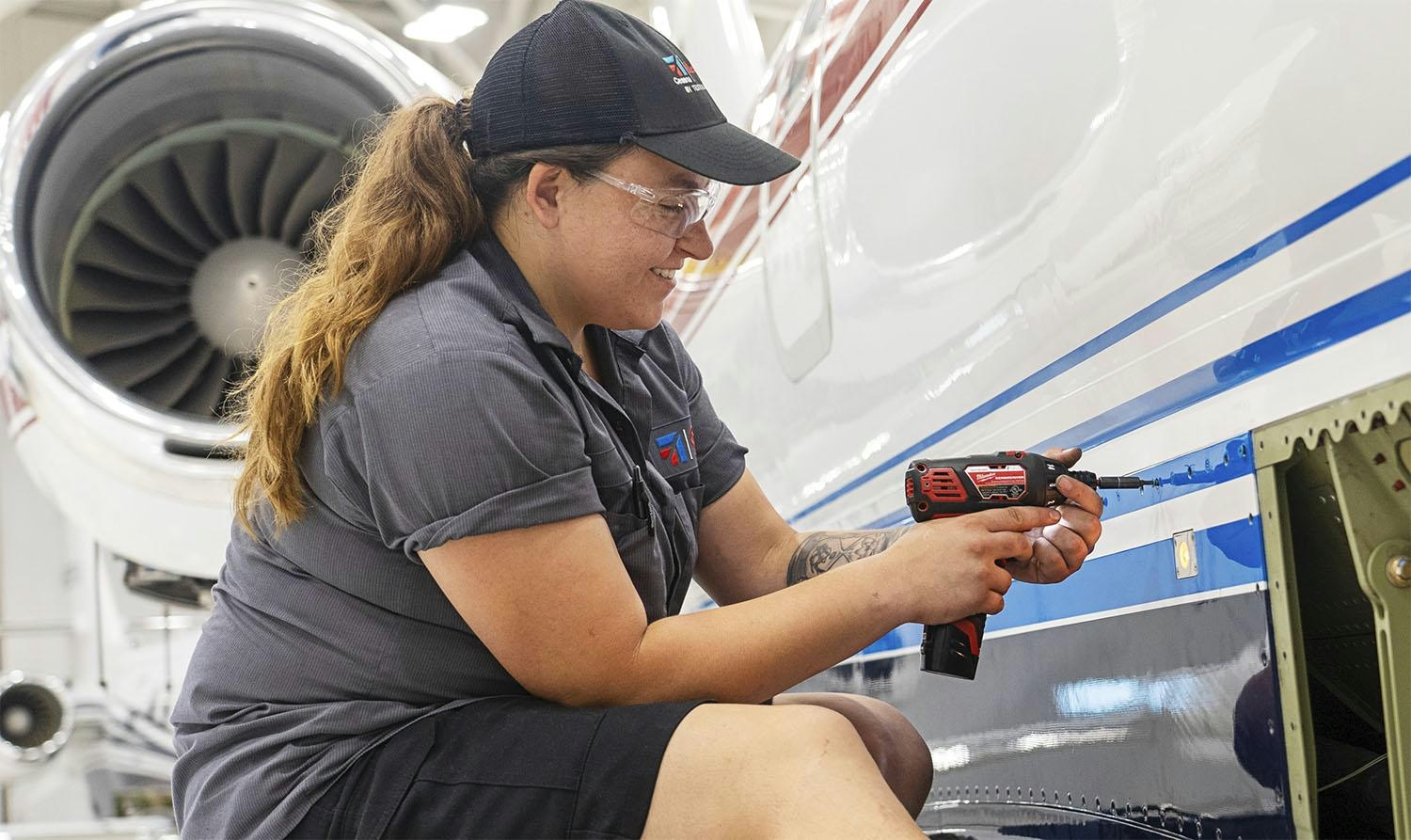
Domestic Aviation Maintenance Expands in India
India’s aviation sector is undergoing rapid expansion, positioning itself as one of the largest markets globally. Indian carriers have placed orders for more than 1,500 new commercial aircraft, driving a significant surge in demand for engine maintenance services. In 2024 alone, Indian airlines accounted for over 800 commercial engine shop visits, a number expected to nearly double to 2,000 by 2030 and potentially reach 4,000 annually by 2040. This growth is largely attributed to the maturation of the narrow-body fleet powered by LEAP and GTF engines, according to Aviation Week’s AWIN MRO Forecast.
Current Challenges in the Domestic MRO Ecosystem
Despite this burgeoning demand, the majority of engine overhaul work and associated revenue currently flow overseas. Indian aircraft engines are frequently sent abroad for major maintenance, underscoring a significant deficiency in the domestic maintenance, repair, and operations (MRO) infrastructure. In established aviation markets, over 80% of engine component repairs—including airfoils, combustor liners, fuel nozzles, and non-destructive testing—are conducted locally. In contrast, India’s domestic repair rate remains near zero, resulting in prolonged transit times, elevated logistics costs, and considerable foreign exchange outflows.
Addressing this gap presents a critical opportunity for the Indian aviation industry. Experts advocate for the development of integrated industrial clusters centered on engine MRO joint ventures. By co-locating engine shops, blade coating facilities, non-destructive testing laboratories, precision machining units, and MRO training institutions within dedicated industrial zones, the sector can achieve enhanced operational efficiencies. These include faster turnaround times, reduced logistics expenses, shared infrastructure, and the cultivation of a skilled talent pool.
Workforce Development and Regulatory Barriers
Expanding domestic MRO capacity is contingent upon the availability of a skilled workforce. Engine overhaul operations require technicians certified with original equipment manufacturer (OEM) approvals, qualifications that necessitate years of supervised training. To meet this demand, India must scale its talent pipeline through OEM-operated training programs, collaborations with local polytechnic institutions, and the reskilling of engineers from related industries such as defense and automotive manufacturing. Equally important is the retention of this talent; engineers who receive certification and competitive employment within India are less likely to pursue opportunities abroad.
Regulatory challenges also impede growth. Indian MRO facilities face duplicated approval costs and restrictions on servicing foreign-registered and leased aircraft. This is particularly problematic given that nearly 80% of India’s civil aviation fleet operates under sale-and-leaseback arrangements. A long-anticipated bilateral agreement with the European Union Aviation Safety Agency (EASA) could alleviate these constraints, enabling Indian MRO providers to access the global market and expand their client base beyond domestic carriers.
Market Dynamics and Future Prospects
The intensifying demand for aviation maintenance services is fostering increased competition among providers. Market participants are responding with strategic expansions, acquisitions, and the enhancement of service portfolios to maintain market share and attract new customers, including operators of business jets. Recent developments, such as Skyservice’s expansion of its Bombardier Authorized Service Facility network in Vancouver and Aviation Technology’s launch of Aviation Technology Interiors, highlight the sector’s dynamism and the drive to offer comprehensive aviation solutions.
While India’s engine MRO demand currently exceeds domestic capacity, targeted investments in infrastructure, workforce development, and regulatory reform position the country to establish a world-class aviation maintenance ecosystem in the coming years.

Etihad and Swissport Extend Global Partnership

Sepehran Airlines B737 Returns to Mashhad After Tyre and Engine Issues

Etihad Deploys Widebody Fleet to Meet Strong Demand

Korean Air Finalizes $36.2 Billion Deal with Boeing

Australia’s RFDS Queensland Section Orders Six King Air 260Cs

Korean Air Finalizes Order for 103 Boeing Jets and Engines

Embraer E195-E2 Features Distinctive Engine Placement Among Regional Jets

What Passengers Can Expect on Boeing’s New 777X Jet

How Ethiopian Airlines Became Africa’s Leading Carrier Amid Gulf Competition

Joby Aviation Extends Autonomous Flight Capabilities with Cross-Country Tour
