
Zet AI‑inzichten om in gerichte actie

Trending
Categories
Emirates Phases Out Its 615-Seat A380 Configuration
Emirates Phases Out Its 615-Seat A380 Configuration
Transition from High-Density to Premium Economy Focus
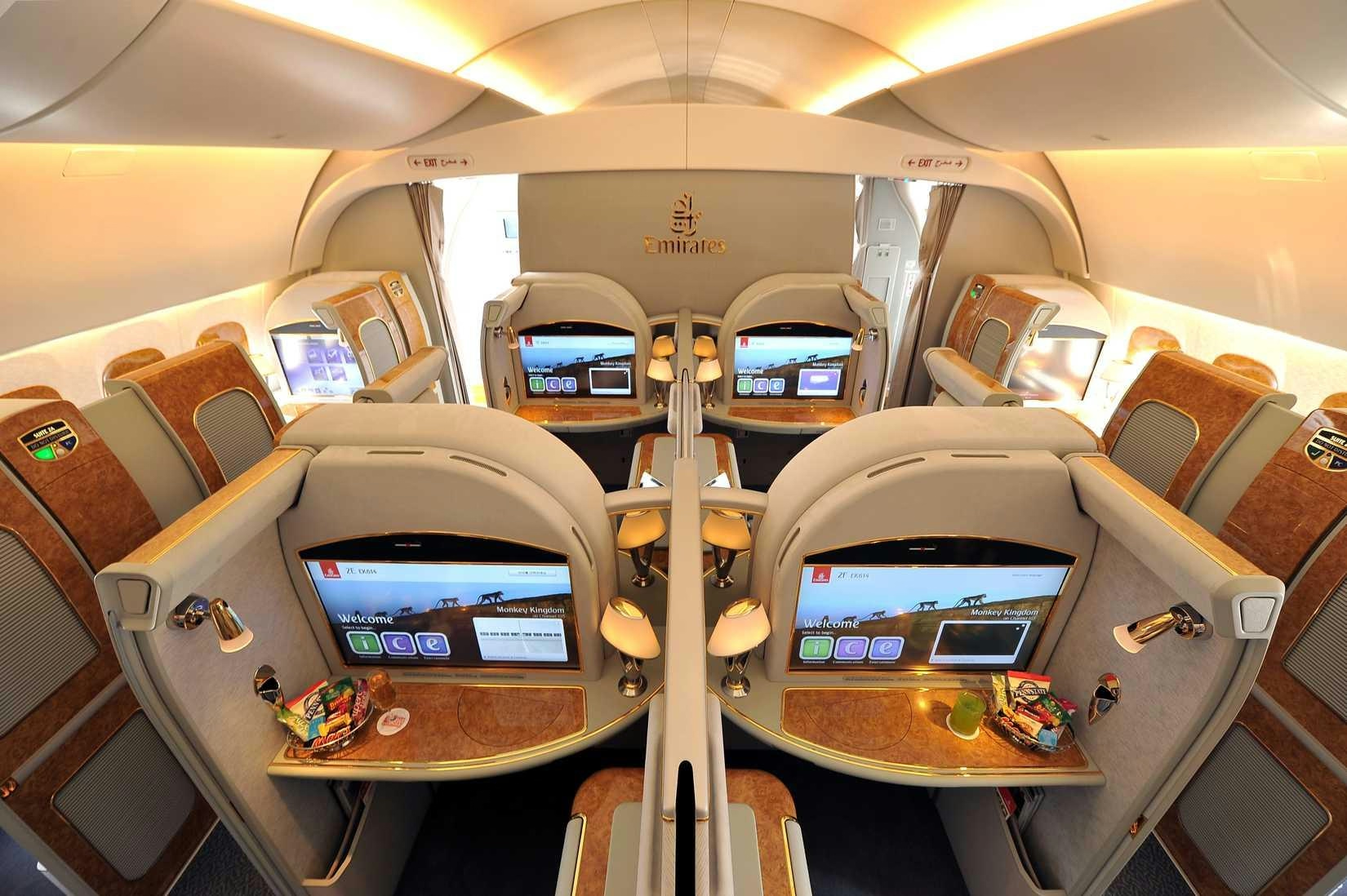
Emirates is retiring its 615-seat Airbus A380 configuration, ending the era of the world’s highest-capacity commercial aircraft in active service. The airline has initiated the removal of 46 seats from each of its 15 two-class A380s, replacing the dense layout with a new three-class configuration that introduces a dedicated premium economy cabin. This strategic shift reflects changing industry economics and evolving passenger preferences, as Emirates moves away from maximizing seat count toward optimizing revenue per square meter.
For nearly twenty years, Emirates operated two primary A380 configurations. The flagship model featured 14 First Class suites, 76 Business Class seats, and up to 517 total seats. In contrast, the lesser-known high-density variant accommodated 58 Business and 557 Economy seats, totaling 615. This configuration was primarily deployed on price-sensitive leisure routes such as Bangkok, Bali, Mauritius, and Kuala Lumpur, where maximizing passenger volume helped reduce per-seat costs.
However, the economic landscape has shifted. In February, Emirates announced that all 15 of its two-class A380s would be converted to a three-class layout comprising 76 Business, 56 Premium Economy, and 437 Economy seats, reducing total capacity to 569. Although this involves a voluntary reduction of 46 revenue seats per aircraft, the airline anticipates higher yields from premium economy, which commands fares two to three times those of standard economy while occupying only about 1.4 times the floor space. The reconfiguration adds 56 premium economy seats at a higher fare while cutting 102 economy seats, resulting in increased revenue density despite a lower overall seat count. Emirates has articulated this approach as a deliberate move to “optimize revenue per square meter rather than maximize seat count,” marking a significant departure from its longstanding dense seating strategy.
Aligning with Industry Trends and Enhancing Passenger Experience
Emirates’ decision aligns with a broader industry trend toward expanding premium cabins, a movement embraced by major global carriers including Delta, United, and American Airlines. Once considered a niche product primarily for North Atlantic routes, premium economy has evolved into a global offering, often featuring dedicated cabins and enhanced amenities that resemble domestic first class.
This strategic pivot coincides with Emirates’ ongoing investments in passenger experience and technology. The airline is rolling out Starlink Wi-Fi across its A380 fleet as part of a comprehensive effort to enhance onboard services and maintain a competitive advantage. Nonetheless, the reduction in seat capacity may present challenges in sustaining revenue on high-demand routes, particularly as competitors respond with their own cabin upgrades and technological innovations.
Despite these changes, Emirates remains financially robust. The airline has sustained steady profitability amid regional disruptions and continues to expand its fleet with new aircraft such as the Airbus A350-900 and Boeing 777 freighters. This strong financial footing provides Emirates with the flexibility to navigate the transition toward more premium-focused configurations.
Implementation and Industry Implications
The first retrofitted A380 entered service on the Dubai-Amman route (EK903/904) in mid-April, with subsequent deployments planned for Prague and Guangzhou. Emirates expects to complete the full conversion of all 15 aircraft by November.
The airline’s move away from ultra-high-density seating underscores a broader industry recognition that premium economy is no longer a niche segment but a global standard. As passenger expectations evolve and airlines seek new avenues for profitability, the era of the 615-seat A380 is drawing to a close, ushering in a new chapter centered on comfort, technology, and revenue optimization.

Etihad Airways Suspends Airbus A380 Flights on Key Route

Aditya Birla Group Seeks Approval for Aircraft Leasing in GIFT City

Qatar Airways Highlights Innovation and Connectivity at Arabian Travel Market 2026

Hong Kong's Five-Year Plan Includes Andrew Fan's Aircraft Parts Processing Hub Proposal

ACIA Aero Leasing Delivers ATR72-600 to Air Nostrum

RTX Appoints Jill Albertelli as Head of Pratt & Whitney

TAT Technologies Joins Beyond Aero Hydrogen Aircraft Program

AURAK Study Highlights Barriers to Air Taxi Adoption in Emerging Economies

Xiamen Air Selects Altitude for 787 Maintenance at Heathrow

Etihad and Swissport Extend Global Partnership
