
Zet AI‑inzichten om in gerichte actie

Trending
Categories
Experts Say Southeast Asia Is Better Suited for Smaller Narrowbody Jets, Benefiting AirBorneo
Southeast Asia’s Aviation Market Favors Smaller Narrowbody Jets
KUALA LUMPUR — The distinctive geography and market characteristics of Southeast Asia are increasingly aligning with the operational advantages of smaller narrowbody jets, such as the Airbus A220 and Embraer E2 family. These aircraft, typically seating fewer than 100 passengers, are proving well-suited to the region’s network of secondary cities and short-haul routes, which often experience lower passenger volumes. Aviation analyst Shukor Yusof of Endau Analytics emphasized that the region’s dispersed urban centers and numerous thin routes create a strong demand for aircraft that balance capacity with frequency.
Shukor highlighted the significance of AirAsia X Bhd’s recent order for 150 Airbus A220-300 aircraft, valued at approximately US$19 billion at list prices. This landmark deal, the largest single firm order for the A220 programme to date, also includes options for an additional 150 jets. Announced in Canada, the agreement underscores the growing recognition among Southeast Asian carriers of the benefits offered by smaller regional jets.
Industry experts note that these aircraft enable airlines to optimize capacity on less dense routes by prioritizing flight frequency over sheer seat numbers, thereby enhancing connectivity between secondary cities. One aviation specialist, speaking on condition of anonymity, explained that this approach represents a “right-sizing” strategy that fills a critical gap between turboprops like the ATR and larger single-aisle jets such as the Airbus A320 or Boeing 737. This middle ground is particularly relevant in ASEAN markets, where demand often falls between the operational scales of these aircraft categories.
Opportunities for Regional Carriers and Strategic Considerations
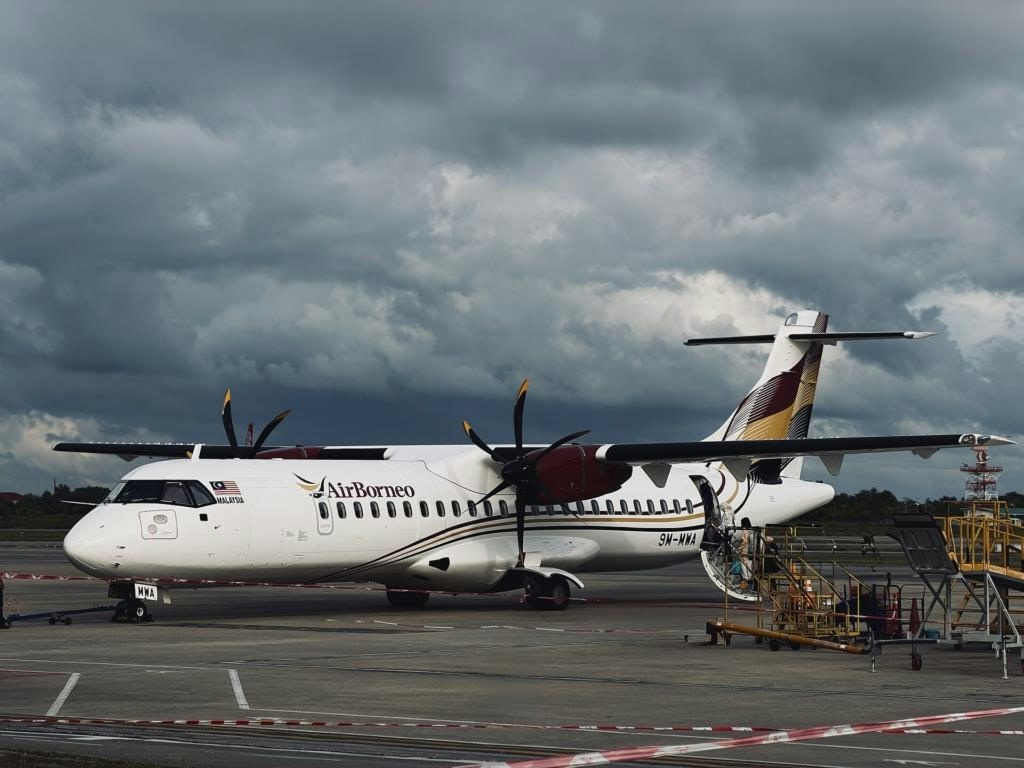
Shukor pointed to Sarawak-owned AirBorneo as a prime beneficiary of this trend, especially for intra-Borneo operations. He described Borneo as “a fantastic place for regional jets,” noting that the island’s size and the prevalence of smaller airports make large aircraft unnecessary. The lower operating costs and suitability for serving smaller population centers position regional jets as a logical choice for AirBorneo’s network development.
Despite the advantages, experts caution that airlines must carefully evaluate operating economics, fleet strategies, and technical requirements before integrating smaller jets into their fleets. Shukor observed that the cost differential between larger narrowbody jets like the A320 and B737 and smaller regional jets is often marginal, which can lead airlines to favor the larger aircraft for their greater capacity and flexibility.
Furthermore, smaller jets tend to be most effective when incorporated into a broader network strategy rather than deployed solely on point-to-point routes. The anonymous expert cited Singapore Airlines’ use of its budget subsidiary Scoot as an example, where regional jets serve as feeders to the mainline network, enhancing overall connectivity and operational efficiency.
The regional preference for smaller jets also presents challenges for larger carriers such as Singapore Airlines, which continues to support Air India amid ongoing difficulties. With elevated fuel prices and speculation about industry consolidation favoring larger airlines, smaller carriers may face increased vulnerability. Meanwhile, Airbus’s strategic pivot toward expanding the business jet market in India reflects shifting market dynamics that could further advantage regional players like AirBorneo as Southeast Asia’s aviation landscape continues to evolve.
Comments

Etihad Airways Suspends Airbus A380 Flights on Key Route

Aditya Birla Group Seeks Approval for Aircraft Leasing in GIFT City

Qatar Airways Highlights Innovation and Connectivity at Arabian Travel Market 2026

Hong Kong's Five-Year Plan Includes Andrew Fan's Aircraft Parts Processing Hub Proposal

ACIA Aero Leasing Delivers ATR72-600 to Air Nostrum

RTX Appoints Jill Albertelli as Head of Pratt & Whitney

TAT Technologies Joins Beyond Aero Hydrogen Aircraft Program

AURAK Study Highlights Barriers to Air Taxi Adoption in Emerging Economies

Xiamen Air Selects Altitude for 787 Maintenance at Heathrow

Etihad and Swissport Extend Global Partnership
