
Zet AI‑inzichten om in gerichte actie

Trending
Categories
GE Aerospace Restructures Commercial Engine Leadership as Stokes Announces Retirement
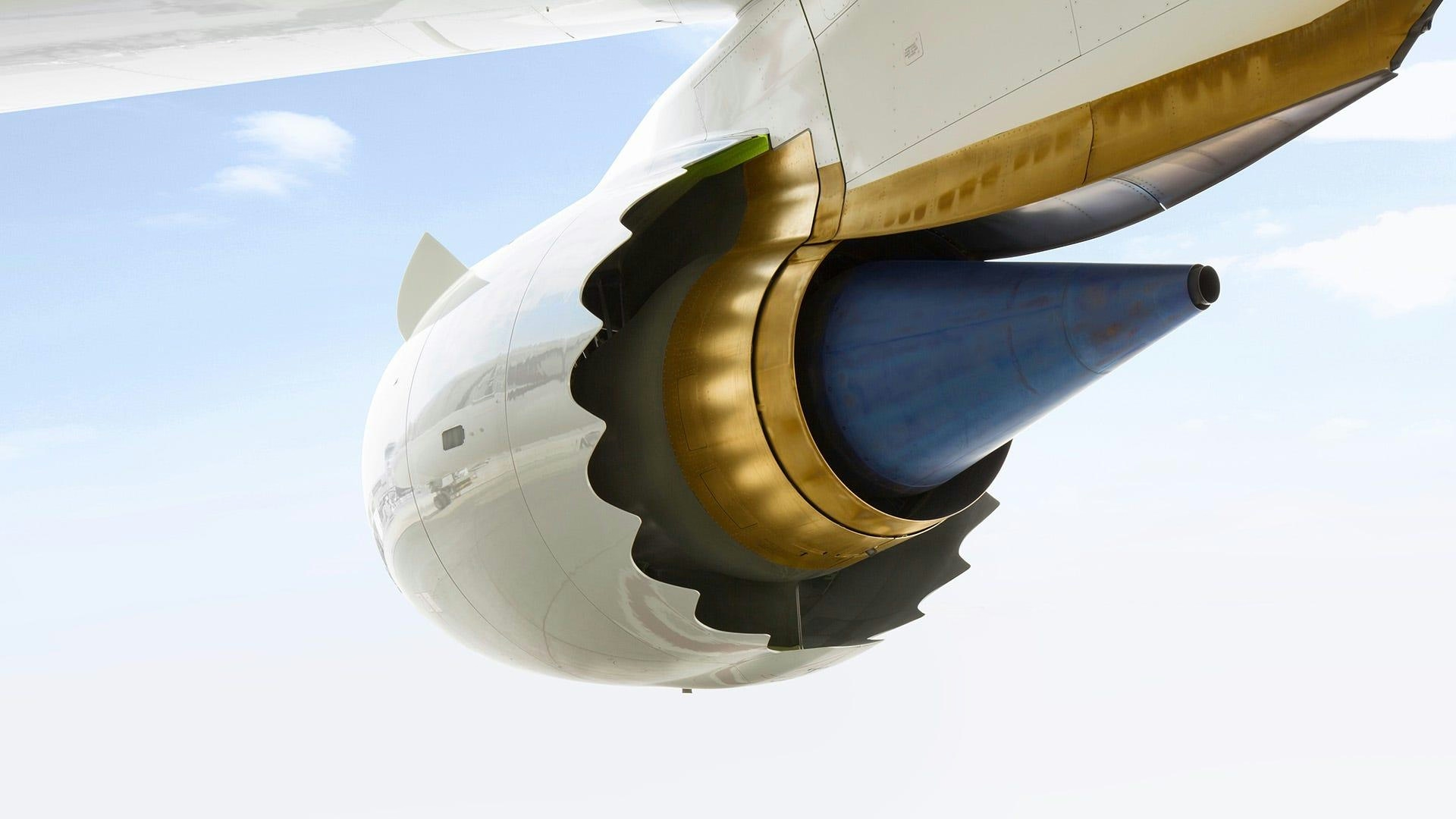
GE Aerospace Restructures Commercial Engine Leadership Amid Executive Transition
GE Aerospace has announced a significant reorganization of its commercial engine leadership, appointing Mohamed Ali as President and CEO of an expanded Commercial Engines and Services (CES) division. This restructuring, unveiled on January 15, consolidates the entire lifecycle of the company’s commercial engine business—including engineering, supply chain, manufacturing, and aftermarket services—under Ali’s unified leadership. The move merges the previously separate CES and Technology & Operations (T&O) teams, aiming to streamline operations and enhance alignment between new engine production, service maintenance, product safety, and quality control.
Leadership Transition and Strategic Realignment
The leadership overhaul coincides with the planned retirement of Russell Stokes, a 29-year veteran of GE, who will remain with the company through July 2026 to facilitate a smooth transition. Stokes has been instrumental in driving operational transformations and played a key role in establishing GE Aerospace as an independent entity. CEO Lawrence Culp acknowledged Stokes’s contributions in laying the company’s operational foundation and described Ali’s extensive experience in both technology and customer-facing roles as an ideal fit for the expanded leadership position.
In a related development, GE Aerospace appointed Jason Tonich as Chief Commercial Sales & Customer Officer. Tonich will oversee a consolidated sales team and report directly to CEO Larry Culp. This change is intended to bring customer relations closer to the executive level and better integrate sales efforts with the company’s broader operational strategy.
Market Context and Outlook
The restructuring occurs amid heightened market interest in GE Aerospace, driven by strong demand for commercial jet engines and aftermarket services. The company’s stock has reached record levels, trading around $317 as of December 23, 2025, supported by increased engine production and a steady influx of new orders. Analysts highlight that any incremental increases in production from Airbus and Boeing could translate into higher engine shipments and additional services revenue, contingent on maintaining supply chain stability. Notably, recent agreements such as GE Aerospace’s contract with Emirates to supply 130 GE9X engines for 65 Boeing 777-9 aircraft have reinforced the company’s market position. Nonetheless, analysts caution that ongoing supply chain challenges and other operational risks remain critical factors to monitor.
These leadership changes precede GE Aerospace’s upcoming fiscal report, with fourth-quarter and full-year 2025 earnings scheduled for release on January 22.

Etihad Airways Suspends Airbus A380 Flights on Key Route

Aditya Birla Group Seeks Approval for Aircraft Leasing in GIFT City

Qatar Airways Highlights Innovation and Connectivity at Arabian Travel Market 2026

Hong Kong's Five-Year Plan Includes Andrew Fan's Aircraft Parts Processing Hub Proposal

ACIA Aero Leasing Delivers ATR72-600 to Air Nostrum

RTX Appoints Jill Albertelli as Head of Pratt & Whitney

TAT Technologies Joins Beyond Aero Hydrogen Aircraft Program

AURAK Study Highlights Barriers to Air Taxi Adoption in Emerging Economies

Xiamen Air Selects Altitude for 787 Maintenance at Heathrow

Etihad and Swissport Extend Global Partnership
