Afbeelding

AeroGenie — Uw intelligente copiloot.

Vraag wat je wilt. Analyseer alles. Handel onmiddellijk.

Trending

Categories

How Airbus Profits Despite Selling Planes at Half Price
October 16, 2025By ePlane AI
How Airbus Profits Despite Selling Planes at Half Price
0
0
Airbus
Aircraft Pricing
A350-1000

How Airbus Profits Despite Selling Planes at Half Price

When Airbus announces a new aircraft, the headline list price—such as the A350-1000’s official tag exceeding $360 million—rarely corresponds to the actual amount airlines pay. In practice, manufacturers like Airbus frequently grant discounts ranging from 40 to 60 percent, and occasionally even deeper for strategically important deals. This discrepancy prompts a critical question: how does Airbus maintain profitability while selling planes at such substantial markdowns?

The explanation lies in Airbus’s intricate business model, where aircraft sales represent merely the initial step into a broader aviation ecosystem. The company capitalizes on its scale, operational efficiencies, long-term service contracts, and sustained customer relationships to secure ongoing profitability.

The Reality Behind List Prices

Airbus, alongside its primary competitor Boeing, publishes catalogue prices for each aircraft model. These figures function more as negotiation benchmarks and marketing tools than as reflections of actual transaction values. For example, while the A321neo is listed at approximately $130 million, most airlines pay between $50 and $70 million depending on factors such as order volume, timing, and customer loyalty. Widebody jets often sell for roughly half their published price.

These discounts are deliberate and strategic. Airlines operate on narrow profit margins and base fleet acquisition decisions on total lifetime costs rather than upfront expenditures alone. By offering competitive pricing, Airbus secures substantial orders and, importantly, long-term maintenance and service agreements that frequently generate greater revenue than the initial sale.

Why Selling Cheap Makes Business Sense

The commercial aircraft market is effectively a duopoly dominated by Airbus and Boeing, making market share crucial. Airlines typically commit to a particular fleet type for decades, so competitive pricing enables Airbus not only to win orders but also to lock in customers for the long term. Each aircraft sale opens avenues for recurring revenue streams from pilot training, spare parts, technical support, and system upgrades.

This approach has proven successful: the Airbus A320 has surpassed Boeing’s 737 as the most-delivered aircraft in history. In 2024, Airbus is increasing monthly deliveries, partly due to FAA-imposed production restrictions on Boeing. This momentum is further supported by a historic backlog exceeding 17,000 aircraft, driven by global supply chain disruptions that have delayed production and elevated costs for airlines. Consequently, carriers are eager to secure new jets, strengthening Airbus’s negotiating leverage.

Scale, Efficiency, and Resilience

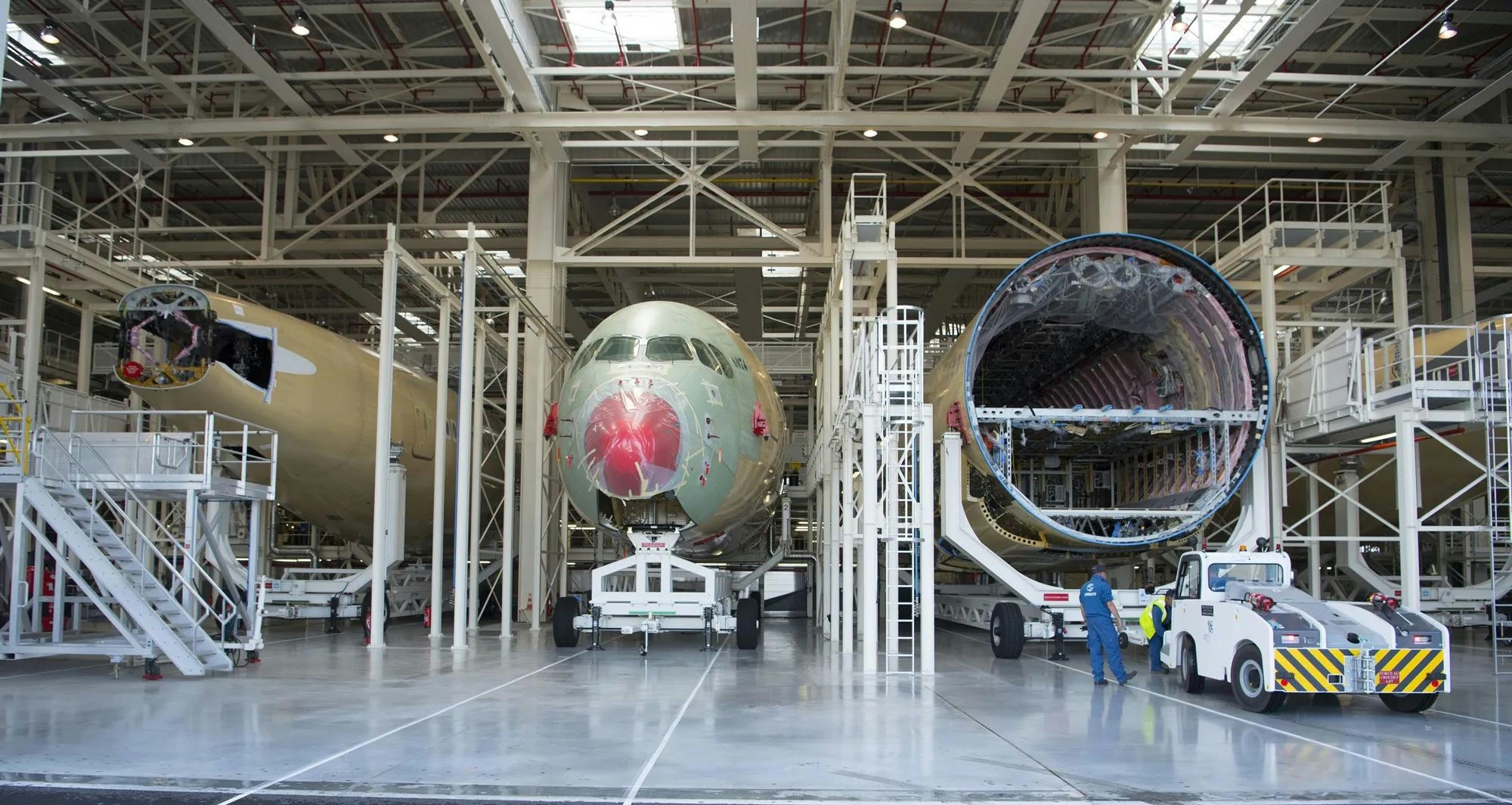
Airbus’s ability to remain profitable despite deep discounts is rooted in its vast production scale and global supply network. Once a new model reaches full production, the cost per unit declines significantly. Components are manufactured across Europe and assembled in facilities located in Toulouse, Hamburg, Tianjin, and Mobile, optimizing efficiency and reducing expenses. As production volumes increase, suppliers offer improved terms, logistics become more streamlined, and automation advances.

The fixed development costs of programs such as the A350—estimated at $15 billion—are amortized over hundreds of units. By 2026, Airbus aims to produce 75 A320-family aircraft per month, further lowering costs and enhancing profit margins.

Meanwhile, the business aviation sector remains robust, thriving despite tariff uncertainties and further reinforcing Airbus’s market position.

In essence, Airbus’s capacity to generate profits while selling aircraft at half their list price underscores the strength of its scale, strategic pricing, and the enduring value of long-term customer relationships within a complex global industry.

More news
GMR School of Aviation Partners with Gati Shakti Vishwavidyalaya to Address Aviation MRO Skill Shortage

GMR School of Aviation Partners with Gati Shakti Vishwavidyalaya to Address Aviation MRO Skill Shortage

GMR School of Aviation Partners with Gati Shakti Vishwavidyalaya to Address Aviation MRO Skill Shortage The GMR School of Aviation in Hyderabad has entered into a strategic partnership with Gati Shakti Vishwavidyalaya to address the growing skill deficit in India’s aviation Maintenance, Repair, and Overhaul (MRO) sector. Announced during the inaugural session of the MRO South Asia Summit 2026 in New Delhi on March 11, the collaboration seeks to integrate academic instruction with industry-focused technical training. This approach aims to equip students with both theoretical knowledge and practical skills tailored to the evolving demands of the MRO industry. Bridging the Skill Gap with Industry-Relevant Education As part of this initiative, students enrolled in the B.Sc. (Aircraft Maintenance Engineering) programme will follow a specialised curriculum recognised by relevant regulatory and academic bodies. The programme is designed to produce aircraft maintenance engineers licensed by the Directorate General of Civil Aviation (DGCA) and the European Union Aviation Safety Agency (EASA), directly addressing the acute shortage of qualified professionals in India’s rapidly expanding aviation sector. Ashok Gopinath, President and Accountable Manager at GMR Aero Technic, emphasised the significance of the partnership, stating, “This initiative aims to develop DGCA/EASA licensed aircraft maintenance engineers equipped with a B.Sc. degree program. This partnership will not only strengthen India’s self-reliance in the MRO sector but also build a sustainable pipeline of skilled engineers who can support the industry’s rapid growth.” Challenges and Industry Implications The Indian aviation industry continues to grapple with a persistent shortage of skilled personnel in MRO operations, compounded by the need to incorporate emerging technologies such as advanced air mobility. Additionally, the sector faces increasing competition from both domestic and international educational institutions and companies investing heavily in workforce development. As the industry evolves, the demand for highly trained engineers capable of adapting to new technologies and regulatory frameworks is intensifying. Market analysts observe that collaborations between educational institutions and industry stakeholders are becoming essential to enhance the quality and relevance of training programmes. The partnership between GMR School of Aviation and Gati Shakti Vishwavidyalaya is expected to inspire similar alliances across the sector. Competitors may respond with their own strategic partnerships or acquisitions to strengthen their MRO capabilities, as exemplified by West Star Aviation’s recent acquisition of DCJet Services to consolidate its position in the Mid-Atlantic MRO market. By fostering closer ties between academia and industry, this collaboration aims to ensure a consistent supply of skilled engineers, supporting India’s ambition to emerge as a global hub for aviation maintenance and repair.
MRO meets AI: The race to protect passengers and profit margins

MRO meets AI: The race to protect passengers and profit margins

MRO Meets AI: The Race to Protect Passengers and Profit Margins Maintenance, repair, and overhaul (MRO) costs in the aviation industry are escalating rapidly. EasyJet, for instance, has projected an MRO expenditure of £451 million for 2025, a significant increase from £390 million the previous year. This equates to approximately £8.7 million per week or £1.24 million daily. EasyJet’s figures reflect a broader industry challenge where the flawless performance of every aircraft component is critical. Even a minor oversight can lead to grounded flights, substantial financial losses, or more severe consequences. For decades, aircraft maintenance has depended on the expertise of skilled technicians conducting thorough inspections and servicing under stringent time constraints. While indispensable, this traditional approach is inherently slow, labor-intensive, and limited by human capacity. The advent of artificial intelligence (AI) is now reshaping this landscape, offering new possibilities for efficiency and precision. AI Enhances Detection and Predictive Maintenance Aerospace engineers are increasingly employing AI to identify minute defects that escape human detection, analyze extensive sensor data within seconds, and forecast failures before they occur. Hybrid predictive models combined with real-time health monitoring have elevated detection rates to as high as 95 percent, marking a substantial advancement in maintenance capabilities. Continuous monitoring is now possible for every major aircraft component, including engines, avionics, landing gear, and fuselage. This proactive approach enables early identification of issues that previously caused unexpected delays, thereby mitigating risks and reducing costs. Transforming MRO Through Data-Driven Platforms The most significant progress stems from AI-integrated platforms that convert raw aircraft and engine data into actionable intelligence. Systems such as Rolls-Royce’s IntelligentEngine, Airbus’ Skywise Predictive Maintenance, and Boeing’s Insight Accelerator harness data from thousands of onboard sensors tracking variables like engine temperature, oil consumption, and vibration. This information is processed in the cloud, allowing engineers to anticipate problems and optimize maintenance schedules effectively. These platforms not only predict component lifespans but also create digital twins—virtual replicas that simulate real-world engine behavior. A Boeing engineer noted that the Insight Accelerator enables MRO teams to move beyond traditional scheduled maintenance toward predictive, condition-based strategies. This shift reduces aircraft on ground (AOG) events, accelerates repairs, and optimizes spare parts management. The Role of Drones, Cobots, and Human Expertise Technological advancements extend beyond AI algorithms. Autonomous drones equipped with high-resolution cameras, thermal imaging, and LiDAR can scan entire aircraft in under twenty minutes, a task that previously required up to ten hours of manual labor. Collaborative robots, or cobots, are increasingly deployed to perform repetitive or hard-to-reach tasks with enhanced speed and accuracy. Lufthansa Technik, for example, utilizes cobots to streamline inspection and repair processes. Despite these innovations, human expertise remains indispensable. While AI can flag potential issues, only certified engineers possess the judgment to interpret anomalies, consider contextual factors, and ultimately certify an aircraft’s airworthiness in compliance with regulatory authorities such as the Civil Aviation Authority (CAA), Federal Aviation Administration (FAA), and European Union Aviation Safety Agency (EASA). Challenges and Market Implications The integration of advanced AI technologies into existing MRO operations presents significant challenges. Substantial investments in infrastructure and workforce training are often necessary. Market responses have been mixed; some companies report enhanced efficiency and profitability, while others grapple with the high costs and complexities associated with AI adoption. Industry competitors are adopting varied strategies, with some aggressively pursuing AI-driven innovation to gain a competitive advantage, while others prefer incremental improvements. Although AI innovation is delivering record results in certain sectors, ongoing economic uncertainties and elevated costs may influence broader market dynamics. The race to harness AI in MRO continues, with critical implications for both passenger safety and the financial health of aviation operators.
Assaia Introduces Airport Stand and Gate Optimization System

Assaia Introduces Airport Stand and Gate Optimization System

Assaia Launches AI-Driven Stand and Gate Optimization System for Airports Assaia, a prominent innovator in AI-powered turnaround optimization, has introduced StandManager, a new Resource Management System (RMS) designed to revolutionize the allocation of stands and gates at airports. Utilizing advanced artificial intelligence, StandManager continuously processes live operational data to automate and optimize aircraft parking decisions, moving beyond the conventional reliance on fixed buffer times and manual scheduling. Dynamic Allocation Enhances Airport Efficiency Traditionally, airports have depended on static rules and scheduled flight data to assign stands and gates, often resulting in inefficiencies when flights arrive early or late. Christiaan Hen, CEO of Assaia, explained that StandManager replaces these static methods with a dynamic system that calculates predictive buffers tailored to each flight. This real-time reallocation of gates enables airports to maximize capacity and operational efficiency, adapting swiftly to changing conditions. Unveiled ahead of Passenger Terminal World 2026 in London, StandManager complements Assaia’s existing ApronAI platform, which employs computer vision to monitor aircraft turnarounds and forecast key milestones. Together, these technologies integrate real-time turnaround performance, towing status, and delay predictions directly into stand allocation decisions, empowering airports to respond proactively to operational fluctuations. Addressing Growing Capacity Challenges The launch of StandManager coincides with projections that global passenger numbers will double by 2053, a growth that threatens to outpace infrastructure development and intensify pressure on airport capacity. Hen highlighted that by replacing fixed buffers with dynamic, predictive ones, airports can reduce idle time between arrivals and increase effective stand capacity by up to 5%, all without requiring new infrastructure investments. Assaia has partnered with Transformers Group, a company founded by former Schiphol data leaders, to deliver StandManager. This collaboration merges Assaia’s expertise in operational AI with Transformers Group’s experience in open-architecture RMS solutions. Bram Kok, Managing Director of Transformers Group, emphasized the importance of data-driven decision-making, noting that stand planning is often hampered by static rules and disconnected systems. Their approach facilitates real-time, informed decisions during disruptions, alleviating pressure on airport teams. Market Challenges and Prospects Despite its potential, the adoption of StandManager may encounter obstacles in regions with less developed aviation infrastructure, such as Brazil. Azul CEO John Rodgerson pointed out that the current state of the Brazilian aviation sector could limit initial uptake and market penetration. The system’s success will depend on its ability to integrate seamlessly with existing airport infrastructure and navigate the regulatory and operational complexities unique to such markets. Market responses are expected to vary. Airlines focused on operational efficiency may demonstrate strong interest, while competitors might respond by adopting similar technologies or developing proprietary solutions, especially given the growth opportunities in emerging aviation markets. With the introduction of StandManager, Assaia broadens its scope from turnaround visibility to comprehensive airport resource optimization, aiming to support airports and airlines in operating more efficiently, safely, and sustainably amid rising global air traffic. For further details, visit www.assaia.com.
Edelweiss Air Extends Wide-Body Flights to Pristina Through April

Edelweiss Air Extends Wide-Body Flights to Pristina Through April

Edelweiss Air Extends Wide-Body Flights to Pristina Through April Switzerland’s Edelweiss Air has announced the continuation of wide-body aircraft operations on its Zurich–Pristina route through April, following a successful trial period in March. The airline will deploy its 334-seat Airbus A350-900 for the evening departure from Zurich on April 2 and April 9, with return flights scheduled for the following days. Additionally, the wide-body aircraft will operate the morning service on April 20. Strategic Expansion in the Balkan Market This extension underscores Edelweiss Air’s ambition to strengthen its foothold in the competitive Balkan aviation sector, where established carriers such as Austrian Airlines and Lufthansa maintain a strong presence. By introducing larger aircraft on this route, Edelweiss Air is positioning itself to capture a greater share of passenger traffic, potentially prompting rival airlines to reconsider their schedules or introduce new services. The move could lead to heightened competition, benefiting travelers through increased options and potentially more competitive pricing. Operational Challenges and Market Implications Despite the promising outlook, Edelweiss Air faces several operational challenges. The airline must balance the need to offer attractive fares and effective marketing strategies to secure market share against the complexities of operating wide-body aircraft at Pristina Airport. The airport’s infrastructure, less developed than that of major European hubs, may pose logistical difficulties in terms of aircraft handling and maintenance. Efficient management of these factors will be critical as the airline seeks to expand its service sustainably. Edelweiss Air’s decision to extend its wide-body flights reflects both a response to growing demand and the shifting dynamics of air travel between Switzerland and Kosovo. The coming months will be pivotal in determining how the airline and its competitors navigate this evolving landscape.
Three-Party Initiative Introduces Air Taxis to Australia Ahead of Brisbane 2032 Games

Three-Party Initiative Introduces Air Taxis to Australia Ahead of Brisbane 2032 Games

Three-Party Initiative Set to Launch Air Taxis in Australia Ahead of Brisbane 2032 Games Australia is on the cusp of becoming a prominent player in the Advanced Air Mobility (AAM) sector, with plans to introduce electric air taxis in time for the Brisbane 2032 Summer Games. A strategic partnership between Sydney-based Alt Air, Brazilian eVTOL manufacturer Eve Air Mobility, and vertiport infrastructure specialist Skyports aims to establish a fully integrated air taxi network for residents and visitors during the international event. Developing an Integrated Air Mobility Network Alt Air, a newcomer to the AAM industry, is collaborating with Eve and Skyports to create a comprehensive eVTOL mobility system. This initiative will utilize existing infrastructure, including airports, alongside new vertiports constructed by Skyports, to form a sophisticated network that enhances multimodal transportation options. The system is designed to facilitate seamless travel between key Games venues, central business districts, and major airports. The Brisbane Games are envisioned as a catalyst for broader AAM adoption across New South Wales and Queensland, potentially transforming urban mobility in the region. Challenges in Infrastructure and Workforce Despite the ambitious vision, the project faces significant challenges, particularly in Queensland’s construction sector, which is already experiencing workforce shortages. These shortages are expected to worsen as preparations for the Games intensify, with projections indicating a labour deficit rising from 27,200 workers in 2026-27 to 46,000 by 2028-29. Such constraints could affect the timely development of vertiports and necessary infrastructure upgrades, posing risks to the project’s schedule. Leveraging Global Expertise and Advanced Technology The partners remain optimistic, jointly developing an operational framework that addresses infrastructure development, route planning, airspace integration, and customer experience. Eve Air Mobility, a subsidiary of Embraer, contributes one of the most advanced eVTOL designs on the market, recently enhanced with Embraer-optimized wings to improve efficiency and global competitiveness. Eve’s international footprint is expanding rapidly, with partnerships in cities such as Dubai, Istanbul, and Jeddah, alongside a critical supply agreement with BAE Systems in the United States. Skyports brings extensive experience in urban air mobility infrastructure, having launched the world’s first functional vertiport in Singapore in 2019. The company operates in major global cities including Boston, London, and Dubai, and is currently developing a vertiport network in Abu Dhabi, underscoring its leadership in this emerging sector. Growing Market Interest and Competitive Dynamics The air taxi market is gaining momentum, particularly following the US Federal Aviation Administration’s announcement of pilot projects across 26 states. This development has bolstered investor confidence in air taxi manufacturers such as Joby and Archer Aviation. Competition is intensifying, with companies like Archer Aviation partnering with technology firms such as Nvidia to integrate artificial intelligence into their air taxis, signaling rapid technological advancement in the field. As the Brisbane 2032 Games approach, the collaboration between Alt Air, Eve Air Mobility, and Skyports represents a significant step toward mainstreaming air taxi operations in Australia. While workforce shortages and infrastructure demands present tangible challenges, the partnership’s integrated approach and global expertise may establish a new benchmark for urban air mobility during the Games and in the years that follow.
Munich Airport and Lufthansa Collaborate on Innovation and Automation in FTE Smart Ramp Initiative

Munich Airport and Lufthansa Collaborate on Innovation and Automation in FTE Smart Ramp Initiative

Munich Airport and Lufthansa Collaborate on Innovation and Automation in FTE Smart Ramp Initiative Advancing Automation in Ramp Operations In a strategic move to enhance efficiency and safety in aircraft turnaround, Munich Airport and Lufthansa have intensified their collaboration through the FTE Smart Ramp initiative. This partnership focuses on integrating robotics, automation, and autonomous vehicles to revolutionize ramp operations. By adopting a more connected and data-driven approach, the initiative aims to improve operational reliability while addressing the complexities of modern aviation. The Smart Ramp project is part of the broader FTE Accelerating Collaboration & Engagement (ACE) platform, developed in partnership with innovation consultancy nlmtd. The initiative envisions fully autonomous and highly efficient aircraft turnaround processes at major international hubs. Munich Airport and Lufthansa are joined by a consortium of global partners, including International Airlines Group, Miami International Airport, All Nippon Airways, Royal Schiphol Group, KLM Royal Dutch Airlines, and the Metropolitan Washington Airports Authority, underscoring the international scope of this effort to elevate operational standards. Challenges and Industry Implications Munich Airport’s engagement with the FTE Smart Ramp initiative reflects its ambition to become a leader in airport autonomy and automation. Thomas Hoff Andersson, Chief Operating Officer at Munich Airport, highlights the importance of collaboration with other airports, airlines, and technology providers to share best practices and accelerate innovation. However, the transition to automation faces significant challenges. Regulatory complexities persist, particularly amid ongoing disputes between industry organizations such as IATA and ACI Europe concerning airport charges and investment frameworks. These issues complicate the deployment of new technologies. Moreover, while automation is often promoted as a means to reduce costs, it raises concerns about potential job losses within traditional ground operations. This dynamic could affect public perception and workforce morale, necessitating careful management. Roswitha Becker, Head of Ground Operations for Lufthansa at Munich Airport, emphasizes the airline’s dedication to innovation, operational excellence, and sustainability as key motivations for participating in the initiative. Nonetheless, recent operational difficulties, including incidents where passengers were stranded overnight at Munich Airport, highlight the critical need for transparent communication and meticulous oversight during the automation rollout. Such events may influence stakeholder and public attitudes toward the Smart Ramp project. A Collaborative Vision for the Future The FTE Smart Ramp initiative also aims to serve as a catalyst for broader industry transformation. Andersson notes that many essential technologies, processes, and standards required for autonomous ramp operations remain underdeveloped. By fostering collaboration among solution providers and industry bodies, the initiative seeks to address these gaps and establish scalable frameworks for autonomy. As Munich Airport and Lufthansa advance their automation efforts, other airlines and airports are likely to accelerate their own strategies to maintain competitiveness. The industry’s response is expected to balance enthusiasm for technological innovation with caution regarding its wider implications. Through their participation in the FTE Smart Ramp initiative, Munich Airport and Lufthansa demonstrate a shared commitment to setting new benchmarks in ramp operations and shaping the future of aviation through collaborative and responsible innovation.
Dassault Unveils Falcon 10X Jet

Dassault Unveils Falcon 10X Jet

Dassault Unveils Falcon 10X Jet, Setting New Standards in Business Aviation Dassault Aviation has officially introduced its Falcon 10X at a newly inaugurated production facility in Bordeaux-Mérignac, marking a pivotal advancement in the business jet sector. Heralded as the company’s most ambitious aircraft to date, the Falcon 10X is designed to transform long-range business travel by offering unparalleled cabin size, comfort, and versatility. Innovation and Performance Drawing on expertise from Dassault’s advanced military aircraft programs, the Falcon 10X benefits from a unique cross-disciplinary approach that integrates cutting-edge aerodynamics, materials, avionics, and flight control systems. This fusion of technologies, distinctive to Dassault’s dual focus on fighter jets and business aircraft, has culminated in an innovative design that pushes the boundaries of the industry. The jet is engineered for exceptional performance, capable of cruising at speeds up to Mach 0.925 and covering a maximum range of 7,500 nautical miles. This enables nonstop flights between major global city pairs such as New York and Shanghai, Los Angeles and Sydney, São Paulo and Dubai, as well as Beijing and Paris. Passenger Comfort and Cabin Design Central to the Falcon 10X’s design philosophy is passenger comfort. At a cruising altitude of 41,000 feet, the cabin pressure is maintained at a low equivalent altitude of 3,000 feet, while 100 percent fresh air is continuously circulated. The cabin features individually adjustable temperature zones to enhance passenger well-being. The new fuselage incorporates 38 extra-large windows—nearly 50 percent larger than those on the Falcon 8X—flooding the interior with natural light. Measuring 9 feet 1 inch (2.77 meters) in width and 6 feet 8 inches (2.03 meters) in height, the cabin surpasses the dimensions of some regional jets. Customers can select from three- or four-zone interior configurations, which include spacious dining areas, Falcon Privacy Suites, full-size bedrooms, and optional showers, underscoring the aircraft’s commitment to luxury and versatility. Market Context and Industry Challenges The Falcon 10X’s market debut occurs amid broader challenges facing the business aviation industry. Supply chain constraints and potential production delays have prompted forecasts to shift, with business jet delivery growth now anticipated in 2026. Market responses have been mixed; while robust defense demand supports Dassault’s outlook, some investors remain cautious due to regulatory complexities and taxation concerns. Competition within the sector is intensifying as established manufacturers prepare to introduce their own innovations. Simultaneously, emerging players in the electric vertical takeoff and landing (eVTOL) market, including Eve Air Mobility and Archer Aviation, are advancing rapidly and may significantly reshape the future landscape of business aviation. Despite these challenges, Dassault’s Falcon 10X establishes a new benchmark for luxury, performance, and technological integration, positioning the company at the forefront of a rapidly evolving industry.
Tata Advanced Systems Chooses Ramco Software for New Defense MRO Facility

Tata Advanced Systems Chooses Ramco Software for New Defense MRO Facility

Tata Advanced Systems Selects Ramco Software for New Defense MRO Facility Tata Advanced Systems Limited (TASL), the aerospace and defence division of the Tata Group, has chosen Ramco Systems to implement its aviation software platform at TASL’s forthcoming Maintenance, Repair and Overhaul (MRO) facility. This new centre will primarily service Lockheed Martin’s C-130J Super Hercules aircraft operated by the Indian Air Force, representing a significant advancement in TASL’s ambition to establish a modern, digitally enabled MRO ecosystem within India. Digital Transformation of Maintenance Operations Ramco Systems will deploy its integrated Aviation MRO platform to oversee core operational processes and enhance efficiency across maintenance activities. The implementation will encompass a broad spectrum of functions, including contract and quote management, maintenance planning, hangar operations, component repair, supply chain management, engineering and quality control, as well as customer billing. These modules will be unified into a single digital system designed to streamline maintenance workflows and improve operational transparency. The platform incorporates mobile applications that provide technicians and engineers with real-time access to critical information on the shop floor. Features such as digital task cards, electronic publications, and resource planning tools will facilitate immediate access to maintenance documentation and operational data, thereby reducing reliance on manual paperwork and boosting workflow efficiency. This system supports TASL’s vision of a fully digital shop floor, where maintenance tasks, work orders, and documentation are processed electronically. Furthermore, integration with TASL’s existing enterprise resource planning infrastructure will enable seamless data exchange across operational and business functions. With this digital foundation, TASL expects to achieve improved planning accuracy, enhanced resource utilisation, and greater transparency in maintenance operations. The system is also anticipated to reduce turnaround times and support scalability as the facility expands. Challenges and Market Implications Despite the promising outlook, the partnership faces potential challenges. Ensuring the seamless integration of Ramco’s software with TASL’s existing systems, managing the complexities inherent in defence supply chain logistics, and adhering to stringent regulatory compliance requirements will be critical to the project’s success. Market response to the collaboration has been largely positive, with expectations that the strategic partnership will bolster investor confidence. Competitors such as Airbus Helicopters and Hexcel may respond by reinforcing their local supply chain strategies and leveraging established relationships within the Indian market. Sandesh Bilagi, President and Chief Operating Officer of Ramco Systems, expressed honour in supporting TASL as its technology partner for the new defence MRO facility. He highlighted that the platform is engineered to meet regulatory standards while enabling efficient operations, minimising downtime, and ensuring reliable system performance. Bilagi further noted that the partnership aligns with the broader “Make in India, Made for the World” initiative by enhancing India’s capacity to support advanced military aviation platforms domestically. About Ramco Systems and Tata Advanced Systems Ramco Aviation Software currently supports over 24,000 users globally and manages operations for more than 4,000 aircraft across more than 90 aviation organisations, including airlines, third-party MRO providers, defence organisations, helicopter operators, and urban air mobility companies. Through cloud-based access and mobile applications, Ramco’s platform aims to drive digital transformation in aviation maintenance and operations. Tata Advanced Systems Limited, a wholly owned subsidiary of Tata Sons, is a leading aerospace and defence company in India. It provides integrated solutions across aerostructures, aeroengines, airborne platforms, defence and security, and land mobility. The company collaborates with several global aerospace and defence firms, contributing to international supply chains and serving as a dedicated supplier to major original equipment manufacturers.
Tunisair Updates Fleet with New A320 and Widebody Aircraft to Support African Tourism

Tunisair Updates Fleet with New A320 and Widebody Aircraft to Support African Tourism

Tunisair Updates Fleet with New A320 and Widebody Aircraft to Support African Tourism Tunisair, Tunisia’s national airline, has embarked on a significant fleet renewal initiative by launching an international tender for two Airbus A320 aircraft. This move forms part of a comprehensive strategy to modernize the airline’s operations and strengthen its competitive position within the North African and Mediterranean aviation markets. Strategic Fleet Renewal and Enhanced Connectivity The planned acquisition of Airbus A320s reflects Tunisair’s commitment to upgrading its fleet to increase capacity and improve the overall passenger experience. The A320 family is widely recognized for its fuel efficiency and operational reliability, making it particularly well-suited for the short- and medium-haul routes that constitute the core of Tunisair’s network. This modernization effort is expected to reduce operating costs while elevating service standards, both critical factors in attracting travelers from Africa and beyond. Tunisair’s role as a vital gateway connecting Africa, Europe, and the Middle East is set to be reinforced by this fleet upgrade. A modernized aircraft lineup will enable the airline to offer more frequent flights and enhanced route options, thereby improving connectivity. These developments are anticipated to create new opportunities for travel professionals to expand tourism packages and business offerings across the region. Expansion into Long-Haul Markets with Widebody Aircraft Beyond the acquisition of A320s, Tunisair is preparing a market consultation aimed at securing both narrowbody and widebody aircraft through lease agreements. The introduction of widebody jets signals the airline’s ambition to extend its reach into intercontinental markets, potentially launching direct long-haul services to Europe and the Middle East. This expansion could have a transformative impact on African tourism by providing faster, more direct access for travelers from sub-Saharan Africa to key international destinations. It also opens new avenues for travel agencies and tour operators seeking to diversify their offerings. Challenges and Market Dynamics Despite the promising prospects, Tunisair faces several challenges in executing its fleet renewal plan. The airline must navigate fluctuating demand within a rapidly changing market environment while ensuring the smooth integration of new aircraft into its existing operations. The financial demands of such a substantial investment require meticulous planning and management. The announcement is likely to intensify competition among African carriers, particularly from established players like Ethiopian Airlines, which may respond with their own fleet upgrades or strategic alliances. As air connectivity and tourism demand continue to grow across the continent, Tunisair and its competitors will need to carefully balance expansion ambitions with the risks inherent in investing in Africa’s dynamic tourism sector. Strengthening Tunisair’s Regional and International Position Through its fleet modernization efforts, Tunisair aims to enhance its competitiveness against both regional and international airlines, offering improved services to tourists and business travelers alike. As the global aviation industry recovers from the pandemic and navigates ongoing economic pressures, a revitalized Tunisair is positioned to play a pivotal role in linking Africa with the wider world. For travel professionals and stakeholders across Africa, these developments represent new opportunities for growth, expanded flight options, and the potential to broaden tourism offerings. Tunisair’s evolving fleet strategy underscores its emergence as a key player in the future landscape of African air travel.
India Joins Rafale Supply Chain with Hical Technologies’ Dassault Contract

India Joins Rafale Supply Chain with Hical Technologies’ Dassault Contract

India Joins Rafale Supply Chain with Hical Technologies’ Dassault Contract Bengaluru-based Hical Technologies has secured a landmark long-term contract with French aerospace giant Dassault Aviation to manufacture critical components for the Rafale fighter jet’s control systems. This agreement represents a significant advancement for India’s private aerospace sector, reinforcing the country’s strategic objectives under the “Make in India” initiative and underscoring its expanding role within global defence supply chains. Details of the Hical-Dassault Agreement Under the terms of the contract, Hical Technologies will be responsible for producing advanced electromechanical assemblies that are integral to the Rafale’s flight control and cockpit management systems. These components are mission-critical and must comply with Dassault’s exacting standards for engineering precision, reliability, and qualification. The confidence placed by Dassault in Indian manufacturing capabilities highlights the maturity and quality of the domestic aerospace industry. The Rafale, widely regarded as one of the world’s most sophisticated multirole combat aircraft, depends on these systems for essential functions including flight control operations, cockpit management, precision maneuvering, navigation, and maintaining stability and safety during combat missions. Given the demanding operational environments in which the Rafale operates, every component supplied must meet stringent performance and reliability criteria. Strategic Importance and Industry Impact India currently operates a fleet of 36 Rafale jets and is exploring further acquisitions to modernize its air force. The partnership between Hical and Dassault not only supports this defence modernization effort but also signals a transformative shift in India’s defence manufacturing landscape. The contract advances the “Make in India” initiative by expanding domestic defence production capabilities and reducing dependence on imports. It also marks a notable increase in private sector participation in a domain traditionally dominated by public-sector enterprises. Furthermore, by supplying components for a fighter jet deployed globally, Indian firms like Hical are solidifying their position within international defence supply networks. Dassault Aviation executives have commended Hical Technologies for its unwavering commitment to quality and reliability. Bruno Coiffier, Senior Executive Vice President for Procurement at Dassault, emphasized Hical’s alignment with the company’s rigorous engineering standards. Yashas Jaiveer, Managing Director of Hical, remarked that the contract is the culmination of years of investment in precision manufacturing and positions Indian aerospace engineering prominently on the global stage. Challenges and Market Dynamics Despite the milestone nature of the agreement, Hical Technologies faces several challenges. The company must navigate complex regulatory frameworks, balance local content requirements with the realities of international supply chains, and manage the complexities inherent in cross-border defence contracts. The deal is anticipated to attract increased investor interest in Hical and is likely to encourage other Indian defence firms to pursue similar opportunities as the sector continues to expand. Meanwhile, Dassault Aviation is managing a substantial backlog of orders, including the potential contract for 114 additional Rafale aircraft for India and future upgrade programs. This backlog underscores the critical importance of reliable and efficient supply chain partnerships. Outlook The Hical-Dassault contract not only enhances India’s stature in the global aerospace industry but also sets a precedent for greater private sector involvement and technological advancement within the country’s defence manufacturing ecosystem. As India deepens its integration into international supply chains, this partnership stands as a testament to the nation’s growing capabilities and ambitions in high-precision aerospace engineering.
line










