Afbeelding

AeroGenie — Uw intelligente copiloot.

Vraag wat je wilt. Analyseer alles. Handel onmiddellijk.

Trending

Categories

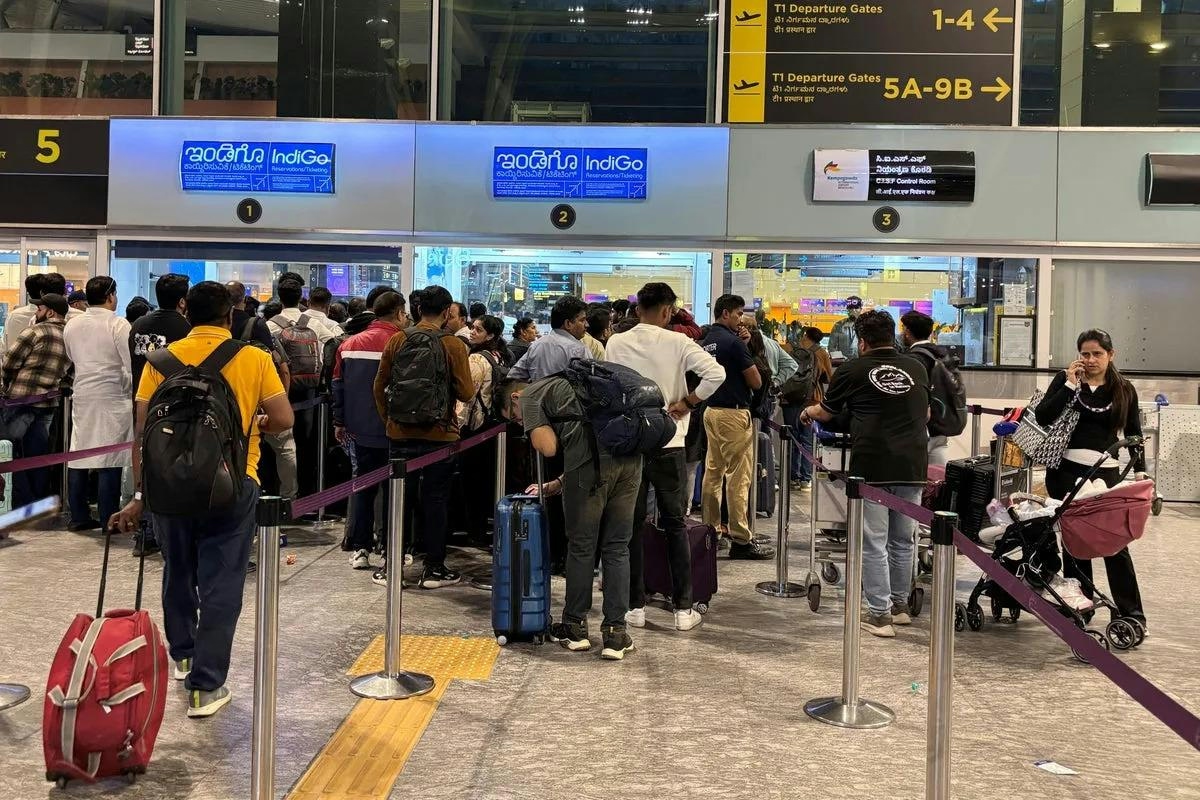
IndiGo Faces Flight Disruptions Amid Crew Shortages
December 4, 2025By ePlane AI
IndiGo Faces Flight Disruptions Amid Crew Shortages
0
0
IndiGo
Crew Shortages
Flight Disruptions

IndiGo Faces Widespread Flight Disruptions Amid Crew Shortages and Regulatory Scrutiny

India’s largest airline, IndiGo, has experienced significant flight disruptions this week, with over 300 cancellations occurring within a span of two days. The disturbances, which affected the carrier’s network on Tuesday and Wednesday, have been primarily attributed to a shortage of crew following the enforcement of new rest and duty regulations. This situation has caused widespread chaos at airports across the country, leaving thousands of passengers stranded and prompting a surge of complaints on social media platforms.

Operational Challenges and Airline Response

In response to the escalating operational difficulties, IndiGo announced a series of “calibrated adjustments” to its flight schedule, expected to continue for 48 hours. Although the airline has not disclosed detailed information, industry insiders suggest that these adjustments involve selective rescheduling and additional cancellations aimed at aligning operations with the available crew capacity. The disruptions were further compounded by minor technological glitches, airport congestion, seasonal timetable changes, and adverse weather conditions, all contributing to the overall operational strain.

IndiGo has acknowledged the complexity of the situation, describing it as the result of “a multitude of unforeseen operational challenges” that collectively led to an unprecedented level of disruption. On Wednesday alone, more than 150 flights were cancelled, with numerous others experiencing significant delays. Passengers across India reported extended waiting times at airports, often enduring hours without clear updates or alternative travel arrangements.

Regulatory Oversight and Market Impact

The Directorate General of Civil Aviation (DGCA), India’s aviation regulator, has initiated an investigation into the causes of the widespread cancellations and delays. The DGCA has formally requested a comprehensive explanation from IndiGo regarding the operational failures and the airline’s strategy to restore stability. The regulator is working closely with IndiGo to address the ongoing issues and has emphasized the importance of safeguarding passenger interests and minimizing disruptions.

The turmoil has also affected IndiGo’s financial standing, with the airline’s share price declining amid investor concerns over the scale of the disruptions and their potential impact on future operations. IndiGo has expressed regret over the inconvenience caused to passengers and affirmed its commitment to urgently restoring normal flight schedules while managing the constraints imposed by updated crew rostering rules and broader systemic pressures within the aviation sector.

As the DGCA’s investigation continues, attention remains focused on IndiGo’s ability to stabilize its services promptly and rebuild confidence among travelers and stakeholders alike.

Comments

  • H

    Hire a Hacker for Cheating Spouse

    My husband just underwent a personality shift. He has changed the passwords on his phones and never drops them. I was curious about his activities, i spoke with a friend who referred me to hackerspytech @gmail com, a hacker who had previously assisted her. I asked him to assist me and he performed an incredible job for me by helping me by hacking my husband phone remotely, i gain access to his iPhone remotely, so that i can access all of his messages, facebook and instagram activities and calls at all times.

  • J

    Jennifer Smith

    I still remember the sinking feeling in my chest the day I realized I’d been scammed. Two full Bitcoins worth millions at today’s price are gone in an instant. The so-called NextGen Elite Crypto Exchange Platform I’d been trading on suddenly froze my account, blocked my withdrawals, and disappeared behind an error message. No replies, no support, nothing. I felt stupid. Betrayed. And hopeless. For days I barely slept, rereading my transaction history, trying to convince myself that there was something I had missed, some hidden button, some technical glitch. But deep down, I knew the truth: I had been fooled by a polished, professional-looking crypto scam. A week later, still devastated, I came across the name Dexdert Net Pro mentioned in an online community where victims discussed crypto-related frauds. People claimed they specialized in helping individuals analyze blockchain activity and recover assets from fraudulent platforms. I reached out. Dexdert Net Pro responded professionally and calmly, outlining what they could and could not do. They were clear from the start. They analyzed the fake platform’s transaction paths, wallet addresses, and the network of movements behind the scenes. Within days, Dexdert Net Pro discovered that my 2 BTC had been moved across a chain of wallets linked to multiple known scam operations. They compiled a detailed forensic report and coordinated with a partner service to flag the addresses through major exchanges.2 days later, I received the message I had been desperately hoping for, my 2.0 BTC successfully reclaimed. I stared at the screen, unable to breathe. It felt unreal like someone had reached into the darkness and pulled me back into the light.  The moment I saw my coins returned to my secure wallet, I felt a weight lift off my shoulders. It wasn’t just the money it was the justice, the relief, the restoration of hope. Dexdert Net Pro didn’t just help me recover funds; they gave me closure. In the world of crypto, you need knowledge, vigilance, and when things go wrong the right experts behind you. REACH OUT INFORMATION VIA: WhatsApp: (+1 (859) 609 4156)Telegram: (ttps://t.me/Dexdertprorecovery)Email: (DexdertNetPro@mail.com)

  • E

    evelyn murphy

    I know an organization who have private investigators for hire who can help you get into your spouse’s phones,emails remotely from your phone they can also help you with your * credit score * clearing of criminal record reecovery of stolen cryptocurrency *increasing of school grades and any thing that has to do with hacking etc You can confirm for yourself from their email or whatsapp line ethicalhackers009@gmail.com Whatsapp No: +14106350697 so you can also give your testimony

  • D

    david agena

    I came across this post while reading about online investment scams, and it reminded me of a tough period I went through earlier this year. I had lost a significant amount to a fraudulent crypto trading platform that looked convincing at first. After trying several ways to get help, I reached out to Coinreclaimservice dot io, who guided me through the process of tracing the transactions and working with the appropriate channels to recover the lost funds. The experience was both emotional and educational — I learned a lot about how these scams operate and how to protect myself moving forward. I truly appreciate the professionalism and clarity shown throughout the process. While I hope no one goes through what I did, it’s reassuring to know that recovery options like this exist. I recommend contacting them if you need structured, step-by-step assistance rather than quick promises, on Watsp: +1 (360) 831-8690 and coinreclaimservice AT gmail.com

  • J

    Jennyantony

    How I Reclaimed My Lost Bitcoin with the help of SWIFT RECOVERY SERVICES After falling victim to a cryptocurrency scam group, I lost $354,000 worth of USDT. I thought all hope was lost from the experience of losing my hard-earned money to scammers. I was devastated and believed there was no way to recover my funds. Fortunately, I started searching for help to recover my stolen funds and I came across a lot of testimonials online about Swift Recovery Services, an agent who helps in recovery of lost bitcoin funds, I contacted Swift Recover Services, and with their expertise, they successfully traced and recovered my stolen assets. Their team was professional, kept me updated throughout the process, and demonstrated a deep understanding of blockchain transactions and recovery protocols. They are trusted and very reliable with a 100% successful rate record Recovery bitcoin, I’m grateful for their help and highly recommend their services to anyone seeking assistance with lost crypto. Website: ht tps:/ /swiftrecoveryservices. c om WhatsApp: ‪+1 725-343-2718‬ Email: info @ swiftrecoveryservices . com

  • S

    Sharon Anderson

    I just wanted to let everyone know about my experience. I attempted to invest my money in Bitcoin, but internet crooks depleted and destroyed my finances. I fell prey to a bitcoin investment fraud, which requires you to keep all of the money in your wallet.Given the difficulties in understanding blockchain transactions, it is imperative to seek the advice of a specialist such as hackerspytech @ gmail com in order to recover lost cryptocurrency from scammers. It takes certain knowledge and experience to comprehend the complexities of blockchain technology and the legal ramifications of retrieving stolen cryptocurrency assets. With the help of cutting-edge technological tools and techniques, hackerspytech @ gmail com can effectively trace and recover lost cryptocurrency by delving into the digital traces left by scammers. Victims can profit from hackerspytech @ gmail com extensive knowledge of the intricacies of cryptocurrency scams and his skill at successfully navigating these obstacles by entrusting the recovery process to this professional.

  • E

    Erica Len Navarro

    Encouraged by these review, I read more about this Spytechacker and I went on and contacted him at hackerspytech @ gmail com based off many reviews i got from here and he gave me applications and login details to access my partner’s phone, it was like a dream come true because i never expected his service to be so top notch with every details i needed. After the phone hack i had full access to his instagram, twitter, Fb Messenger and othr social media accounts remotely and without his consent. This allowed me to view text messages, calls, WhatsApp conversations, and hisocation . With the evidence I gathered, I was able to file for divorce in court and make necessary changes in my life. If you need to access your partner phone for spying purpose, I highly recommend this expert.. it’s 100% possible to hack someone WhatsApp using a phone number with the support of a professional ethics expert

  • B

    Bruce Billis

    Some time ago, I received a message saying I had won an international lottery. At first, I laughed it off, but the email looked so convincing — official logos, certificates, even a phone number I could call. Out of curiosity, I contacted them, and they told me I had won a huge cash prize. The only condition was that I had to pay certain ‘processing fees’ and ‘taxes’ before the winnings could be released. It sounded a little odd, but the documents they sent looked real, and the idea of a life-changing prize clouded my judgment. I ended up sending multiple payments, each time believing I was closer to receiving my winnings. Of course, the prize never came. Eventually, the emails stopped, the phone numbers were disconnected, and I realized I had been scammed. I felt humiliated and angry with myself for falling for it. The money I lost was money I had saved for important things, and I thought it was gone forever. In my search for help, I found CHAINTRACE ASSET RECOVERY. At first, I was hesitant — after being tricked, trusting anyone again felt impossible. But from the very first conversation, they treated me with respect and understanding. They explained how lottery scams operate and assured me they had handled similar cases before. I provided them with all the receipts, emails, and transaction details I had. They immediately got to work, tracing the funds. Throughout the process, they kept me updated, which gave me a sense of hope I hadn’t felt since the scam happened. After weeks of effort, I received the most incredible news — CHAINTRACE ASSET RECOVERY Recovery was able to retrieve a large part of my stolen money. Seeing it back in my account felt unreal. It was a mix of relief, gratitude, and a sense of justice. CHAINTRACE ASSET RECOVERY didn’t just help me financially; they restored my faith that good people still exist who genuinely want to help others. If you’ve fallen for a scam like this, don’t let shame keep you from seeking help. These professionals know exactly how to handle these situations and will fight to get your money back. WHATSAPP : +1 (581) 256‑1989 EMAIL: chaintraceasset@post.com WEBSITE: https://chaintraceassetrecovery.com

More news
American Airlines Expands Premium Offerings on Widebody Fleet

American Airlines Expands Premium Offerings on Widebody Fleet

American Airlines Expands Premium Offerings on Widebody Fleet Strategic Shift Toward Premium Travel American Airlines is intensifying its focus on premium travel by investing substantially in new cabin products across its widebody and long-range narrowbody aircraft. This initiative reflects a broader industry trend where U.S. carriers compete vigorously to attract high-yield passengers through enhanced business class suites, upgraded lounges, and expanded premium economy cabins on long-haul routes. American’s transformation involves reshaping its fleet composition to prioritize premium seating over maximum capacity, a move that underscores the growing profitability of premium travelers. The airline’s premium pivot aligns with a wider market shift, as premium cabins continue to generate a disproportionate share of revenue on transatlantic and transpacific routes. Although corporate travel has not yet fully recovered to pre-pandemic levels, demand from premium leisure travelers has surged, prompting airlines to reconfigure aircraft to emphasize business and premium economy seating. American Airlines has publicly committed to increasing its premium seating by more than 45% across its long-haul fleet by the middle of the decade, signaling a long-term strategic repositioning rather than a temporary adjustment. Competitive Landscape and Industry Context American’s expansion in premium offerings occurs amid intensified competition from other carriers. JetBlue, for instance, has curtailed its transatlantic growth due to fleet constraints and heightened rivalry, underscoring the necessity for American to differentiate its premium products to sustain a competitive advantage. Similarly, Turkish Airlines’ disciplined approach to growth and profitability highlights the importance of balancing expansion with operational efficiency. Air Canada’s focus on the flexibility of new aircraft such as the A350-1000 further illustrates the need for American to consider both range and operational benefits as it refines its premium strategy. Fleet Modernization and Product Enhancements The airline’s premium transformation extends beyond new aircraft deliveries to include retrofitting existing Boeing 777 and 787 jets with updated interiors. American is introducing premium-heavy configurations on recently delivered Boeing 787-9 Dreamliners, which now feature 51 Flagship Suite seats—significantly increasing premium capacity compared to earlier models. The upcoming introduction of the Airbus A321XLR will mark a notable development by bringing lie-flat Flagship Suite seating to a narrowbody platform capable of long-haul operations. Collectively, these initiatives demonstrate American’s commitment to premium comfort as a central pillar of its competitive strategy, moving beyond reliance on network scale or flight frequency. At the core of this strategy is the new Flagship Suite business class product, which represents American’s first major advancement in business class hard product design in over a decade. The suites are designed to enhance privacy and personalization, featuring sliding doors, expanded storage, wireless charging, and a chaise lounge seating position that allows for multiple reclining configurations. Complementing these features are enhanced finishes, modern lighting, and upgraded inflight entertainment systems, all contributing to an elevated onboard experience. As American Airlines continues to invest in premium products and fleet modernization, its ability to balance differentiation, operational efficiency, and flexibility will be critical to maintaining its position in the increasingly competitive premium long-haul market.
Human Factors: When Effort Falls Short

Human Factors: When Effort Falls Short

Human Factors: When Effort Falls Short Engine Failure and Emergency Response The National Transportation Safety Board’s (NTSB) final report on the March 2024 aviation accident begins with a stark account: approximately 30 minutes into the flight, the airplane’s engine abruptly emitted a loud noise before ceasing to produce power. This sudden failure was accompanied by oil spraying across the windscreen, severely impairing the pilot’s visibility. With the nearest airport beyond reach and the Altamaha River in Georgia swollen to flood stage below, the pilot swiftly established the best glide speed, issued a Mayday call, and maneuvered to avoid the river. The terrain ahead offered little reprieve, consisting of dense pine forests and hilly ground, conditions far from ideal for an emergency landing. The aircraft involved, a 2015 Cirrus SR22 Xi Edition, was equipped with a full-frame parachute system. The pilot prudently waited until the last safe moment, ensuring clearance from the river and surrounding swamp, before deploying the parachute. The descent carried the pilot, his wife, and their dog into the forest canopy. The aircraft struck the trees, flipped nose down, and came to rest entangled among young pines, with its spinner nearly touching the ground. Remarkably, all occupants escaped without injury, though the aircraft sustained substantial damage, as later confirmed by NTSB investigators. Mechanical Breakdown and Investigation Findings The investigation quickly identified the cause of the engine failure. Upon removing the engine cowl, investigators discovered a catastrophic breach in the engine crankcase near cylinders Nos. 3 and 4. A large portion of the engine’s upper section was missing, including much of the base of the No. 4 cylinder. The connecting rod for the No. 4 piston was absent, with only fragments recovered from the crankcase and oil sump. Metal debris was found throughout the oil filter, and the oil pump exhibited internal scratches caused by circulating metal fragments. The remaining five connecting rods were also compromised, showing signs of bushing displacement, chipping, and in some cases, breakage. This incident highlights a critical reality in aviation and other high-stakes industries: despite rigorous preparation and advanced technology, human factors and unforeseen mechanical failures can still precipitate critical breakdowns. The complex interplay between human decision-making and mechanical reliability remains a constant challenge. Broader Implications: Human Factors in Technology and Markets A parallel can be drawn between this aviation incident and the current volatility in financial markets, where human factors intersect with rapid technological change. Recent fluctuations in stock prices, particularly among technology companies, have been driven by investor reactions to advancements in artificial intelligence. Concerns over AI tools potentially displacing established software have led to sharp declines in share values. In response, competitors face the imperative to adapt—either by investing heavily in AI to maintain competitiveness or by emphasizing human-centric strategies to differentiate themselves. Market reactions have been swift and severe, with analysts cautioning that volatility may persist amid unpredictable economic conditions and geopolitical tensions. Companies must carefully balance risks and opportunities, sometimes pivoting strategically to leverage human expertise or to mitigate uncertainties introduced by technological disruption. Whether in the cockpit or the boardroom, the enduring lesson is clear: effort and preparation are indispensable but not always sufficient. Human factors—including decision-making under pressure and adaptability in the face of unforeseen challenges—continue to shape outcomes, for better or worse.
Cathie Wood Increases Investment in Air-Taxi Stocks

Cathie Wood Increases Investment in Air-Taxi Stocks

Cathie Wood Increases Investment in Air-Taxi Stocks Strategic Expansion in the eVTOL Sector Cathie Wood, founder of ARK Invest, has significantly increased her investment in the electric air-taxi industry, committing approximately $16.5 million to shares in Archer Aviation and Joby Aviation. This strategic move aligns with the advancing development of commercial electric vertical take-off and landing (eVTOL) air-taxi services, which both companies aim to launch potentially by 2026. Over the course of Tuesday and Wednesday, Wood acquired 1,367,862 shares of Archer Aviation valued at around $9.21 million. The majority of these purchases—947,943 shares worth $6.37 million—occurred on Tuesday following an 11% decline in Archer’s stock price after its quarterly earnings report. In parallel, ARK Invest purchased 739,987 shares of Joby Aviation totaling approximately $7.26 million across two sessions, including 539,131 shares valued at $5.26 million on Tuesday alone. Joby recently reported a fourth-quarter loss of $0.14 per share for 2025, marking an improvement from a $0.23 loss in the previous year. Market Response and Sector Outlook Wood’s increased stake has reignited investor interest in the eVTOL sector, with market activity reflecting growing confidence in the long-term potential of urban air mobility. Despite Joby’s stock declining roughly 25% year to date, analysts interpret Wood’s consecutive acquisitions as a strong endorsement of the sector’s transformative prospects for urban transportation later this decade. Nevertheless, the path to commercial viability for eVTOL companies remains complex. Regulatory approval continues to pose a significant challenge, as authorities work to establish comprehensive safety and operational standards for air-taxi services. Technological innovation is equally critical, with companies striving to enhance battery efficiency, flight range, and overall reliability. The competitive environment is intensifying, as Wood’s high-profile investments may prompt rival firms to accelerate their development and commercialization efforts to secure market leadership. As Archer, Joby, and other competitors advance toward commercial launches, the sector’s success will depend on navigating regulatory and technical obstacles while leveraging increasing investor and public interest. Wood’s recent investments highlight both the promise and the intricate challenges facing the emerging eVTOL market.
Airlines Face Fundamental Technology Challenges, Not Just AI Issues

Airlines Face Fundamental Technology Challenges, Not Just AI Issues

Airlines Face Fundamental Technology Challenges Beyond AI Airlines are incurring billions of dollars in losses annually, not primarily due to fuel costs or labor expenses, but because of outdated technology that fails to keep pace with the increasing complexity of modern aviation. As global operations generate vast volumes of data and demand real-time coordination among partners and customers, legacy IT systems have become a critical bottleneck, impeding efficiency and operational effectiveness. The Legacy Technology Burden Industry surveys reveal that 80% of airlines now identify legacy technology as a significant operational barrier, a notable rise from 65% in 2019. These aging systems undermine not only efficiency but also reliability, resilience, and customer trust—factors that are crucial in an industry characterized by razor-thin profit margins. Despite total revenues expected to exceed $1 trillion by 2026, global airlines are projected to operate with net margins below 4%. Willie Walsh, Director General of the International Air Transport Association (IATA), highlights the stark reality that airlines will earn an average profit of just $7.90 per passenger, a figure that pales in comparison to the profit Apple generates from selling an iPhone cover. The challenge extends beyond technology alone. The distinction between being genuinely AI-ready and merely AI-curious is becoming increasingly critical for airlines aiming for strategic growth or seeking to mitigate systemic risks. While research suggests that artificial intelligence could enable the aviation sector to realize up to $42 billion in savings by 2035 through smarter automation, dynamic planning, and predictive operations, these benefits remain largely theoretical unless airlines first modernize their core systems. Operational Impacts and AI Integration Challenges The consequences of these technological shortcomings are evident across the industry. JetBlue’s transatlantic expansion, for example, has been hindered not only by competitive pressures and airport slot constraints but also by fleet limitations and the need to differentiate its product offering. These operational challenges are exacerbated by the inability to fully leverage data and AI, as most airlines lack the infrastructure necessary to harness real-time insights from the massive data streams generated by modern aircraft. An Airbus A350 can produce terabytes of operational data per flight day, yet much of this information remains untapped due to siloed systems and manual processes. Although AI is delivering value in isolated instances—such as predictive maintenance reducing unscheduled repairs, fuel optimization generating measurable savings, and dynamic pricing engines unlocking incremental revenue—these successes rarely scale. Analytics and AI tools often cannot fully integrate with legacy operational systems, limiting their broader impact. Some airlines employing machine learning have reported operational cost reductions of up to 20% and maintenance downtime decreases of up to 30%, but these gains remain exceptions rather than the norm. Market Volatility and Organizational Barriers The broader technology disruption is also influencing market dynamics. The rise of AI has introduced volatility in software stocks, as investors grapple with the potential for AI to disrupt traditional software services. This has resulted in cycles of panic-driven selling and euphoric rallies, reflecting uncertainty about AI’s long-term impact on sectors including aviation. Ultimately, the primary barrier for airlines is organizational rather than purely technological. Treating AI as a mere add-on to outdated systems is insufficient. To unlock the full potential of digital transformation and maintain competitiveness in a rapidly evolving industry, airlines must confront and resolve their fundamental technology challenges directly.
Crankshaft Fatigue Causes Emergency Landing

Crankshaft Fatigue Causes Emergency Landing

Crankshaft Fatigue Forces Emergency Landing Near Bellevue A Cirrus SR22T aircraft was compelled to execute an emergency landing near Bellevue, Washington, following a total engine failure caused by crankshaft fatigue, according to a preliminary report from the National Transportation Safety Board (NTSB). Incident Overview The event took place shortly after the aircraft departed from Runway 34 at Renton Municipal Airport (KRNT). The flight instructor and the pilot under instruction reported that the plane had stabilized at approximately 2,500 feet mean sea level when the engine’s revolutions per minute (RPM) surged erratically. This was immediately followed by a loud bang and a complete loss of engine power. Unable to restart the engine, the crew deployed the Cirrus Airframe Parachute System (CAPS), enabling a controlled descent into a wooded wetland area near a residential neighborhood. The aircraft came to rest upright, about four miles northeast of the airport, in a nose-low position. Both pilots survived without injury, and there were no immediate reports of damage or casualties on the ground. Investigation and Findings Initial site examination revealed damage to the airplane’s nose landing gear fairing, with both wings and flaps removed during recovery operations. The engine, a Continental Motors TSIO-550-K1B, remained attached to the fuselage, with all cylinders and accessories intact. Investigators confirmed control continuity from the cockpit to the fuel servo and found no external mechanical damage to the engine crankcase. Subsequent detailed analysis conducted at Continental Motors facilities and the NTSB Materials Laboratory uncovered significant internal damage. The crankshaft was fractured near the No. 2 main bearing and No. 3 connecting rod journal. Further examination revealed fatigue cracks had developed at multiple points along the crankshaft, culminating in its failure. Maintenance records showed the engine had undergone an overhaul in November 2019 and was installed in April 2020, accumulating approximately 680 flight hours since the overhaul. No recent maintenance had been performed on the crankshaft prior to the incident. The NTSB identified the probable cause as a total loss of engine power resulting from a fatigue fracture of the crankshaft. Broader Implications Beyond the technical aspects, the emergency landing highlights operational challenges within the aviation industry. The incident likely caused immediate disruptions, including flight rerouting, passenger accommodations, and temporary airport closures. Financial repercussions for the operator may encompass costs related to fuel, landing fees, and passenger compensation. Moreover, the event has the potential to influence consumer confidence, as travelers may raise concerns regarding aircraft maintenance and safety protocols. Competitors within the aviation sector are expected to observe the situation closely, potentially adjusting pricing strategies or market positioning should the incident indicate broader maintenance issues. The airline’s response, particularly its transparency and management of customer concerns, will be pivotal in preserving passenger trust and loyalty. **NTSB Identification:** 193887
Embraer Integrates AI-Based Counter-Drone System into A-29 Super Tucano

Embraer Integrates AI-Based Counter-Drone System into A-29 Super Tucano

Embraer Integrates AI-Based Counter-Drone System into A-29 Super Tucano Embraer, in collaboration with Valkyrie Aero, has announced a significant enhancement to the A-29 Super Tucano’s operational capabilities through the integration of an artificial intelligence-enabled counter-drone system. Unveiled on March 4, 2026, this upgrade centers on Valkyrie Aero’s “Gunslinger” AI suite, designed to accelerate the detection and engagement process in manned counter-unmanned aerial system (C-UAS) missions. The Gunslinger system will be incorporated into the A-29’s existing sensor and weapons architecture, enabling a more rapid and effective “find, fix, finish” cycle against increasingly prevalent unmanned threats. Addressing the Challenge of Low-Cost Drones The proliferation of small, inexpensive drones on modern battlefields has exposed significant limitations in traditional countermeasures. Conventional responses, such as deploying frontline fighter jets, often incur high operational costs and inefficient use of expensive interceptors. Fast jets face difficulties engaging slow-moving drones safely with guns, while the use of costly air-to-air missiles against low-value drones—such as Iran’s Shahed series—proves economically unsustainable. This growing mismatch has underscored the need for more practical and cost-effective solutions. Embraer positions the A-29 Super Tucano, a turboprop light attack and advanced trainer aircraft, as a viable alternative. Its tandem cockpit configuration, endurance, and agility allow it to match the speed profile of attack drones, providing a stable firing platform for guns, guided rockets, and other precision effectors. Marcio Monteiro, Vice President for Market Intelligence at Embraer Defense and Security, emphasized the aircraft’s proven combat record, with over 60,000 combat flight hours, as a testament to its suitability for manned C-UAS operations. Technological Integration and Market Response Chris Turner, Senior Vice President at Valkyrie Aero, explained that the Gunslinger capability was developed in direct response to urgent operational needs identified by frontline users. However, integrating advanced AI systems into the A-29 presents several challenges. These include ensuring the AI’s effectiveness against a diverse range of drone threats, preserving the aircraft’s agility and speed, and managing the costs associated with such technological enhancements. Despite these hurdles, the market response has been encouraging. Defense agencies and customers worldwide have shown increased interest in advanced counter-drone solutions, prompting Embraer to actively reposition the A-29 for C-UAS missions since late 2025. The company advocates the A-29 as a purpose-built alternative to the improvised use of crop-dusting and trainer aircraft for drone defense, a tactic notably employed in Ukraine. Unlike these ad hoc platforms, the A-29 offers integrated sensors, targeting systems, and precision weapons, while maintaining a favorable balance of speed and cost. Industry Trends and Future Prospects The integration of AI-enhanced counter-drone capabilities is part of a broader industry trend, with competitors such as Lockheed Martin and BAE Systems also advancing similar technologies for their platforms. This shift reflects the growing recognition of artificial intelligence as a critical component in modern aerial defense strategies. Embraer continues to build momentum for the A-29, with recent deliveries including the first two aircraft delivered to Uruguay in February 2026. While the company has not yet announced a definitive timeline for the operational deployment of the AI-assisted mission system, the integration represents a significant step in adapting legacy platforms to address evolving aerial threats effectively.
Standardaero and Avilease Sign Agreement for LEAP and CFM56-7B MRO Services

Standardaero and Avilease Sign Agreement for LEAP and CFM56-7B MRO Services

StandardAero and Avilease Forge Partnership for LEAP and CFM56-7B MRO Services StandardAero, Inc., a prominent independent provider of aerospace engine aftermarket services, has formalized an agreement with Avilease to deliver maintenance, repair, and overhaul (MRO) services for LEAP and CFM56-7B engines. This collaboration is designed to support a broad spectrum of fixed and rotary wing aircraft operating within commercial, military, and business aviation sectors. Scope of Services and Operational Segments StandardAero offers an extensive range of aftermarket solutions encompassing engine maintenance, repair and overhaul, component repair, on-wing and field service support, asset management, and engineering services. The company’s operations are divided into two primary segments. The Engine Services segment provides comprehensive engine and airframe MRO and related services to customers across commercial, military, helicopter, and business aviation markets. Meanwhile, the Component Repair Services segment focuses on engine part repair, accessory repair, and new part manufacturing, serving diverse industries including marine, land, and oil and gas. Market Context and Emerging Challenges This agreement emerges amid evolving market dynamics that present both opportunities and challenges. As technical and supply chain constraints impacting engine availability begin to ease, the industry faces the prospect of an oversupply of spare engines. Such a surplus could exert downward pressure on lease rates and asset values, potentially affecting the financial performance of both StandardAero and Avilease. Competition within the MRO sector is intensifying, with companies like Bombardier expanding their own service offerings, thereby increasing competitive pressures and potentially redistributing market share. Furthermore, technological advancements in engine component manufacturing, exemplified by Mecachrome’s initiatives to improve the production process for LEAP turbine blades, are poised to influence operational efficiencies and reshape the competitive landscape. Strategic Implications of the Partnership Despite these challenges, the alliance between StandardAero and Avilease highlights a shared commitment to delivering value-added aftermarket solutions and adapting to the rapidly evolving aerospace environment. The partnership is anticipated to reinforce their positions within the global engine MRO market, while ongoing industry developments will continue to inform their strategic direction and future opportunities.
ETF Airways to Receive First ATR Aircraft

ETF Airways to Receive First ATR Aircraft

ETF Airways to Receive First ATR Aircraft ETF Airways is poised to receive its inaugural ATR72-600 aircraft, marking a pivotal advancement in the airline’s fleet expansion efforts. The turboprop, currently stationed in Vietnam, is scheduled to arrive in Zagreb within the coming days. This acquisition is facilitated through a six-year lease agreement with Singapore-based leasing firm Avation and represents ETF Airways’ initial venture into operating turboprop aircraft. Strategic Expansion into Turboprop Operations According to Stjepan Bedić, CEO of ETF Airways, the airline is experiencing robust demand for ACMI leases involving turboprop aircraft. He emphasized that this segment offers a strategic niche amid intense competition for leasing Airbus A320 and Boeing 737 jets. Bedić further outlined the airline’s long-term vision, which includes the addition of a second ATR72-600 by 2027, signaling a sustained commitment to this aircraft category. The integration of the ATR72-600 into ETF Airways’ existing fleet presents both opportunities and operational challenges. The airline must undertake meticulous planning to ensure regulatory compliance and manage operational costs effectively. This process will involve comprehensive training programs for flight crews and maintenance personnel, alongside adjustments to operational protocols to accommodate the distinct characteristics of turboprop aircraft. Implications for Regional Market Competition Industry analysts suggest that ETF Airways’ entry into the turboprop market could heighten competition on regional routes. Should other carriers follow suit by expanding their fleets with ATR aircraft, the regional aviation landscape may experience shifts in fleet strategies and pricing models as competitors strive to protect their market shares. ETF Airways’ move reflects a broader industry trend toward increased demand for efficient, short-haul aircraft amid fierce competition for narrow-body jets. The airline’s planned expansion within the turboprop segment underscores its strategic intent to strengthen its position in this evolving market niche.
Range Comparison Between Boeing 787-9 and 787-10 Dreamliner

Range Comparison Between Boeing 787-9 and 787-10 Dreamliner

Range Comparison Between Boeing 787-9 and 787-10 Dreamliner When Boeing introduced the 787 Dreamliner family, the objective was to develop a versatile aircraft platform capable of addressing a wide range of airline requirements across global networks. This vision materialized in three main variants: the 787-8, 787-9, and 787-10. While all models share advanced composite materials, next-generation engines, and similar wing designs, the 787-9 and 787-10 are frequently compared due to their comparable size and common deployment on long-haul routes. Key Differences in Range and Capacity At first glance, the 787-9 and 787-10 appear nearly identical, offering airlines operational commonality in pilot training and maintenance. However, a significant difference lies in their range capabilities. The 787-9 can fly approximately 1,200 nautical miles (2,220 kilometers) farther than the 787-10, a distinction that profoundly influences route planning and operational flexibility. This extended range enables the 787-9 to serve ultra-long-haul flights, including transpacific and intercontinental routes, which the 787-10 cannot operate without imposing payload or fuel restrictions. This disparity is not solely due to size. The 787-10 features a stretched fuselage designed to accommodate more passengers, making it the highest-capacity model in the Dreamliner family. Despite this, it retains much of the same wing and fuel system as its shorter counterparts. The increased weight and passenger load reduce its maximum range, positioning the 787-10 as more suitable for high-density, medium- to long-haul routes rather than the longest intercontinental services. Conversely, the 787-9 balances passenger capacity, cargo capability, and range, establishing it as the most versatile and widely adopted variant within the family. Boeing’s Strategic Approach and Market Outlook Boeing’s strategy was not to replace one variant with another but to provide airlines with a suite of aircraft optimized for specific operational missions. The 787-10 complements the 787-9 by focusing on routes where efficiency and passenger volume take precedence over maximum range. This approach has resonated with carriers aiming to tailor their fleets to diverse market demands. Looking ahead, Boeing plans to deliver upgraded versions of both the 787-9 and 787-10 in the first half of 2026, promising enhancements such as extended flight range or increased cargo capacity. This development coincides with continued investment in the Dreamliner family by airlines in the Asia-Pacific region. Notably, Vietnam’s Sun PhuQuoc Airways recently signed a $22.5 billion agreement for 40 Dreamliner jets, underscoring the aircraft’s appeal for intercontinental services and reflecting the region’s confidence in long-term growth despite industry challenges such as delivery delays. As Boeing prepares to introduce these improved variants, competitors and market analysts are closely monitoring how the new Dreamliners will influence airline strategies and global fleet compositions. The ongoing evolution of the 787 family underscores Boeing’s commitment to addressing diverse airline needs through targeted innovation rather than a uniform solution.
AJW Group Renews Partnership with ASL Aviation to Support A330ceo Fleet

AJW Group Renews Partnership with ASL Aviation to Support A330ceo Fleet

AJW Group Renews Partnership with ASL Aviation to Support A330ceo Fleet AJW Group has extended its collaboration with ASL Aviation Holdings through a new agreement to provide airframe-only support for two A330ceo aircraft operated by ASL Airlines Ireland. This development builds upon an existing relationship in which AJW supported twelve of ASL’s B737 Classic aircraft. Under the renewed contract, AJW will deliver technical and engineering services on a time and materials (T&M) basis, offering ASL operational flexibility while ensuring dependable maintenance support for its commercial fleet. The programme, initiated earlier this year, is scheduled to run for an initial term of four years. This commitment reflects AJW Group’s strategic focus on delivering tailored support solutions for widebody aircraft, reinforcing its long-term dedication to ASL’s operational needs. By concentrating on airframe expertise combined with adaptable commercial terms, AJW aims to enhance the safety, reliability, and overall performance of ASL’s A330ceo fleet. Industry Context and Market Dynamics The renewal of this partnership occurs amid shifting conditions in the global aviation market. Persistent overcapacity in China’s air transport sector has cast uncertainty over near-term demand for widebody aircraft, potentially affecting the requirements for support services. Despite these challenges, Airbus remains optimistic about the long-term prospects for widebody aircraft demand in China, a perspective that may influence strategic planning and market expectations for companies such as AJW. Concurrently, other industry players are adjusting their fleet management strategies in response to evolving market conditions. For instance, Frontier Airlines has recently reduced its fleet size through lease terminations and order deferrals, actions that could alter market dynamics and impact how maintenance and support providers position their offerings. In this complex and changing environment, AJW’s renewed agreement with ASL underscores the critical importance of flexible and responsive support solutions. By leveraging its technical expertise and adaptable service models, AJW Group is positioning itself to address the evolving needs of widebody operators despite ongoing market uncertainties.
line










