
Zet AI‑inzichten om in gerichte actie

Trending
Categories
Man Repairs Plane Engine Mid-Flight Without Parachute
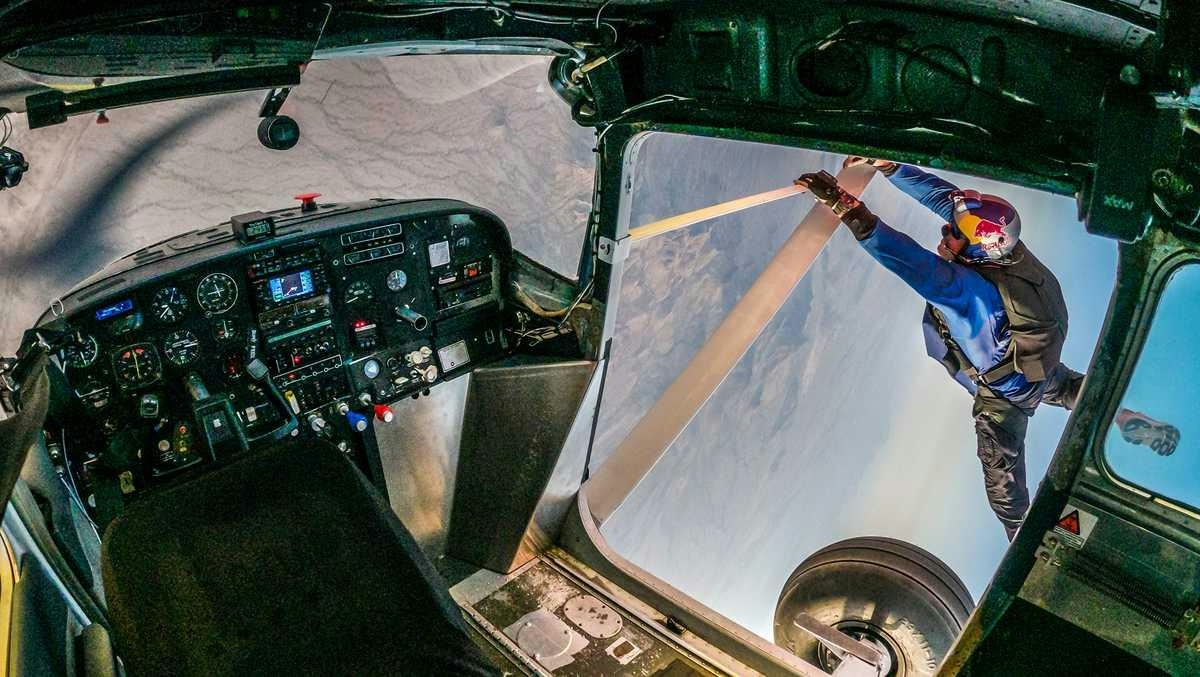
Man Repairs Plane Engine Mid-Flight Without Parachute
A Harrowing Incident in Vienna
In a dramatic episode in Vienna, a mechanic found himself precariously perched atop the tail of an aircraft as it unexpectedly took off. Unaware of the mechanic’s presence, the pilot accelerated forward, leaving the man clinging desperately to the plane’s framework. Despite his frantic attempts to signal the pilot, the aircraft continued its flight, eliciting horror from onlookers below who feared a fatal outcome. The ordeal only concluded when the airdrome manager intervened, signaling the pilot to land. The mechanic, though visibly shaken, emerged unharmed and promptly resumed his duties.
The Evolution of In-Flight Repairs
While such incidents are rare, they highlight a growing trend in aviation where mechanics accompany test flights or long-haul journeys to perform emergency repairs mid-air. This practice has introduced complex challenges, including increased regulatory scrutiny and heightened public safety concerns. Recent cases have led to emergency landings and thorough investigations by aviation authorities, prompting airlines to reevaluate safety protocols and insurance policies.
The role of airborne mechanics has a storied history. In 1929, during a record-setting non-stop flight from Los Angeles to New York, Captain Frank Hawks was accompanied by mechanic Oscar Grubb. Packed with 375 gallons of fuel, the cramped cabin forced Grubb to endure eighteen hours of continuous labor, managing fuel pumps and battling noxious fumes without respite. His resourcefulness was evident as he repurposed empty cans to create additional space during brief moments of rest.
Innovations and Challenges in Mid-Air Maintenance
The challenges of in-flight repairs were further exemplified during American refueling endurance flights. The aircraft known as the “Question Mark” featured a narrow catwalk beside the engine, where Staff Sergeant Roy W. Hooe attempted to clean and replace sparkplugs mid-flight. However, the instability of the aircraft compelled him to abandon the task. Learning from these difficulties, subsequent flights incorporated safer procedures. On the “Fort Worth,” mechanic James Kelly, a former cowboy, performed engine maintenance 2,000 feet above ground while balanced on a narrow plank, equipped with a parachute for safety. He successfully changed sparkplugs and installed a new tachometer shaft under these precarious conditions.
In response to such daring feats, competitors in the aviation industry have strengthened safety measures and launched public relations efforts to reassure passengers. For instance, on the St. Louis “Robin,” mechanic “Red” Dale Jackson introduced a safety feature that allowed him to climb onto a six-inch-wide catwalk to inspect the engine, ensuring he could safely return to the cabin.
Balancing Innovation and Safety
As aviation technology advances, the risks and responsibilities borne by airborne mechanics remain under intense scrutiny. Regulatory bodies are increasing oversight, and airlines face mounting pressure to uphold rigorous safety standards. These developments underscore the ongoing tension between the pioneering spirit of early aviation and the imperative to safeguard public safety in contemporary flight operations.

Etihad Airways Suspends Airbus A380 Flights on Key Route

Aditya Birla Group Seeks Approval for Aircraft Leasing in GIFT City

Qatar Airways Highlights Innovation and Connectivity at Arabian Travel Market 2026

Hong Kong's Five-Year Plan Includes Andrew Fan's Aircraft Parts Processing Hub Proposal

ACIA Aero Leasing Delivers ATR72-600 to Air Nostrum

RTX Appoints Jill Albertelli as Head of Pratt & Whitney

TAT Technologies Joins Beyond Aero Hydrogen Aircraft Program

AURAK Study Highlights Barriers to Air Taxi Adoption in Emerging Economies

Xiamen Air Selects Altitude for 787 Maintenance at Heathrow

Etihad and Swissport Extend Global Partnership
