
Zet AI‑inzichten om in gerichte actie

Trending
Categories
MB Energy and Zaffra Sign MoU to Advance eSAF Commercialization in Europe
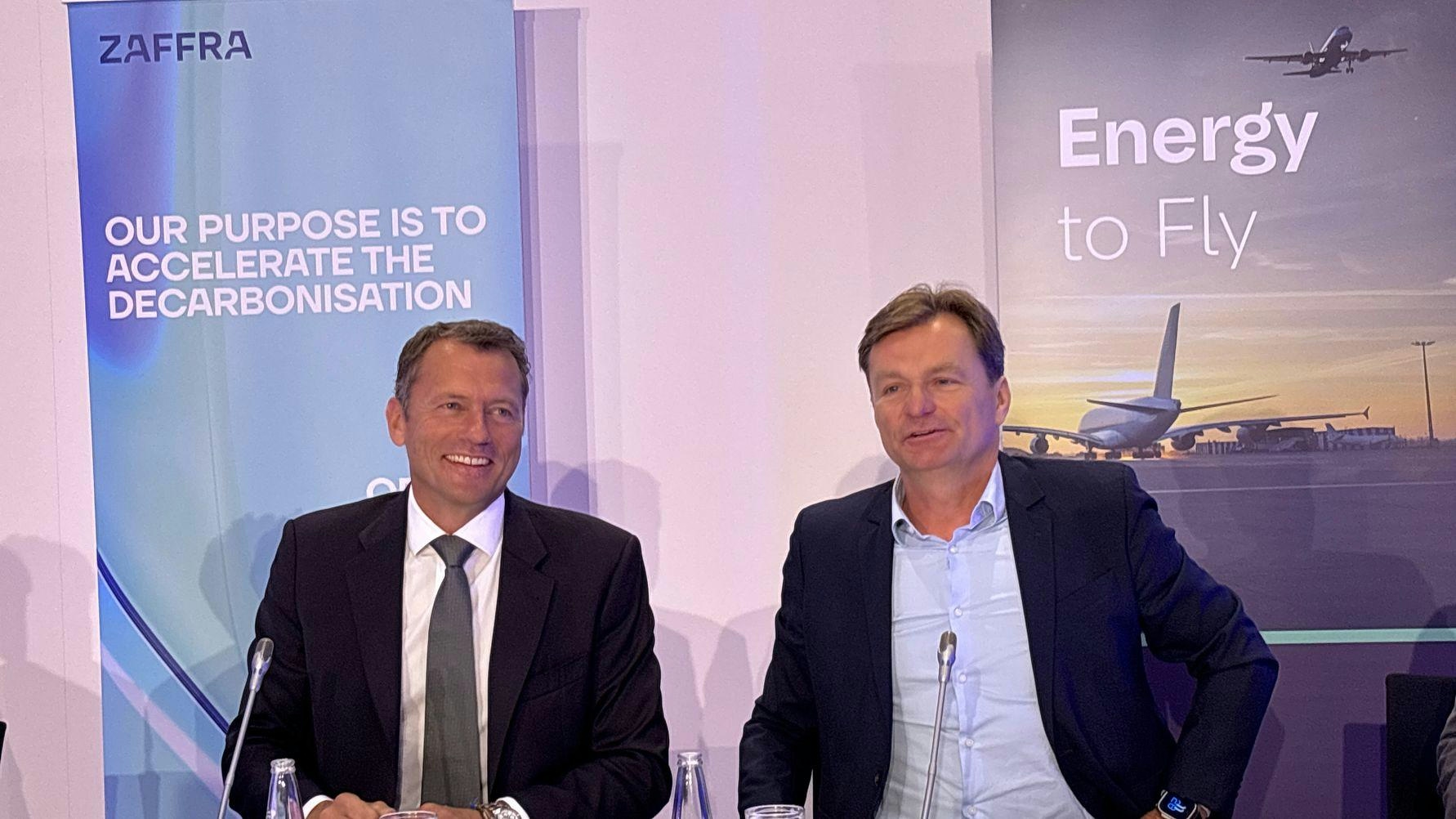
MB Energy and Zaffra Sign MoU to Advance eSAF Commercialization in Europe
Zaffra, a prominent developer of electric Sustainable Aviation Fuel (eSAF), and MB Energy, an independent energy company, have formalized a non-binding Memorandum of Understanding (MoU) to explore a strategic partnership aimed at accelerating the commercialization and deployment of eSAF across Europe. This collaboration seeks to bridge the critical gap between synthetic fuel production and the necessary infrastructure—including storage, blending, logistics, and airport supply chains—required to deliver eSAF at scale.
Addressing Aviation’s Decarbonization Challenge
The aviation industry is under increasing pressure to meet stringent decarbonization targets and comply with emerging Sustainable Aviation Fuel mandates. The partnership between Zaffra and MB Energy is positioned to play a pivotal role in ensuring that airlines and other stakeholders gain access to reliable and scalable eSAF supplies. MB Energy’s extensive network of storage terminals, logistics expertise, and strategic access to key aviation hubs will support the distribution of Zaffra’s future production, advancing the shared objective of reducing carbon emissions within the sector.
Despite the promising outlook, the path to widespread eSAF adoption presents significant challenges. Both companies must navigate complex and stringent European Union regulations, which often render SAF production energy-intensive and costly. The evolving regulatory environment, coupled with increased market scrutiny, is driving demand for more cost-effective SAF solutions. Competitors are responding by investing in advanced production technologies and forging new partnerships to maintain their positions in the European market. Additionally, recent geopolitical tensions and the urgent imperative to reduce fossil fuel dependency have heightened the importance of developing viable SAF alternatives, potentially accelerating industry collaboration and innovation.
Strategic Focus and Future Prospects
Under the terms of the MoU, MB Energy is positioned as a potential offtaker for eSAF volumes from Zaffra’s global portfolio, thereby supporting the commercial viability of future production. The initial focus will be on the Brandenburg eSAF facility, Germany’s largest planned eSAF production site. This joint venture between Zaffra and ENERTRAG aims to produce over 30,000 tonnes of eSAF annually at the PCK refinery in Schwedt by 2030, fulfilling approximately one quarter of Germany’s eSAF mandate under the EU’s ReFuelEU Aviation Regulation.
The partnership also envisions MB Energy collaborating with Zaffra to develop a comprehensive end-to-end logistics framework for eSAF projects, encompassing distribution across MB Energy’s markets and direct supply to airline customers. Furthermore, the companies are exploring opportunities to secure hydrogen supply for eSAF production through MB Energy’s low-carbon fuel infrastructure initiative, New Energy Gate, based in Hamburg. This cooperation is expected to bolster Zaffra’s participation in the European double-sided auction by establishing a robust supply chain that integrates production, logistics, and customer delivery.
Jan Toschka, CEO of Zaffra, highlighted the importance of the partnership, stating, “Commercialising eSAF requires more than production capacity alone—it requires an entirely new supply and logistics ecosystem. This partnership with MB Energy would be a critical step towards establishing that ecosystem and ensuring that more sustainable fuels can reach customers efficiently, reliably and at scale.”
Jonathan Perkins, CEO of MB Energy, echoed this sentiment, noting, “Building a successful eSAF market requires strong partnerships across the entire value chain. By combining Zaffra’s eSAF development capabilities with MB Energy’s infrastructure and market reach, we would be creating the foundation for a practical and scalable supply chain that can help accelerate aviation’s reduction of carbon emissions in Europe.”
Beyond environmental benefits, the collaboration is anticipated to generate broader economic and societal advantages, including the creation of regional employment opportunities through construction, operations, logistics, and related value chains. It also addresses the urgent need for sustainable and secure energy solutions amid a rapidly evolving geopolitical and regulatory landscape.

Etihad Airways Suspends Airbus A380 Flights on Key Route

Aditya Birla Group Seeks Approval for Aircraft Leasing in GIFT City

Qatar Airways Highlights Innovation and Connectivity at Arabian Travel Market 2026

Hong Kong's Five-Year Plan Includes Andrew Fan's Aircraft Parts Processing Hub Proposal

ACIA Aero Leasing Delivers ATR72-600 to Air Nostrum

RTX Appoints Jill Albertelli as Head of Pratt & Whitney

TAT Technologies Joins Beyond Aero Hydrogen Aircraft Program

AURAK Study Highlights Barriers to Air Taxi Adoption in Emerging Economies

Xiamen Air Selects Altitude for 787 Maintenance at Heathrow

Etihad and Swissport Extend Global Partnership
