
Zet AI‑inzichten om in gerichte actie

Trending
Categories
New Funding Supports Autonomous Aviation in Civil and Military Sectors
New Funding Supports Autonomous Aviation in Civil and Military Sectors
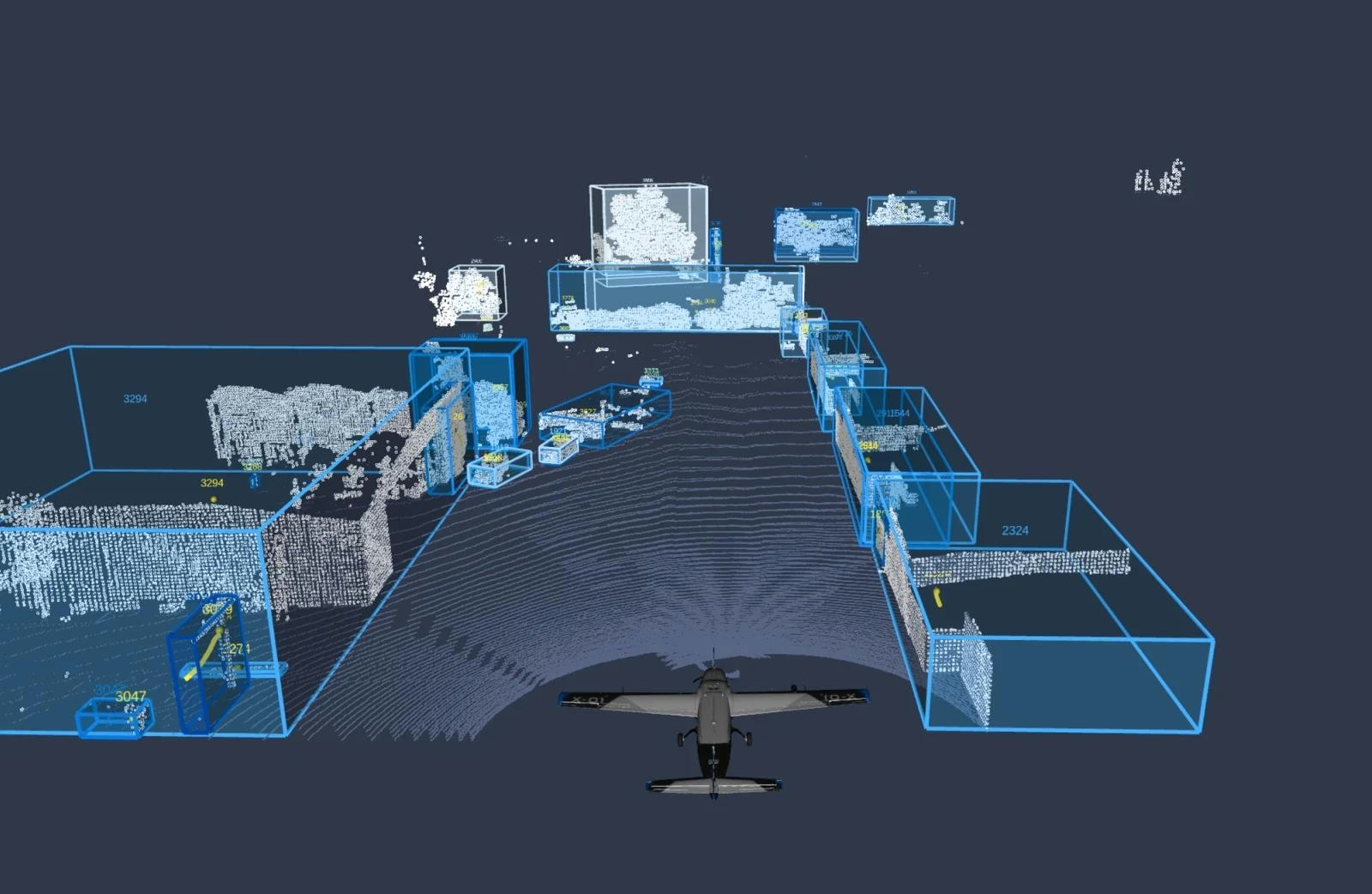
Innovate UK, a branch of UK Research and Innovation (UKRI), has unveiled a funding initiative of up to £10 million aimed at accelerating the development of aviation technologies with applications spanning both civil and military domains. This programme seeks to bolster the United Kingdom’s national security and defence capabilities by promoting resilient, dual-use aviation systems. These include Uncrewed Aircraft Systems (UAS), hybrid electric Vertical Take Off and Landing (eVTOL) aircraft, hybrid electric Conventional Take Off and Landing (eCTOL) aircraft, and other collaborative or autonomous aviation platforms.
Advancing Dual-Use Aviation Technologies
The competition targets innovative projects that push the boundaries of current technology and bring these advancements closer to commercialisation and operational deployment. Applicants are encouraged to focus on manufacturing scalability and address specific end-user requirements, with an emphasis on technologies at Technology Readiness Level (TRL) 5 or higher. A key stipulation is the involvement of a UK-based customer or operator as a project partner, ensuring a clear pathway to market across both civil and defence sectors. This approach aligns with the UK government’s strategic priorities for aviation innovation.
The funding initiative supports broader governmental objectives, including enabling routine Beyond Visual Line of Sight (BVLOS) UAS operations by 2027, increasing drone adoption within the public sector, and achieving commercial piloted eVTOL flights by 2028. Projects may incorporate flight activities, provided they adhere to existing or attainable regulatory approvals within the project timeframe.
Context and Global Developments
The UK’s commitment to dual-use aviation innovation emerges amid a global surge in investment in autonomous flight technologies. In the United States, for example, Reliable Robotics recently secured $160 million to expedite Federal Aviation Administration (FAA) certification of its autonomous flight system, aiming for commercial readiness by 2028. Industry leaders such as Honeywell and Odys are advancing sophisticated anti-drone platforms, while Bell, in collaboration with Near Earth Autonomy, is developing an uncrewed cargo variant of the Bell 505 helicopter.
Concurrently, the Pentagon’s latest $54 billion budget request highlights a strategic pivot towards AI-powered warfare. Despite this, defence analysts warn that militaries worldwide may not yet be fully prepared to manage the operational and ethical challenges posed by autonomous systems on the battlefield.
Competitive Selection and Strategic Goals
Innovate UK’s competition is highly selective, with an estimated success rate of approximately 15% based on previous funding rounds. Decisions will be made considering the quality of applications and the prior conduct of applicants. Due to budget constraints, not all high-scoring proposals will receive funding.
By fostering collaboration between civil and military stakeholders and supporting scalable, dual-use technologies, the UK aims to establish itself as a leader in the rapidly evolving autonomous aviation sector.

Etihad Airways Suspends Airbus A380 Flights on Key Route

Aditya Birla Group Seeks Approval for Aircraft Leasing in GIFT City

Qatar Airways Highlights Innovation and Connectivity at Arabian Travel Market 2026

Hong Kong's Five-Year Plan Includes Andrew Fan's Aircraft Parts Processing Hub Proposal

ACIA Aero Leasing Delivers ATR72-600 to Air Nostrum

RTX Appoints Jill Albertelli as Head of Pratt & Whitney

TAT Technologies Joins Beyond Aero Hydrogen Aircraft Program

AURAK Study Highlights Barriers to Air Taxi Adoption in Emerging Economies

Xiamen Air Selects Altitude for 787 Maintenance at Heathrow

Etihad and Swissport Extend Global Partnership
