
Zet AI‑inzichten om in gerichte actie

Trending
Categories
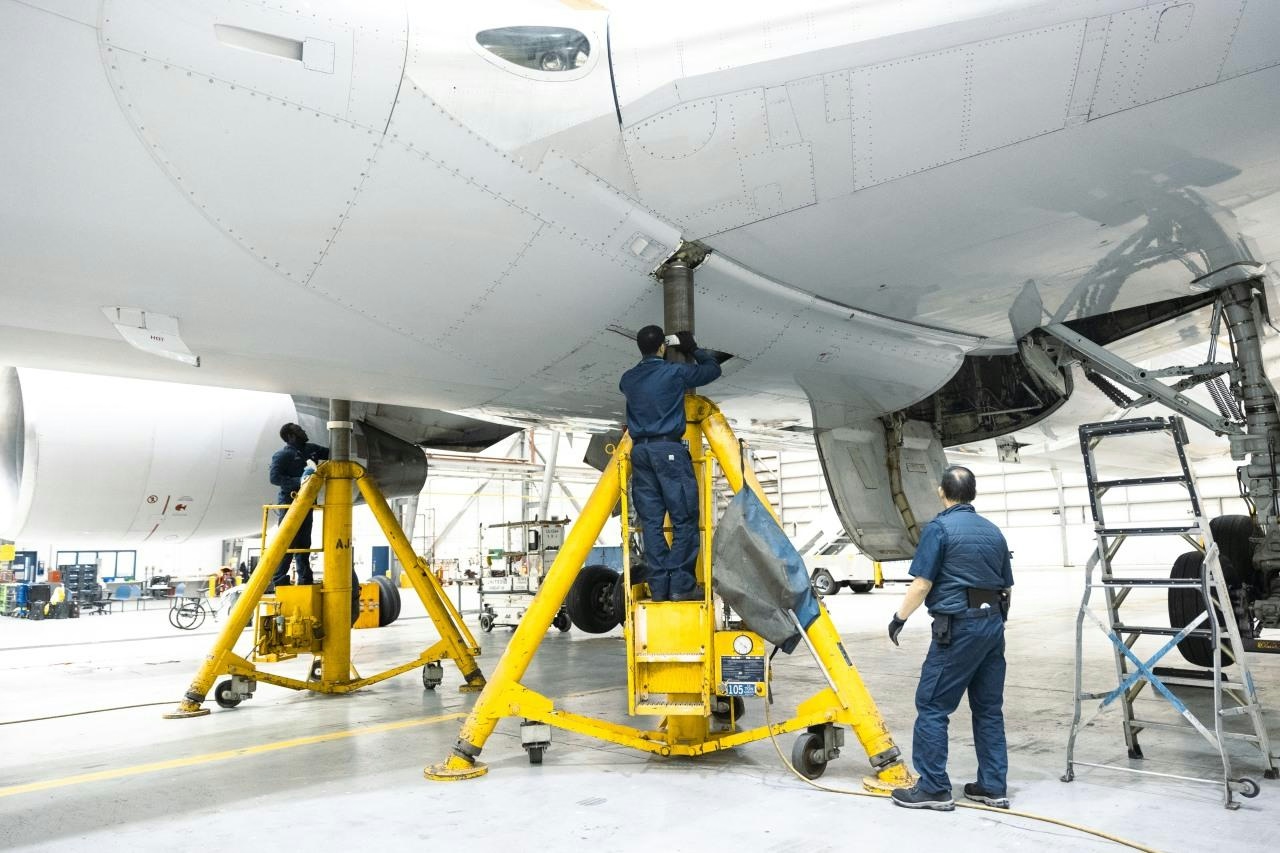
Rising Fuel Costs Challenge Post-Pandemic Aviation Maintenance Growth
Rising Fuel Costs Challenge Post-Pandemic Aviation Maintenance Growth
Surge in Demand Meets Rising Uncertainty
Maintenance providers such as Pratt & Whitney’s Eagle Services Asia in Singapore have experienced a significant increase in demand in recent years, driven by the post-pandemic recovery and airlines’ efforts to rapidly restore capacity. However, this momentum in the aviation maintenance sector is now confronted with growing uncertainty. The sharp rise in fuel prices has compelled airlines worldwide to reduce flights and cut capacity, casting doubt on the sustainability of the aftermarket boom that has characterized the industry’s recent growth.
Since the beginning of the year, jet fuel prices have doubled, largely due to the near-total closure of the Strait of Hormuz amid escalating tensions in the ongoing US-Iran conflict. This critical chokepoint, which once accounted for approximately a quarter of the world’s oil supply, remains closed to shipping, resulting in both price inflation and looming supply shortages. In response, airlines have consolidated routes, reduced scheduling flexibility, and in some cases, cancelled flights outright. While these measures have been relatively modest outside the Middle East, they signal a fundamental shift in airline economics that could have far-reaching consequences for the maintenance, repair, and overhaul (MRO) sector.
Industry Impact and Responses
The effects of rising fuel costs are already manifesting within the industry. On April 28, UK wet-lease carrier Ascend Airways announced it would return its Boeing 737 Max 8 aircraft to lessors and surrender its air operator’s certificate, explicitly citing unsustainable fuel expenses. Major carriers have also issued warnings of further disruptions. United Airlines CEO Scott Kirby recently indicated that fares would need to increase by at least 20% to offset soaring fuel costs, while Delta Air Lines has announced plans to “meaningfully” reduce growth in response to the crisis. Industry analysts emphasize that the current jet fuel crisis differs from previous shocks, with logistical bottlenecks and limited policy options suggesting that the disruption may persist longer than past fuel price surges.
Within the MRO industry, perspectives vary. Some executives regard the current capacity reductions as minor schedule adjustments unlikely to significantly affect maintenance demand. Others caution that airlines may soon be compelled to take more drastic actions, including grounding aircraft, which would directly and substantially impact the aftermarket sector. Jonathan Berger, head of Alton Aviation Consultancy’s MRO and aftermarket advisory practice, observed a notable shift in sentiment among maintenance providers. Speaking at the MRO Americas trade show in Orlando, Berger remarked, “Everybody is just worried about how long is it going to last. It’s like the pandemic. It’s like déjà vu.”
Outlook Amid Persistent Challenges
Despite these challenges, the aftermarket sector remains resilient for the time being, supported by ongoing demand to address durability issues with new-generation turbofan engines and increased production targets from manufacturers such as Airbus and Boeing. Nevertheless, cautionary signals are emerging. During its first-quarter earnings call on April 22, GE Aerospace warned that the combined effects of the Iran conflict and fuel inflation could eventually dampen demand for aftermarket services. CEO Larry Culp highlighted the risk of “lower volume related to shop visits, spare parts and spare engines, and lower profitability” if current trends continue into late summer and early fall.
As the aviation industry braces for a potentially prolonged fuel crisis, the post-pandemic surge in aviation maintenance faces its most significant challenge to date.

Etihad Airways Suspends Airbus A380 Flights on Key Route

Aditya Birla Group Seeks Approval for Aircraft Leasing in GIFT City

Qatar Airways Highlights Innovation and Connectivity at Arabian Travel Market 2026

Hong Kong's Five-Year Plan Includes Andrew Fan's Aircraft Parts Processing Hub Proposal

ACIA Aero Leasing Delivers ATR72-600 to Air Nostrum

RTX Appoints Jill Albertelli as Head of Pratt & Whitney

TAT Technologies Joins Beyond Aero Hydrogen Aircraft Program

AURAK Study Highlights Barriers to Air Taxi Adoption in Emerging Economies

Xiamen Air Selects Altitude for 787 Maintenance at Heathrow

Etihad and Swissport Extend Global Partnership
