
Zet AI‑inzichten om in gerichte actie

Trending
Categories
Parachutists Review Software Following Jumper Snag Incident on Plane
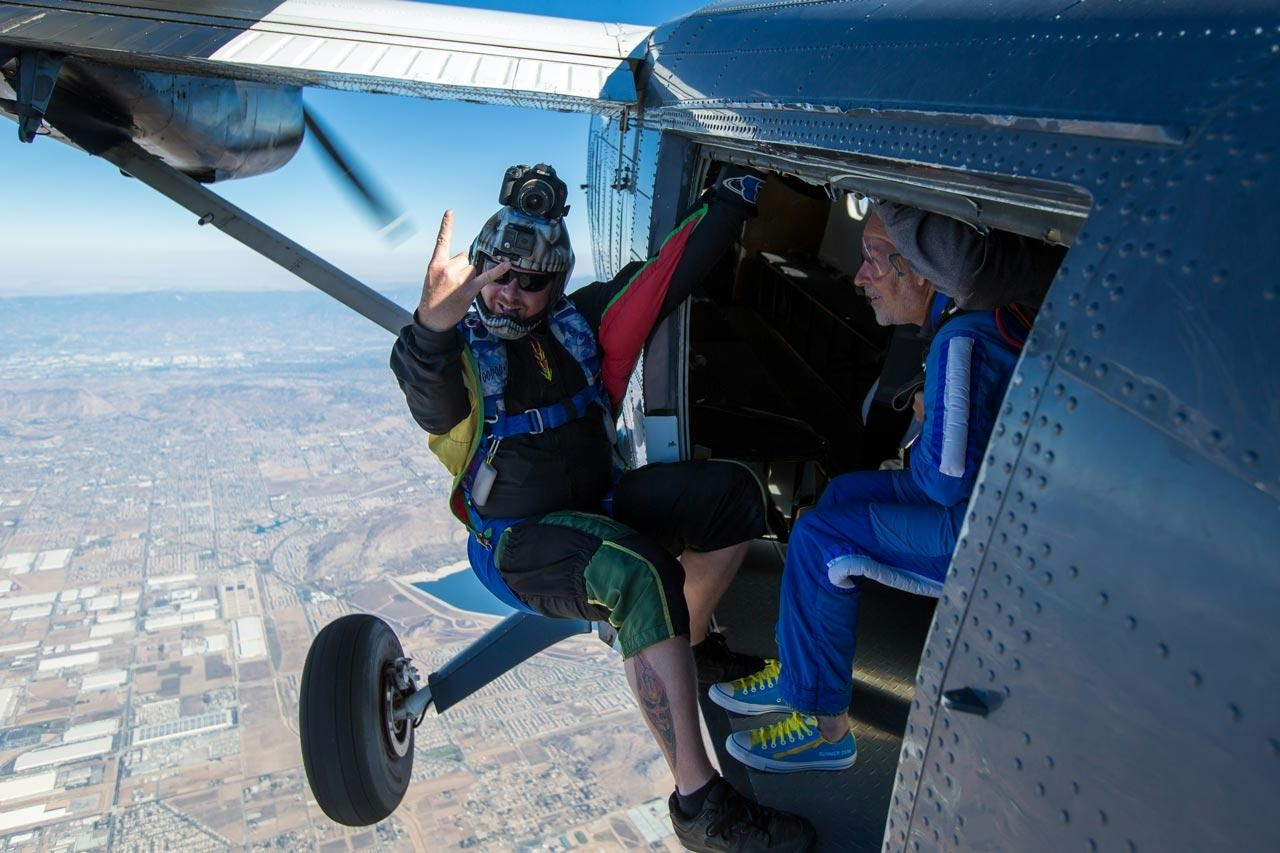
Parachuting Club Reviews Safety Software Following Jumper Snag Incident
An Australian parachuting club is undertaking a comprehensive review of its safety protocols and software systems after a harrowing incident in Far North Queensland. On September 20, during a group jump involving 16 parachutists, a skydiver’s reserve parachute inadvertently deployed as they exited a Cessna 208 aircraft, becoming entangled on the plane’s tail. This unexpected event exposed vulnerabilities in both training and operational procedures.
Incident Details and Immediate Response
The Australian Transport Safety Bureau (ATSB) reported that the reserve parachute was caught by the wind and dragged the jumper out of the aircraft, wrapping around the horizontal stabilizer. The parachutist sustained a leg injury and was left suspended beneath the plane. Demonstrating remarkable presence of mind, the individual used a knife to sever the entangled chute and subsequently landed safely using their main parachute. The aircraft, meanwhile, experienced control difficulties due to the remaining parachute material attached to its tail. The pilot briefly contemplated abandoning the plane but ultimately managed a safe landing. All other jumpers completed their descent without incident.
Investigation Findings and Safety Concerns
The ATSB’s investigation revealed that the premature deployment resulted from the reserve handle snagging on the Cessna’s wing flap—a hazard not adequately addressed during pre-jump training. Notably, the training mock-up used by the club did not include wing flaps, leaving jumpers unprepared for this risk. The report also identified deficiencies in the club’s manifest software, which, while calculating the aircraft’s weight with jumpers aboard, lacked the capability to assess proper loading and balance. Furthermore, the pilot did not utilize the electronic flight bag to verify weight and balance for the flight, a procedural lapse the ATSB highlighted as a contributing factor in previous fatal accidents within similar operations.
Although these shortcomings were not direct causes of the incident, the ATSB has strongly recommended that the club address them promptly. In response, the club is collaborating with its software provider to integrate balance calculations into its manifest system and is exploring alternative software solutions to bolster operational safety.
Broader Implications for Aviation Safety
This incident has drawn wider attention to the critical importance of robust safety protocols and reliable software in both parachuting and aviation sectors. Concurrently, Airbus is facing scrutiny over a software update affecting more than half of its A320 fleet, a development that may influence flight operations and investor confidence. Industry competitors are anticipated to respond by enhancing safety measures and software reliability to maintain trust and operational efficiency.
The Far North Queensland event underscores the essential interplay between thorough training and advanced technology in safeguarding parachuting activities. It has prompted a sector-wide reassessment of risk management practices and the digital tools that support them.

Etihad Airways Suspends Airbus A380 Flights on Key Route

Aditya Birla Group Seeks Approval for Aircraft Leasing in GIFT City

Qatar Airways Highlights Innovation and Connectivity at Arabian Travel Market 2026

Hong Kong's Five-Year Plan Includes Andrew Fan's Aircraft Parts Processing Hub Proposal

ACIA Aero Leasing Delivers ATR72-600 to Air Nostrum

RTX Appoints Jill Albertelli as Head of Pratt & Whitney

TAT Technologies Joins Beyond Aero Hydrogen Aircraft Program

AURAK Study Highlights Barriers to Air Taxi Adoption in Emerging Economies

Xiamen Air Selects Altitude for 787 Maintenance at Heathrow

Etihad and Swissport Extend Global Partnership
