
Zet AI‑inzichten om in gerichte actie

Trending
Categories
Russia Completes Certification Tests of PD-8 Turbofan Engine for SJ-100 Jet
Russia Completes Certification Tests of PD-8 Turbofan Engine for SJ-100 Jet
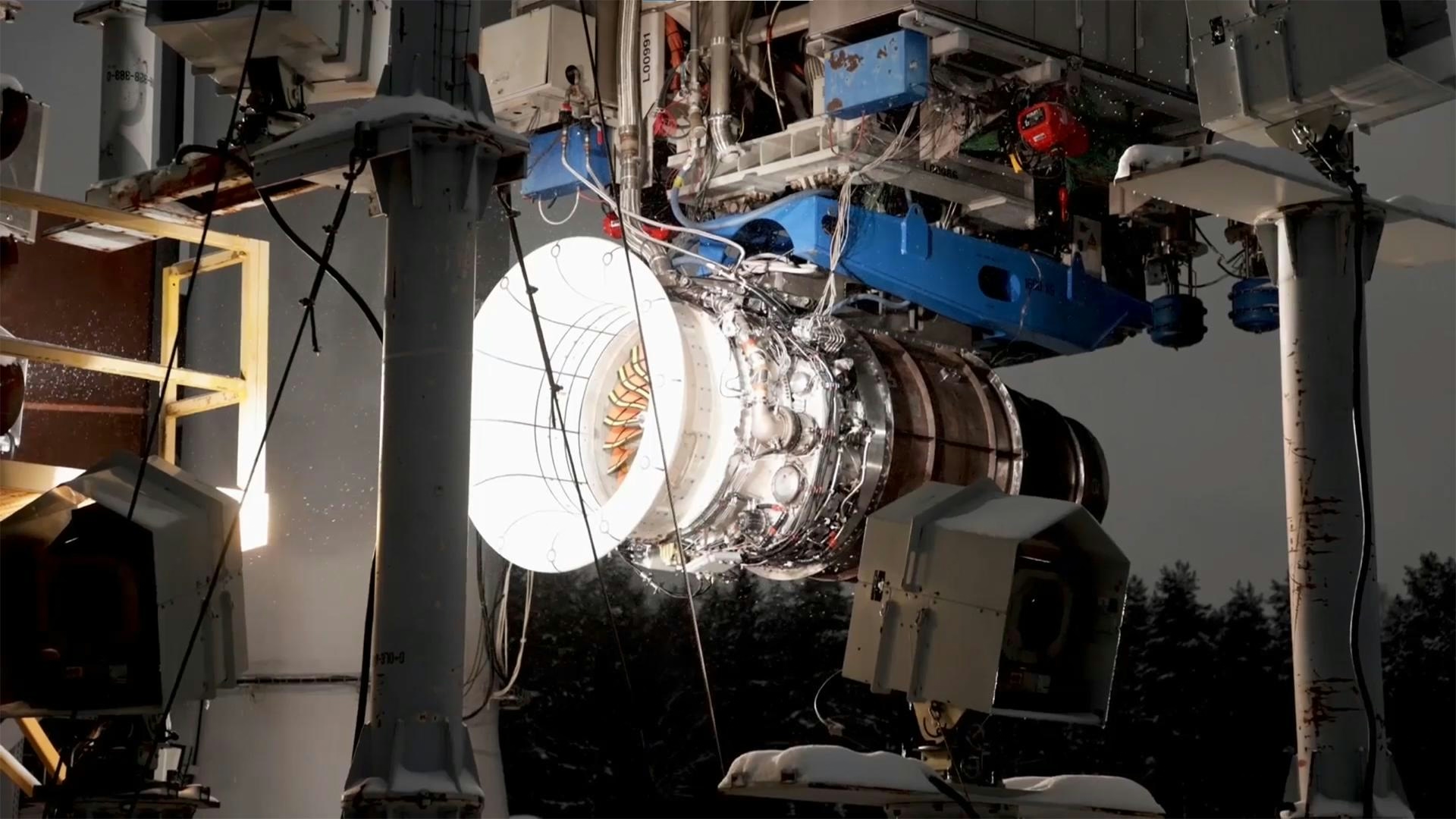
Russia’s state corporation Rostec has announced the successful completion of certification tests for the PD-8 turbofan engine, a crucial milestone toward the commercial approval of the SJ-100 regional jet anticipated later this year. Developed by United Engine Corporation (UEC), the PD-8 accumulated over 6,500 operating hours throughout its development and certification phases. This extensive testing included nearly 1,450 flight hours conducted on Superjet aircraft and a dedicated flying laboratory.
Rigorous Testing and Certification Process
The PD-8 engine underwent a comprehensive series of tests designed to meet stringent reliability and durability standards. These trials encompassed challenging conditions such as icing, simulated long-term operation, bird strikes, water ingestion, hail exposure, and fan blade failure scenarios. The final certification test, held in April at UEC-Saturn’s outdoor facility in Rybinsk, involved simulating flight through a hail cloud, during which the engine reportedly maintained normal operation. Rostec highlighted the engine’s “high reliability and safety” throughout the testing process. Following these achievements, documentation has been submitted to Russia’s Federal Air Transport Agency for final certification approval.
Strategic Importance and Development Context
The PD-8 is intended to power both the SJ-100 regional jet and the Beriev Be-200 amphibious aircraft. Its development forms part of Russia’s broader strategy to replace Western-made systems and components, a move accelerated by international sanctions imposed after the invasion of Ukraine. The SJ-100 itself represents a heavily modified iteration of the Sukhoi Superjet 100, redesigned to incorporate Russian-made systems, avionics, and engines. Earlier versions of the Superjet relied on the Franco-Russian PowerJet SaM146 engine and numerous imported parts.
Although Russian authorities expect the SJ-100 to receive certification later this year, reports indicate that serial production may not commence until 2027. This delay, alongside similar setbacks in the MC-21 narrowbody jet program, could affect market perception and investor confidence in Russia’s civil aviation sector. Both aircraft programs have become priorities for Moscow following disruptions to aircraft deliveries, spare parts supplies, and support services from Boeing, Airbus, and other foreign suppliers due to Western sanctions.
Technological Innovations and Market Implications
The PD-8 program incorporates advanced technologies derived from the larger PD-14 engine, including new turbine materials and a supersonic high-pressure turbine stage designed to enhance efficiency and reduce fuel consumption. UEC engineers introduced several innovations during development to ensure the engine meets international standards for performance and safety.
Market reactions to the PD-8’s progress have shown increased interest from Russian airlines seeking domestic alternatives to foreign engines. However, global competitors are expected to maintain their market share by continuing to advance their own technologies. As Russia moves forward with certifying and producing the SJ-100 and its new engine, the ability to meet international benchmarks and deliver reliable, durable products will be essential to restoring confidence in its aviation industry.

Etihad Airways Suspends Airbus A380 Flights on Key Route

Aditya Birla Group Seeks Approval for Aircraft Leasing in GIFT City

Qatar Airways Highlights Innovation and Connectivity at Arabian Travel Market 2026

Hong Kong's Five-Year Plan Includes Andrew Fan's Aircraft Parts Processing Hub Proposal

ACIA Aero Leasing Delivers ATR72-600 to Air Nostrum

RTX Appoints Jill Albertelli as Head of Pratt & Whitney

TAT Technologies Joins Beyond Aero Hydrogen Aircraft Program

AURAK Study Highlights Barriers to Air Taxi Adoption in Emerging Economies

Xiamen Air Selects Altitude for 787 Maintenance at Heathrow

Etihad and Swissport Extend Global Partnership
