
Zet AI‑inzichten om in gerichte actie

Trending
Categories
SalamAir Expands Fleet to Meet Growing Regional Travel Demand
SalamAir Expands Fleet to Meet Growing Regional Travel Demand
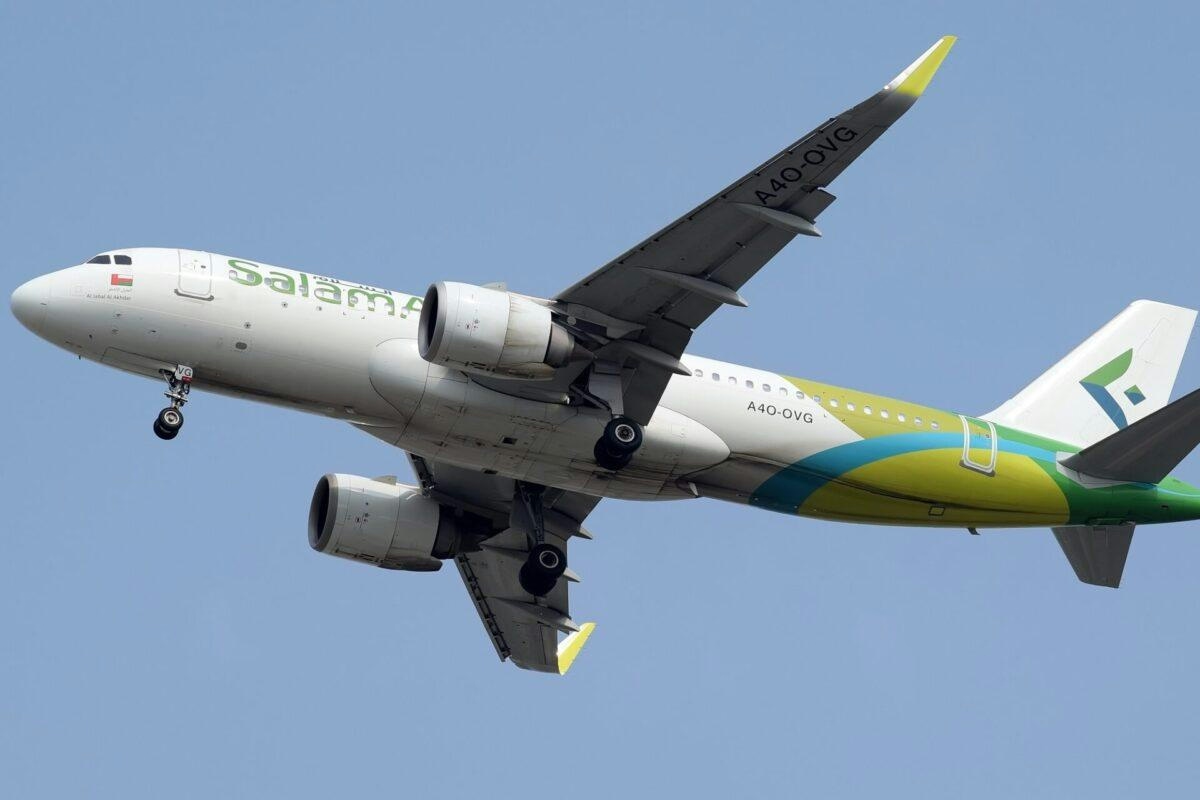
Oman’s low-cost carrier, SalamAir, is enhancing its operational capacity by wet leasing two Boeing 737-8 aircraft in response to a significant increase in regional travel demand across the Middle East and Asia. This strategic expansion aims to improve the airline’s scheduling flexibility, boost passenger capacity, and reinforce operational resilience amid a surge in tourism and aviation activity throughout the Gulf region.
The move highlights SalamAir’s dedication to growth within the competitive Middle Eastern low-cost travel sector. It also aligns with a broader industry trend where airlines increasingly rely on wet lease agreements and ACMI (Aircraft, Crew, Maintenance, and Insurance) partnerships to rapidly scale their fleets without the delays associated with long-term aircraft deliveries.
Supporting Oman’s Tourism and Regional Connectivity
The addition of these aircraft is expected to enhance regional connectivity to Muscat and other key destinations, thereby supporting Oman’s broader efforts to attract international travelers as Gulf tourism experiences a robust recovery. Operating primarily from Muscat International Airport, SalamAir serves a diverse network spanning the Middle East, South Asia, Southeast Asia, and Central Asia. The airline’s routes cater to a wide range of travelers, including leisure tourists, budget-conscious passengers, families, religious pilgrims, labor migrants, and business travelers.
Fleet Expansion Amid Industry Challenges
As passenger numbers continue to rise, SalamAir’s focus on expanding its fleet and maintaining operational flexibility is critical for sustaining competitive scheduling and launching new routes. The wet lease of the Boeing 737-8 aircraft provides immediate capacity growth, enabling the airline to manage peak travel periods effectively and increase flight frequencies on high-demand routes.
The Boeing 737-8, a popular narrow-body jet for short- and medium-haul flights, offers advantages such as improved fuel efficiency, extended range, greater passenger capacity, and reduced operating costs. These features are particularly beneficial in the Gulf and regional Asian markets, where many routes connect major tourism and business hubs.
Nevertheless, SalamAir’s expansion occurs amid persistent structural challenges within the aviation sector. The airline must navigate infrastructure and regulatory obstacles similar to those faced in other emerging markets, such as Africa, where fleet expansions by lessors like TrueNoord have highlighted ongoing difficulties. Additionally, SalamAir contends with competition from established aircraft manufacturers like Embraer, which holds a strong position in the regional jet segment.
Market Dynamics and Competitive Landscape
The upward trend in European regional travel demand, marked by an increase in early 2026 arrivals, may further enhance SalamAir’s growth prospects as global travel patterns evolve and regional connectivity gains importance. However, the airline faces potential competitive responses as rivals adjust capacity and routes in light of rising fuel costs and ongoing geopolitical tensions in the Middle East.
Wet leasing remains a crucial strategy for rapidly growing airlines, allowing them to add capacity promptly without the delays inherent in traditional aircraft acquisitions. For SalamAir, this approach supports operational flexibility during seasonal peaks, fleet maintenance periods, new route launches, and potential delivery delays, positioning the airline to adapt swiftly within a dynamic and competitive market environment.

Etihad Airways Suspends Airbus A380 Flights on Key Route

Aditya Birla Group Seeks Approval for Aircraft Leasing in GIFT City

Qatar Airways Highlights Innovation and Connectivity at Arabian Travel Market 2026

Hong Kong's Five-Year Plan Includes Andrew Fan's Aircraft Parts Processing Hub Proposal

ACIA Aero Leasing Delivers ATR72-600 to Air Nostrum

RTX Appoints Jill Albertelli as Head of Pratt & Whitney

TAT Technologies Joins Beyond Aero Hydrogen Aircraft Program

AURAK Study Highlights Barriers to Air Taxi Adoption in Emerging Economies

Xiamen Air Selects Altitude for 787 Maintenance at Heathrow

Etihad and Swissport Extend Global Partnership
