
Zet AI‑inzichten om in gerichte actie

Trending
Categories
Schiphol Advances Autonomous Smart Ramp Operations Through Technology and Collaboration
Schiphol Advances Autonomous Smart Ramp Operations Through Technology and Collaboration
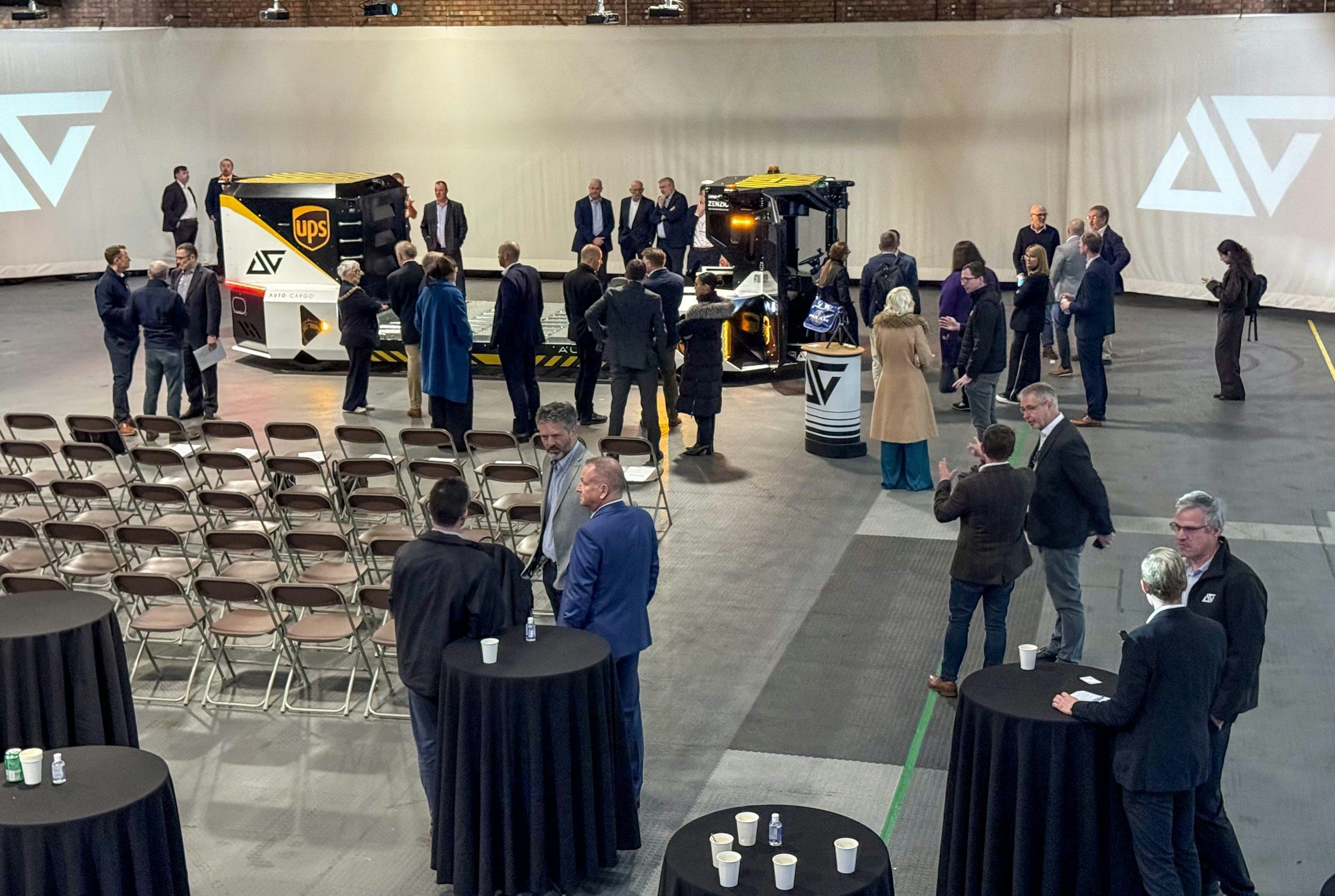
Royal Schiphol Group is intensifying its efforts to realize a fully autonomous airside environment by 2050, positioning itself as a leader in airport innovation. As a prominent participant in the FTE Smart Ramp program, Schiphol is focused on developing more efficient, autonomous aircraft turnaround processes—an advancement that has the potential to transform ground operations throughout the aviation sector.
Pioneering Automation with KLM
In collaboration with KLM, Schiphol is piloting two critical elements of the Smart Ramp initiative: the autonomous detection and removal of foreign object debris (FOD), and the robotic connection of ground power units (GPU). Traditionally, these tasks have been manual and labor-intensive, offering significant opportunities for automation to improve both safety and operational efficiency.
Daan Boot, Strategy & Innovation Advisor at Royal Schiphol Group, explained that the initial trial for FOD detection, conducted with one innovative company, revealed that autonomous robots can exhibit unpredictable behavior on the ramp. Building on these insights, a new trial is scheduled with a different provider to test both detection and removal capabilities, initially in a controlled environment and subsequently at Schiphol later this year.
Progress is also being made in the autonomous GPU connection project. This system employs a robotic arm designed to locate the aircraft’s power flap, open it, lift a 50-kilogram cable, connect it with precision, and close the flap without causing any damage to the aircraft. Early laboratory trials using a mock aircraft body have yielded promising results, indicating the potential viability of this technology.
Harnessing AI for Real-Time Efficiency
Beyond robotics, Schiphol is utilizing artificial intelligence (AI) and computer vision to enhance ramp operations. The airport’s Deep Turnaround system employs computer vision to monitor every stage of the turnaround process, delivering real-time data to handlers and internal teams. According to Boot, this system enables proactive management of delays by allowing gate switches in advance, thereby facilitating slot rebooking and minimizing operational disruptions. This predictive capability is already contributing to improved gate utilization, reduced delays, and more efficient resource allocation.
Navigating Challenges and Industry Reactions
Despite these technological advancements, Schiphol faces considerable challenges in scaling autonomous ramp operations. Regulatory compliance, safety concerns, and integration with existing infrastructure remain significant obstacles. The broader industry context highlights these difficulties: recent legal and financial challenges faced by companies such as Tesla in autonomous vehicle development, alongside Boeing’s ongoing evaluation of AI certifiability for automated taxiing and runway safety, underscore the complex regulatory and technical barriers ahead.
Market responses to Schiphol’s initiatives have been mixed. While progressive stakeholders express enthusiasm about the potential for enhanced efficiency and safety, more traditional actors remain cautious, concerned about possible operational disruptions and the maturity of these emerging technologies. Competitors are closely observing Schiphol’s progress, with some pursuing similar automation strategies or developing countermeasures to safeguard their market positions.
Collaboration as a Catalyst
Boot emphasizes that cross-industry collaboration is vital for achieving scalable innovation. He notes that scaling these technologies is particularly challenging given that many do not yet exist commercially. Schiphol’s active participation in the FTE Accelerating Collaboration & Engagement (ACE) platform exemplifies this collaborative approach, fostering partnerships aimed at overcoming both technical and regulatory hurdles.
As autonomous vehicles gain momentum in sectors such as automotive and logistics, Schiphol’s smart ramp initiatives illustrate both the promise and complexity of implementing autonomous systems in real-world airport operations. The airport’s ongoing trials and cooperative efforts represent a significant stride toward the future of autonomous airside operations, even as considerable challenges remain on the path ahead.

Etihad Airways Suspends Airbus A380 Flights on Key Route

Aditya Birla Group Seeks Approval for Aircraft Leasing in GIFT City

Qatar Airways Highlights Innovation and Connectivity at Arabian Travel Market 2026

Hong Kong's Five-Year Plan Includes Andrew Fan's Aircraft Parts Processing Hub Proposal

ACIA Aero Leasing Delivers ATR72-600 to Air Nostrum

RTX Appoints Jill Albertelli as Head of Pratt & Whitney

TAT Technologies Joins Beyond Aero Hydrogen Aircraft Program

AURAK Study Highlights Barriers to Air Taxi Adoption in Emerging Economies

Xiamen Air Selects Altitude for 787 Maintenance at Heathrow

Etihad and Swissport Extend Global Partnership
