
Zet AI‑inzichten om in gerichte actie

Trending
Categories
Taehwa Group Merges Hana ITM to Support Long-Term Growth
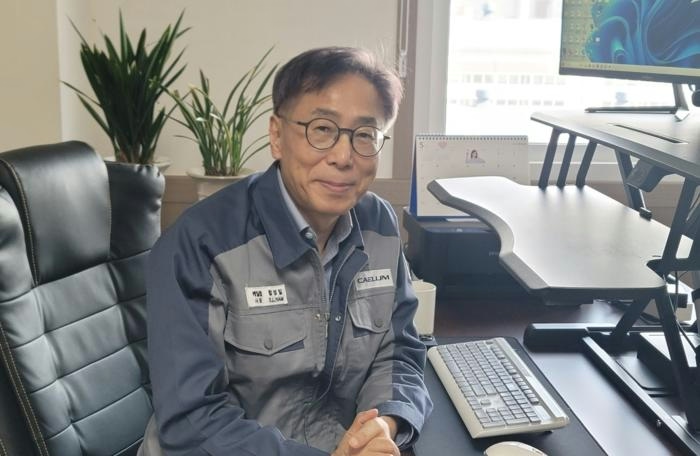
Taehwa Group Merges Hana ITM to Support Long-Term Growth
Strategic Integration to Strengthen Aerospace Competitiveness
Taehwa Group has announced the merger of its wholly owned subsidiary, Hana ITM, into its aerospace-focused affiliate, Caleum. This strategic consolidation aims to enhance the group’s competitiveness in the aviation engine parts sector and support sustained growth amid a global recovery in aviation demand and ongoing supply chain restructuring. By aligning its resources, Taehwa Group seeks to capitalize on emerging opportunities within both defense and aerospace markets.
Koh Sung-il, president of Caleum’s Aerospace Business Department, highlighted that the merger is designed to improve manufacturing competitiveness through vertical integration. The combination of group-level mold and material technologies with Hana ITM’s precision metal processing capabilities will enable Taehwa Group to internalize the entire production process—from raw materials to processing, coating, and precision sheet metal fabrication. This comprehensive integration is expected to enhance quality consistency, reduce manufacturing costs, and increase responsiveness to global customers.
“Through the merger, we have eliminated Hana ITM’s funding burden and gained strong momentum to expand our business,” Koh stated. He further noted that the company plans to internalize honeycomb materials and coating processes within the year to ensure stringent quality management and better meet global demand.
Expansion and Collaboration with Global Partners
Hana ITM, a key supplier of engine components such as turbine vanes and seal segments to global aviation engine manufacturer Safran since 2019, is positioned for further growth following the merger. Safran, a major supplier to Boeing and Airbus, has recently engaged in mid- to long-term cooperation discussions with Caleum’s Gimhae Aerospace Business Department. According to Koh, Safran has positively evaluated the company’s improved quality and production capacity. Discussions have included expanding production of existing products and exploring potential collaboration on new materials and advanced casting technologies.
Challenges and Market Context
Despite the promising outlook, the merger presents several challenges. Taehwa Group must navigate regulatory scrutiny, ensure seamless operational integration, and address potential resistance from employees. Market reactions have been mixed, with investors balancing the long-term strategic benefits against the risks of short-term operational disruptions. Additionally, competitors may respond with aggressive marketing strategies or strategic partnerships to protect their market positions.
The broader manufacturing sector’s robust growth, coupled with global trends such as electric vehicle adoption and renewable energy projects, provides a supportive environment for the merger. However, risks remain, including inflationary pressures, geopolitical tensions, and fluctuating consumer demand, all of which could influence the group’s ambitions.
Future Prospects and Industry Leadership
Looking ahead, Taehwa Group is exploring new production bases and actively pursuing participation in domestic aviation engine localization projects. The company aims to supply components for South Korea’s aviation engine localization initiative, aligning with the Defense Acquisition Program Administration’s development roadmap.
“We will join the supply chain for the aviation engine localization business by advancing our materials and parts technology,” Koh affirmed, underscoring Taehwa Group’s commitment to innovation and long-term leadership in the aerospace industry.

Etihad Airways Suspends Airbus A380 Flights on Key Route

Aditya Birla Group Seeks Approval for Aircraft Leasing in GIFT City

Qatar Airways Highlights Innovation and Connectivity at Arabian Travel Market 2026

Hong Kong's Five-Year Plan Includes Andrew Fan's Aircraft Parts Processing Hub Proposal

ACIA Aero Leasing Delivers ATR72-600 to Air Nostrum

RTX Appoints Jill Albertelli as Head of Pratt & Whitney

TAT Technologies Joins Beyond Aero Hydrogen Aircraft Program

AURAK Study Highlights Barriers to Air Taxi Adoption in Emerging Economies

Xiamen Air Selects Altitude for 787 Maintenance at Heathrow

Etihad and Swissport Extend Global Partnership
