
Zet AI‑inzichten om in gerichte actie

Trending
Categories
Two Companies Provide Diesel Engines for Airplanes
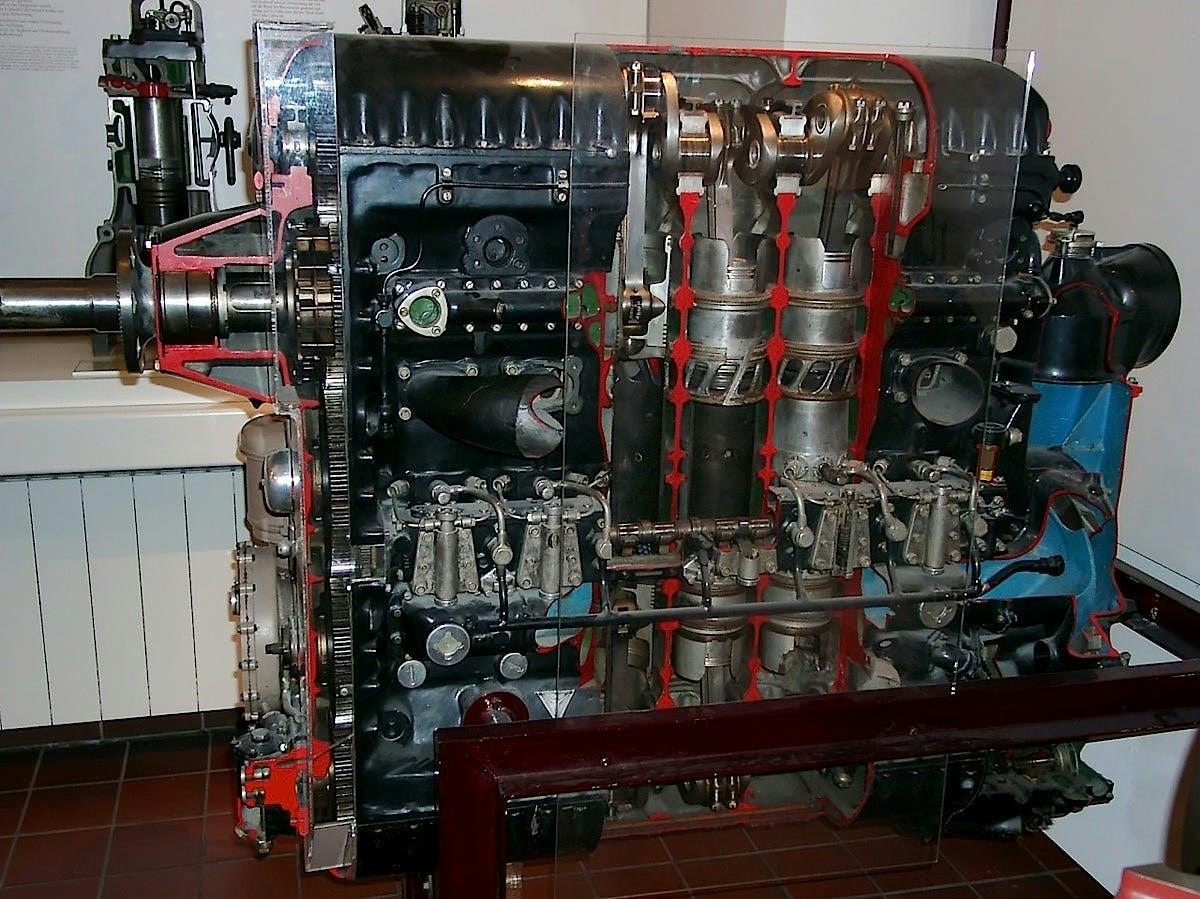
Diesel Engines Carve a Niche in Aviation Amidst Industry Challenges
Despite the widespread repercussions of the diesel emissions scandals of the 2010s and the ongoing Dieselgate trial involving five automakers in the United Kingdom this year, diesel engines continue to maintain a significant presence across various transportation sectors. Their superior efficiency and lower total cost of ownership have ensured sustained demand in industries such as long-haul trucking, maritime shipping, rail transport, and heavy machinery. Less recognized, particularly in the United States, is the expanding role of diesel technology in aviation, especially in regions where aviation-grade gasoline (avgas) is either scarce or prohibitively expensive.
Diesel Engines and Aviation Fuel Dynamics
In many parts of the world, the limited availability of avgas has made operating traditional gasoline-powered piston aircraft increasingly costly and logistically challenging. Diesel-powered airplanes offer a compelling alternative by utilizing Jet A fuel—a kerosene-based aviation fuel widely available in commercial aviation—rather than conventional diesel fuel. The advantage lies not merely in the fuel type but in the fundamental engine technology. Diesel engines, named after their inventor Rudolf Diesel, operate by igniting fuel through compression rather than spark plugs. Jet A’s chemical composition is particularly well-suited to this combustion process, enabling diesel engines to function efficiently in aircraft applications.
Since the first diesel-powered airplane took flight in 1928, the concept has seen intermittent interest, but recent years have witnessed renewed momentum. Companies such as Piper Aircraft are actively working to expand the presence of diesel-powered airplanes in the U.S. market, while Diamond Aircraft has established itself as a leader in Europe since 2002. This resurgence is driven by operators’ growing demand for more efficient and cost-effective propulsion systems amid fluctuating fuel prices and supply constraints.
Competitive Pressures and Emerging Technologies
The market for diesel aircraft engines is becoming increasingly competitive and complex. Broader industry pressures have already forced major manufacturers like Volkswagen to halt certain production lines, underscoring the intense competition across transportation sectors. In aviation, emerging technologies and alternative fuels are beginning to challenge the diesel segment’s growth prospects. Rolls-Royce’s recent successful tests of methanol-powered engines exemplify this shift, signaling potential changes in fuel preferences within the industry.
Meanwhile, established aerospace giants are adapting swiftly. GE Aerospace has experienced a surge in its stock value amid a jet-engine boom and significant contract acquisitions, highlighting the critical role of innovation and scale in maintaining market leadership. Airbus’s ongoing efforts to accelerate aircraft deliveries to meet ambitious production targets further illustrate the dynamic and competitive environment in which engine manufacturers operate.
As the aviation industry continues to evolve, companies specializing in diesel engines must navigate a complex landscape shaped by technical innovation, economic considerations, regulatory developments, and shifting fuel paradigms. The future trajectory of diesel propulsion in aviation will depend largely on how effectively these firms respond to emerging challenges and opportunities within a rapidly transforming market.

Etihad Airways Suspends Airbus A380 Flights on Key Route

Aditya Birla Group Seeks Approval for Aircraft Leasing in GIFT City

Qatar Airways Highlights Innovation and Connectivity at Arabian Travel Market 2026

Hong Kong's Five-Year Plan Includes Andrew Fan's Aircraft Parts Processing Hub Proposal

ACIA Aero Leasing Delivers ATR72-600 to Air Nostrum

RTX Appoints Jill Albertelli as Head of Pratt & Whitney

TAT Technologies Joins Beyond Aero Hydrogen Aircraft Program

AURAK Study Highlights Barriers to Air Taxi Adoption in Emerging Economies

Xiamen Air Selects Altitude for 787 Maintenance at Heathrow

Etihad and Swissport Extend Global Partnership
