
Zet AI‑inzichten om in gerichte actie

Trending
Categories
Understanding Octane Ratings and Risks of Unleaded Fuel
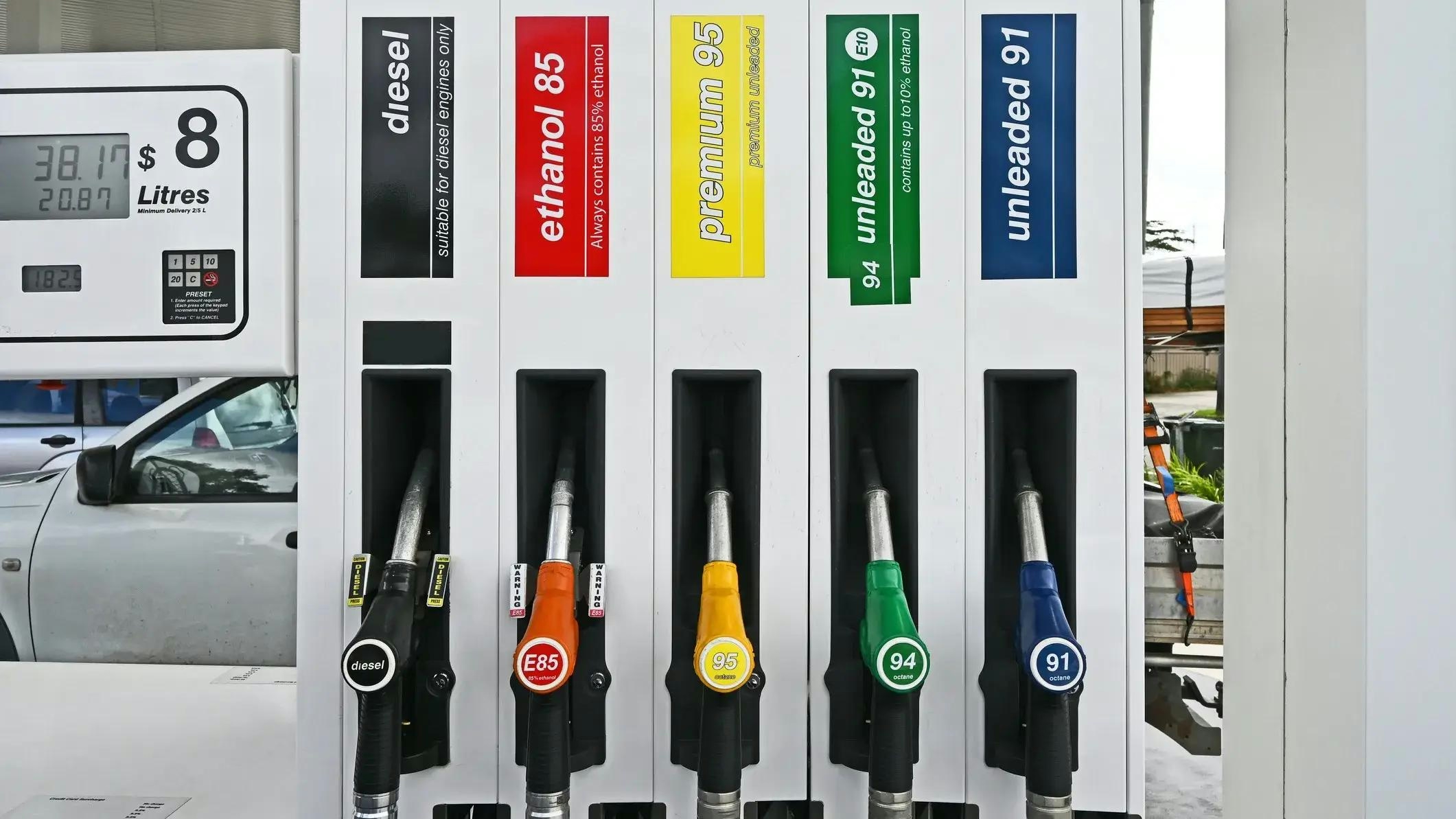
Understanding Octane Ratings and the Risks of Unleaded Aviation Fuel
The aviation industry is currently facing significant challenges as it transitions toward 100 octane unleaded aviation gasoline (avgas). A widespread misunderstanding persists regarding the meaning of octane ratings, which are often misconstrued as inherent physical properties of the fuel. In reality, octane ratings are derived from tests conducted in a single-cylinder engine, a method that frequently fails to predict how a fuel will perform in the complex environment of real-world aircraft engines.
The Complexity of Octane Ratings and Fuel Performance
During early efforts to develop 100-octane unleaded avgas, several experimental blends—referred to as “dumbbell” blends—achieved high octane ratings in laboratory settings but caused significant engine knocking when used in actual flight operations. This discrepancy highlights a critical concern: a fuel that meets the 100 octane unleaded standard in testing may not adequately serve the operational requirements of the entire general aviation (GA) fleet.
The situation is further complicated by the nature of the current fuel standard, which is not simply 100LL (low lead) but rather 100/130 low lead. When the industry shifted from high-lead to low-lead formulations, the average lean octane rating increased, but the rich rating decreased. Pilots have reported a rise in engine knock complaints, indicating that the rich rating is particularly important for aircraft engines. However, accurately measuring the rich rating in unleaded fuels remains a significant technical challenge, leaving a gap in understanding how these fuels will perform under rich operating conditions.
The continued effectiveness of 100LL fuel is largely due to its consistent composition. All suppliers use a base of bottomed alkylate, add two grams per gallon of Tetraethyl Lead (TEL), and include sufficient toluene to meet octane specifications. The transition to unleaded fuels introduces uncertainty because new formulations may only meet the lean rating without satisfying the rich rating, and their chemical compositions are often unknown. This uncertainty raises questions about whether these fuels will be suitable for the diverse range of engines in the GA fleet.
Implications for Engine Manufacturers and Safety
Engine manufacturers such as Continental Aerospace and Lycoming face significant challenges amid this uncertainty. Without a clear, universally accepted fuel specification and detailed knowledge of fuel composition, manufacturers cannot guarantee that their engines will operate safely to full time-between-overhaul (TBO) without experiencing knocking or other performance issues. This lack of assurance introduces both safety and legal risks. In the event of an accident, manufacturers may be unable to determine whether fuel quality contributed to engine failure, complicating liability and regulatory responses.
Broader Market Pressures and Economic Impact
These technical and safety concerns are unfolding against a backdrop of volatile fuel markets. Jet fuel prices have doubled within an eight-week period, exerting immense pressure on airline operating costs and raising fears of supply shortages. Airlines have responded by increasing fares; United Airlines CEO Scott Kirby has indicated that ticket prices must rise by at least 20 percent to offset escalating fuel expenses. Some carriers are employing hedging strategies to manage crude oil price fluctuations, but logistical challenges and diminished effectiveness of policy tools such as the Strategic Petroleum Reserve suggest that the crisis may persist.
The repercussions of rising fuel prices extend beyond the aviation sector. Lower-income Americans are disproportionately affected by the surge in gasoline costs, exacerbating existing economic inequalities. As the aviation industry navigates the complex transition to unleaded avgas amid ongoing fuel market instability, balancing safety, operational reliability, and affordability remains a critical challenge for manufacturers, operators, and the broader public alike.

Etihad Airways Suspends Airbus A380 Flights on Key Route

Aditya Birla Group Seeks Approval for Aircraft Leasing in GIFT City

Qatar Airways Highlights Innovation and Connectivity at Arabian Travel Market 2026

Hong Kong's Five-Year Plan Includes Andrew Fan's Aircraft Parts Processing Hub Proposal

ACIA Aero Leasing Delivers ATR72-600 to Air Nostrum

RTX Appoints Jill Albertelli as Head of Pratt & Whitney

TAT Technologies Joins Beyond Aero Hydrogen Aircraft Program

AURAK Study Highlights Barriers to Air Taxi Adoption in Emerging Economies

Xiamen Air Selects Altitude for 787 Maintenance at Heathrow

Etihad and Swissport Extend Global Partnership
