Afbeelding

Zet AI‑inzichten om in gerichte actie

Meld je vandaag nog aan voor de AeroGenie-wachtlijst!

Trending

Categories

Farnborough and Paris Air Shows 2026 Highlight Advances in Global Aviation
July 3, 2026By ePlane AI
Farnborough and Paris Air Shows 2026 Highlight Advances in Global Aviation
0
0
Farnborough Airshow 2026
Paris Air Show
Aviation Innovation

Farnborough and Paris Air Shows 2026 Highlight Advances in Global Aviation

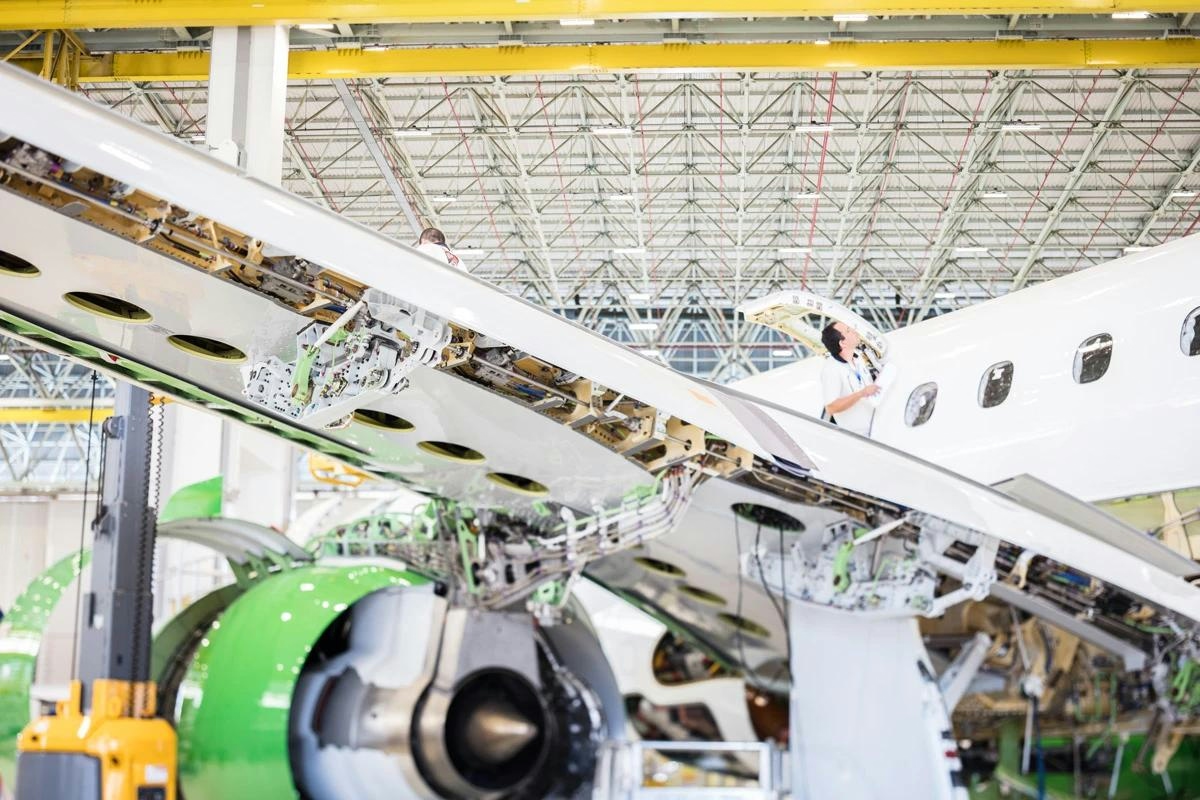
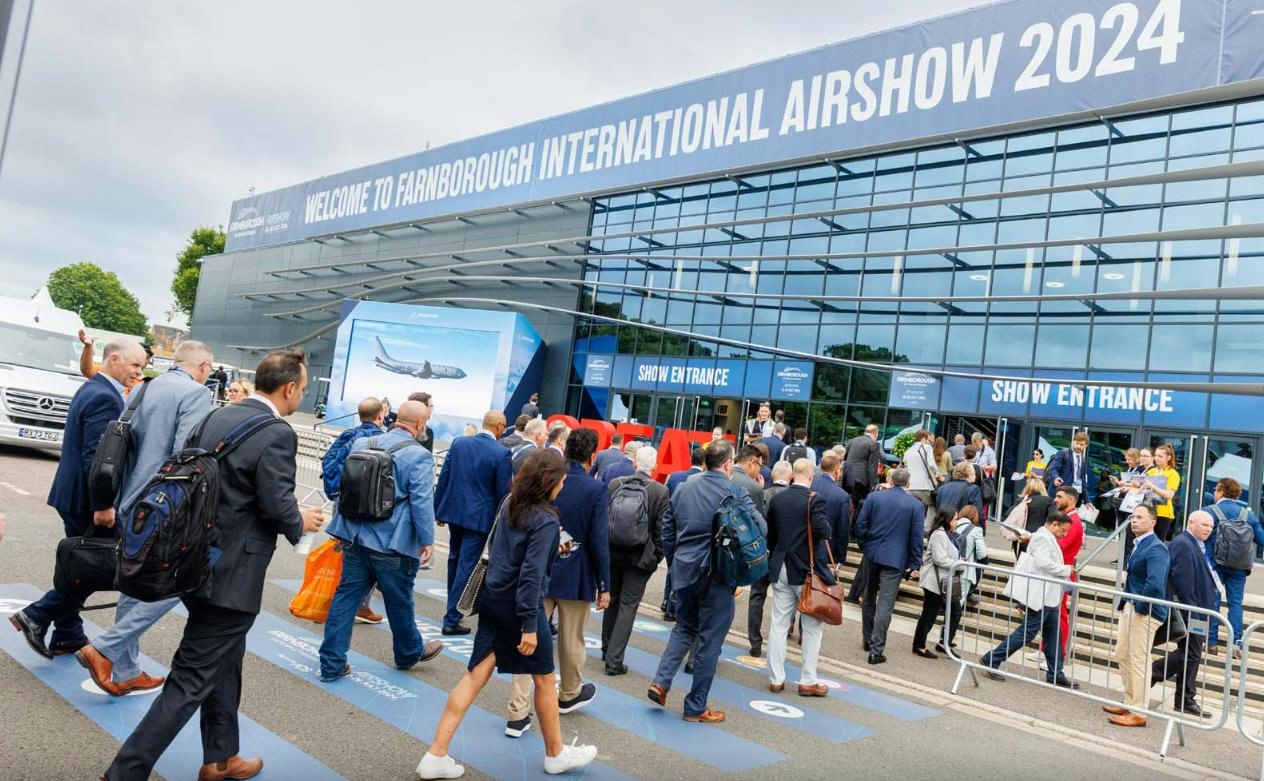
The Farnborough and Paris Air Shows, recognized as the world’s premier aviation exhibitions, are poised to shape the future of global aviation in 2026. These alternating events have historically influenced aircraft design, airline fleet strategies, and travel trends, having introduced landmark models such as the Boeing 747 and Airbus A380. Serving as pivotal launchpads for next-generation, fuel-efficient jets, the upcoming Farnborough Airshow is highly anticipated by airlines, manufacturers, and travelers alike for its potential to transform global routes, sustainability efforts, and the overall passenger experience.

A Pivotal Moment for Aviation Innovation

The 2026 airshows arrive at a critical juncture for the aviation industry. Airlines are under increasing pressure to reduce emissions, enhance fuel efficiency, and adjust to evolving post-pandemic travel demand, particularly as passenger numbers continue to rise in long-haul and leisure markets. Farnborough and Paris have become strategic arenas where leading manufacturers such as Airbus and Boeing vie for multi-billion-dollar contracts, with announcements at these events often triggering significant shifts in global route planning.

For travelers, these developments herald the introduction of newer aircraft capable of longer non-stop flights and potentially more competitive fares as airlines modernize their fleets. The rapid pace of technological advancement is evident in the focus on sustainable aviation fuels, hybrid propulsion systems, and advanced air mobility solutions. These innovations are expected to drive a transformative wave in global travel, enhancing efficiency and environmental performance.

Opportunities and Challenges for Stakeholders

The primary beneficiaries of the Farnborough and Paris airshows include airlines, aircraft manufacturers, and passengers. Airlines gain access to cutting-edge aircraft designed to reduce fuel consumption and extend range, facilitating new direct international routes and improved connectivity between secondary cities. Manufacturers utilize the global platform to demonstrate innovation and secure long-term competitive advantages, with deals struck at these events often influencing fleet strategies for decades.

Beyond the industry, tourism boards and destination markets stand to benefit significantly. The advent of long-range, low-cost operations enabled by new aircraft models can open emerging destinations to global tourism, stimulating growth in hospitality, infrastructure, and regional economies. For travelers, this translates into a broader array of choices, enhanced cabin comfort, and improved reliability on both short-haul and intercontinental flights.

Nevertheless, the 2026 editions of Farnborough and Paris face notable challenges. Infrastructure capacity is an increasing concern, as highlighted by Signature Aviation CEO Tony Lefebvre in a recent Aviation Week survey. The growing interest in advanced air mobility and sustainability initiatives may place additional strain on existing facilities, necessitating substantial upgrades. Concurrently, major airline groups such as Lufthansa, Air France-KLM, and International Airlines Group are expected to respond with strategic initiatives aimed at consolidating their market positions amid both opportunities and industry headwinds.

Implications for Travelers

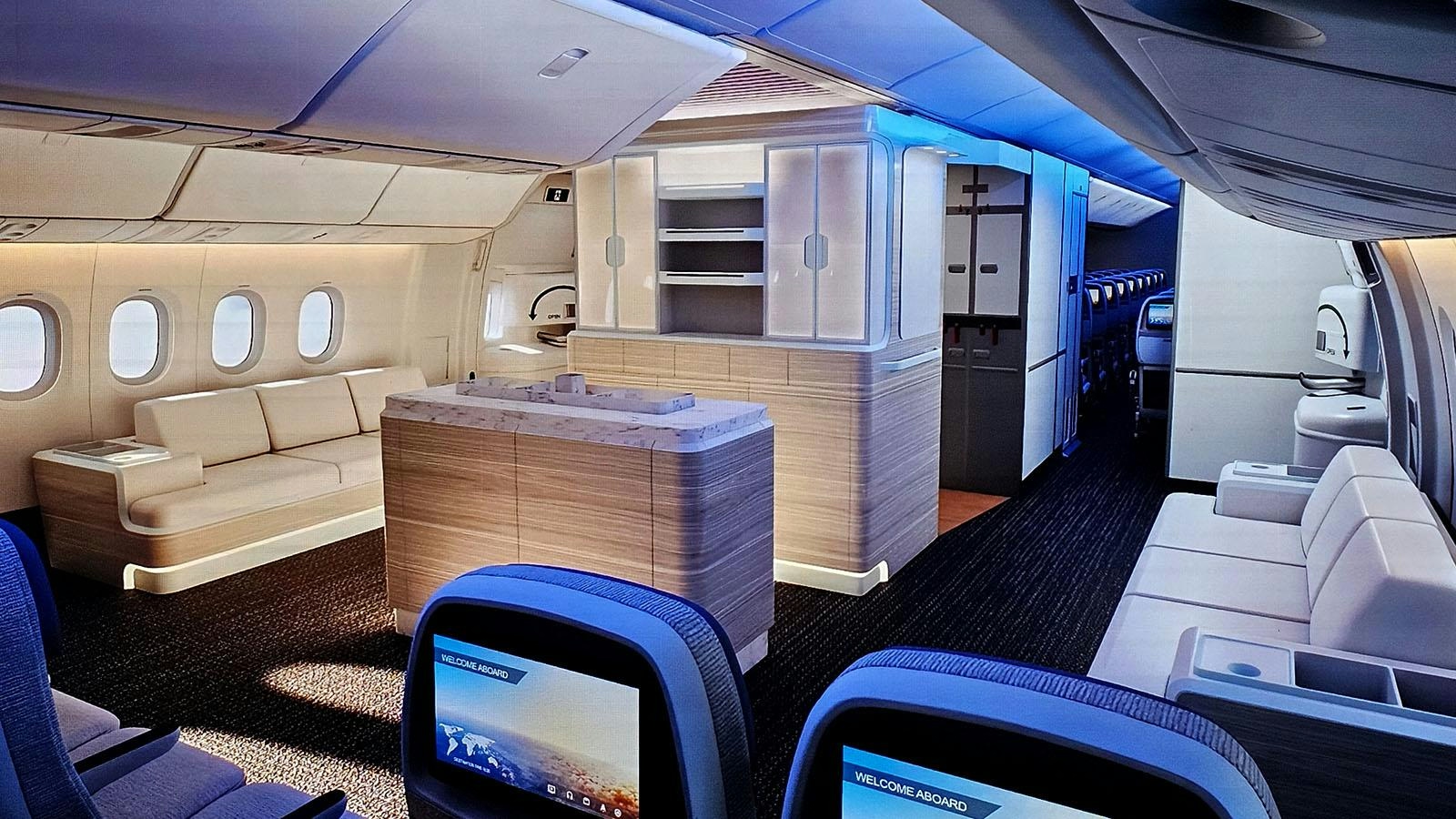
Although primarily industry-focused, the innovations unveiled at Farnborough and Paris have immediate and lasting effects on passengers. Aircraft introduced at these shows typically enter commercial service within 12 to 36 months, offering quieter cabins, enhanced comfort, longer non-stop routes between global cities, and improved operational efficiency and reliability.

As the aviation community converges on Farnborough and Paris in 2026, the decisions and technological breakthroughs presented will reverberate throughout the industry, fundamentally reshaping how, where, and how sustainably the world travels.

More news
The Role of Aerospace Innovation in American History

The Role of Aerospace Innovation in American History

The Role of Aerospace Innovation in American History For over two centuries, American innovation has consistently expanded the nation’s horizons, with aerospace technology playing a pivotal role in this advancement. Since the Wright Brothers achieved the first powered flight in 1903, the aerospace industry has fundamentally transformed travel, commerce, and defense, while also shaping the American identity. Richard Aboulafia, managing director at AeroDynamic Advisory, emphasizes that the country’s scientific and technological foundation would be a mere fraction of its current state without aerospace. Key developments in material sciences, electronics, communications, and global connectivity can all be traced back to significant investments in this sector. Aviation as a Symbol of American Ingenuity Aviation has long stood as a testament to American creativity and determination. Boeing historian Anna Italiano remarks on the extraordinary progress made since the initial powered flight, describing the achievements as “astronomical.” Companies such as Boeing began as modest start-ups, embodying the nation’s spirit of vision and perseverance. Over time, collaboration between government and industry has positioned the United States as a global leader, fostering international tourism, global supply chains, and the modern economy. Moreover, advancements in defense and space systems have bolstered national security and propelled scientific discovery. Market Dynamics and Recent Developments The aerospace sector has faced its share of challenges and market complexities. The historic initial public offering (IPO) of SpaceX on June 12, 2026, highlighted the substantial market capitalization of private aerospace firms and introduced new dynamics to financial markets. As the sole publicly traded private company in the space launch industry, SpaceX’s IPO posed unprecedented challenges for traders, particularly concerning hedging strategies and risk management. The market’s reaction underscored both the promise and volatility inherent in such pioneering ventures. This event also reaffirmed the enduring partnership between American industry and defense, a relationship that continues to influence the sector’s trajectory. While competitor responses remain uncertain, the emphasis on maintaining the United States’ competitive edge in technology and innovation is unmistakable. Milestones in American Aerospace Innovation The history of American aerospace is marked by significant milestones that have shaped the industry’s evolution. The Wright Brothers’ first powered flight in 1903 launched the aviation age, followed by the jet propulsion revolution in the 1940s, which introduced faster and more efficient aircraft. The Boeing 707’s inaugural scheduled transatlantic flight in 1958 made air travel more accessible to the public. The 1960s and 1970s saw NASA’s Apollo Program advance space exploration, culminating in the 1969 moon landing. In 1983, President Reagan authorized the civilian use of GPS, expanding its applications beyond military navigation. The Boeing 777, introduced in 1994 and designed entirely with 3D computer graphics, set new standards for long-distance air travel. The 2000s witnessed the rise of commercial spaceflight companies such as SpaceX and Blue Origin, with NASA partnering to open new frontiers for tourism and research. In the 2010s, drones transitioned from military use to widespread adoption in civilian and commercial sectors. Throughout its history, the American aerospace industry has demonstrated remarkable resilience and adaptability, successfully navigating technological, economic, and market shifts. Its legacy is one of relentless innovation, ensuring that the United States remains at the forefront of global aerospace leadership.
Salary Comparison of Airbus A350 and Boeing 777 Captains in 2026

Salary Comparison of Airbus A350 and Boeing 777 Captains in 2026

Salary Comparison of Airbus A350 and Boeing 777 Captains in 2026 Market Preferences and Fleet Composition The Airbus A350-1000 is increasingly recognized as the largest airliner that US-based carriers are willing to acquire, with Delta Air Lines at the forefront of this trend. Conversely, American Airlines and United Airlines have demonstrated a preference for Boeing’s widebody aircraft, particularly the 777-300ER and the 787 Dreamliner. Across the United States, there has been a noticeable shift away from very large widebodies toward smaller, more fuel-efficient models such as the A330neo, the Boeing 787 family, and the A350-900. Globally, both the Boeing 777 and Airbus A350 maintain significant commercial presence, with approximately 70 operators for the 777—including cargo airlines—and 38 for the A350. However, no US carrier currently operates both aircraft types, complicating direct salary comparisons within a single airline. Consequently, any analysis must consider cross-airline comparisons, taking into account factors such as pilot seniority, fleet pay categories, and years of experience. Pilot Compensation and Fleet Assignments In practice, captain salaries for the A350 and 777 are largely comparable among US airlines operating these aircraft. Compensation is primarily influenced by seniority and the fleet pay category rather than the manufacturer of the aircraft. The Boeing 777 serves as the flagship widebody for American and United, while the A350 holds that status at Delta. Both aircraft types are typically assigned to the most senior pilots, reflecting their prestige and operational importance within each airline’s fleet. Delta’s current widebody fleet includes 41 A350s, 81 A330s, and 57 Boeing 767s, with the latter being gradually retired. American and United maintain all-Boeing widebody fleets: American operates 67 Boeing 777s and 70 Boeing 787s, while United’s fleet comprises 53 Boeing 767s, 96 Boeing 777s, and 87 Boeing 787s. Notably, United recently canceled its order for 45 A350s, reaffirming its commitment to Boeing widebodies. Other US carriers with widebody operations include Hawaiian Airlines, which operates A330s, and Alaska Airlines, which has incorporated Boeing 787s acquired from Hawaiian. Global Pay Trends and Future Outlook Internationally, pilot remuneration for the A350 and 777 remains largely equivalent within the same airline and country, with geographic location exerting a more significant influence on pay levels than aircraft type. Pilots based in the US or Western Europe generally receive higher compensation compared to their counterparts in other regions. Looking ahead to 2026, several factors may influence the widebody pilot market. The Airbus A350-1000 continues to face engine durability concerns, particularly with the Rolls-Royce Trent XWB-97, as underscored by Emirates. These technical challenges could impact airline purchasing decisions. Meanwhile, Singapore Airlines is reportedly considering an order for at least 50 of the industry’s largest jets, potentially favoring the Boeing 777X over the A350-1000. American Airlines is also evaluating new widebody acquisitions to maintain competitiveness with Delta and United, both of which have recently expanded their fleets. As of May 2026, commercial order data indicates Airbus leads with 379 firm orders for its larger aircraft variants, compared to just 13 for Boeing. This disparity suggests a possible shift in market preference toward Airbus, which may eventually affect pilot demand and fleet assignments. While the choice between the A350 and 777 has minimal direct impact on captain salaries in the US, evolving industry trends, technical issues, and shifting market dynamics are likely to shape the future environment for widebody pilots. For the time being, seniority and fleet assignment remain the primary determinants of compensation for captains operating these flagship aircraft.
United Airlines Receives Its 69th and 70th Airbus A321neo Aircraft

United Airlines Receives Its 69th and 70th Airbus A321neo Aircraft

United Airlines Expands Fleet with 69th and 70th Airbus A321neo Deliveries United Airlines has taken delivery of its 69th and 70th Airbus A321neo aircraft, reinforcing the carrier’s ongoing fleet modernization efforts. The two jets, registered as N24573 and N54561, were produced at Airbus’ US assembly facility in Mobile, Alabama, and arrived earlier this week. Following delivery, both aircraft were flown to Tampa International Airport, where they will undergo specialized maintenance, interior outfitting, and regulatory inspections at United’s $33 million maintenance center before entering commercial service. Strategic Fleet Expansion and the United Next Program These latest additions form part of United’s ambitious plan to incorporate approximately 200 A321neos into its fleet, with 135 more aircraft scheduled for future delivery. This expansion is a key component of the airline’s United Next program, which aims to introduce over 250 new aircraft by April 2028. The initiative is designed to strengthen United’s position as a leading premium US carrier, operating the largest fleet in the country and serving more than 400 destinations worldwide. The A321neo has become a vital element of United’s single-aisle operations, consistently achieving the highest passenger satisfaction ratings among the airline’s narrowbody fleet and surpassing the performance of the Boeing 737. Up to 50 of these aircraft will be configured as the new Coastliner variant, featuring 20 United Polaris lie-flat seats with all-aisle access, 12 United Premium Plus seats, and 129 economy seats. This configuration aims to deliver a widebody-like experience on transcontinental routes, connecting West Coast hubs such as San Francisco and Los Angeles with East Coast destinations including Newark. Industry Trends and Challenges United’s emphasis on the A321neo reflects broader industry trends, as the aircraft has captured a significant share of the single-aisle market. Airbus has prioritized production of the A321neo over less popular models like the A319neo in response to strong demand. The success of the A320neo family is further underscored by EasyJet’s recent milestone of receiving its 100th aircraft from the series, highlighting its global appeal. However, the rapid adoption of the A321neo has introduced supply chain challenges. Airbus has recently informed customers of delivery delays affecting the A320neo series, particularly the A321neo models scheduled for 2027 and 2028. These delays may impact United’s fleet expansion timeline as well as those of other major airlines. Meanwhile, competition within the US market remains intense. American Airlines is reportedly considering a new widebody aircraft order from either Boeing or Airbus to keep pace with United and Delta, as all three carriers continue to expand international routes and modernize their fleets. As United’s newest A321neos complete final preparations in Tampa, the airline remains committed to enhancing the passenger experience and maintaining its competitive advantage in a dynamic and evolving aviation landscape.
Government Removes TDS on Aircraft Lease Rentals at IFSCs

Government Removes TDS on Aircraft Lease Rentals at IFSCs

Government Removes TDS on Aircraft Lease Rentals at IFSCs The Central government has announced the removal of tax deducted at source (TDS) on aircraft lease rentals paid to leasing companies operating from International Financial Services Centres (IFSCs), including GIFT City. This policy, effective retrospectively from April 1, 2026, aims to enhance the attractiveness of aircraft leasing through IFSCs and alleviate cash flow constraints faced by airlines. Details of the TDS Exemption According to an official notification issued by the Central Board of Direct Taxes (CBDT), the exemption covers both lease rentals and supplementary lease payments made to eligible aircraft leasing units based in an IFSC. To benefit from this exemption, lessors must opt for a 20-year tax holiday under the Income-tax Act, 2025. During this period, airlines will no longer be required to deduct tax before making lease payments to qualifying IFSC-based lessors. This change is expected to reduce compliance burdens and release working capital that would otherwise remain tied up pending tax adjustments. Although TDS will not be deducted once the necessary declaration is submitted, airlines are still required to report these payments in their tax deduction statements. The exemption applies strictly within the 20 consecutive tax years selected by the lessor; beyond this timeframe, standard TDS provisions will resume. Implications for the Aircraft Leasing Industry This policy adjustment is anticipated to strengthen India’s aircraft leasing ecosystem by enhancing the competitiveness of IFSC-based entities relative to established offshore leasing hubs. It aligns with the government’s broader strategy to position GIFT IFSC as a global centre for aviation finance. Industry experts expect the removal of TDS to stimulate competition among leasing companies, as the tax benefit makes IFSC-based leasing more appealing. This could trigger a surge in leasing activity, with firms seeking to leverage the new regulatory environment. Market dynamics may shift accordingly, prompting competitors to adopt more aggressive pricing, improve service offerings, and pursue strategic partnerships to maintain or expand their market presence. Pricing structures and business models are likely to evolve in response to increased competition and heightened market activity. The CBDT notification also empowers the Income Tax Department’s systems wing to develop digital processes and a security framework for filing declarations and maintaining electronic records under the new regime. This initiative aims to ensure streamlined compliance and effective oversight. The removal of TDS on aircraft lease rentals at IFSCs represents a significant step toward bolstering India’s position in the global aircraft leasing market while providing critical financial relief to domestic airlines.
Preliminary Report Did Not Identify Engine Failure Before Skydiving Plane Crash That Killed 12

Preliminary Report Did Not Identify Engine Failure Before Skydiving Plane Crash That Killed 12

Preliminary Report Finds No Engine Failure Before Missouri Skydiving Plane Crash That Killed 12 A preliminary investigation by federal safety officials has found no evidence of engine failure or other significant mechanical issues preceding the fatal skydiving plane crash in Missouri that claimed the lives of all 12 individuals on board, including several experienced jumpers. Investigation Details and Findings The National Transportation Safety Board (NTSB) released its initial report on Thursday following an inspection of the wreckage from the June 14 crash near Butler, approximately an hour south of Kansas City. The report indicates that the aircraft’s engine showed no signs of malfunction or failure that would have impeded normal operation prior to the accident. Fuel samples taken from the truck used to refuel the plane were also found to be free of sediment or debris, ruling out contamination as a factor. The aircraft, operated by Skydive Kansas City, had completed two flights earlier that day without incident. Weather conditions at the time of the crash were clear, and the pilot was described as having a safety-oriented approach. A review of the skydiving operator’s software confirmed that the plane complied with all weight and balance requirements for the flight. Notably, the aircraft was not equipped with crashworthy voice or data recorders, devices commonly found on commercial planes that provide critical information about a flight’s final moments. The NTSB noted that such equipment was not required for this type of aircraft. However, investigators recovered damaged GoPro cameras from the wreckage, which may offer additional insights as the investigation continues. Circumstances of the Crash and Ongoing Investigation The crash occurred shortly after the plane took off from Butler Memorial Airport at 11:25 a.m. During the initial climb, the aircraft began a gradual left turn, with both wings eventually becoming nearly perpendicular to the ground before the plane impacted a field nose-first and ignited. The resulting fire caused extensive damage to the plane’s structure, cockpit, cabin, and fuel system. Some family members of the victims were present at the airport to watch the jump and witnessed the tragedy. Among those killed was Jen Sharp, the technology director for the United States Parachute Association, the sport’s governing body. Initial speculation from local officials suggested the plane might have been losing power and that the pilot was attempting an emergency landing on a nearby highway. However, the NTSB’s preliminary findings have not identified any mechanical or fuel-related issues that would support this theory. Broader Safety Concerns and Regulatory Context Previous skydiving plane crashes have been linked to poor maintenance, and the NTSB has expressed concerns about insufficient oversight of skydiving operators. Following a 2019 crash in Hawaii that resulted in 11 fatalities, the agency recommended stronger Federal Aviation Administration (FAA) regulations for skydiving flights. While the FAA has yet to adopt these recommendations, it established a committee in April to review and propose new safety measures. The United States Parachute Association affirmed that Skydive Kansas City adheres to established safety standards. The NTSB’s investigation remains ongoing, with a final report expected to take a year or more to complete.
Airlines Introducing Innovative Business Class Seats in 2026

Airlines Introducing Innovative Business Class Seats in 2026

Airlines Set to Revolutionize Business Class Seating in 2026 In 2026, several leading airlines will introduce a new generation of business class suites designed to elevate comfort, privacy, and technological integration. This evolution marks a significant departure from traditional seating arrangements, reflecting a broader industry trend toward lie-flat beds and private suites that prioritize connectivity, personalization, and thoughtful design to enhance the passenger experience. Innovation Amid Industry Challenges The push for premium travel options is driven in part by the deployment of more fuel-efficient aircraft capable of longer non-stop routes. However, these advancements come at a time of considerable financial pressure within the aviation sector. The development and operational costs associated with these cutting-edge business class products are substantial, compelling airlines to strike a delicate balance between investment and maintaining competitive fare structures. Furthermore, some passengers accustomed to conventional seating may be reluctant to adopt the new suite configurations. Industry analysts also forecast a potential halving of airline profits in 2026 due to escalating fuel prices, raising concerns about the long-term viability of such premium upgrades. United Airlines’ Elevated Polaris Experience United Airlines is at the forefront of this transformation with the upcoming launch of its Boeing 787-9 featuring the Elevated interior, an evolution of its Polaris business class. The new cabin will offer 32 suites per section, each equipped with sliding doors and high walls to ensure privacy. The front row will include four oversized Polaris Studios with companion seating, catering to both solo travelers and pairs. The Adient Ascent seat converts into a lie-flat bed, complemented by a 27-inch OLED monitor, complimentary WiFi, wireless charging, and luxury amenities. United is also enhancing the onboard dining experience with caviar service and curated wine pairings. The first Elevated-equipped 787-9 will operate routes from San Francisco to London and Singapore starting in 2026, with plans to outfit 30 additional aircraft by 2027. Qantas’ Ultra-Long-Haul Business Class Innovation Qantas is advancing its business class offering through the Airbus A350-1000ULR, tailored for its ultra-long-haul 'Project Sunrise' flights lasting up to 20 hours. The aircraft will feature 52 next-generation business class suites arranged in a 1-2-1 configuration, utilizing Safran’s Unity platform. Each suite boasts a 47-inch sliding door, an 80-inch lie-flat bed, and an 18-inch entertainment monitor with Bluetooth audio, USB-A and USB-C ports, complimentary WiFi, and wireless charging. Additional amenities include a leather ottoman, customizable lighting, generous storage, and access to a dedicated wellbeing zone equipped with hydration stations and stretching areas. Market Implications and Future Outlook As these innovative business class products enter the market, demand for premium travel services is expected to rise, prompting competitors to accelerate their own cabin upgrades to maintain market share. Nevertheless, the substantial costs involved and the uncertain profitability amid a challenging economic environment will require airlines to carefully manage both passenger expectations and financial sustainability as they navigate this new era of business class travel.
Airbus Navigates Jet Demand and Production Challenges Amid Global Travel Recovery

Airbus Navigates Jet Demand and Production Challenges Amid Global Travel Recovery

Airbus Navigates Jet Demand and Production Challenges Amid Global Travel Recovery Airbus stands at the forefront of a vigorous resurgence in commercial aviation, as airlines worldwide renew their fleets and expand capacity in response to a sharp increase in post-pandemic travel demand. The European aerospace giant’s extensive order backlog, encompassing both single-aisle and widebody aircraft, underpins its long-term growth prospects. However, the company continues to grapple with persistent production and supply-chain challenges as it strives to convert these orders into delivered aircraft and generate corresponding cash flow. Order Backlog and Market Position Global air traffic has largely rebounded to, and in some regions exceeded, pre-pandemic levels. This recovery has prompted airlines to prioritize the acquisition of more fuel-efficient aircraft to reduce operating costs and comply with increasingly stringent emissions regulations. Airbus’s capacity to scale up production on its core programs while upholding rigorous quality and safety standards remains a critical strategic focus, closely monitored by investors. The company has amassed a substantial backlog across its product range, providing multi-year revenue visibility and a buffer against short-term market volatility. Recent large orders from carriers in Europe, Asia, and the Middle East reflect strong airline confidence in both long-haul and regional travel over the coming decade. Nevertheless, managing this backlog requires careful allocation of delivery slots, as airlines compete for earlier delivery positions. The single-aisle segment, particularly the A320neo family, continues to be the cornerstone of Airbus’s commercial operations. Narrowbody aircraft dominate short- and medium-haul routes, with airlines increasingly favoring models that offer enhanced fuel efficiency and extended range. Consequently, Airbus’s production planning and workforce deployment are heavily concentrated on these high-volume platforms, making any disruption in narrowbody manufacturing a significant risk to the company’s financial performance. Production Ramp-Up and Supply Chain Constraints In an effort to address its backlog, Airbus is working to increase monthly production rates but faces ongoing challenges related to component bottlenecks and labor shortages. The global aviation supply chain remains strained by capacity limitations, parts shortages, and certification delays for critical systems. Engine delays, particularly from supplier Pratt & Whitney, have grounded hundreds of A320neo aircraft, drawing sharp criticism from airline executives such as United Airlines CEO Scott Kirby, who has described the engine shortage as a major constraint for the industry. Airbus CEO Guillaume Faury has acknowledged the inherent difficulties in scaling up production, emphasizing the necessity of close coordination across the company’s factories in Europe, China, and the United States. The firm is investing in industrial efficiency improvements, digital planning tools, and workforce training to ensure that production growth does not come at the expense of quality. Despite these challenges, Faury reports no indications of jet order cancellations, signaling resilient long-term demand. However, Airbus has informed customers of delivery delays for the A320neo series—particularly the A321neo variant—affecting jets scheduled for 2027 and 2028. Strategic Outlook Beyond the narrowbody segment, Airbus’s widebody aircraft remain vital to long-haul markets such as transatlantic and Asia-Europe routes. The company’s investor communications highlight its robust commercial backlog, ongoing research and development investments, and commitments to sustainability. Recent analyses have focused on how Airbus balances capital allocation among new technology development, debt management, and shareholder returns, while maintaining flexibility in a cyclical industry. As airlines rely on timely aircraft deliveries to implement network strategies and retire aging fleets, Airbus’s ability to navigate supply-chain constraints and ramp up production will be central to sustaining its growth trajectory and maintaining its leadership position in the global aerospace sector.
India’s Largest eVTOL Demonstrator Completes Flight Tests, Advancing Air Taxi Development

India’s Largest eVTOL Demonstrator Completes Flight Tests, Advancing Air Taxi Development

India’s Largest eVTOL Demonstrator Completes Flight Tests, Advancing Air Taxi Development India’s burgeoning electric vertical take-off and landing (eVTOL) industry has achieved a pivotal milestone with the successful completion of integrated flight testing for Sarla Aviation’s Sylla 1.0. This half-scale prototype, weighing 1,540 pounds (700 kilograms), stands as the largest indigenously developed eVTOL demonstrator in the country. Developed in less than a year on a budget under US$13 million, Sylla 1.0 represents a significant advance toward the establishment of air taxi services within India. Technical Achievements and Testing Milestones The Sylla 1.0 features a wingspan of 24 feet 7 inches (7.5 meters) and is powered by a 400-volt electric propulsion system. Its successful test campaign marks it as the first Indian aircraft to demonstrate a distributed-propulsion wing system and the first eVTOL of its weight class to achieve vertical take-off. The comprehensive testing regimen evaluated multiple critical components, including the electric propulsion system, battery architecture, distributed propulsion mechanisms, flight-control algorithms, airframe integrity, and landing gear performance. Future trials are planned to assess the demonstrator’s capability to transition from hover mode to sustained wing-borne flight, a vital function for operational air taxi services. This accomplishment brings Sarla Aviation closer to realizing its full-scale Shunya aircraft, which is designed to be the world’s most economically viable air taxi. The Shunya project benefits from the expertise of a design team with backgrounds at leading international eVTOL companies such as Lilium, Volocopter, Wisk, Beta, and Joby Aviation. The aircraft will incorporate seven propulsion units, dual isolated battery systems, and a sustainable aviation fuel (SAF) tank, aiming for a hybrid operational range of up to 500 miles (800 kilometers). It is engineered to carry a pilot and six passengers with luggage or alternatively four passengers in a more luxurious configuration, with adaptability for cargo loads up to 1,500 pounds (680 kilograms). The Shunya is projected to reach a top speed of 155 mph (250 km/h), positioning it as a transformative solution for airport-city transfers and urban mobility. Regulatory and Market Challenges Despite these technical strides, Sarla Aviation faces a complex regulatory and commercial environment as it moves toward market entry. The company must secure approvals from local authorities for public flight testing, obtain commercial operation licenses, and establish designated landing zones in major urban centers. Safety remains a critical concern, particularly in light of recent safety issues involving Boeing-owned Wisk Aero, which have heightened investor scrutiny and could impact confidence across the eVTOL sector. The competitive landscape is intensifying both domestically and internationally. Global players such as Joby Aviation, Archer, Vertical Airspace, SkyDrive, and Chinese firms including eHang and TCab Tech are advancing their own eVTOL initiatives. Within India, The ePlane Company recently announced the launch of the country’s first full-scale eVTOL prototype, while startups like BluJ Aerospace continue to develop cutting-edge aviation technologies. These developments are expected to accelerate interest in advanced air mobility solutions, prompting companies to expedite development schedules and explore strategic partnerships. As India’s eVTOL industry continues to mature, the successful flight tests of Sylla 1.0 highlight the nation’s growing capabilities in next-generation aviation, while underscoring the regulatory, safety, and competitive challenges that remain.
Airbus Addresses A350 Cracking Issue Without Grounding Fleet

Airbus Addresses A350 Cracking Issue Without Grounding Fleet

Airbus Addresses A350 Cracking Issue Without Grounding Fleet Technical Challenges and Material Complexities Airbus has recently confronted a significant technical challenge with its A350 widebody aircraft following reports of localized surface cracking and paint degradation. This issue has sparked public debate and legal disputes, focusing attention on the long-term airworthiness of composite commercial aircraft—a relatively novel area in aviation engineering. Unlike traditional aluminum airliners, the A350 extensively employs carbon fiber-reinforced polymer (CFRP) to reduce weight and enhance fuel efficiency on long-haul flights. However, the use of CFRP introduces new complexities, particularly in the interaction between exterior coatings and lightning-protection layers applied to the composite structure. The root cause of the surface cracking lies in the differing thermal expansion properties of these materials. While CFRP remains dimensionally stable across a wide temperature range, the outer paint and expanded copper foil used for lightning protection expand and contract more significantly. When the aircraft transitions rapidly from the heat of a runway to the cold temperatures at cruising altitude, mechanical stress develops at the interface between these layers. This stress results in fine cracks, flakes, and blisters in the paint, especially along fuselage joints. Although these blemishes are visible to passengers and maintenance personnel, non-destructive testing has confirmed that the damage is confined to superficial exterior layers, leaving the underlying carbon-fiber structure intact and structurally sound. Regulatory Response and Airbus’s Mitigation Strategy Despite calls from Qatar Airways for an immediate global grounding of the A350 fleet, aviation regulators including the European Union Aviation Safety Agency (EASA) and the Federal Aviation Administration (FAA) adopted a measured, data-driven approach. Comprehensive technical assessments concluded that the paint degradation did not compromise the aircraft’s structural integrity or flight safety. Rather than grounding the entire fleet, regulators mandated targeted inspections of the lightning protection mesh on specific early-production aircraft. Airbus responded by implementing material adjustments and localized repairs, enabling the manufacturer to address the issue without the operational and financial disruption associated with a fleet-wide grounding. Nevertheless, the incident has intensified scrutiny from regulators and airline operators, raising broader concerns about the long-term durability and maintenance requirements of composite airframes. Broader Industry Implications and Market Reactions This challenge comes amid additional technical and financial pressures for Airbus, including the need for further inspections and repairs on A380 wing spars, which could result in substantial costs and operational disruptions. Meanwhile, competitors such as Boeing are leveraging the situation to emphasize the reliability of their own wide-body aircraft, potentially influencing airline purchasing decisions. Market responses are already emerging. For instance, Qantas is reportedly considering an order for 20 wide-body jets, evaluating options from both Airbus and Boeing. The outcome of such procurement decisions may signal a shift in airline strategies as operators reassess the structural integrity and long-term maintenance demands of their fleets. While Airbus has managed to contain the A350 surface cracking issue without grounding its fleet, the episode highlights the evolving challenges associated with advanced aircraft materials and the heightened scrutiny manufacturers face from regulators and the global marketplace.
Corendon Airlines Expands Use of Self-Service Kiosks at Airports

Corendon Airlines Expands Use of Self-Service Kiosks at Airports

Corendon Airlines Expands Use of Self-Service Kiosks at Airports Advancing Digital Transformation in Passenger Services Corendon Airlines is intensifying its digital transformation efforts by broadening the deployment of self-service check-in kiosks across multiple airports. This initiative aims to provide passengers with a faster, more convenient, and contactless travel experience. The newly introduced kiosks enable travelers to complete check-in procedures, select seats, pay for ancillary services, and drop off baggage without the need to visit traditional check-in counters. Passengers can retrieve their flight information by scanning passports or entering their PNR numbers, after which they may choose preferred seats or opt for automatic seat assignment. The kiosks feature an integrated payment system that accepts Turkish Lira (TRY), Euro (EUR), US Dollar (USD), and British Pound (GBP), facilitating swift and secure transactions for additional services. The Self Bag Drop functionality further enhances efficiency by automatically verifying baggage details and activating baggage tags, allowing passengers to complete baggage drop-off with minimal delay. Currently, Corendon Airlines’ self-service kiosks and Self Bag Drop solutions are operational at Antalya, Manchester, and Amsterdam airports, with pilot programs underway at Düsseldorf, Warsaw, and Nuremberg airports. Operational Challenges and Industry Context Atılay Batu, Chief Operating Officer of Corendon Airlines, underscored the company’s dedication to innovation, stating, “We continue to invest in digitalisation to enable our passengers to complete their airport procedures faster and more comfortably. With our self-check-in kiosks, we are making check-in and baggage drop processes more efficient while further strengthening our operational capabilities. We will continue to improve our service quality with innovative solutions that enhance the overall guest experience.” Despite the clear benefits, the expansion of self-service technology presents several challenges. Passenger acceptance remains a critical factor, as some travelers may prefer traditional check-in methods or require additional assistance. Integrating these automated systems into existing airport operations also poses complexities, necessitating seamless coordination to avoid disruptions. Furthermore, the shift toward automation may encounter resistance from traditional check-in staff concerned about job security. The broader European aviation sector is currently grappling with rising operating costs, ongoing consolidation among major airline groups, and geopolitical uncertainties. In this environment, Corendon’s investment in automation could generate significant efficiency improvements and cost savings. While some competitors may adopt similar technologies to maintain competitiveness, others might emphasize personalized, staff-driven services to distinguish themselves in the market. As Corendon Airlines continues to expand its self-service offerings, it positions itself at the forefront of digital innovation, navigating the opportunities and challenges inherent in a rapidly evolving industry landscape.
line