
Zet AI‑inzichten om in gerichte actie

Trending
Categories
US Business Jet Avoids Collision with Unidentified Aircraft
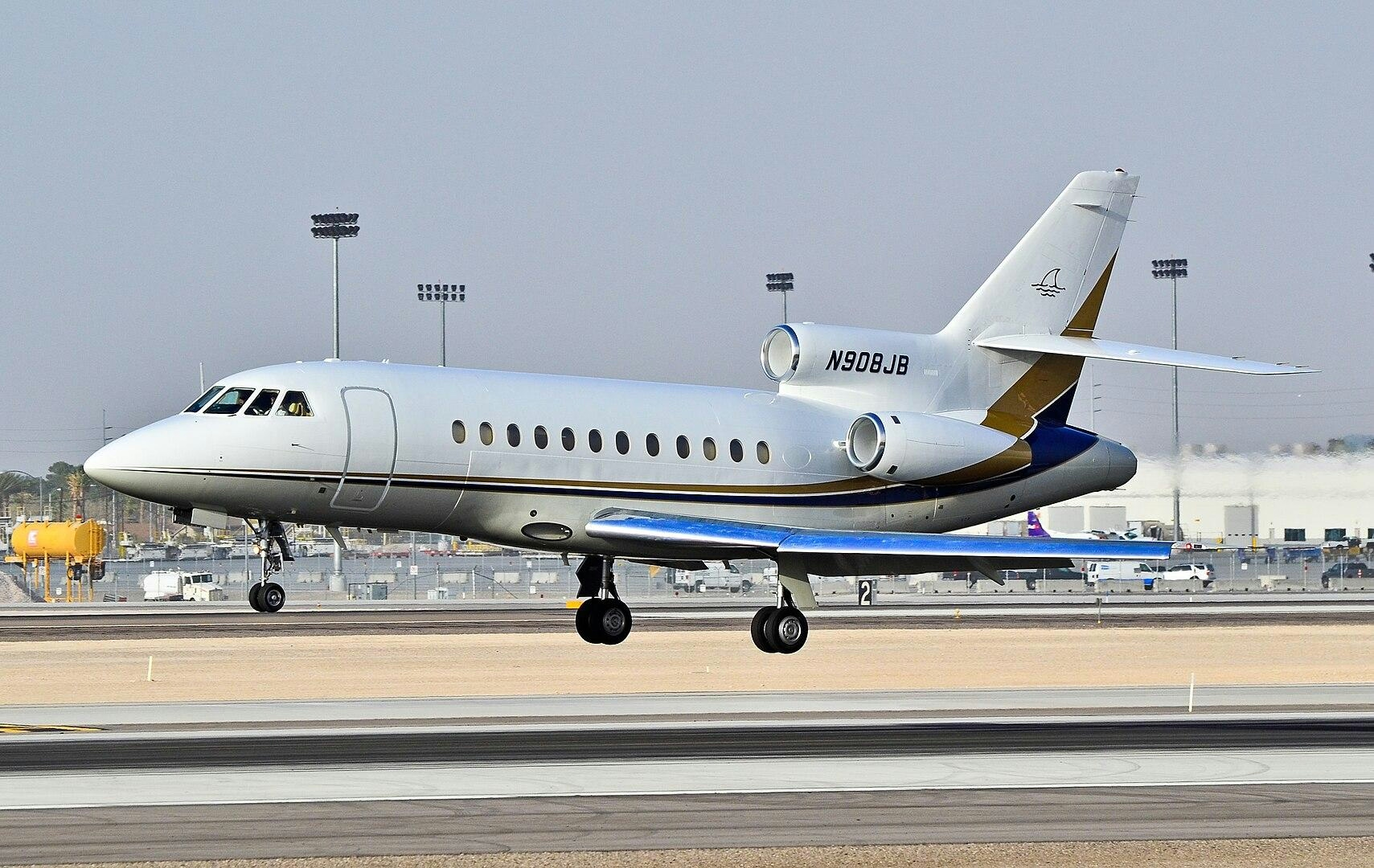
US Business Jet Avoids Collision with Unidentified Aircraft Over Caribbean
Near Miss Incident Involving Dassault Falcon 900
A Dassault Falcon 900 business jet narrowly averted a midair collision with an unidentified widebody aircraft shortly after departing Oranjestad Queen Beatrix International Airport (AUA) en route to Miami Opa Locka Executive Airport (OPF). The incident occurred north of Aruba and has intensified concerns regarding airspace safety in the southern Caribbean, a region increasingly affected by encounters with unidentified and military aircraft that have unsettled both commercial and private flight crews.
The Falcon 900, registered as N888ZA, was ascending toward flight level 380 when air traffic control (ATC) at Curaçao Center instructed the crew to execute a right turn to avoid conflicting radar returns. Despite following these instructions, the pilots soon reported visual contact with a large aircraft resembling a Boeing 777 or 767 at an alarmingly close distance. The crew questioned why their onboard systems had not issued a resolution advisory and noted that the ATC-directed maneuver had inadvertently placed them on a converging course with the unidentified aircraft.
ATC informed the Falcon crew that the unknown aircraft was exhibiting irregular maneuvers and subsequently warned of another aircraft approaching from the Falcon’s five o’clock position. The controller estimated the conflicting traffic at approximately flight level 260, while the Falcon was climbing through the mid-twenties. The pilots confirmed they were ascending directly into the path of the widebody aircraft, which was moving unpredictably. ATC later reported that the trailing aircraft had turned eastbound and no longer posed a threat.
Air Traffic Control Communications and Broader Safety Concerns
Transcripts of the ATC-pilot communications, recorded by LiveATC.net, reveal the controller issuing avoidance vectors amid uncertain altitude information. The Falcon 900 crew expressed concern over the unexpected proximity and the absence of a traffic alert, highlighting a critical gap in situational awareness. The rapid closure rate between the two aircraft left minimal time for evasive action.
This incident follows a similar near miss involving a JetBlue flight departing Curaçao, which narrowly avoided a collision with a US Air Force refueling tanker near Venezuelan airspace. The JetBlue pilot described the encounter as "outrageous," reporting that the military aircraft maintained their altitude and passed within two to three miles. The air traffic controller shared the pilot’s alarm, emphasizing the serious concern posed by unidentified aircraft operating in the region.
These events have sparked growing apprehension about air traffic management and the presence of military operations in the southern Caribbean. Pilots and controllers have voiced frustration over unidentified aircraft maneuvering unpredictably and entering controlled airspace without proper coordination. The recent close calls underscore the urgent need for enhanced communication and surveillance measures to safeguard both commercial and private aviation in this increasingly congested airspace.

Adobe Warns AI-Driven Trip Planning Challenges Travel Sites

The Global Parts Shortage
GE Aerospace's Robust Capital Position Fuels Higher Shareholder Returns
AI Advances Support Sustainable Aviation and Efficient Flight Paths

Airbus Faces Freighter Deadline Amid Weak Order Growth and Stagnant Shares
Integrated CNS System for Low-Altitude Aircraft

Chinese Robots Debut in Aviation and Military Roles at WRC 2026
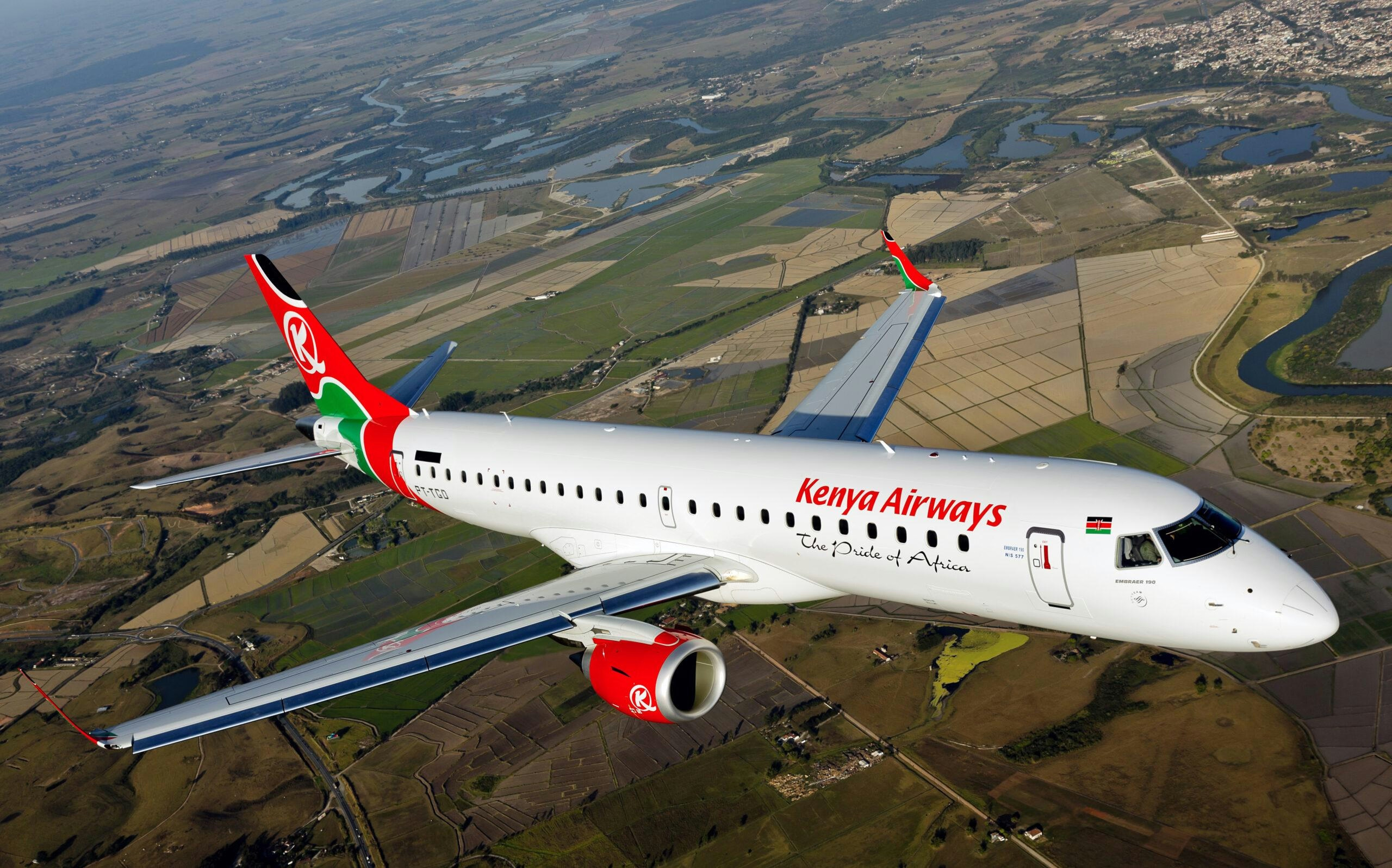
Kenya Airways Aims to Resume Operations of Grounded Fleet by Early 2027
Avora Aviation Completes A320 Sale-Leaseback Agreement with FTAI
StandardAero Expands Bombardier Global MRO Services at Van Nuys Facility
