image

AeroGenie — Uw intelligente copiloot.

Vraag alles. Analyseer alles. Reageer direct.

Trending

Categories

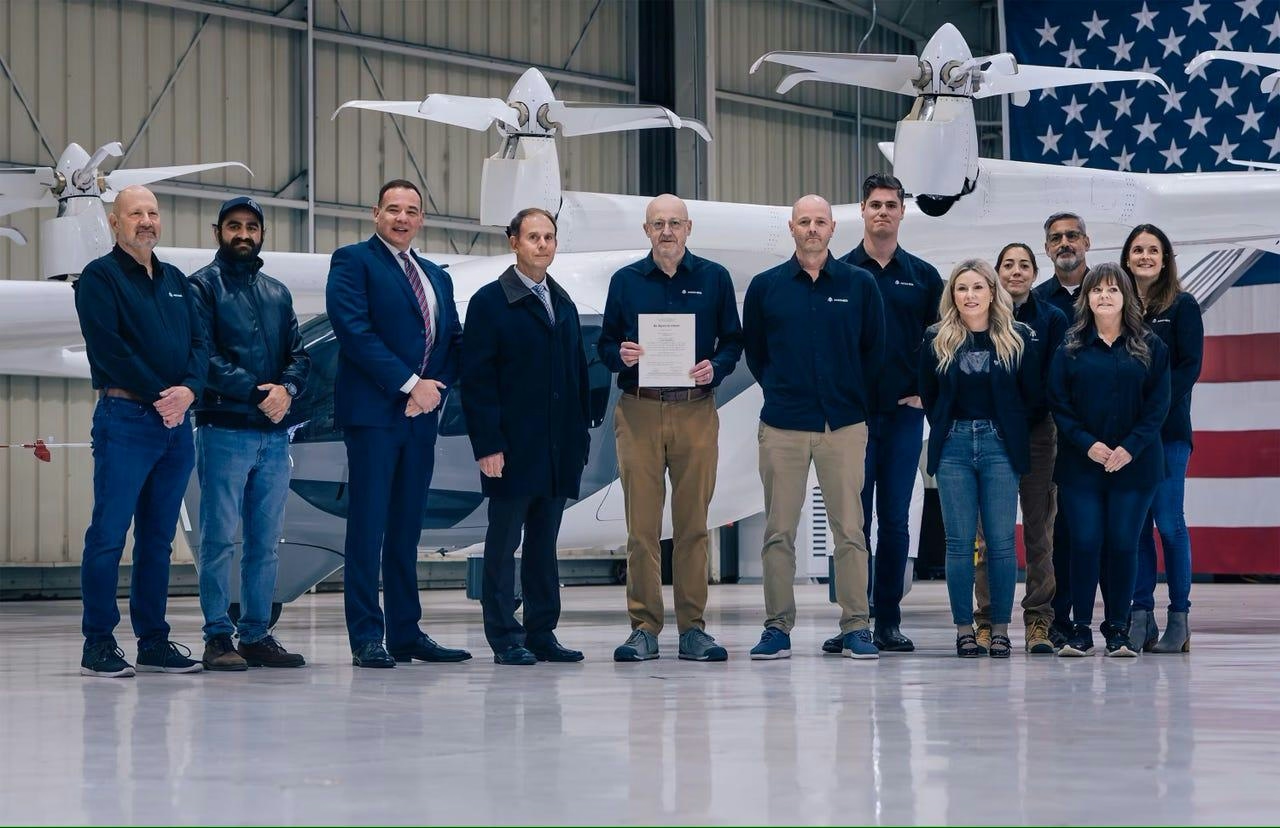
US Launches Pilot Program to Advance Air Taxi Development
September 12, 2025By ePlane AI
US Launches Pilot Program to Advance Air Taxi Development
0
0
Air Taxi
eVTOL Aircraft
Advanced Air Mobility

US Launches Pilot Program to Advance Air Taxi Development

The United States government has unveiled a new pilot program designed to accelerate the development and deployment of air taxis, marking a pivotal advancement in the field of advanced air mobility. The Federal Aviation Administration (FAA) announced on Friday that it will initiate at least five projects through public-private partnerships aimed at facilitating the safe integration of electric vertical take-off and landing (eVTOL) aircraft into American airspace.

Government Initiative and Industry Participation

Transportation Secretary Sean Duffy emphasized the significance of the initiative, stating, “The next great technological revolution in aviation is here. The United States will lead the way, and doing so will cement America’s status as a global leader in transportation innovation.” This program follows an executive order signed by President Donald Trump in June, which mandated the establishment of a pilot program to test eVTOL aircraft for diverse applications, including emergency services, air taxis, cargo transport, and defense logistics.

Leading eVTOL manufacturers Archer Aviation and Joby Aviation have confirmed their involvement in the program. Archer Aviation is collaborating with United Airlines and other carriers to conduct trial operations of its Midnight aircraft under the FAA’s eVTOL Integration Pilot Programme (eIPP). The company anticipates that these trials will demonstrate both the safety and scalability of eVTOL operations. Archer’s CEO, Adam Goldstein, remarked that these initial flights will help solidify American leadership in advanced aviation and pave the way for scaled commercial operations domestically and internationally.

Joby Aviation, another prominent participant, highlighted its extensive flight testing across five continents, including recent demonstrations in Dubai. Greg Powles, Joby’s chief policy officer, noted, “We’ve spent more than 15 years building the aircraft technology and operational capabilities that are defining advanced aerial mobility, and we’re ready to bring our services to communities.”

Challenges and Market Implications

The market responded positively to the announcement, with shares in both Archer and Joby rising by more than 2 percent on Friday afternoon. However, industry experts caution that the program faces considerable challenges. Regulatory hurdles, safety concerns, and technological limitations remain significant obstacles to the widespread adoption of eVTOL aircraft. The FAA has underscored that efforts to accelerate eVTOL projects will not compromise rigorous safety standards.

The pilot program is also expected to intensify competition among leading air taxi startups, as companies seek a first-mover advantage in this emerging sector. Early participation in the FAA’s initiative could provide critical operational experience ahead of full FAA certification, positioning US firms at the forefront of global advanced air mobility.

As the United States advances this ambitious program, the coming months will be critical in determining the pace at which air taxis transition from experimental flights to a viable mode of urban transportation.

More news
United Airlines Integrates AI into Mobile App

United Airlines Integrates AI into Mobile App

United Airlines Integrates AI into Mobile App United Airlines has unveiled a significant update to its mobile application, incorporating artificial intelligence to enhance the overall travel experience. Launched on Tuesday, the revamped app introduces a range of AI-driven features designed to function as a comprehensive travel assistant. Among these are Virtual Gate, a tool that provides real-time boarding information, a locator for the nearest and most suitable United Club lounges, and live tracking of checked baggage. Enhancing the Traveler’s Journey with Predictive Navigation At the core of the update is a predictive navigation system that anticipates passengers’ needs throughout their journey. As departure time nears, the app automatically highlights boarding status and gate details. For travelers facing tight connections, it offers timely guidance to facilitate smooth transfers between flights. Upon arrival, the app delivers up-to-date local weather information and suggests ride-share options, aiming to simplify ground transportation arrangements. This initiative aligns with a broader industry movement toward integrating AI and mobile technologies to provide more personalized and efficient travel services. Airlines are increasingly investing in digital tools that reduce stress and improve convenience, and United’s latest enhancements are expected to prompt competitors to accelerate their own adoption of AI-driven solutions. Challenges and Regulatory Considerations Despite the potential benefits, the integration of AI into travel applications presents notable challenges. Automation errors, such as inaccuracies in navigation prompts or baggage tracking, could disrupt the customer experience. Furthermore, the expanded use of personal data to power these AI features has attracted heightened regulatory scrutiny. Authorities are closely examining issues related to AI-based pricing models, data transparency, and consumer protection, raising important questions about how airlines manage and safeguard sensitive customer information. United Airlines is positioning its AI-powered app as a new benchmark for digital travel assistance, aiming to deliver a smoother and more intuitive journey for its customers. As the airline industry continues to evolve, the interplay between technological innovation, operational reliability, and consumer trust will remain a critical focus.
Jeppesen ForeFlight Names New Executives to Lead Aviation Initiatives

Jeppesen ForeFlight Names New Executives to Lead Aviation Initiatives

Jeppesen ForeFlight Names New Executives to Lead Aviation Initiatives Jeppesen ForeFlight, a prominent provider of aviation software solutions, has announced the appointment of three senior executives to its leadership team. This strategic move highlights the company’s commitment to growth, customer success, and innovation amid a rapidly evolving aviation industry. The new leadership appointments arrive at a critical juncture as Jeppesen ForeFlight seeks to reinforce its competitive position and respond to shifting market demands. Strategic Leadership Appointments Joe Ayers has been appointed Chief Financial Officer (CFO), bringing over 15 years of experience in enterprise software finance. He will be responsible for steering the company’s financial strategy and operations, with a focus on driving sustainable growth through disciplined financial management and strategic investment. Toya Del Valle assumes the role of Chief Customer Officer (CCO), leveraging her extensive background in customer success within major airlines and technology firms. Del Valle will oversee customer support, training, and engagement initiatives, aiming to enhance both customer experience and operational efficiency. Richa Gupta joins as Chief People Officer (CPO), where she will lead global talent strategy and employee experience. Her leadership in human resources is expected to foster a culture of innovation and transformation within the organization. Navigating a Competitive and Dynamic Market Jeppesen ForeFlight faces a competitive landscape dominated by established players such as Garmin and Honeywell. The company must maintain its innovative edge while adapting to rapidly changing customer needs and ensuring the seamless integration of emerging technologies into its product offerings. Industry analysts suggest that these leadership changes may intensify scrutiny from competitors and potentially influence strategic partnerships across the sector. In response, rivals are likely to accelerate their innovation and marketing efforts to protect market share and counter Jeppesen ForeFlight’s advancements. Advancing Innovation and Customer Experience Building on Jeppesen’s 90-year legacy in aeronautical data and ForeFlight’s cutting-edge technology, the company continues to expand its presence across commercial, business, military, and general aviation sectors. The integration of financial stewardship under Ayers, customer engagement led by Del Valle, and a forward-thinking workplace culture driven by Gupta positions Jeppesen ForeFlight to deliver the next generation of aviation technology solutions. The company aims to set new standards in safety, efficiency, and operational intelligence through these combined efforts. Reinforcing Industry Leadership These executive appointments underscore Jeppesen ForeFlight’s dedication to providing innovative software that enhances decision-making, improves safety, and increases operational efficiency. Serving a diverse client base that includes airlines, aviation fleets, military organizations, and business aviation operators, the company is well-positioned to navigate the opportunities and challenges presented by a rapidly transforming industry.
737 MAX Engine Shuts Down Mid-Flight After Cockpit Sun Visor Detaches

737 MAX Engine Shuts Down Mid-Flight After Cockpit Sun Visor Detaches

737 MAX Engine Shutdown Triggered by Detached Cockpit Sun Visor A Ryanair-branded Boeing 737-8 MAX encountered an unusual in-flight emergency on December 8, 2025, when a cockpit sun visor detached during climb-out from Krakow, Poland, resulting in the shutdown of one of its engines. The aircraft, registered 9H-VUE and operated by Malta Air under a wet-lease agreement, was conducting flight FR-3505 to Milan Bergamo at the time of the incident. Incident Overview and Flight Response The flight departed Krakow at approximately 06:25 local time and was ascending through 8,000 feet when the crew halted their climb and maintained level flight. According to reports from the Aviation Herald, the detached sun visor struck an engine start lever, causing the shutdown of a CFM LEAP-1B engine. In response, the flight crew issued a “PAN PAN” call, indicating an urgent but non-life-threatening situation, and began troubleshooting while holding their heading. After stabilizing at 10,000 feet, the crew successfully restarted the affected engine, canceled the PAN PAN alert, and proceeded to Milan Bergamo. The aircraft landed safely about 90 minutes later without further incident, and no injuries were reported among passengers or crew. The aircraft remained grounded in Milan for approximately 50 hours before returning to service. Investigation and Industry Context The Maltese Bureau of Air Accident Investigation (BAAI) has classified the event as an incident and initiated a formal investigation. No official report has yet been released, and the precise circumstances remain under review. Aviation experts have expressed skepticism regarding the likelihood of a sun visor—typically mounted high and forward near the windshield—dislodging and actuating an engine start lever, which is located low on the center pedestal and generally requires deliberate manipulation. Investigators are expected to analyze cockpit voice and flight data recorders, maintenance records, and hardware configurations to determine the sequence of events. This incident occurs amid ongoing scrutiny of Boeing and the 737 MAX series. The U.S. Federal Aviation Administration (FAA) is currently reviewing Boeing’s cockpit alerting system for the forthcoming MAX 10 model, focusing on potential safety enhancements. The event has drawn renewed attention from aviation regulators worldwide and may prompt legal or operational repercussions should systemic issues be identified. The aviation industry is also contending with broader challenges, including the need to retrofit thousands of passenger aircraft to mitigate pilot disorientation risks during solar storms—a vulnerability that could further disrupt flight operations. Wet-lease arrangements, such as the one involved in this case, are common during peak travel periods, with the marketing carrier selling tickets while another airline operates the flight under its own certificate. The aircraft’s Maltese registration (“9H”) and the use of CFM LEAP-1B engines are standard for the 737 MAX fleet. In-flight engine shutdowns remain rare, with certification standards requiring aircraft to safely continue flight and land on a single engine. The ongoing investigation will seek to establish whether the detached sun visor was the direct cause, a contributing factor, or incidental to the engine shutdown, and whether any maintenance or procedural shortcomings played a role. Ryanair has not issued a statement regarding the incident.
Air Taxis Are Not a Viable Solution to Broward’s Traffic Problems

Air Taxis Are Not a Viable Solution to Broward’s Traffic Problems

Air Taxis Are Not a Viable Solution to Broward’s Traffic Problems On December 3, the Sun Sentinel published an article titled “Air taxi developer planning commuter network,” which unfortunately resembled more of a promotional piece than a critical examination of the proposal. While air taxis are frequently promoted as a remedy for traffic congestion, the reality is that they would primarily serve a wealthy, well-connected minority, leaving the majority of Broward County residents to contend with persistent gridlock. Economic and Practical Limitations The assertion that air taxi fares will be “comparable in price to ground transportation” strains credibility. Comparable to what exactly—chauffeured luxury vehicles? History is replete with transportation innovations that have been overhyped and failed to deliver on their promises. Examples include Elon Musk’s Hyperloop, which critics argue was more a tactic to undermine California’s high-speed rail project than a feasible alternative, and Uber’s initial strategy of drastically undercutting taxi prices to eliminate competition before raising fares. Similarly, venture-backed “pod-based” automated vehicles have yet to fulfill their transformative potential. The article missed a crucial opportunity to scrutinize the financial realities of air taxis. The cost structure of operating multimillion-dollar vertical takeoff and landing (VTOL) aircraft is substantial. It is difficult to envision how trips carrying four non-wealthy passengers could cover these expenses. Even under optimistic assumptions—operating every 10 minutes for 18 hours daily, amounting to 216 flights per day, each at full capacity—air taxis would transport only 432 people. By comparison, a single arterial road accommodates between 30,000 and 60,000 vehicles daily, and Tri-Rail serves approximately 16,000 riders each day. Clearly, air taxis lack the scalability required to address Broward’s transportation demands. Infrastructure, Regulation, and Market Realities Beyond economic concerns, significant obstacles remain in making air taxis a practical solution. Infrastructure development, regulatory approval, safety considerations, and public acceptance all present formidable challenges. Market responses have been mixed; while some investors and observers see potential, many remain skeptical about the ability of air taxis to fulfill their ambitious objectives. Even among industry competitors, strategies vary considerably. For instance, Archer Aviation is concentrating on business aviation infrastructure rather than mass transit applications. Recent developments highlight that although air taxis may hold promise, they remain unproven as a solution to real-world congestion. The Case for Established Public Transit Meanwhile, proven transportation solutions already exist. Trains and buses offer time-saving and cost-effective relief that Broward residents urgently need. The bus network primarily serves lower-income riders, largely because it is not a viable option for those who can afford to drive. Enhancing public transit benefits the entire community, not just its users. Increased ridership reduces the number of cars on the road, thereby decreasing traffic congestion, pollution, accidents, and associated healthcare costs. Additionally, property values tend to rise in areas well-served by transit. The transportation surtax approved by Broward voters was intended to improve these systems, yet questions persist regarding the allocation of these funds. Concerns have been raised about whether the transit budget has been supplanted by surtax revenues, similar to how lottery funds have sometimes replaced education budgets. Furthermore, $1 billion is being allocated to a new commuter rail line projected to serve only 1,000 daily riders. In contrast, Tri-Rail, despite facing political funding challenges, effectively removes the equivalent of one lane of I-95 traffic every day. In sum, robust public transit systems provide widespread benefits, even to those who do not directly use them. Air taxis, by contrast, are unlikely to alleviate Broward’s traffic problems. Rather than investing in flashy and unproven technologies, efforts should focus on expanding and improving public transportation options that serve the entire community.
The Vision Jet and the Future of Personal Aviation

The Vision Jet and the Future of Personal Aviation

The Vision Jet and the Future of Personal Aviation The Cirrus Vision Jet is transforming the landscape of personal aviation by combining luxury, cutting-edge technology, and unparalleled safety features into the world’s first single-engine personal jet. Cirrus Aircraft offers comprehensive support to owners throughout the entire ownership experience, encompassing flight training, financing, and ongoing maintenance, thereby ensuring a seamless and premium journey from acquisition to operation. Luxury Meets Functionality The Vision Jet is distinguished by its spacious cabin, the largest in its class, made possible by a carbon fiber fuselage that maximizes interior volume. Passengers enjoy ample headroom and legroom, complemented by panoramic windows that enhance the sense of openness. The cabin’s design elevates travel into a comfortable and productive environment, with senior community manager Dale Huffstetler likening the experience to that of a luxury automobile. He notes, “The cabin is extremely roomy, particularly for the size of the aircraft. There are copious amounts of leg room.” The interior features high-end leather seating and modern amenities such as charging ports and in-flight entertainment systems, making it a preferred choice for both families and business travelers. The cabin is thoughtfully equipped to support work and relaxation alike, with an entertainment display that integrates with personal devices and a center console that serves as a functional workspace. Additional comforts include a pressurized cabin suitable for high-altitude flights, accent lighting, rear climate controls, and Gogo InFlight Wi-Fi, ensuring reliable connectivity throughout the journey. Pioneering Safety Innovations Cirrus has established new benchmarks in aviation safety through pioneering features like the Cirrus Airframe Parachute System (CAPS) and the Safe Return Emergency Autoland. CAPS, an FAA-approved whole-aircraft parachute system, can be deployed in emergencies to safely lower the entire jet to the ground. Huffstetler explains, “If the aircraft is broken, the Cirrus Airframe Parachute System is there in the event the aircraft cannot be landed safely.” The Safe Return Emergency Autoland system, powered by Garmin technology, automatically lands the aircraft if the pilot becomes incapacitated, further enhancing safety and accessibility. These innovations have garnered significant industry recognition, including the prestigious Robert J. Collier Trophy, and have set a new standard for personal aviation safety. Navigating Industry Challenges Despite its technological advancements and enhanced user experience, the Vision Jet and the broader personal aviation sector face considerable challenges. Regulatory changes, such as the United Kingdom’s extension of Air Passenger Duty to a wider range of business jet users, are driving up operational costs. Moreover, efforts to meet sustainable aviation fuel (SAF) targets are complicated by fragmented and costly government policies across Europe, sparking debate over the financial viability and effectiveness of SAF mandates within business aviation. These pressures have led some competitors, particularly in the electric vertical takeoff and landing (eVTOL) sector, to pivot away from passenger services toward logistics and drone operations. This strategic shift reflects a search for more sustainable business models amid evolving market conditions and regulatory landscapes. Looking Ahead As the Vision Jet continues to redefine luxury, safety, and connectivity in personal aviation, the industry must also confront regulatory and environmental challenges. The future of personal flight will hinge not only on technological innovation but also on the ability to navigate a complex and shifting policy and market environment.
Aircraft Leasing Market Expected to Grow Amid Changing Tourism and Fleet Demands

Aircraft Leasing Market Expected to Grow Amid Changing Tourism and Fleet Demands

Aircraft Leasing Market Set for Growth Amid Shifting Tourism and Fleet Demands The global aircraft leasing market is on track for significant expansion, driven by changing tourism patterns and airlines’ increasing need for operational flexibility. Valued at $87.97 billion in 2024, the market is expected to grow to $94.36 billion in 2025 and reach $155.61 billion by 2032, representing a compound annual growth rate (CAGR) of 7.39%. As passenger traffic rises and the tourism sector becomes more dynamic, leasing has emerged as a crucial strategy for airlines to swiftly adjust to fluctuating demand while advancing sustainability goals. Operational Flexibility and Fleet Expansion Airlines, especially those operating in major tourist destinations and regions with pronounced seasonal traffic, are turning to leasing to manage both long-term growth and short-term capacity fluctuations. Leasing enables carriers to expand or reduce their fleets without the burden of substantial upfront capital expenditure, offering agility in highly competitive and rapidly evolving markets. Both lessors and airlines are increasingly utilizing advanced asset management systems and data analytics to optimize fleet deployment and respond effectively to changing travel trends. Freighter Conversions and the Rise of E-Commerce A significant development reshaping the leasing landscape is the growing demand for narrowbody freighter conversions. This trend is largely propelled by the rapid expansion of the e-commerce sector and increased cargo volumes linked to tourism. Airlines are converting passenger aircraft into freighters to capitalize on new revenue opportunities, allowing lessors to diversify their portfolios and serve both passenger and cargo operators amid expanding global trade and travel. Technological Innovation and Sustainability Initiatives Digital transformation is further influencing the aircraft leasing sector. Innovations in digital asset management and predictive analytics are enhancing lease negotiations, minimizing aircraft downtime, and improving fleet utilization. Concurrently, lessors are increasingly offering green financing options, such as green bonds, to support environmentally sustainable leasing solutions. The industry’s commitment to sustainable aviation is reflected in the provision of more fuel-efficient aircraft and the integration of sustainable aviation fuel clauses in lease agreements, assisting airlines in meeting stringent carbon reduction targets. Emerging Challenges and Market Dynamics Despite promising growth, the aircraft leasing market faces notable challenges. Aviation insurers predict rising insurance premiums starting in 2026, following an anticipated record year for large losses in 2025. This development could increase costs for leasing companies, necessitating strategic adjustments in pricing and risk management across the sector. Furthermore, the regional aircraft fleet in the Middle East is projected to more than double by 2044, intensifying competition and demand for leasing services. Globally, the commercial aircraft fleet is also expected to double by the same year, prompting a comprehensive replacement cycle and a transition toward sustainable propulsion technologies. These evolving dynamics are likely to influence leasing strategies, profitability, and the types of aircraft in demand. Outlook As the aviation industry contends with rising demand, sustainability imperatives, and emerging risks, aircraft leasing is poised to remain a fundamental component of airline fleet management. The sector’s capacity to adapt to technological advancements, regulatory changes, and shifting market conditions will be pivotal in determining its future trajectory.
Sentient Jet Introduces Cryptocurrency Payments

Sentient Jet Introduces Cryptocurrency Payments

Sentient Jet Embraces Cryptocurrency Payments for Private Jet Travel Sentient Jet, a pioneer in private aviation and the originator of the jet card concept, has announced that clients can now pay for flights using select cryptocurrencies through BitPay, the world’s largest blockchain payment processor. This initiative reflects the shifting preferences of ultra-high-net-worth travelers and underscores Sentient Jet’s ongoing commitment to innovation and enhanced convenience. Expanding Payment Options with Digital Assets Under the new system, both existing Card Owners and new members are able to complete transactions using cryptocurrencies such as Bitcoin (BTC), Ethereum (ETH), and prominent U.S. dollar-backed stablecoins including Circle’s USDC and PayPal’s PYUSD. All payments are processed via BitPay and settled in U.S. dollars, enabling Sentient Jet to accept digital asset payments without directly holding cryptocurrencies. Alan Walsh, President of Sentient Jet, emphasized the company’s dedication to evolving the private travel experience, noting that the firm has consistently innovated—from inventing the Jet Card model to introducing text-based booking and advancing sustainability efforts. He highlighted the importance of offering clients thoughtful choices in both communication and payment methods. Industry Implications and Regulatory Challenges The adoption of cryptocurrency payments comes amid growing acceptance of digital assets among luxury consumers. Bill Zielke, Chief Marketing Officer of BitPay, observed that businesses accepting cryptocurrency often experience larger transaction sizes, as customers value the flexibility and security these payment methods provide. He described Sentient Jet’s move as a significant milestone for the private aviation sector. Nevertheless, the integration of cryptocurrencies is not without its challenges. The regulatory environment remains uncertain, particularly following the U.S. Senate Banking Committee’s recent decision to postpone the review of the “Cryptocurrency Market Structure Bill” until 2026. This delay complicates compliance efforts for companies like Sentient Jet, which must navigate evolving legal frameworks. Additionally, the inherent volatility of cryptocurrency markets and potential consumer adoption barriers may influence the success of these payment options. While traditional investors may approach the development with caution, cryptocurrency advocates are likely to welcome the increased flexibility. Market trends further illustrate the evolving landscape. Bitcoin’s dominance has recently neared 60% of the total cryptocurrency market, according to a Bitget report, signaling a shift toward more established digital assets and potentially impacting competitors focused on alternative coins. Meanwhile, firms such as TrustLinq are working to bridge the divide between cryptocurrencies and conventional financial systems, highlighting ongoing usability challenges that Sentient Jet and others in the industry must address. Positioning Within the Private Aviation Sector Sentient Jet’s integration of BitPay’s infrastructure positions the company at the forefront of digital payment innovation within private aviation. Competitors may respond by adopting similar cryptocurrency payment options or enhancing their own offerings to maintain competitive differentiation. Founded in 1999 and now part of Flexjet, Sentient Jet has a longstanding history of innovation, from creating the Jet Card to pioneering automated text-to-book technology and promoting sustainability initiatives. The introduction of cryptocurrency payments represents the latest step in the company’s efforts to simplify and elevate the private travel experience for its discerning clientele.
Pentagram Designs Identity for eVTOL Company Vertical Aerospace

Pentagram Designs Identity for eVTOL Company Vertical Aerospace

Pentagram Designs Identity for eVTOL Company Vertical Aerospace Renewed Momentum in eVTOL Development Aviation technology is often characterized by protracted development timelines, with groundbreaking innovations frequently taking decades to materialize. The electric vertical take-off and landing (eVTOL) sector, long anticipated as the next frontier in urban mobility, has experienced renewed vigor in 2025, driven in part by intensifying competition from China. While several early contenders such as Volocopter and Lilium have withdrawn from the race, Vertical Aerospace remains steadfast in advancing its ambitious vision. Based in Bristol, Vertical Aerospace is preparing to unveil its latest eVTOL aircraft, the Valo, on December 10 in London. The company seeks to distinguish itself from competitors including Joby, Archer, and Beta by combining innovative aircraft design with a clear certification strategy, a robust business model, and a seasoned leadership team. The Valo builds upon insights gained from the VX4 prototype and incorporates feedback from piloted test flights and operators. It is specifically engineered to serve early commercial routes, with a focus on airport-to-city center connections. Strategic Focus and Industry Partnerships Vertical Aerospace is prioritizing safety, reliability, and professionalism over large-scale infrastructure development. The company recently secured a pre-order agreement with Héli Air Monaco for the Valo, which aims to achieve airliner-level safety certification by 2028. Collaborations with Skyports Infrastructure and Bristow, a helicopter operator with six decades of experience, are instrumental in paving the way for commercial operations as early as the first quarter of 2029. Pentagram’s Role in Shaping the Brand Identity To articulate its vision and reinforce its market positioning, Vertical Aerospace engaged the internationally acclaimed design agency Pentagram. Under the leadership of Angus Hyland, Pentagram developed a comprehensive brand identity encompassing both the company and the Valo aircraft. This refreshed branding spans all customer touchpoints, including digital applications, billboards, and aircraft liveries, achieving a balance between futuristic innovation and grounded professionalism. At the heart of the new identity is Vertical’s distinctive hummingbird logo, symbolizing the core capabilities of vertical take-off, hovering, and flight. Pentagram refined the logo to be less abstract and more closely aligned with the sleek contours of the Valo aircraft. The updated wordmark, set in the Universal Sans typeface, conveys a modern, technical, and engineered aesthetic. The Valo Aircraft and Market Prospects The Valo is a piloted rotorcraft designed to transport four passengers over distances up to 100 miles at speeds reaching 150 miles per hour. Vertical Aerospace is targeting high-demand routes such as the journey from London’s Canary Wharf to Heathrow Airport—a trip that typically takes nearly an hour by car or train but could be completed in just 12 minutes by the Valo. With its revitalized brand identity, strategic partnerships, and a clear certification roadmap, Vertical Aerospace is positioning itself at the forefront of the eVTOL industry. The upcoming unveiling in London will represent a pivotal moment in the company’s efforts to redefine urban air mobility.
Gama Aviation Expands Services with New Paintshop at Staverton

Gama Aviation Expands Services with New Paintshop at Staverton

Gama Aviation Expands Services with New Paintshop at Staverton Gama Aviation is preparing to launch a new paintshop at its UK Rotary Centre of Excellence in Staverton, with operations expected to commence in January 2026. The facility will offer refinishing, repainting, and livery services specifically tailored for Leonardo AW169, AW139, and Airbus H145 helicopter platforms. This new addition will be integrated with Gama’s existing Part-145 maintenance, avionics, and interior modification services, reinforcing the company’s objective to provide a comprehensive, end-to-end service experience for its clients. Advanced Facility and Expertise The paintshop, measuring 16 by 8 metres, is equipped with specialist lighting and optimized airflow management systems to support a wide range of services, from minor panel refinishing to full aircraft repaints. Customers will benefit from aviation-approved colour matching and bespoke paint scheme development, overseen by a senior rotary paint specialist with over three decades of industry experience. This expertise is expected to enhance the quality and precision of the refinishing work, aligning with the high standards demanded in the rotary aviation sector. Operational and Market Challenges While the expansion represents a significant advancement for Gama Aviation, it also introduces several operational challenges. The integration of the paintshop may lead to increased operational costs and potential delays as the company adjusts to new workflows and fluctuating demand. Additionally, the move is likely to attract close scrutiny from competitors and customers alike, who will be attentive to any changes in pricing structures and service quality. In response, competitors may seek to bolster their own service offerings or negotiate more favourable terms with suppliers to maintain their market positions. This dynamic could intensify competition within the sector, as companies strive to differentiate their capabilities and secure client loyalty. Compounding these challenges, recent industry forecasts indicate that aviation insurance premiums are expected to rise starting in 2026. This anticipated increase could further impact Gama Aviation’s cost base and influence its pricing strategies for the new paintshop services. Despite these potential headwinds, Gama Aviation’s investment in the Staverton facility highlights its commitment to broadening its service portfolio and reinforcing its standing in the rotary aviation market.
MAAS Aviation and easyJet Renew Aircraft Painting Contract

MAAS Aviation and easyJet Renew Aircraft Painting Contract

MAAS Aviation and easyJet Renew Aircraft Painting Contract MAAS Aviation has confirmed the renewal of its contract to repaint easyJet’s entire fleet of A320 family aircraft, extending a longstanding partnership between the two companies. The repainting work will continue to be conducted at MAAS Aviation’s Maastricht facility, which boasts two climate-controlled paint shops equipped with advanced building management systems, datalogging capabilities, and high-lux lighting designed to ensure precise and superior-quality finishes. Strengthening a Collaborative Partnership Richard Marston, chief commercial officer at MAAS Aviation, underscored the strength and transparency of the collaboration with easyJet. He noted that regular communication between the teams ensures alignment of working procedures, enabling MAAS Aviation to maintain high standards of painting while achieving rapid turnaround times. This close cooperation has been instrumental in delivering consistent quality and efficiency throughout their multi-year relationship. Sophie Michelson, easyJet’s aircraft appearance manager, emphasized the critical importance of maintaining exceptional exterior paint standards. She praised MAAS Aviation for their continued commitment to excellence, which has supported easyJet in achieving industry-leading paint processes and finishes. Michelson also highlighted easyJet’s dedication to sustainability, noting ongoing efforts to reduce carbon emissions. Since 2019, MAAS Aviation has played a key role in helping easyJet meet these objectives, and the airline looks forward to further improvements as its fleet expands. Industry Context and Future Considerations The contract renewal occurs amid increasing industry pressures to balance competitive pricing with the delivery of high-quality maintenance and painting services. Airlines are scrutinizing supplier contracts more closely, prompting competitors in the aircraft painting and maintenance sector to offer more attractive terms in an effort to secure business. This competitive environment is likely to influence future negotiations and contract renewals across the aviation industry. Furthermore, easyJet’s recent announcement of plans to acquire Adria Tehnika in 2026 represents a strategic move to consolidate its maintenance and repair operations. This acquisition may affect MAAS Aviation’s position as a supplier to easyJet, as the airline evaluates how best to integrate new capabilities and streamline its supplier relationships in the coming years. Despite these evolving market dynamics, both MAAS Aviation and easyJet remain committed to upholding high standards of aircraft appearance and operational efficiency. Their continued partnership reflects a shared dedication to quality, innovation, and sustainability in aircraft maintenance and presentation.
Ask AeroGenie










