
Zet AI‑inzichten om in gerichte actie

Trending
Categories
Welsh Researchers Help Develop First Hydrogen Aircraft Engine
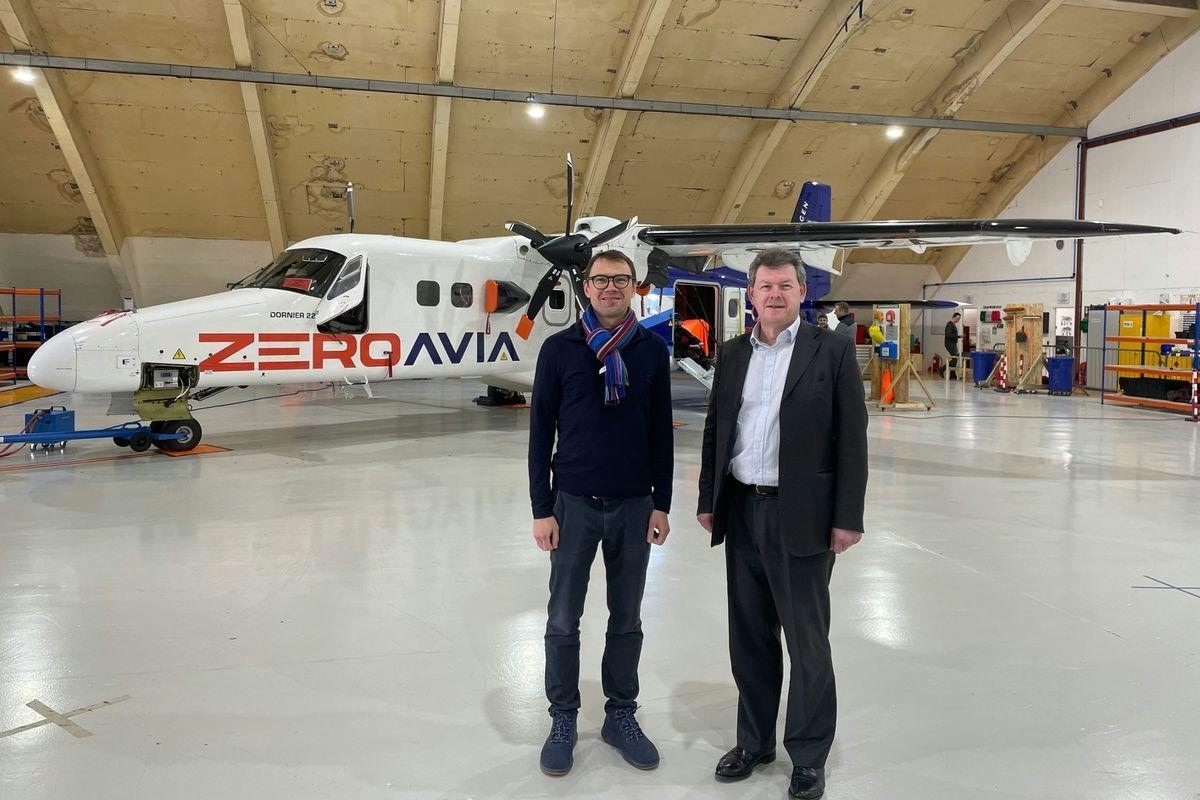
Welsh Researchers Advance Hydrogen Aircraft Engine Technology
Researchers at Swansea University have been instrumental in a landmark achievement in aviation, contributing to the successful demonstration that hydrogen can power modern aircraft engines. This milestone was reached through the four-year international HYEST (Hydrogen Engine System Technologies) programme, led by Rolls-Royce and easyJet, which recently completed the first successful test of a contemporary aero engine operating on 100% hydrogen at full take-off power.
Pioneering Materials Research for Hydrogen Engines
The breakthrough represents a significant stride toward developing lower-carbon aviation technologies as the industry seeks alternatives to traditional fossil fuels. Hydrogen is widely regarded as a promising solution to reduce aviation’s carbon emissions, although experts acknowledge that considerable technical and infrastructural challenges remain before hydrogen-powered flight can become commercially viable.
Swansea University’s Institute of Structural Materials (ISM) played a crucial role by providing essential data on material performance under the extreme conditions required for hydrogen-fuelled engines. The researchers developed advanced testing facilities capable of simulating cryogenic temperatures and high-pressure hydrogen environments. These facilities, created in collaboration with Swansea’s Steel and Metals Institute, enable scientists to replicate the harsh conditions inside hydrogen engines and generate vital data to assess the safety and performance of future designs.
Professor Geraint Whittaker, director of the ISM and the Rolls-Royce University Technology Centre in Materials at Swansea, emphasized the university’s expertise in materials testing. He described ISM as an internationally recognised centre specialising in mechanical testing at high temperatures, noting that collaboration with the Steel and Metals Institute brought complementary expertise in handling challenging industrial gases such as hydrogen. This partnership facilitated the creation of unique testing capabilities.
Professor Whittaker highlighted that the research has produced extensive data supporting the development of hydrogen-powered gas turbines. He pointed to the close collaboration with Rolls-Royce, which has enabled laboratory-scale mechanical characterisation to directly inform understanding of material behaviour in hydrogen-fuelled engines.
International Collaboration and Industry Implications
The HYEST programme united partners from the UK and abroad, with the final engine testing conducted at NASA’s Stennis Space Center in the United States. Louise Gale, a materials specialist at Rolls-Royce, described the work as part of a broader effort to establish whether hydrogen can safely and efficiently power future aircraft. She noted that the NASA testing represented the culmination of a comprehensive global programme aimed at proving hydrogen’s viability as an aerospace fuel.
Gale underscored the importance of Swansea University’s specialist testing capabilities, stating that the development of hydrogen-fuelled engines requires novel materials testing to validate behaviour in hydrogen environments. The test facilities developed by Swansea have been critical in generating key materials data to support component design and safety assessments.
Despite this progress, significant challenges remain on the path to commercial hydrogen aviation. These include the high costs associated with hydrogen production and storage, the need for substantial infrastructure investment, and technical difficulties in optimising hydrogen engines for large-scale use. The industry’s advancements have prompted increased investment in hydrogen propulsion technologies, with competitors such as China and other major aerospace firms accelerating research and forming strategic partnerships to advance their own hydrogen capabilities.

Etihad Airways Suspends Airbus A380 Flights on Key Route

Aditya Birla Group Seeks Approval for Aircraft Leasing in GIFT City

Qatar Airways Highlights Innovation and Connectivity at Arabian Travel Market 2026

Hong Kong's Five-Year Plan Includes Andrew Fan's Aircraft Parts Processing Hub Proposal

ACIA Aero Leasing Delivers ATR72-600 to Air Nostrum

RTX Appoints Jill Albertelli as Head of Pratt & Whitney

TAT Technologies Joins Beyond Aero Hydrogen Aircraft Program

AURAK Study Highlights Barriers to Air Taxi Adoption in Emerging Economies

Xiamen Air Selects Altitude for 787 Maintenance at Heathrow

Etihad and Swissport Extend Global Partnership
