
Orquestre insights de IA em ações

Tendências
Categories
A Holistic Approach to Decarbonizing Air Transport
A Holistic Approach to Decarbonizing Air Transport
Efforts to reduce greenhouse gas emissions in the air transport sector are intensifying, with the industry pursuing a multifaceted strategy that encompasses technological innovation, operational enhancements, and policy coordination. Achieving substantial decarbonization will demand not only advancements in aircraft design and propulsion but also the navigation of complex economic and structural challenges.
Fleet Modernization and Technological Progress
A central component of emissions reduction lies in the renewal of aircraft fleets. Airlines are progressively phasing out older models such as the A320Ceo, B737NG, and A330 in favor of newer, more fuel-efficient aircraft including the A320Neo, B737MAX, A350, and B787. These next-generation planes incorporate advanced materials like aluminum-lithium composites and optimized aerodynamic features, such as winglet retrofitting, which has contributed to the elimination of an estimated 80 million tons of CO₂ since 2000. Engine technologies have also advanced, with innovations like the Leap engine delivering fuel savings of up to 15 to 20 percent compared to earlier models.
The Role and Challenges of Sustainable Aviation Fuels
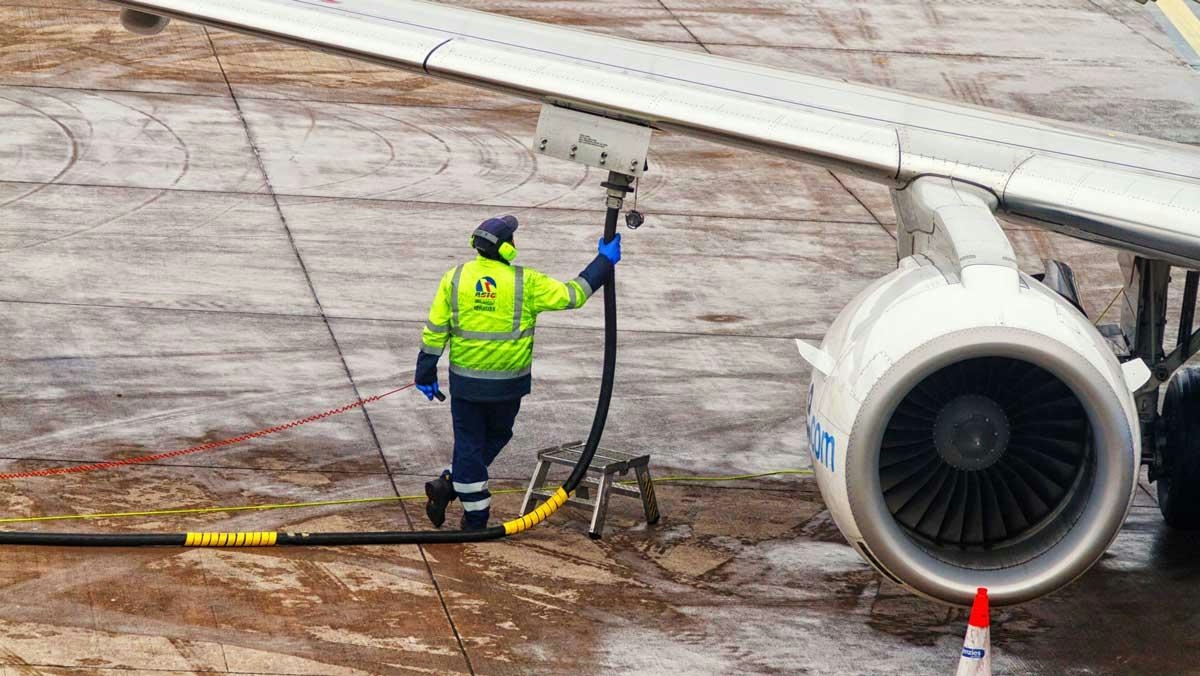
Sustainable aviation fuels (SAFs) are widely recognized as a critical pathway toward decarbonization. Derived from bio-based feedstocks such as camelina, jatropha, babassu, and palm oil, or produced synthetically by combining green hydrogen with captured carbon dioxide, SAFs offer lifecycle CO₂ emission reductions ranging from 50 to 98 percent depending on the source. Importantly, SAFs are compatible with existing aircraft and engine designs, requiring no significant modifications.
Despite their potential, SAFs currently represent a minuscule fraction of global jet fuel consumption. In 2021, only approximately 100 million liters were utilized worldwide, accounting for a mere 0.1 percent of total jet fuel use. The primary obstacle remains the high production cost, which is typically two to four times that of conventional jet fuel. Although recent increases in oil and gas prices—partly driven by geopolitical tensions in the Middle East—have narrowed this cost disparity, they have also introduced greater volatility in fuel prices. This unpredictability complicates airlines’ budgeting and planning for SAF integration, with some carriers cautioning that fare increases may be necessary to offset rising operational expenses. Furthermore, insufficient infrastructure and ongoing concerns regarding the sustainability of certain feedstocks continue to impede broader adoption.
Emerging Hydrogen-Powered Aircraft
Looking forward, hydrogen-powered aircraft are anticipated to enter commercial service within the next decade. These aircraft promise zero carbon dioxide emissions and are expected to outperform conventional planes in terms of nitrogen oxide emissions and contrail formation, although they will produce higher levels of water vapor. Initial applications are likely to focus on electrifying auxiliary systems through fuel cells, with manufacturers such as Airbus already unveiling multiple hydrogen-powered aircraft concepts.
Operational Efficiency and Market Dynamics
In addition to technological advancements, optimizing airline operations and maintenance presents significant opportunities for emissions reduction. Strategies including enhanced flight planning and “eco-piloting” techniques are being adopted to improve fuel efficiency.
Simultaneously, the industry confronts mounting pressures from volatile fuel markets and stringent regulatory requirements. European carriers, in particular, face the challenge of balancing immediate fuel supply constraints with long-term climate commitments, risking potential setbacks to established environmental frameworks. In response, some airlines are employing hedging strategies and advocating for policy adjustments aimed at mitigating supply disruptions while sustaining momentum toward decarbonization.
Decarbonizing air transport demands a comprehensive approach that integrates technological innovation, operational improvements, and coordinated policy support. While significant challenges persist—especially regarding sustainable fuel adoption and market volatility—the sector’s ongoing transformation offers a viable pathway toward a more sustainable aviation future.

Etihad Airways Suspends Airbus A380 Flights on Key Route

Aditya Birla Group Seeks Approval for Aircraft Leasing in GIFT City

Qatar Airways Highlights Innovation and Connectivity at Arabian Travel Market 2026

Hong Kong's Five-Year Plan Includes Andrew Fan's Aircraft Parts Processing Hub Proposal

ACIA Aero Leasing Delivers ATR72-600 to Air Nostrum

RTX Appoints Jill Albertelli as Head of Pratt & Whitney

TAT Technologies Joins Beyond Aero Hydrogen Aircraft Program

AURAK Study Highlights Barriers to Air Taxi Adoption in Emerging Economies

Xiamen Air Selects Altitude for 787 Maintenance at Heathrow

Etihad and Swissport Extend Global Partnership
