
Orquestre insights de IA em ações

Tendências
Categories
ACC Aviation Reports Stable First Quarter but Cautions on Future Volatility

ACC Aviation Reports Stable First Quarter but Cautions on Future Volatility
ACC Aviation has announced a stable performance in the global ACMI (Aircraft, Crew, Maintenance, and Insurance) market for the first quarter of 2026, with activity levels closely aligned with those recorded in the same period last year. Despite this apparent steadiness, the company warns of underlying shifts across aircraft segments and regions that suggest a more volatile market environment in the months ahead.
Market Overview and Geopolitical Impact
The data presented by ACC Aviation primarily reflects conditions prior to the full impact of recent geopolitical tensions in the Middle East. These developments have already triggered significant increases in jet fuel prices, which are expected to influence airline strategies and ACMI demand throughout 2026. The European aviation sector, in particular, has demonstrated resilience, maintaining steady growth despite these challenges. However, the outlook for the second half of the year remains uncertain.
Dave Williams, Director of Leasing at ACC Aviation, highlighted the evolving dynamics within the market. He noted that while the overall ACMI market appears stable on the surface, structural changes are underway. Demand is being rebalanced across different aircraft segments, driven by operational recovery and shifting priorities among airlines.
Segment Performance and Regional Variations
The narrowbody ACMI segment experienced a 10.1% year-on-year decline in the first quarter, largely due to reduced demand from major operators such as IndiGo, Viva (Mexico), and AJet. This decrease reflects improved fleet availability following the resolution of Pratt & Whitney GTF engine issues that had constrained capacity in 2025. Williams explained that much of the narrowbody ACMI demand over the past year was linked to engine-related groundings, and as these issues have been addressed, airlines are naturally reducing their reliance on short-term leasing solutions.
In contrast, the widebody ACMI segment recorded robust growth of 30.1%, driven by increased activity from prominent Middle Eastern and global carriers including Saudia, Etihad Airways, Emirates, and Turkish Airlines. This growth has been supported by rising cargo demand and strategic fleet expansion. Williams emphasized that widebody demand is following a different trajectory, with airlines actively utilizing ACMI to support long-haul operations and capitalize on cargo opportunities.
The turboprop segment also saw notable growth of 22.4% year-on-year, largely attributed to SAS’s operational ramp-up through its partnership with Braathens.
Regionally, Europe remained largely flat with a marginal increase of 0.4%, balancing higher activity from SAS against reduced ACMI reliance from KLM. Asia experienced moderate growth of 5.6%, supported primarily by Indian carriers. South America posted the strongest regional growth at 67.9%, albeit from a smaller base, led by FlyBondi. Oceania and Africa recorded solid gains of 21.1% and 17.9% respectively. North America, however, faced a sharp decline of 65.2%, mainly due to decreased demand from Viva.
Williams underscored the increasingly fragmented nature of the ACMI market, noting that airline-specific factors, fleet strategies, and local market conditions are exerting a greater influence than broad global trends.
Market Challenges and Industry Outlook
Even before the escalation of tensions in the Middle East, the European narrowbody ACMI market was exhibiting signs of oversupply, with operators anticipating stronger summer demand that has yet to materialize. Williams remarked that there has been an element of overcapacity, as operators positioned themselves for demand that has not fully materialized.
Within the broader aviation sector, market responses indicate cautious optimism. Business aviation demand has outpaced supply, demonstrating discipline despite ongoing risks. Philippine Airlines remains profitable but has issued warnings regarding the long-term financial impact of fuel price volatility. Competitors such as DAE have also reported successful first quarters despite regional conflicts.
While the immediate market environment appears stable, ACC Aviation and industry observers agree that future performance remains uncertain amid continuing geopolitical and economic challenges.
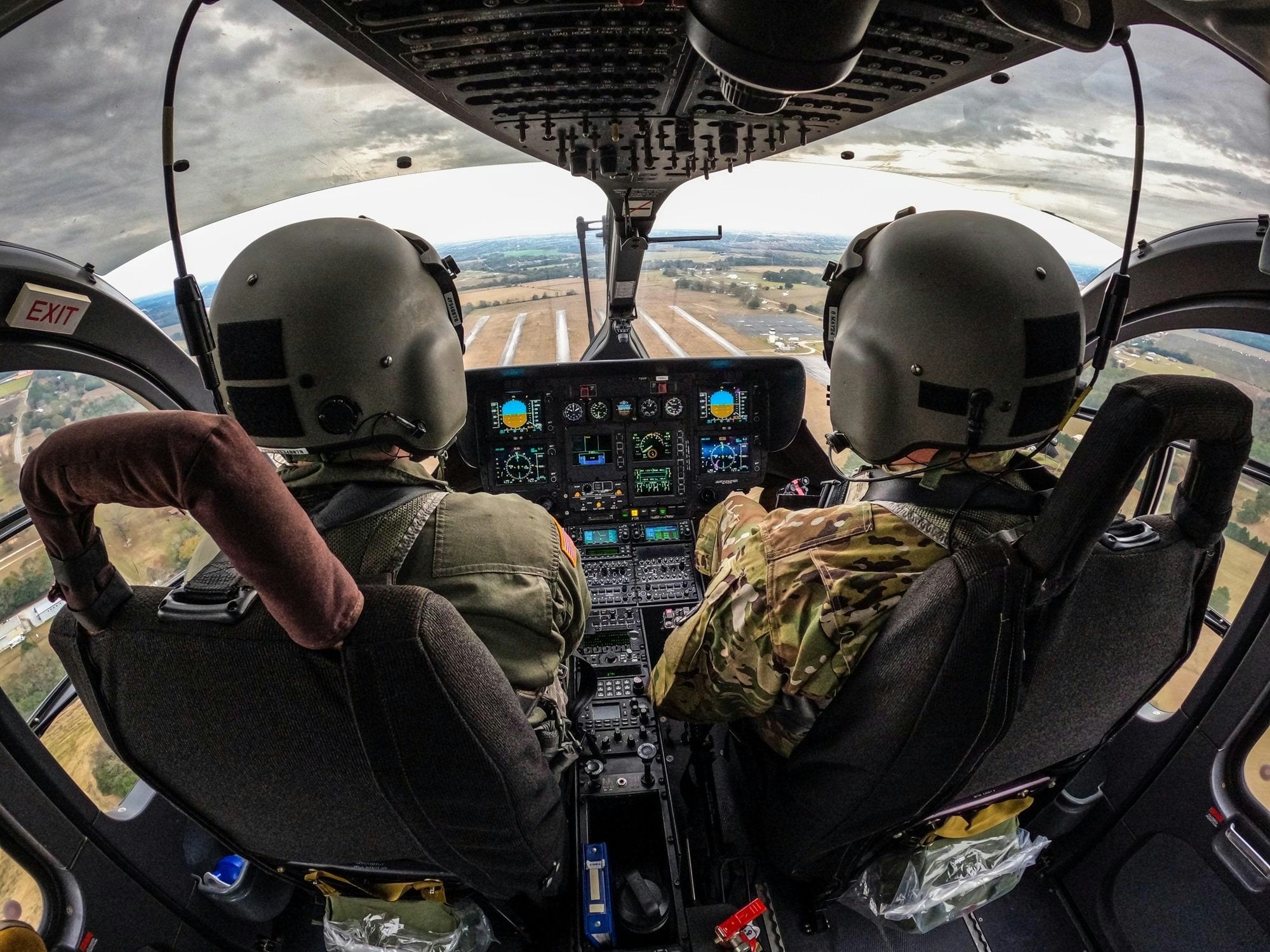
M1 Awarded $10 Billion U.S. Army Flight Training Contract

Alfor Secures £50 Million for Teesside Conversion Hub

The Future of Air Travel
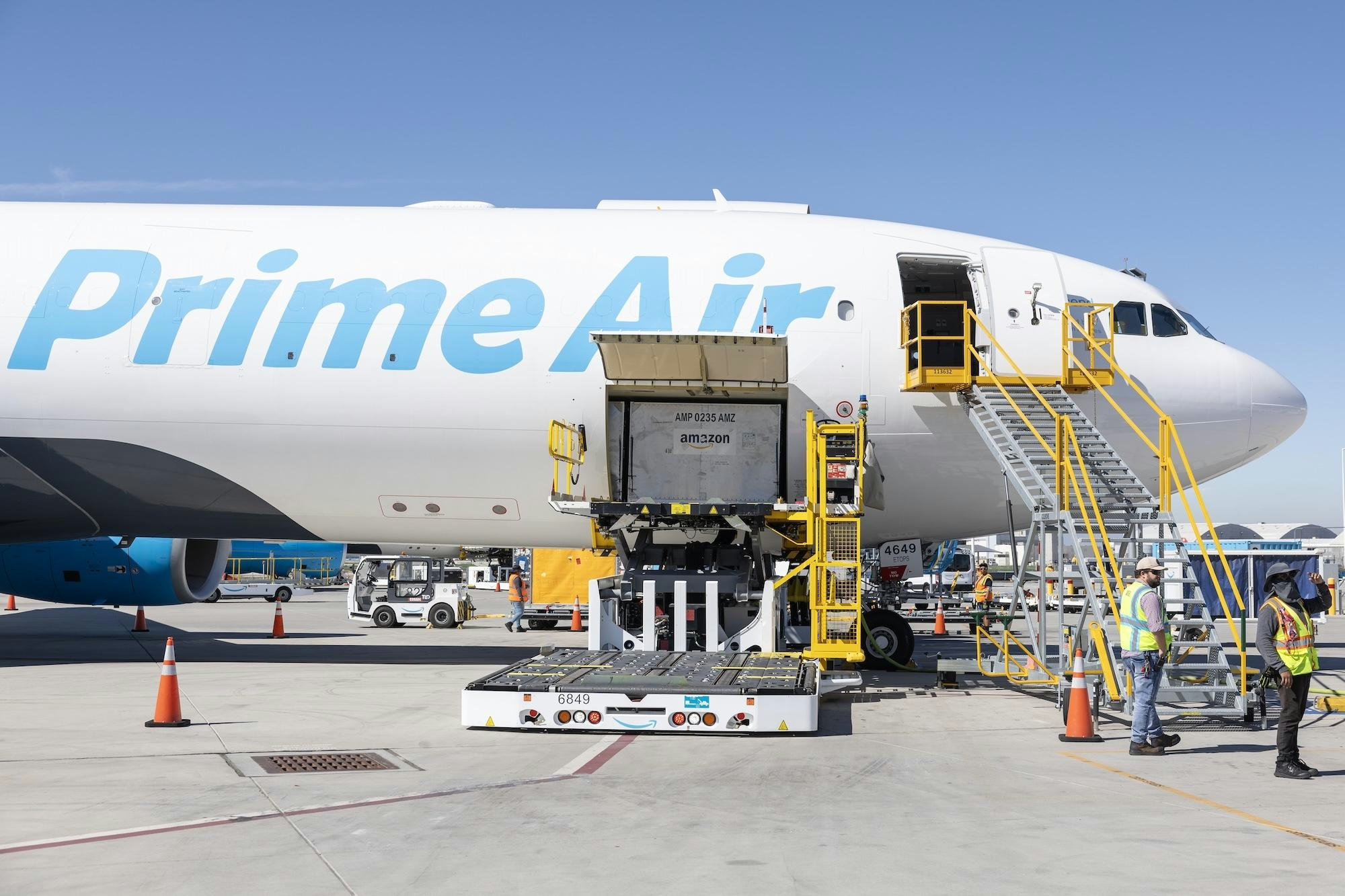
Government Considers AI to Accelerate Aviation Cargo Clearance

Advancing Innovation in Canadian Aerospace

Challenges Facing Asia's Aviation Maintenance Sector

South Korea to Expedite Designation of Urban Air Mobility Test Zones

Ryanair Warned to Reinforce Engine Part Before Incident of Passenger Sucked Into Window

China Unveils 800-Passenger Jet Featuring ‘Flying Wing’ Design

Starlux Airlines to Establish $132 Million Training Base in Taiwan
