
Orquestre insights de IA em ações

Tendências
Categories
AI-Powered Air Traffic Control Integrated into Home Flight Simulators
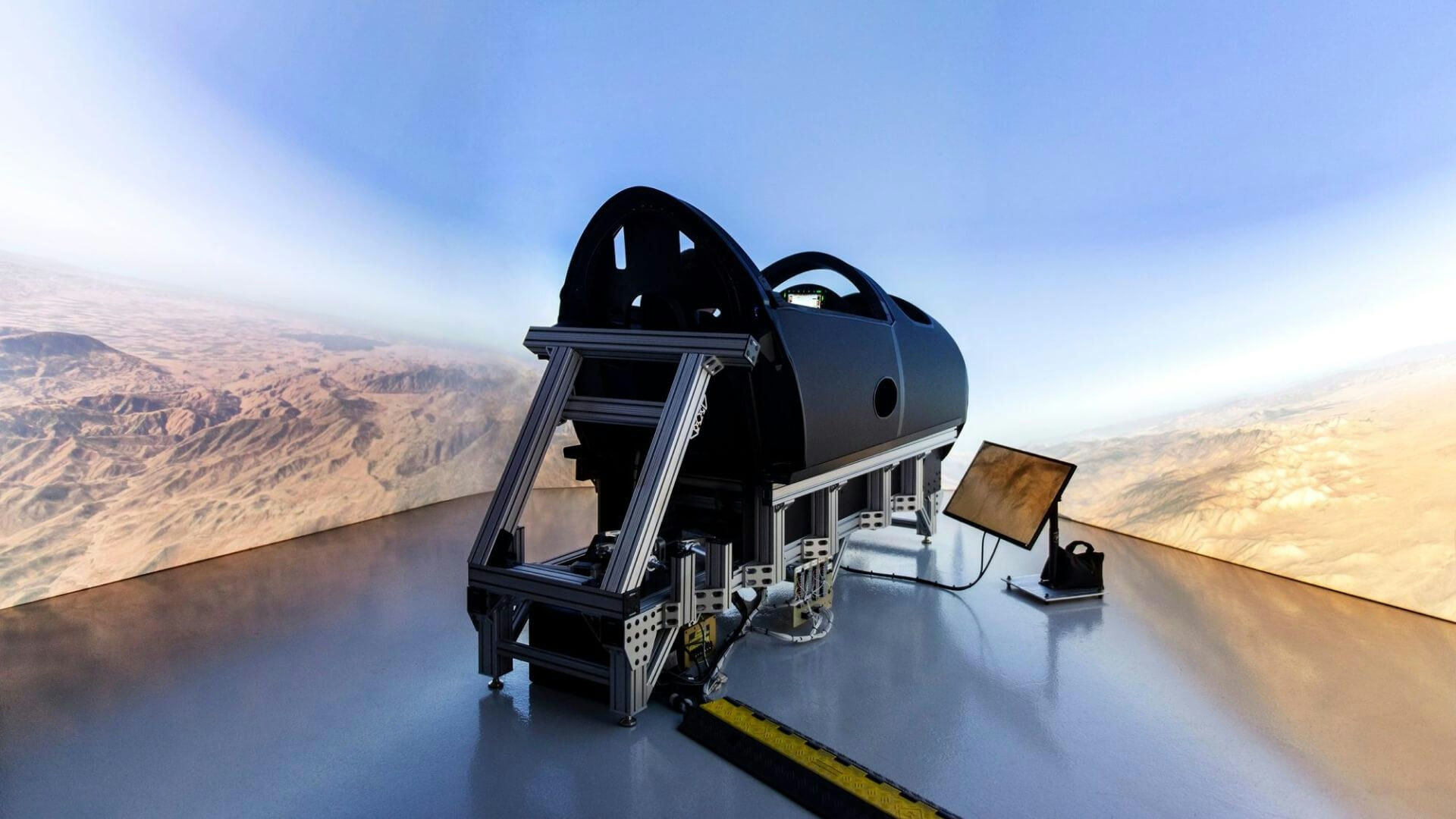
AI-Powered Air Traffic Control Integrated into Home Flight Simulators
Last year, Microsoft unveiled its latest iteration of the renowned flight simulation software, Microsoft Flight Simulator 2024 (MSFS2024), at a media event near the Grand Canyon National Park Airport (KGCN) in Arizona. Building on the success of Microsoft Flight Simulator 2020, which attracted over 15 million unique users within five years, MSFS2024 arrives with considerable anticipation from the global flight simulation community.
Immersive Launch Experience and Technological Advancements
The launch event brought together a diverse assembly of content creators, journalists, and industry experts from around the world. Microsoft curated a series of immersive activities, including a sunrise tour along the Grand Canyon’s southern rim and a helicopter flight over the iconic landscape. These experiences allowed attendees to directly compare the real-world environment with its digital recreation in MSFS2024. Cirrus Aircraft contributed to the event by providing flights in the Vision Jet G2+, lending further authenticity and industry relevance.
A standout feature of MSFS2024 is the integration of an advanced AI-powered air traffic control (ATC) system. Utilizing satellite data, high-resolution aerial imagery, photogrammetry, and machine learning, the development team has achieved an unprecedented level of detail in replicating complex terrains such as the Grand Canyon. The AI-driven ATC system is designed to simulate real-world airspace management and communication, significantly enhancing the realism of home flight simulation.
Challenges and Industry Implications
Despite its promise, the incorporation of AI-powered ATC into consumer flight simulators presents significant challenges. Ensuring the system’s reliability and safety is critical, as users demand seamless and accurate air traffic management. Regulatory compliance remains a complex issue, with aviation authorities closely scrutinizing the deployment of AI technologies in both simulated and operational contexts. Additionally, concerns have been raised about the potential impact on traditional air traffic controllers, especially amid ongoing staffing shortages and the Federal Aviation Administration’s recent admission of difficulties in maintaining full staffing levels under current frameworks.
Reactions within the market have been mixed. While many flight simulation enthusiasts embrace the innovation, some traditional aviation sectors and regulatory bodies remain cautious about the technology’s maturity and its long-term effects. Competitors in the simulation and aviation technology space are responding by developing their own AI-driven solutions or forming strategic partnerships with specialized firms to remain competitive with Microsoft’s advancements.
Following the launch, the opportunity to replicate a flight between Flagstaff (KFLG) and Grand Canyon Airport (KGCN) from a home simulator underscored the transformative potential of AI-enhanced ATC. Although updates to the software have been awaited, the promise of a more immersive and authentic air traffic control experience highlights a significant evolution for both flight simulation enthusiasts and the broader aviation industry.
As MSFS2024 approaches its official release, its AI-powered air traffic control system stands as a notable technical achievement and a catalyst for ongoing discussions about the future of air traffic management in both virtual and real-world skies.

Etihad Airways Suspends Airbus A380 Flights on Key Route

Aditya Birla Group Seeks Approval for Aircraft Leasing in GIFT City

Qatar Airways Highlights Innovation and Connectivity at Arabian Travel Market 2026

Hong Kong's Five-Year Plan Includes Andrew Fan's Aircraft Parts Processing Hub Proposal

ACIA Aero Leasing Delivers ATR72-600 to Air Nostrum

RTX Appoints Jill Albertelli as Head of Pratt & Whitney

TAT Technologies Joins Beyond Aero Hydrogen Aircraft Program

AURAK Study Highlights Barriers to Air Taxi Adoption in Emerging Economies

Xiamen Air Selects Altitude for 787 Maintenance at Heathrow

Etihad and Swissport Extend Global Partnership
