
Orquestre insights de IA em ações

Tendências
Categories
Air Canada Orders Eight Airbus A350-1000 Aircraft
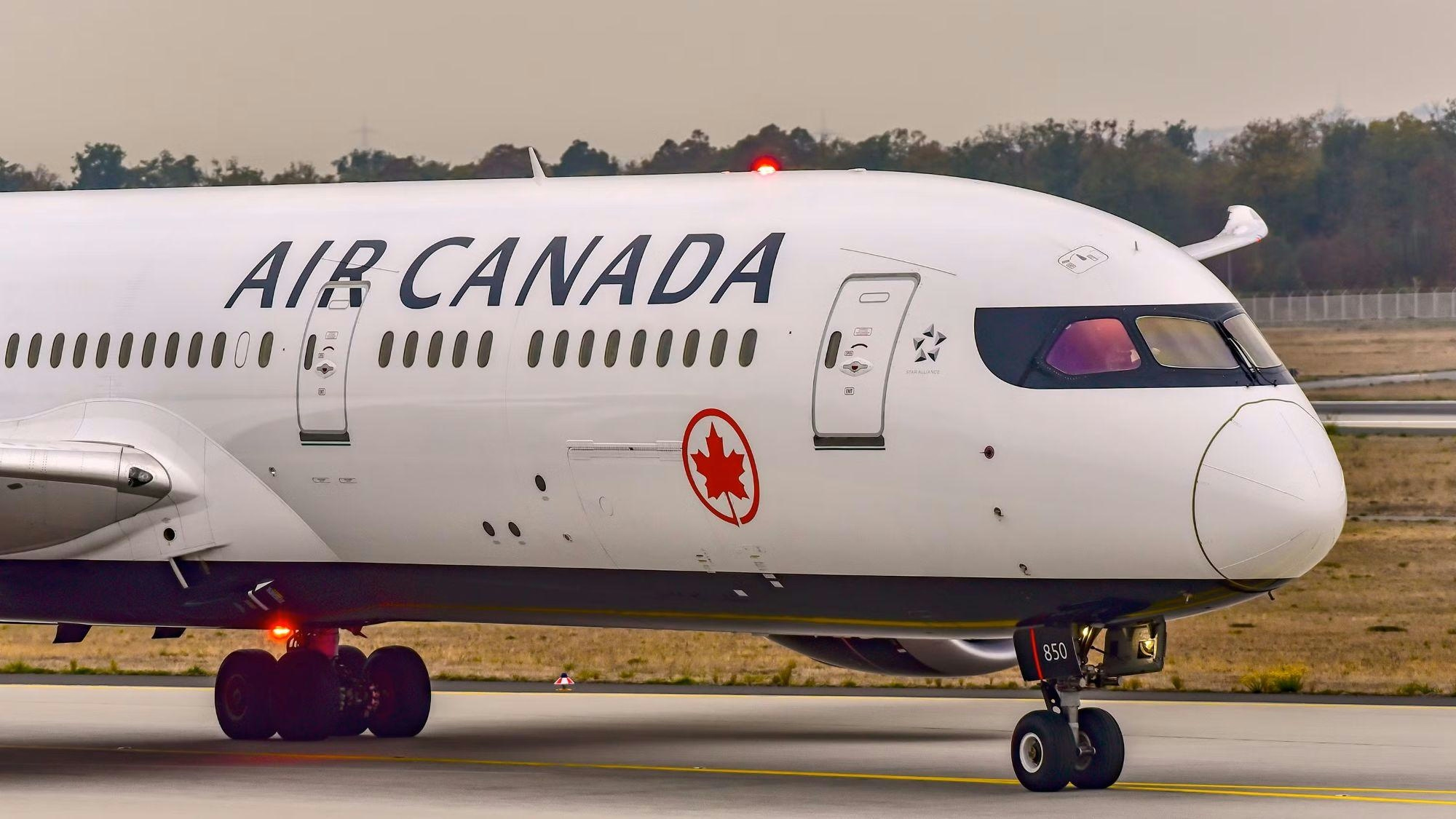
Air Canada Commits to Eight Airbus A350-1000 Aircraft to Renew Long-Haul Fleet
Air Canada has confirmed a firm order for eight Airbus A350-1000 aircraft, marking a pivotal advancement in the airline’s strategy to modernize its long-haul fleet. Initially reported as undisclosed in November 2025, this acquisition highlights Air Canada’s dedication to expanding its international network with state-of-the-art widebody aircraft.
Enhancing Global Connectivity and Efficiency
The Airbus A350-1000 is renowned for its cutting-edge technology, superior fuel efficiency, and an extended range of up to 9,000 nautical miles. These attributes are expected to provide Air Canada with a competitive advantage, facilitating non-stop flights from Canada to rapidly growing markets in the Indian subcontinent, Southeast Asia, and Australia. Mark Galardo, Air Canada’s Executive Vice President and Chief Commercial Officer, emphasized that the A350-1000 represents a natural progression in the airline’s fleet evolution. He noted that the aircraft’s advanced capabilities and improved efficiencies will unlock new long-haul opportunities worldwide, with the iconic Maple Leaf emblem symbolizing Air Canada’s commitment to connecting its customers, hubs, and country to the global stage.
Benoit de Saint-Exupéry, Airbus Executive Vice President of Commercial Aircraft Sales, described Air Canada’s choice as a strong endorsement of the A350-1000’s technological leadership. He highlighted that the decision reflects not only a fleet modernization effort but also Air Canada’s ambition to establish new benchmarks in range, performance, and passenger experience.
Technological Advancements and Environmental Considerations
The A350-1000 features the Airspace cabin, designed specifically for ultra-long-haul comfort. Passengers benefit from a lower cabin altitude and reduced noise levels, enhancing wellbeing during extended flights. Powered by the latest generation Rolls-Royce engines and constructed with lightweight materials, the aircraft achieves a 25% reduction in fuel consumption and emissions compared to previous-generation competitors. Furthermore, the A350 is capable of operating with up to 50% Sustainable Aviation Fuel (SAF), with Airbus targeting full 100% SAF capability by 2030, underscoring the aircraft’s role in advancing sustainable aviation.
Strategic and Operational Implications
While the order is widely viewed as a strategic move to strengthen Air Canada’s long-haul operations, it also entails significant financial and operational challenges. The acquisition requires substantial upfront investment and long-term financial commitments, raising concerns about potential fiscal pressures amid economic uncertainties. Market responses have been mixed, with some analysts cautioning that increased competition could trigger price wars as rival carriers may accelerate their own fleet upgrades. Additionally, integrating the new aircraft into Air Canada’s existing operations will demand considerable logistical and operational adjustments.
As of January 2026, the Airbus A350 family has amassed over 1,500 orders from 67 customers worldwide, reflecting robust demand for its efficiency and performance.

Etihad Airways Suspends Airbus A380 Flights on Key Route

Aditya Birla Group Seeks Approval for Aircraft Leasing in GIFT City

Qatar Airways Highlights Innovation and Connectivity at Arabian Travel Market 2026

Hong Kong's Five-Year Plan Includes Andrew Fan's Aircraft Parts Processing Hub Proposal

ACIA Aero Leasing Delivers ATR72-600 to Air Nostrum

RTX Appoints Jill Albertelli as Head of Pratt & Whitney

TAT Technologies Joins Beyond Aero Hydrogen Aircraft Program

AURAK Study Highlights Barriers to Air Taxi Adoption in Emerging Economies

Xiamen Air Selects Altitude for 787 Maintenance at Heathrow

Etihad and Swissport Extend Global Partnership
