Imagem

Orquestre insights de IA em ações

Entre na lista de espera da AeroGenie hoje mesmo!

Tendências

Categories

Air New Zealand and Other Airlines Adjust Schedules at Major Hubs Amid Boeing 787 Engine Issues
May 22, 2026By ePlane AI
Air New Zealand and Other Airlines Adjust Schedules at Major Hubs Amid Boeing 787 Engine Issues
0
0
Boeing 787
Rolls-Royce Trent 1000
Flight Schedule Disruptions

Air New Zealand and Global Airlines Adjust Operations Amid Boeing 787 Engine Reliability Challenges

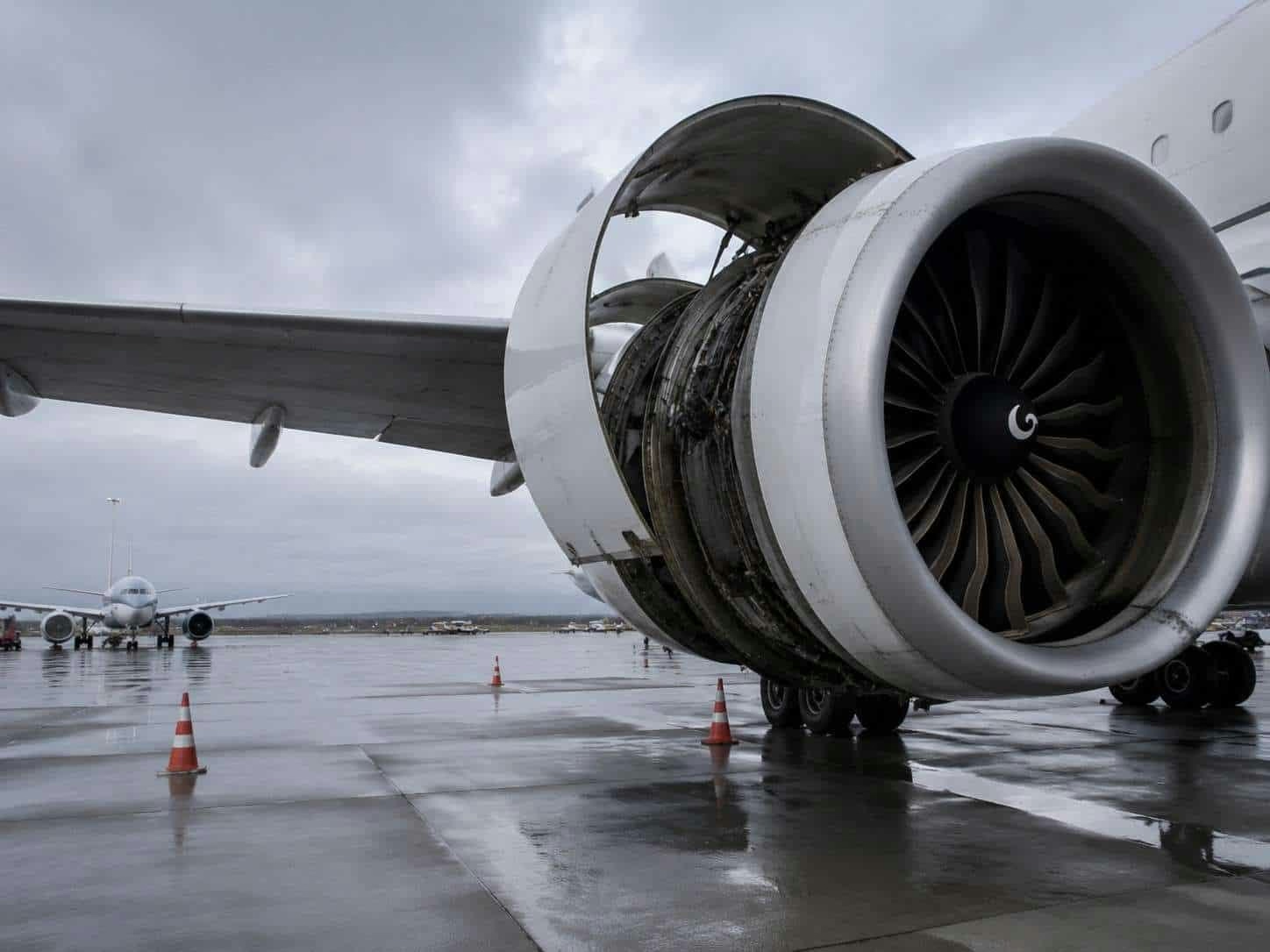
Airlines around the world are confronting significant operational disruptions as ongoing reliability issues with Boeing 787 engines force widespread schedule adjustments and flight cancellations. Major carriers, including Air New Zealand, British Airways, All Nippon Airways (ANA), and LATAM, have been compelled to reroute or suspend long-haul services at key international hubs such as Auckland Airport, London Heathrow, Los Angeles International Airport, and Tokyo Narita. These disruptions are reshaping fleet strategies and prompting a reevaluation of engine procurement decisions across the industry.

The Boeing 787 Engine Reliability Crisis

At the heart of the crisis are persistent durability problems with the Rolls-Royce Trent 1000 engines, which power a substantial portion of the global 787 Dreamliner fleet. Aviation regulators, notably the European Union Aviation Safety Agency (EASA), have issued multiple airworthiness directives mandating frequent inspections and component replacements to address premature wear and cracking in critical engine parts. EASA has specifically highlighted the risk of cracks developing in low-pressure turbine blade assemblies, which could lead to in-flight engine shutdowns if not properly managed.

These longstanding technical challenges have resulted in intensified maintenance schedules, unexpected aircraft groundings, and increased operational complexity for affected airlines. The situation is further exacerbated by global supply chain delays for replacement parts and limited overhaul capacity, causing some aircraft to remain out of service for extended periods. In response, airlines are prioritizing aircraft equipped with more reliable and readily available engines, such as the GE Aerospace GEnx-1B, both for current operations and future fleet acquisitions.

Operational and Market Implications

Air New Zealand has been particularly affected by these issues, facing significant aircraft availability constraints and engine maintenance delays that have led to flight cancellations and contributed to a reported net loss in its early fiscal year 2026 results. The airline, which depends heavily on its 787 fleet for international routes, has acknowledged ongoing fleet limitations and plans to introduce GEnx-powered 787s by late 2026 to enhance reliability and restore capacity.

Similarly, British Airways has encountered delays in engine deliveries and has shifted its orders for six new Boeing 787 aircraft from Rolls-Royce Trent 1000 engines to GE GEnx units. The airline’s Chief Technical Officer noted that no engines were delivered on schedule in 2025, underscoring persistent supply chain and reliability challenges.

Other carriers, including ANA and LATAM, have also revised their fleet plans and long-haul schedules in light of these engine reliability concerns. LATAM has recently placed orders for 787s powered by GEnx engines, while simultaneously expressing renewed confidence in the latest Rolls-Royce Trent 1000 XE variant.

These schedule adjustments at major hubs have introduced additional operational costs, increased passenger dissatisfaction, and intensified competitive pressures within the industry. Airlines such as Air New Zealand, which rely heavily on the 787 for international connectivity, remain particularly vulnerable to these disruptions. Meanwhile, competitors like JetBlue appear less affected by the shifting dynamics, and market analysts suggest that heightened scrutiny of airline reliability may influence passenger preferences toward carriers operating more dependable aircraft.

As the industry continues to navigate these challenges, reliance on GEnx-powered 787s is expected to grow, with airlines seeking to stabilize their networks while maintaining safety and reliability in global air travel.

More news
Global Aviation to Double Capacity by 2050 Through AI and Software Without New Airports

Global Aviation to Double Capacity by 2050 Through AI and Software Without New Airports

Global Aviation to Double Capacity by 2050 Through AI and Software, Not New Airports The global aviation industry is poised for a profound transformation, targeting a doubling of passenger capacity by 2050 without expanding airports, fleets, or border personnel. This ambitious goal is being pursued through the adoption of automation, artificial intelligence (AI), and advanced data-driven software solutions, enabling the sector to scale operations efficiently within existing physical infrastructures. Digital Transformation as the Core Strategy According to SITA’s Impact Report 2025, the aviation industry is projected to carry approximately 8 billion passengers annually within the next two decades, with the International Air Transport Association (IATA) forecasting this number could reach 10 billion by 2050. This anticipated surge in demand is driving airlines, airports, and border authorities to prioritize digital transformation over traditional infrastructure expansion such as new terminals or runways. David Lavorel, CEO of SITA, underscored the central challenge of accommodating this growth without doubling physical infrastructure. He noted that the transition is already underway, with airports maximizing capacity within existing facilities to avoid the high costs and extended timelines associated with new construction. Governments are also streamlining border processes by implementing pre-clearance systems that reduce congestion and enhance operational efficiency. A significant element of this shift is the integration of AI beyond pilot programs into operational control centers, where it now actively manages flights and passenger flows. This evolution marks a transition from experimental deployments to core system integration, positioning digital infrastructure as equally critical as physical assets in determining the capacity, resilience, and efficiency of aviation systems. Challenges and Industry Response Despite the promising outlook, the industry faces considerable challenges. Modernizing air traffic control systems remains a complex endeavor, particularly as the Federal Aviation Administration explores AI applications to manage increasingly congested airspace. Sustainability goals present another major obstacle, with IATA reaffirming its commitment to achieving net-zero carbon emissions by 2050. Additionally, delays in aircraft deliveries and concerns regarding the reliability and transparency of AI systems pose risks to the sector’s digital transformation efforts. Market reactions to these developments are mixed, reflecting both optimism and caution. While the potential for increased efficiency and cost reductions is driving investment in digital solutions, apprehensions persist about the dependability of AI-driven systems and their capacity to manage critical operations transparently. Competitors are closely monitoring these trends, with many airlines accelerating their technological strategies to maintain competitiveness in a rapidly evolving market. Industry leaders emphasize that this transformation is a collective endeavor involving airlines, airports, governments, and technology partners. As passenger demand continues to rise, the focus is increasingly on developing integrated technological ecosystems capable of expanding throughput without enlarging the physical footprint of aviation infrastructure. The aviation sector’s ability to double capacity by 2050 will depend on the successful adoption of AI and software-driven solutions, balanced against the imperatives of modernization, sustainability, and public trust in emerging technologies.
Lithuania Reviews Future of Šiauliai International Airport

Lithuania Reviews Future of Šiauliai International Airport

Lithuania Reviews Future of Šiauliai International Airport Lithuania is undertaking a comprehensive reassessment of Šiauliai International Airport’s role, with Defense Minister Robertas Kaunas confirming that civilian flights will cease following the expiration of the passenger terminal lease in March 2027. Minister Kaunas underscored that the primary focus should remain on maintaining the airport to NATO standards, emphasizing that Lithuania’s existing civilian airports sufficiently accommodate passenger traffic. Strategic and Economic Considerations Šiauliai International Airport, operated by the Lithuanian Air Force, functions as its principal base while also supporting non-scheduled civilian passenger and cargo flights. The prospect of ending civilian operations has sparked concern among local businesses, which warn that such a move could lead to substantial investment losses and the erosion of the airport’s international standing. Estonian-owned Aviatic MRO, one of two civilian maintenance, repair, and overhaul (MRO) providers at Šiauliai alongside Airhub Aviation, has expressed interest in expanding its maintenance hub investments. However, the company requires firm assurances regarding the airport’s continued operational status to proceed with its plans. Compounding these challenges, Riga Airport in neighboring Latvia is preparing to assume responsibility for live animal cargo transport in the region—a service previously managed by Šiauliai—highlighting the competitive pressures confronting the Lithuanian facility. Broader Aviation Sector Challenges The review of Šiauliai’s future occurs against a backdrop of significant challenges within the European aviation sector. Rising operating costs, geopolitical uncertainties, and increasing demands for sustainability are exerting pressure on regional airports. Concurrently, ongoing consolidation among major European airlines threatens to reduce competition and connectivity, disproportionately affecting smaller airports such as Šiauliai. Airlines are also navigating fuel price volatility and escalating operational expenses, factors likely to influence their strategic decisions regarding regional routes. Furthermore, the industry’s transition toward greener technologies and the implementation of new state aid regulations are poised to reshape regional airport connectivity. These developments, alongside market dynamics and competitor responses, will be critical in determining the trajectory of Šiauliai International Airport. As Lithuania deliberates on the airport’s future, the decision will carry significant implications not only for national defense priorities but also for regional economic development and the country’s role within the evolving European aviation landscape.
Four Air Taxi Models That Could Shape Future Travel

Four Air Taxi Models That Could Shape Future Travel

Four Air Taxi Models That Could Shape Future Travel The landscape of urban transportation is on the cusp of a significant transformation with the advent of electric vertical takeoff and landing (eVTOL) aircraft. These innovative vehicles promise to revolutionize city travel by providing a cleaner, quieter alternative to traditional ground transportation. As companies compete to bring air taxis to market, the industry is navigating a complex interplay of technological innovation, regulatory scrutiny, and safety concerns. Archer Aviation’s Midnight: A Silent Contender Archer Aviation’s Midnight eVTOL captured attention at the 2025 California International Air Show with its near-silent flight and distinctive design, featuring six propellers and a twin tail. The company is progressing toward Federal Aviation Administration (FAA) certification, positioning the Midnight as a potential official air taxi for the 2028 Los Angeles Olympics and Team USA. Despite these advancements, safety remains a critical issue. Recent litigation involving Boeing-owned Wisk Aero, which faces allegations of inadequate software testing for autonomous air taxis, highlights the imperative for stringent safety protocols as these aircraft approach commercial deployment. Virgin Atlantic and Joby Aviation’s UK Air Taxi Initiative In the United Kingdom, Joby Aviation, in collaboration with Virgin Atlantic, is preparing to launch an air taxi service centered around the Joby S4 eVTOL. This model accommodates four passengers, a pilot, and luggage, and can reach speeds of up to 200 miles per hour. Initial routes are planned to connect Heathrow and Manchester airports, with intentions to expand to less frequent destinations. Joby also aims to commence operations in Dubai by late 2026 and in up to ten U.S. states within the same timeframe. While these developments signal progress, market responses remain cautious, with investors and regulators closely monitoring how these services will meet safety and regulatory standards. United Airlines and Archer: Integrating Air Taxis into Air Travel United Airlines has partnered with Archer Aviation to incorporate air taxis as a bookable add-on for passengers, particularly targeting congested urban areas such as New York City. This initiative seeks to utilize existing airport infrastructure and city helipads to streamline travel times for commuters and travelers alike. The collaboration underscores the intensifying competition in the sector, with a strong emphasis on meeting regulatory requirements and enhancing public safety through technological improvements, including advancements in battery systems. Vertical Aerospace’s Valo and Industry Innovations British company Vertical Aerospace is advancing its air taxi offerings with the Valo, a next-generation model building on the success of its VX4 prototype. The Valo is equipped with eight electric rotors—four fixed at the rear that stow during flight and four at the front that tilt to provide lift or thrust. The commercial launch is targeted for 2028. Meanwhile, other firms such as Beta Technologies are adopting more cautious timelines for market entry. The industry is also witnessing significant progress in battery technology, exemplified by Helios Horizon’s solid-state battery demonstrator, which promises to enhance both the safety and efficiency of future eVTOL aircraft. As eVTOL technology continues to evolve, the race to define the future of urban air travel accelerates. The realization of clean, quiet, and convenient urban flight hinges on successfully addressing the intertwined challenges of safety, regulation, and technological innovation.
Rolls-Royce’s Trent 1000 XE Gains Ground on GEnx in Boeing 787 Market

Rolls-Royce’s Trent 1000 XE Gains Ground on GEnx in Boeing 787 Market

Rolls-Royce’s Trent 1000 XE Narrows the Gap with GEnx in Boeing 787 Market Rolls-Royce is making significant strides in the competitive market for Boeing 787 engines as its Trent 1000 XE engine gains ground on General Electric’s GEnx. Recent enhancements, particularly to the high-pressure turbine, have addressed previous reliability concerns, helping to restore the Trent 1000 XE’s standing among airline operators. Renewed Confidence Amidst Technical Challenges The durability upgrades have begun to yield tangible results, as evidenced by renewed airline confidence in the Trent 1000 XE. LATAM Airlines recently expanded its fleet with three new Boeing 787 aircraft powered by Rolls-Royce engines, signaling a notable endorsement of the improved engine. This development marks a recovery for Rolls-Royce following a period of technical setbacks and a decline in market share. However, the market response remains varied. Some carriers, including Thai Airways, have chosen to transition to GEnx-powered 787s, reflecting a degree of caution that persists among operators. The competitive environment is further complicated by the operational and financial difficulties faced by airlines such as Air New Zealand, underscoring the complex considerations involved in selecting engines for their fleets. Ongoing Competition in a Dynamic Market Rolls-Royce’s focus on enhancing the Trent 1000 XE’s durability has been instrumental in closing the performance gap with the GEnx. Nevertheless, the company continues to grapple with the repercussions of earlier reliability issues. As airlines carefully evaluate their options, the contest for dominance in the Boeing 787 engine market remains highly dynamic, with both Rolls-Royce and General Electric striving to secure the trust of global carriers.
DAE and Neuberger Launch New Aircraft Leasing Partnership

DAE and Neuberger Launch New Aircraft Leasing Partnership

DAE and Neuberger Establish Mustang Aerospace to Expand Aircraft Leasing Footprint Dubai Aerospace Enterprise (DAE) Ltd and Neuberger Specialty Finance have announced the formation of Mustang Aerospace, a new co-investment vehicle designed to strengthen their position in the global aircraft leasing market. This partnership will enable both entities to acquire a diversified fleet of aircraft, providing long-term capital support to airlines worldwide and aiming to develop Mustang into a prominent industry player. Strategic Ambitions and Industry Context Mustang Aerospace plans to invest approximately US$6 billion in aircraft assets over the medium term. The venture leverages DAE’s extensive experience, spanning over four decades in aircraft leasing and asset management, alongside Neuberger’s expertise in asset-based finance. As of March 31, 2026, DAE manages a fleet of around 700 aircraft valued at US$25 billion, serving more than 200 airline customers across 80 countries through offices located in Dubai, Dublin, Amman, Singapore, Miami, and Seattle. DAE’s Aircraft Investor Services (AIS) group currently manages seventeen agreements for institutional and financial investors, including seven structured aircraft portfolio transactions. Neuberger Specialty Finance, the asset-based finance division of Neuberger, oversees assets exceeding US$5 billion across more than 50 portfolio companies. Since 2018, it has invested over US$16 billion through 80 global origination partners. Neuberger itself is a private, independent investment manager with US$567 billion in assets under management. The launch of Mustang Aerospace occurs amid intensified competition within the aircraft leasing sector. Recent significant investments, such as KKR’s US$1.4 billion commitment to Altavair and Azorra’s expanded order for Embraer E195-E2 aircraft, highlight the influx of new capital and the industry’s drive for scale. Market analysts suggest that this heightened activity will lead to increased scrutiny of the financial stability and strategic positioning of existing leasing firms. Competitors are expected to respond by enhancing their portfolios or pursuing new partnerships to maintain market share, while the additional capital may foster innovation and efficiency improvements across the sector. Leadership Perspectives and Financial Backing Firoz Tarapore, CEO of DAE, emphasized the value of the renewed partnership, noting, “Sean Hinze led our original co-investor relationship dating back to 2017; collaborating with him at Neuberger will allow us to expand our offering at greater scale to our airline customers around the world and support our ambition to continue growing our AIS offering. We look forward to deploying our industry-leading franchise in search of opportunistic investments on behalf of Neuberger Specialty Finance and the funds it manages.” Sean Hinze, Managing Director at Neuberger Specialty Finance, expressed enthusiasm about the venture, stating, “Launching Mustang with DAE is an exciting opportunity to reignite our partnership and expand it into a scaled, durable franchise within Neuberger’s Asset Based Finance platform. We’re thrilled to combine DAE’s world-class aircraft management capabilities with our flexible capital and structuring expertise to build a long-term leasing franchise that can serve airline customers globally.” To facilitate Mustang Aerospace’s growth, the partnership has secured committed warehouse financing from a consortium of leading financial institutions, including Goldman Sachs, Mizuho, BNP Paribas, MUFG, Société Générale, and Truist.
Next Phase of Trinational Fighter Jet Program Begins

Next Phase of Trinational Fighter Jet Program Begins

Next Phase of Trinational Fighter Jet Program Begins Edgewing has been awarded a £4.6 billion contract to advance the next phase of the Global Combat Air Programme (GCAP), a trilateral initiative involving the United Kingdom, Italy, and Japan aimed at developing a next-generation fighter aircraft. The contract, granted by the GCAP Agency on behalf of the three governments, will fund an 18-month period dedicated to completing advanced concept and assessment work, while simultaneously progressing joint detailed design and development efforts. Strengthening International Defence Collaboration This latest contract follows a £686 million agreement signed in April 2026 and represents a significant milestone for GCAP, reinforcing its status as a flagship model for international defence cooperation. The investment, jointly financed by the partner nations, will support the programme’s next stage of design and engineering, underscoring the long-term commitment of Italy, Japan, and the UK to this ambitious project. The UK’s recent pledge of £8.6 billion over four years has been pivotal in securing the programme’s continuity, alleviating concerns about potential delays. With Germany’s withdrawal from the competing Future Combat Air System (FCAS) project, GCAP now stands as the sole credible European-led sixth-generation fighter jet programme. This positions GCAP as a geopolitically significant alternative to the US, Chinese, and Russian offerings, attracting interest from multiple countries seeking advanced air combat capabilities. Masami Oka, Chief Executive of the GCAP Agency, highlighted that the new contract will enable the agency and Edgewing to accelerate delivery timelines, enhance global security, share costs and technological expertise, and generate highly skilled employment across all three nations. Edgewing, established just a year ago as the trinational prime contractor and design authority, continues to integrate expertise from the UK, Italy, and Japan. Marco Zoff, Edgewing’s Chief Executive, noted that the award reflects the confidence placed in the company by the partner nations and the GCAP Agency, building on progress made under the initial contract. He emphasized that the collaborative delivery model, which unites three national industries under a single engineering prime, is instrumental in expediting development. Industrial Partnerships and Strategic Outlook The GCAP programme benefits from broader trilateral industrial partnerships, including the GCAP Electronics Evolution (G2E) consortium, responsible for developing the aircraft’s advanced sensing and communications systems, and a power and propulsion consortium tasked with creating its next-generation propulsion system. Launched in 2022, GCAP aims to deliver a sixth-generation stealth fighter by 2035. The programme is expected to enhance industrial capabilities, advance design and manufacturing expertise, create high-value jobs and intellectual property, and equip the partner nations with the capabilities necessary to address future security challenges. As GCAP progresses, the global landscape for next-generation airpower is evolving rapidly. The US Air Force’s recent selection of Anduril for the production phase of its Collaborative Combat Aircraft (CCA) programme signals a shift towards autonomous and cost-effective mass production in airpower. Within this context, GCAP’s advancement underscores its strategic importance and its role in shaping the future of international defence collaboration.
SSJ-100 Aircraft Engines to Undergo Upgrades in Russian Aviation

SSJ-100 Aircraft Engines to Undergo Upgrades in Russian Aviation

SSJ-100 Aircraft to Receive Domestic Engine Upgrades Amid Modernization Drive Russia’s United Aircraft Corporation (UAC) has announced a comprehensive plan to upgrade the engines of its SSJ-100 passenger aircraft, signaling a pivotal move in the country’s broader strategy to modernize its civil aviation sector and diminish reliance on foreign technology. This initiative involves replacing the current SaM146 engines, developed through a Russian-French partnership, with domestically produced PD-8 engines on between 50 and 100 SSJ-100 jets. Engine Replacement and Certification Process The decision to undertake this engine replacement was disclosed by UAC head Vadim Badekha at the Innoprom exhibition, who cited the limited technical lifespan of the SaM146 engines as the primary impetus for the overhaul. The certification process for the SSJ-100 equipped with the new PD-8 engines is currently in progress. According to the Russian Ministry of Industry and Trade, the main research and development phase for the engine replacement is slated for 2026–2027. This move is widely regarded as a strategic effort to bolster the stability and self-sufficiency of Russian civil aviation, particularly amid ongoing international sanctions and geopolitical tensions that have complicated access to foreign components and technical support. Despite the engine upgrade, UAC has no plans to replace the aircraft’s foreign-made avionics systems. Badekha emphasized that these systems continue to operate reliably and are maintained without significant issues, consistent with the approach taken for other foreign aircraft currently in operation within Russia. Challenges and Industry Implications Industry experts have identified the engines as the principal obstacle to the long-term operation of the SSJ-100 fleet. The transition to PD-8 engines is expected to enhance flight safety, improve economic efficiency, and support the continuity of regional air travel—objectives that align with Russia’s ambition to expand its fleet of modern, domestically produced aircraft in line with government passenger transport targets. However, the modernization program faces considerable challenges. The development and certification of the PD-8 engines are complex processes, and ensuring their compatibility and performance improvements over the SaM146 will be critical to the program’s success. Additionally, the high cost of upgrading the fleet has raised concerns within the industry. While UAC leadership maintains that the expenses will be manageable for airlines and will not require direct federal funding, some market observers remain skeptical. Badekha dismissed earlier media reports suggesting the program could cost up to 115 billion rubles, affirming that actual costs are consistent with standard aviation modernization projects. Market reactions have been mixed. International aviation markets have expressed skepticism, citing the impact of sanctions and uncertainties surrounding the reliability of new Russian-made components. At the same time, global competitors may seek to exploit the situation by promoting their own engine technologies to airlines looking for alternatives. Strategic Significance for Russian Aviation Despite these challenges, the SSJ-100 engine upgrade represents a significant milestone in Russia’s import substitution policy. By reducing dependence on foreign technical support and components, the initiative aims to lower long-term maintenance costs and enhance the resilience of the Russian aviation industry in an increasingly complex geopolitical environment.
Global Analysis of the Aircraft Water Service Trucks Market

Global Analysis of the Aircraft Water Service Trucks Market

Global Analysis of the Aircraft Water Service Trucks Market The global aircraft water service trucks market is poised for significant expansion, with projections indicating growth from USD 310 million in 2026 to USD 529 million by 2036. This represents a compound annual growth rate (CAGR) of 5.5%. Having reached USD 296 million in 2025, the market is expected to generate an absolute opportunity of USD 219 million by 2036. This growth is primarily driven by ongoing airport fleet renewals and increased investments in aviation infrastructure worldwide. Market Drivers and Challenges The demand for aircraft water service trucks is being propelled by several key factors. Airports globally are undertaking fleet modernization initiatives, replacing aging ground service vehicles with more efficient, low-emission alternatives to enhance operational performance and comply with stringent environmental regulations. Concurrently, rising passenger traffic is intensifying the need for reliable aircraft servicing, including the provision of potable water essential for passenger comfort and operational efficiency. Environmental sustainability is also a critical driver, with the adoption of electric airport vehicles gaining momentum as part of broader efforts to reduce carbon footprints and align with global climate goals. Airlines and airport operators are increasingly prioritizing faster turnaround times, making dependable and efficient ground support equipment indispensable. Despite these positive trends, the market faces notable challenges. Fluctuating fuel prices and geopolitical tensions continue to disrupt supply chains, while the stabilization of air cargo rates amid ongoing global uncertainties compels airports and service providers to seek more efficient refueling and servicing solutions. In response, industry players are focusing on technological advancements aimed at enhancing production efficiency and minimizing material waste. These efforts reflect broader trends observed in the aerostructures sector and the rising demand for advanced aircraft-grade fasteners. Market Segmentation and Regional Outlook By vehicle type, truck-mounted units are anticipated to dominate, accounting for 44% of the market in 2026, maintaining their status as the preferred choice for commercial airport operations. In terms of capacity, narrowbody units are projected to hold a 36% share, mirroring the prevalence of single-aisle aircraft within the global fleet. Commercial airports are expected to represent 58% of the market, driven by their high volume of daily aircraft movements. Regarding powertrain, diesel-powered vehicles are forecasted to retain a 52% market share in 2026, although electric alternatives are steadily gaining traction. Ground handlers, who operate extensive service fleets across multiple terminals, are set to capture 37% of the market by buyer type. Regionally, the United States is projected to experience the highest growth, with a 5.9% CAGR through 2036, supported by expansive airport modernization projects. Germany follows closely with a 5.7% CAGR, fueled by fleet renewal initiatives. China is expected to register a 5.6% CAGR amid ongoing terminal expansions, while Japan and India are forecasted to grow at 5.4% and robust rates respectively, driven by equipment upgrades and infrastructure development. Strategic Implications for Industry Stakeholders Shambhu Nath Jha, Senior Analyst at Fact.MR, emphasizes the critical role of aircraft water service trucks in airport ground operations. He notes that suppliers who enhance vehicle reliability and introduce low-emission platforms will solidify their market position as airports continue to modernize their support fleets. Industry stakeholders are advised to focus on several strategic priorities. Manufacturers should accelerate the development of electric water service vehicles tailored for high-traffic airports. Airport operators are encouraged to modernize aging fleets to improve operational efficiency. Fleet managers would benefit from implementing predictive maintenance programs to reduce downtime, while equipment suppliers should invest in advancing water tank hygiene and monitoring technologies. Aircraft water service trucks remain indispensable in supplying potable water to commercial aircraft, thereby supporting passenger comfort and enabling airlines to maintain stringent turnaround schedules. As passenger volumes increase and airports invest in modern, efficient service fleets, the market for these vehicles is expected to sustain steady growth despite ongoing challenges in the global supply chain and operational environment.
SkyDrive Reveals Full-Size Aircraft Mockup Abroad

SkyDrive Reveals Full-Size Aircraft Mockup Abroad

SkyDrive Unveils Full-Scale eVTOL Aircraft Mockup in Indonesia SkyDrive Inc., a prominent Japanese developer specializing in compact electric vertical takeoff and landing (eVTOL) aircraft, has presented its full-scale SKYDRIVE Model SD-05 mockup outside Japan for the first time. The unveiling occurred during a two-day promotional event held from June 23 to June 24 at the Cengkareng Heliport near Soekarno-Hatta International Airport in Jakarta, Indonesia. This event was organized in collaboration with Whitesky Aviation, a leading Indonesian helicopter operator. Strategic Collaboration and Market Interest The Jakarta event attracted a diverse audience, including representatives from Indonesia’s mining and agricultural sectors as well as government officials. Attendees showed considerable interest in the aircraft’s potential to address logistical and infrastructure challenges that affect both urban and rural productivity. Indonesia’s mining industry, which contributes approximately 10% to the regional GDP, and its extensive agricultural plantations covering over 15 million hectares, frequently experience delays due to underdeveloped transportation networks. In urban centers such as Jakarta, chronic traffic congestion results in estimated annual economic losses of around 65 trillion rupiah. SkyDrive’s partnership with Whitesky Aviation, initiated in August 2025, initially targeted the severe traffic congestion in Jakarta. The proximity of Whitesky’s heliport to the main international airport made air taxi services between the airport and the city center a natural starting point for exploring eVTOL applications. Since then, discussions have expanded to include the use of eVTOL aircraft to enhance logistics and emergency response capabilities in remote mining areas, where limited road access often impedes timely medical assistance. The collaboration is also exploring the potential of eVTOL technology to support Indonesia’s vast agricultural sector, where current drone technologies are constrained by the large distances involved in surveillance and disaster response. Challenges and Competitive Landscape Despite the enthusiasm generated by the Jakarta showcase, SkyDrive faces considerable challenges in establishing a presence in the international eVTOL market. Regulatory hurdles remain significant, as aviation authorities worldwide continue to develop standards for certifying and integrating new eVTOL technologies. Additionally, technological integration presents complexities, particularly in ensuring that these new aircraft can operate safely and efficiently within existing airspace and infrastructure. The competitive environment is intensifying, with established aerospace companies such as Airbus and Boeing investing heavily in their own eVTOL and urban air mobility initiatives. Market reactions to SkyDrive’s overseas debut have been mixed. While some investors are optimistic about the innovative potential of eVTOL solutions, others remain cautious regarding the commercial viability and scalability of the technology in the near term. Industry analysts anticipate that competitors may respond with new strategic partnerships and accelerated research and development efforts as the race to shape the future of urban and regional air mobility continues. SkyDrive’s Jakarta event represents a significant milestone in its global ambitions, underscoring both the opportunities and challenges the company faces as it seeks to transform transportation in Indonesia and beyond.
Latham & Watkins Advises Avenue Capital Group on $360 Million Aviation Leasing Continuation Vehicle

Latham & Watkins Advises Avenue Capital Group on $360 Million Aviation Leasing Continuation Vehicle

Latham & Watkins Advises Avenue Capital Group on $360 Million Aviation Leasing Continuation Vehicle Significant Investment in Aviation Leasing Portfolio Partners Group, a prominent global private markets firm, has committed $250 million through its infrastructure secondaries strategy to Avenue Capital Group’s global commercial aviation leasing portfolio. This investment forms part of a $360 million aviation leasing continuation vehicle managed by Avenue Capital Group and includes 69 mid-life aviation assets, encompassing narrowbody and widebody aircraft as well as regional jets. The transaction underscores the intensifying competition and heightened regulatory scrutiny within the aviation finance sector. Legal Counsel and Transaction Team Latham & Watkins LLP served as both fund and deal counsel to Avenue Capital Group throughout the transaction. The firm’s corporate deal team was led by Investment Funds partners Andrea Schwartzman and Matthew Wynne, supported by associates Connor Ross, Daniel Sung, and Molly Nelson. Key contributions were also made by M&A partner Paul Kukish and counsel Jennifer Wong, alongside associates Eric Giray and Mattia Siena. The legal team further included partner Michael Milazzo with associates Arash Lotfi and Alice Chen advising on tax matters; partner Aaron Gilbride and associate Katherine Ryan handling investment funds regulatory issues; partner Drew Levin, counsel Hannah Cary, and associate Enrique Covarrubias overseeing insurance aspects; and partner Patrick English with associate Ben Bouwman addressing antitrust considerations. Market Context and Regulatory Environment This transaction occurs amid increased regulatory attention, particularly from the U.S. Securities and Exchange Commission (SEC), which has intensified its focus on private equity continuation funds. The regulatory environment is driving firms to improve transparency and proactively manage potential conflicts of interest in such deals. Concurrently, the competitive landscape is evolving rapidly, exemplified by major industry players such as KKR, which recently committed $1.4 billion to Altavair, signaling strong investor demand and escalating competition in the aircraft leasing market. Legal Sector Adaptation to Market Demands The complexities of aviation and private equity transactions are also reshaping the legal sector. Law firms advising on these deals face growing demand for specialized technology and data science expertise. Firms like Latham & Watkins are responding by recruiting AI directors with competitive compensation packages, reflecting the broader necessity for advanced technical skills to navigate the increasingly sophisticated regulatory and transactional environment. The Avenue Capital Group transaction, with Latham & Watkins at the forefront, exemplifies the scale and intricacy of contemporary aviation leasing deals, while highlighting the evolving challenges and opportunities confronting both investment firms and their legal advisors in a dynamic market.
line









