
Orquestre insights de IA em ações

Tendências
Categories
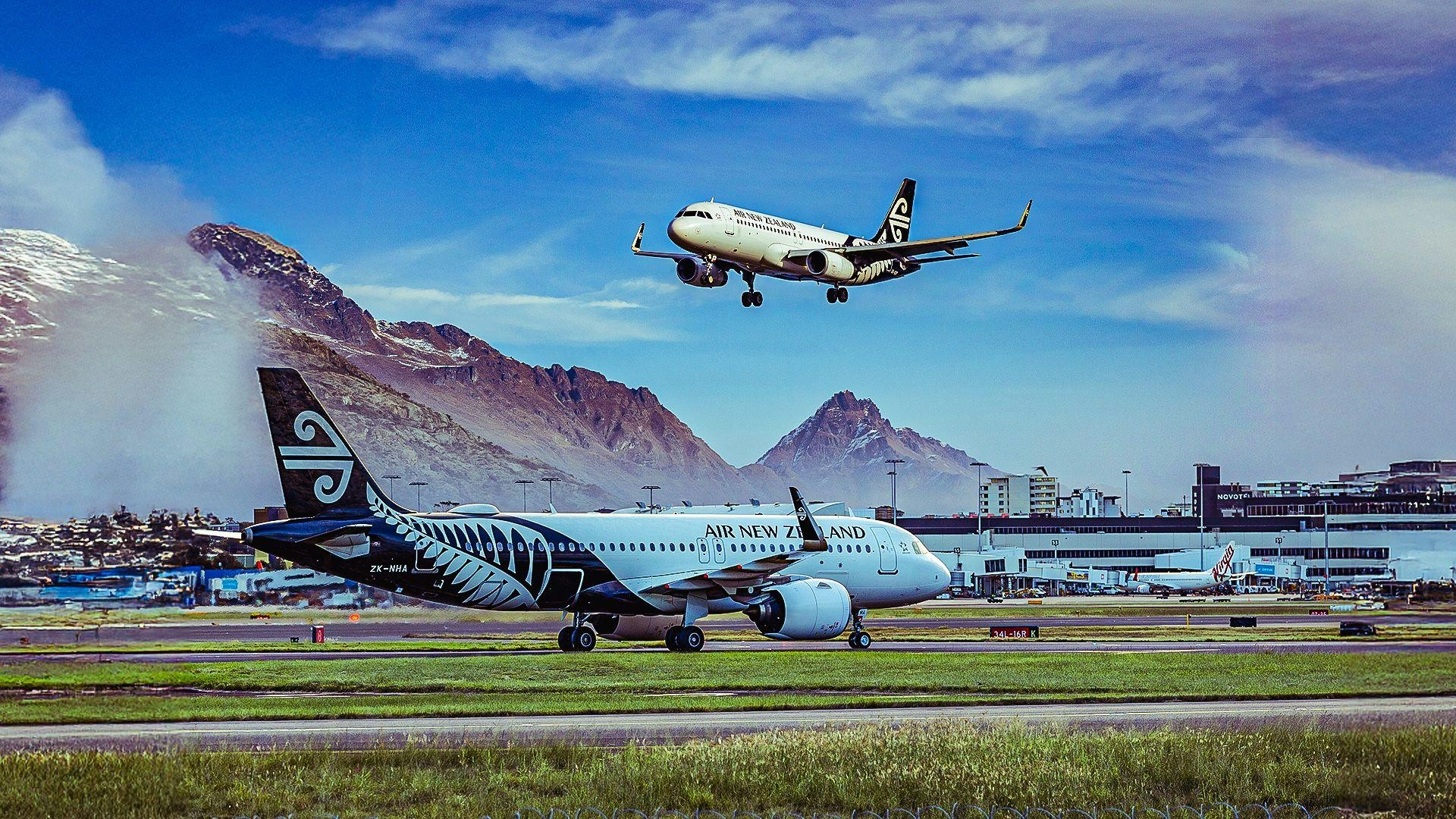
Air New Zealand Cancels Hundreds of Flights Amid Fuel Crisis and Engine Issues
Air New Zealand Cancels Hundreds of Flights Amid Fuel Crisis and Engine Issues
Operational Disruptions Across Key Destinations
Air New Zealand is currently grappling with a severe operational crisis that has led to the cancellation of hundreds of flights across major hubs including Christchurch, Wellington, and Nelson. The airline is contending with a global shortage of jet fuel alongside persistent engine maintenance problems, resulting in widespread disruptions to both domestic and international travel. These challenges have created a complex environment that has significantly impacted passenger itineraries and the airline’s scheduling capabilities.
Fuel Shortages and Rising Costs
The root of Air New Zealand’s difficulties lies in a combination of soaring fuel prices and critical engine reliability issues. The global aviation industry has been severely affected by a jet fuel shortage, driven by geopolitical tensions in the Middle East and the closure of the Strait of Hormuz, a vital oil transit route. New Zealand’s complete dependence on imported jet fuel has made it particularly susceptible to these supply constraints. In May alone, over 13,000 flights were canceled worldwide as airlines struggled to manage escalating fuel costs and limited availability.
In response, Air New Zealand has reduced its flight schedule by approximately 5% from March through early May, focusing primarily on off-peak domestic routes to conserve fuel while maintaining essential services. A further 4% reduction in May and June has disproportionately affected regional routes, significantly restricting travel options for passengers in smaller centers. To mitigate the financial impact of volatile fuel prices, the airline has implemented temporary fare increases, raising domestic economy fares and adding a flat NZ$90 surcharge to international long-haul one-way tickets.
Engine Maintenance Challenges and Supply Chain Issues
Compounding the fuel crisis are significant maintenance challenges affecting Air New Zealand’s fleet. The airline’s Airbus A320neo aircraft, powered by Pratt & Whitney GTF engines, and Boeing 787-9 Dreamliners, equipped with Rolls-Royce Trent 1000 engines, have experienced premature component wear. This issue, coupled with a global shortage of spare parts, has led to maintenance backlogs and operational disruptions. To address the shortage of serviceable engines, Air New Zealand has resorted to leasing aircraft solely to harvest operational engines, highlighting the broader impact of global supply chain disruptions on New Zealand’s aviation sector.
Financial disclosures indicate that while the airline has received NZ$55 million in compensation from engine manufacturers, ongoing aircraft groundings continue to strain operations. Air New Zealand now anticipates significantly higher losses for the fiscal year, citing the combined pressures of rising fuel costs and weakening demand.
Industry-Wide Challenges and Passenger Impact
The crisis facing Air New Zealand is reflective of broader challenges within the global aviation industry. Other major carriers, such as Delta Air Lines, have also been compelled to cancel hundreds of flights, although in Delta’s case, crew scheduling issues have been the primary cause. Airlines worldwide are adjusting routes and reducing services as they navigate escalating operational costs and uncertainties.
As Air New Zealand endeavors to stabilize its operations, passengers across New Zealand continue to face uncertainty regarding flight availability, travel schedules, and fare levels. Both the airline and transport authorities emphasize that these difficult decisions are necessary to manage fuel consumption effectively and maintain safety standards amid ongoing concerns over fleet reliability.

Etihad Airways Suspends Airbus A380 Flights on Key Route

Aditya Birla Group Seeks Approval for Aircraft Leasing in GIFT City

Qatar Airways Highlights Innovation and Connectivity at Arabian Travel Market 2026

Hong Kong's Five-Year Plan Includes Andrew Fan's Aircraft Parts Processing Hub Proposal

ACIA Aero Leasing Delivers ATR72-600 to Air Nostrum

RTX Appoints Jill Albertelli as Head of Pratt & Whitney

TAT Technologies Joins Beyond Aero Hydrogen Aircraft Program

AURAK Study Highlights Barriers to Air Taxi Adoption in Emerging Economies

Xiamen Air Selects Altitude for 787 Maintenance at Heathrow

Etihad and Swissport Extend Global Partnership
